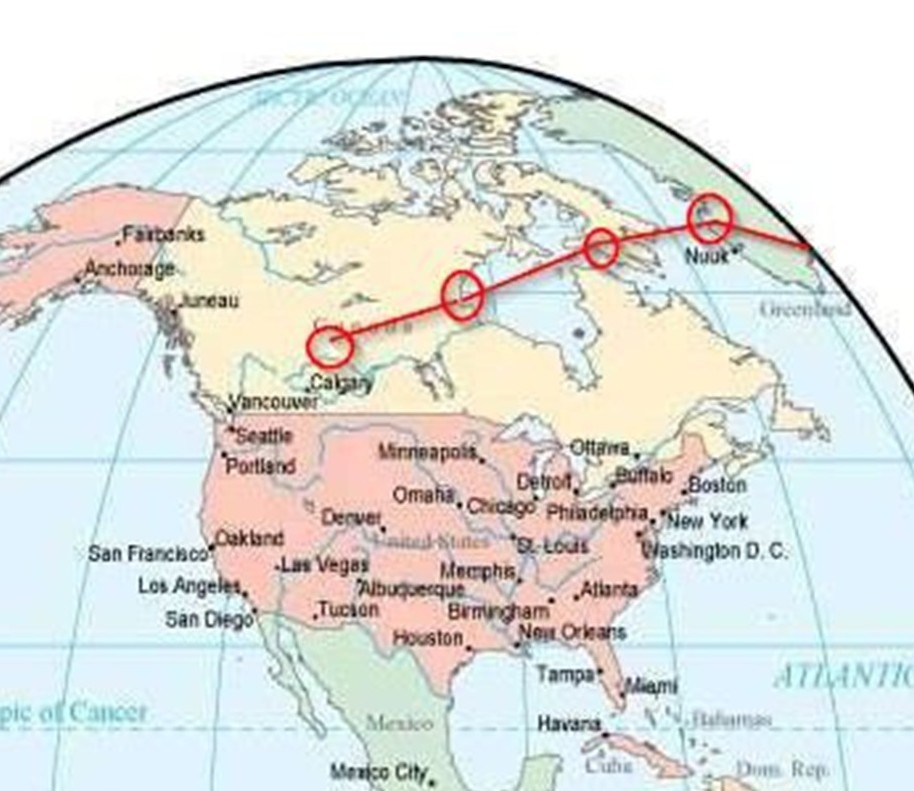
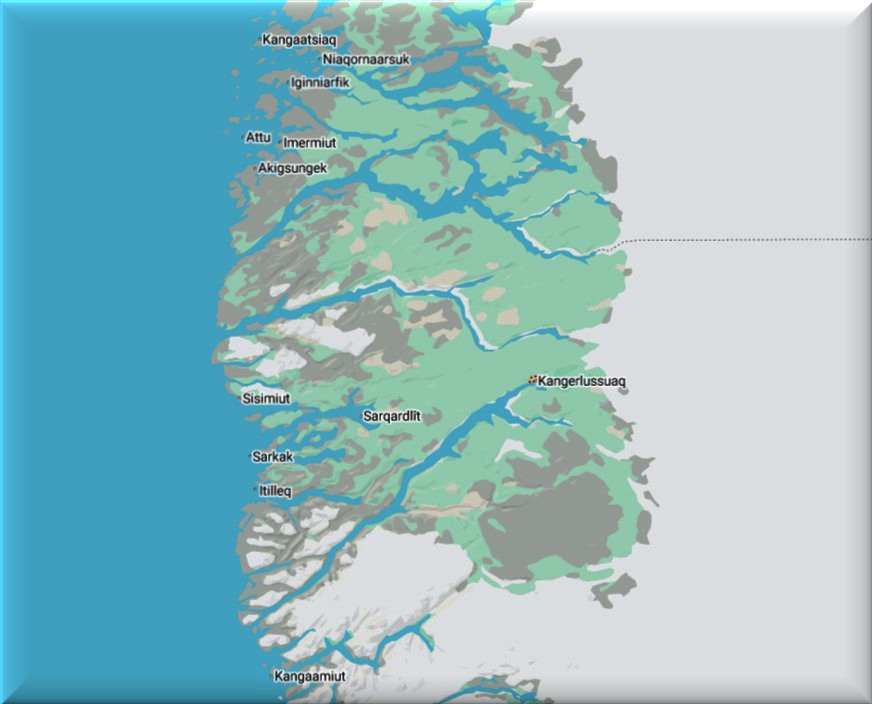
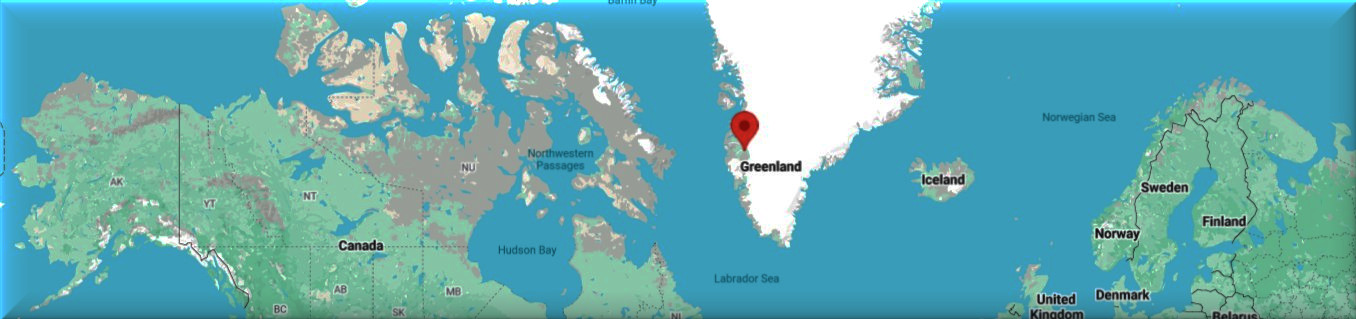
Kangerlussuaq (lit. ’Big Fjord’; Danish: Søndre Strømfjord) is a settlement in western Greenland in the Qeqqata municipality located at the head of the fjord of the same name. The town and airport were built as a U.S. base during and after World War II, when the site was known as Bluie West-8 and then Sondrestrom Air Base, but transitioned to a Greenlandic settlement in 1992. Kangerlussuaq Airport was Greenland’s primary air transport hub until the rebuilt and expanded Nuuk Airport opened in 2024.
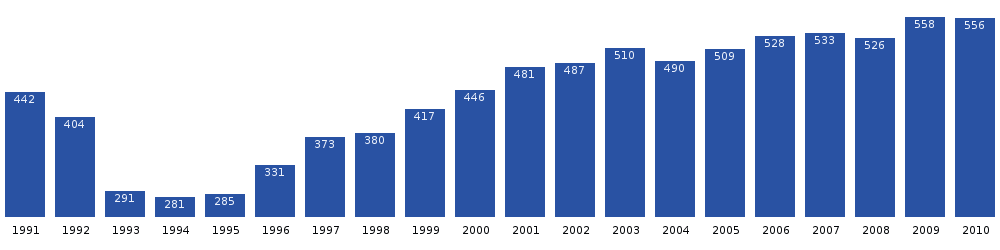
The Kangerlussuaq area is also home to Greenland’s most diverse terrestrial fauna, including muskoxen, caribou, and gyrfalcons. The settlement’s economy and population of 399 is almost entirely reliant on the airport and tourist industry. It is the only town in Greenland which is not located on the proper ocean, being situated at the end of a 160 km long fjord, although it still has a coastline on the ocean.
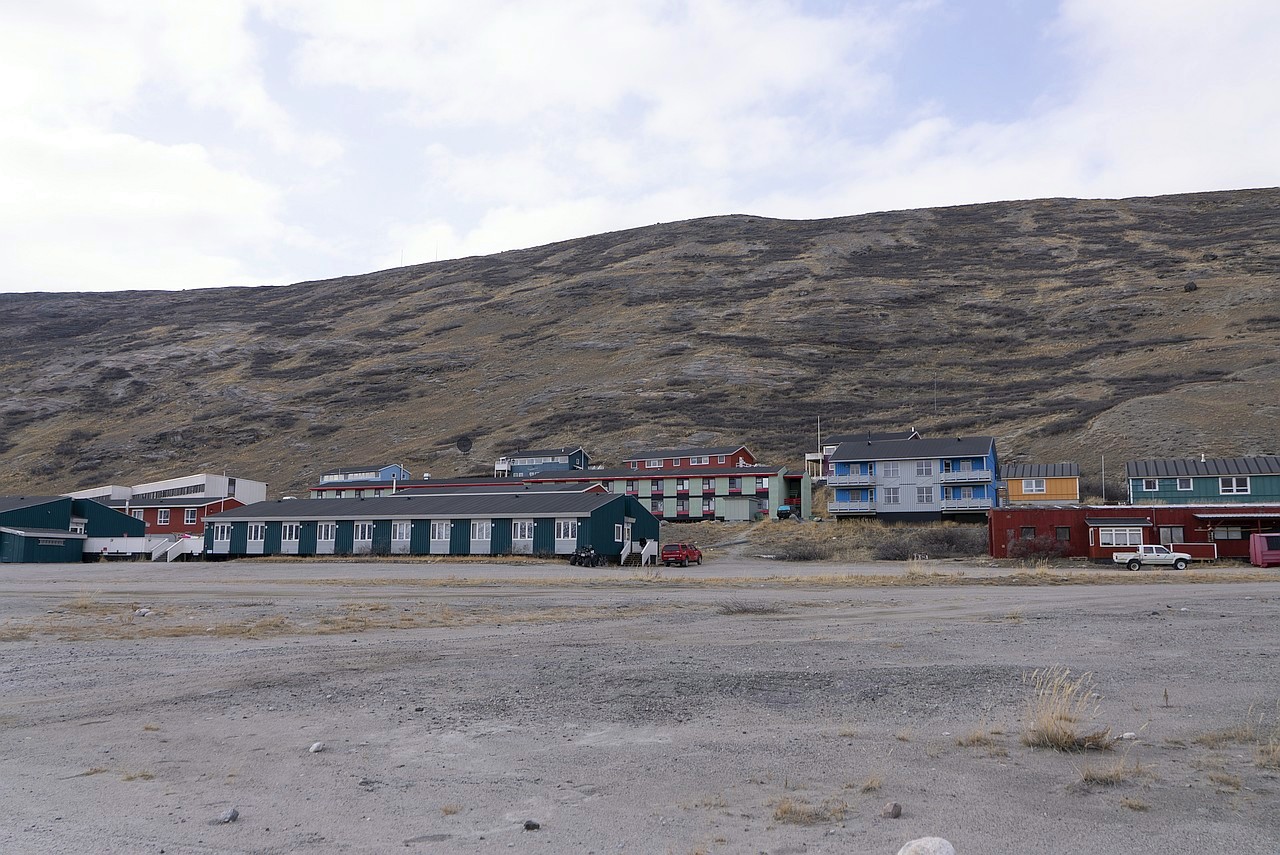
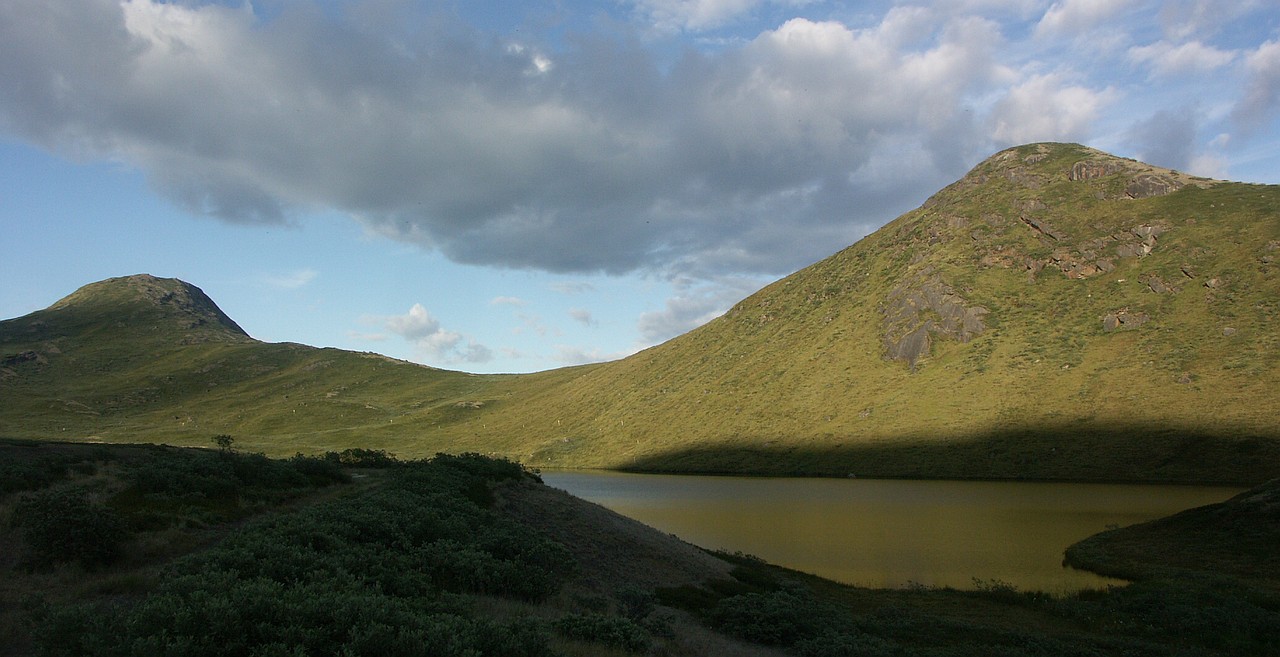
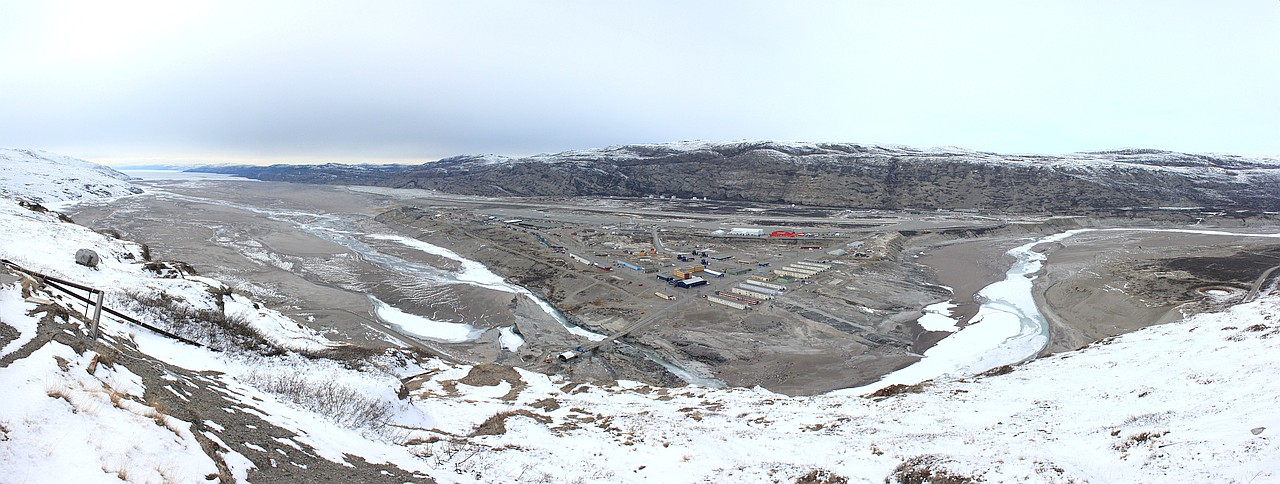
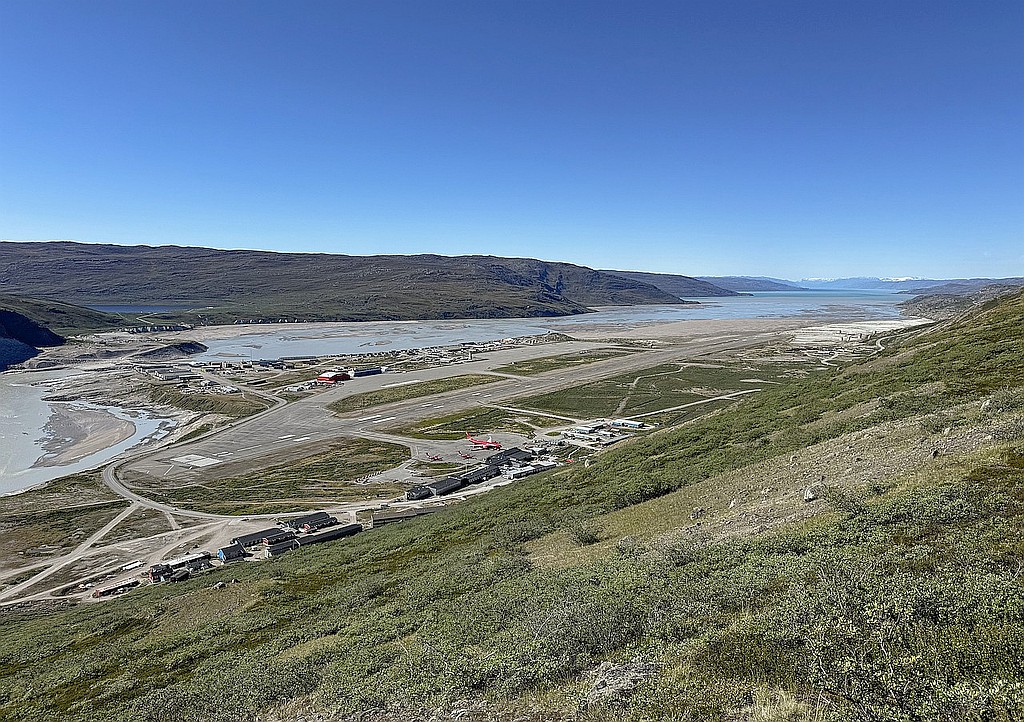
Residential houses East of Kangerlussuaq Airport By Quintin Soloviev – Own work, CC BY-SA 4.0, https://commons.wikimedia.org/w/index.php?curid=120440857Midnight sun under Sugarloaf, Kangerlussuaq By Algkalv (talk) – Own work, Public Domain, https://commons.wikimedia.org/w/index.php?curid=5783534A panorama of Kangerlussuaq taken from Black Ridge, 2013 By Tog000 – Got to the mountain, CC BY-SA 3.0, https://commons.wikimedia.org/w/index.php?curid=25921699Wikipedia
Kangerlussuaq Airport (SJF)
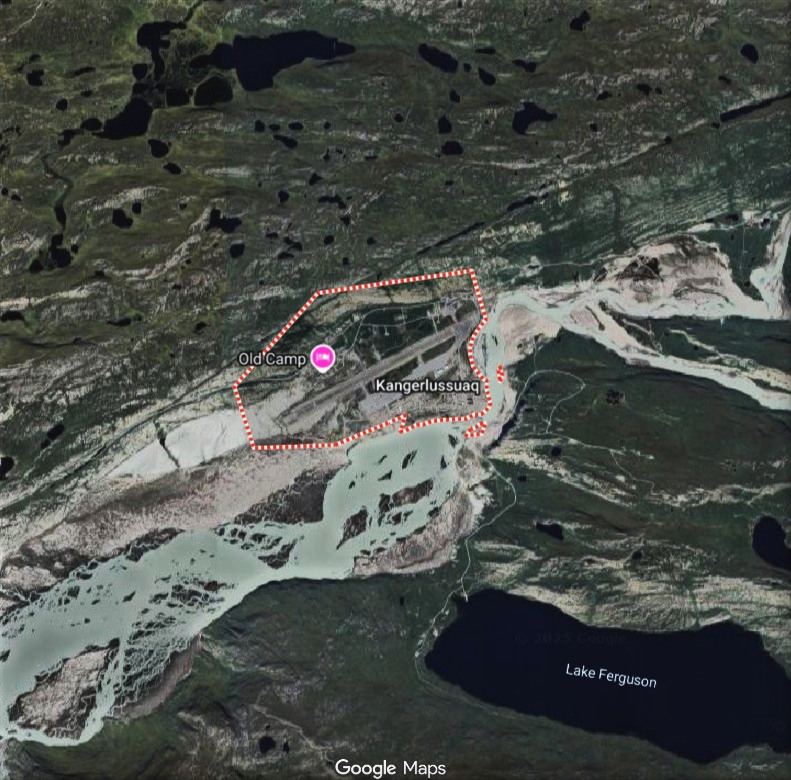
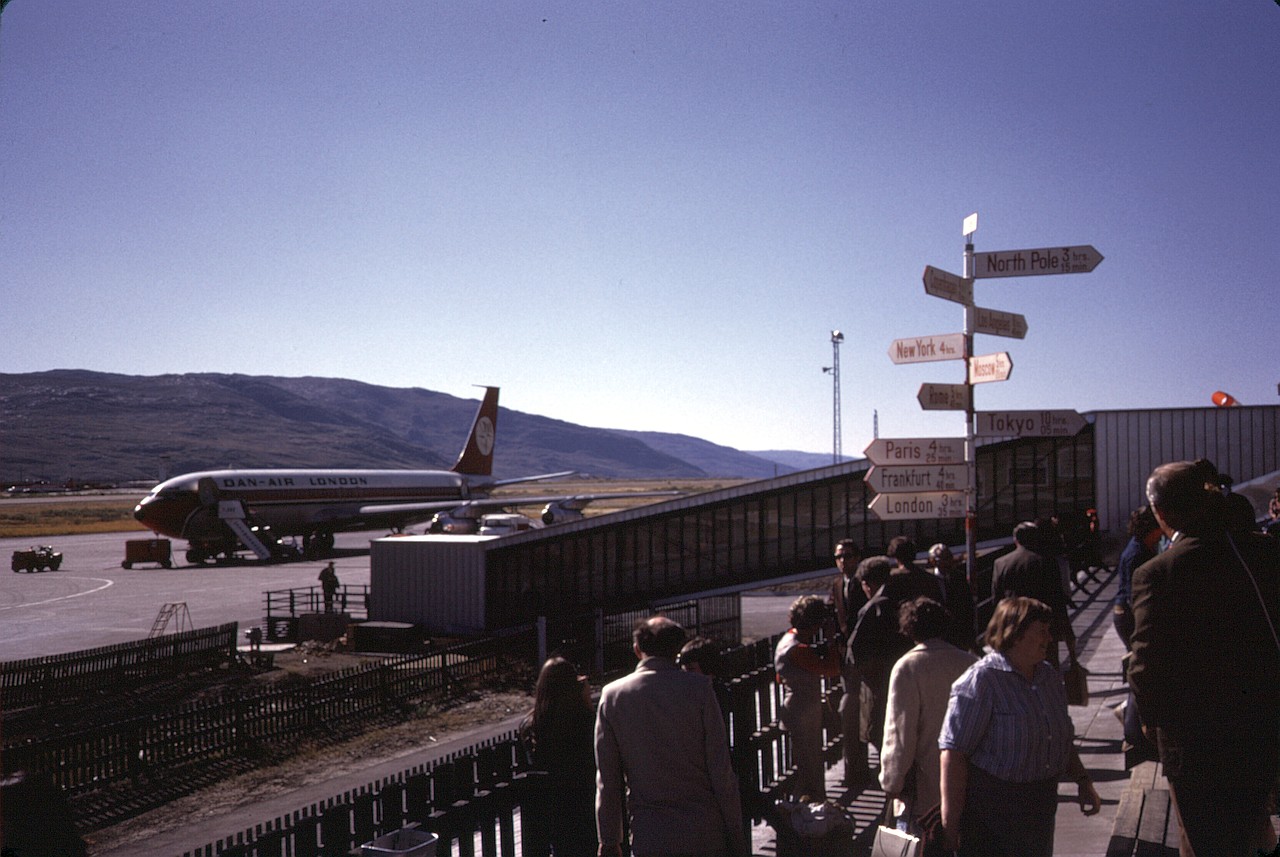
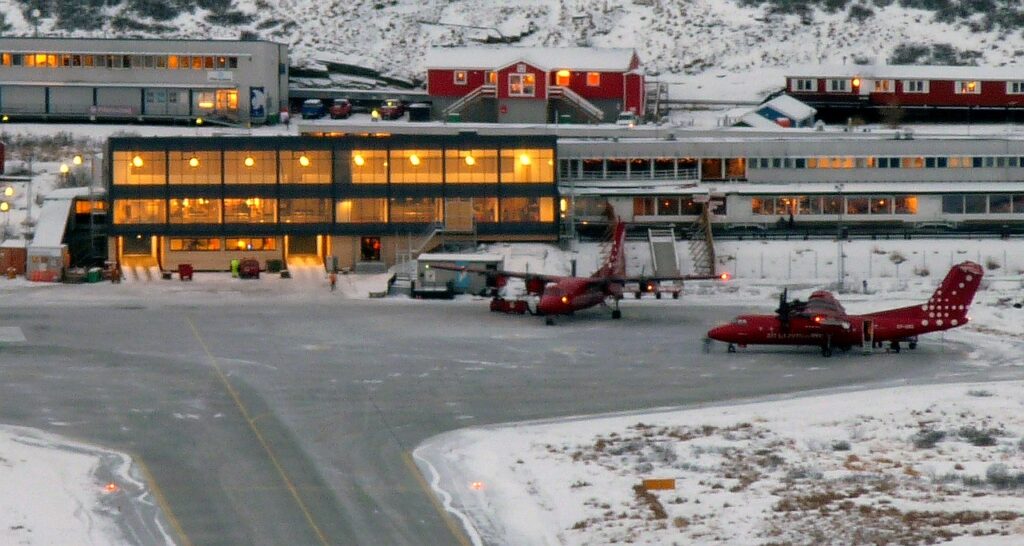
Kangerlussuaq Airport (Greenlandic: Mittarfik Kangerlussuaq, Danish: Kangerlussuaq Lufthavn, formerly Søndre Strømfjord Lufthavn in Danish) (IATA: SFJ, ICAO: BGSF) is an airport in Kangerlussuaq, a settlement in the Qeqqata municipality in central-western Greenland. It was originally built as Sondrestrom Air Base (Bluie West-8) in 1941 and began to serve a civilian role in the 1950s which continued after the closure of the base in 1992. Alongside Nuuk Airport and Narsarsuaq Airport, it is one of only three civilian airports in Greenland large enough to handle large aircraft. It is still used for NATO and Danish Defence purposes.
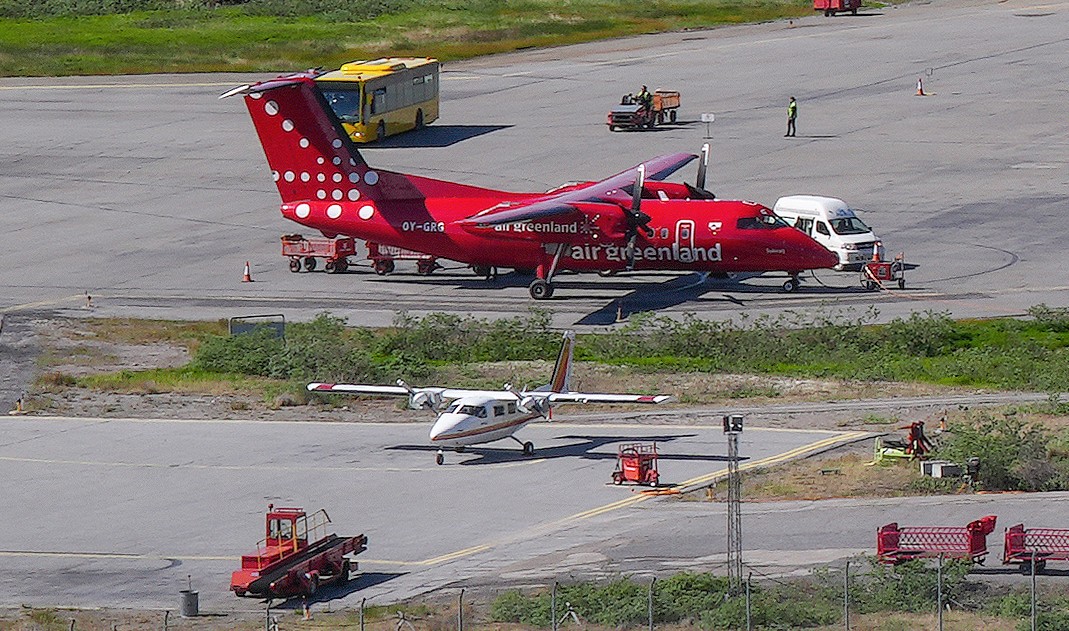
Kangerlussuaq Airport in summer 2024 By Quintin Soloviev – Own work, CC BY 4.0, https://commons.wikimedia.org/w/index.php?curid=156875965The airport in 1974 By Miranda.Kopetzky – Own work, CC BY-SA 4.0, https://commons.wikimedia.org/w/index.php?curid=55039614Kangerlussuaq Airport in 2024 By Quintin Soloviev – Own work, CC0, https://commons.wikimedia.org/w/index.php?curid=165048626
Kangerlussuaq Airport was previously the international hub for Air Greenland. Most traffic transitioned to Nuuk Airport in November 2024, coinciding with the opening of its new terminal and lengthened runway.
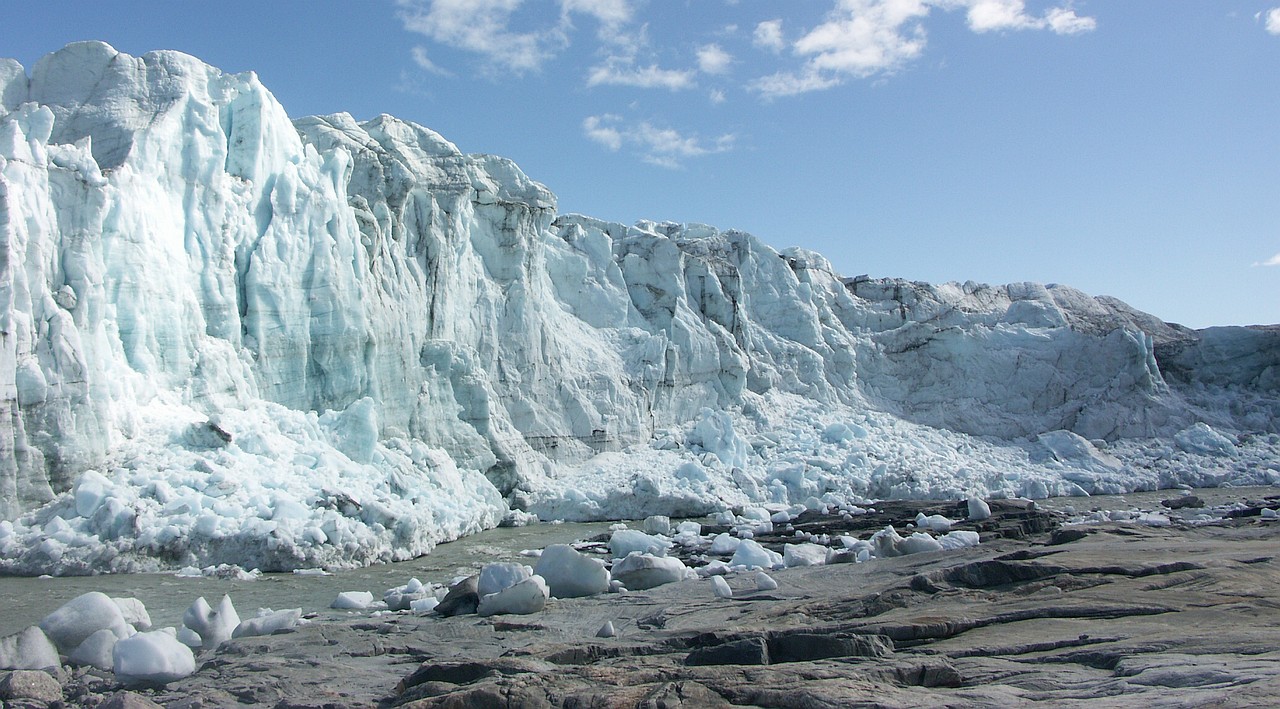
Russell Glacier (Danish: Russells Gletscher) is a glacier in the Qeqqata municipality in central-western Greenland. It flows from the Greenland ice sheet (Greenlandic: Sermersuaq) in the western direction. The front of the glacier is located 25 km (16 mi) east of Kangerlussuaq. It is active, advancing 25 m (82 ft) every year, and, due to easy access from Kangerlussuaq, it remains a popular place for tourists to visit.
Russell Glacier, flowing down from Sermersuaq. Visible is the fresh meltwater outflow and remains of berg bombardment. By Algkalv (talk) – Own work, Public Domain, https://commons.wikimedia.org/w/index.php?curid=5605853
Methane cycling below the glacier A 2014 study, based on subglacial drainage samples (dominated by Pseudomonadota), found evidence of methane cycling below the ice sheet of the Russell Glacier. During the study, the most widespread surface melt on record in the past 120 years in Greenland was observed on 12 July 2012; unfrozen water was present on almost the entire ice sheet surface (98.6%). The findings indicate that methanotrophs could serve as a biological methane sink in the subglacial ecosystem and, at least during the sample time, the region was a source of atmospheric methane. Scaled dissolved methane (CH4) flux during the four months of the summer melt season was estimated at 990 Mg CH4. Because the Russell-Leverett Glacier is representative of similar Greenland outlet glaciers, the researchers concluded that the Greenland Ice Sheet may represent a significant global methane source.
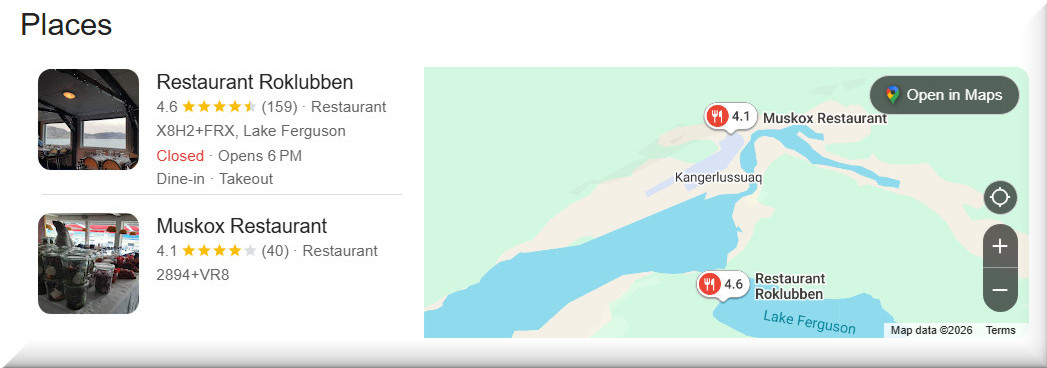
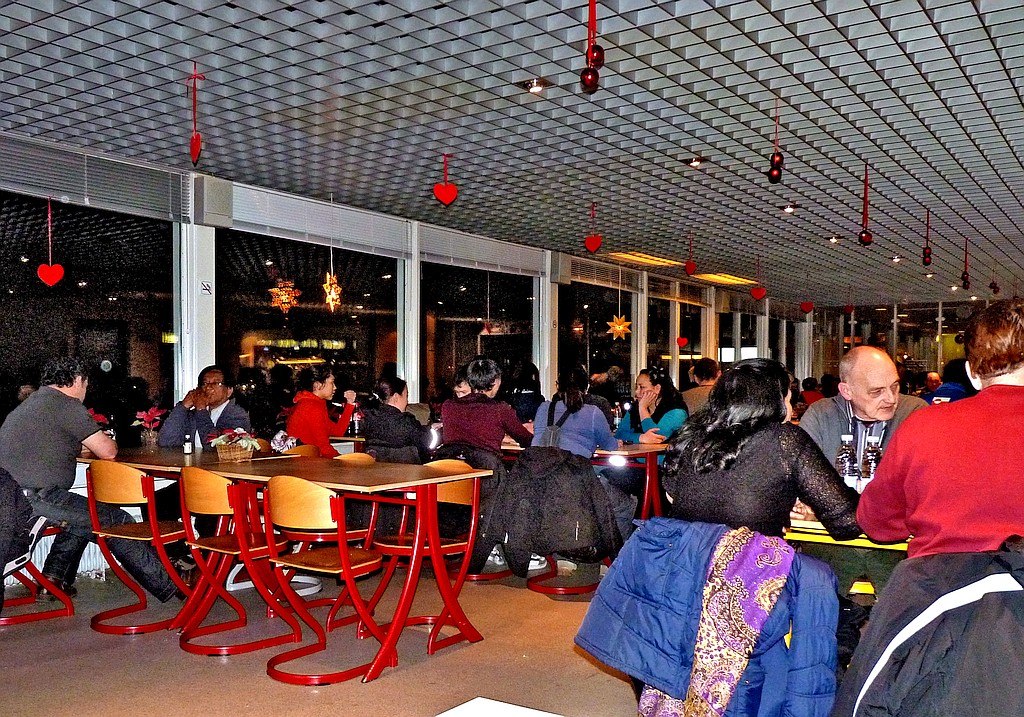
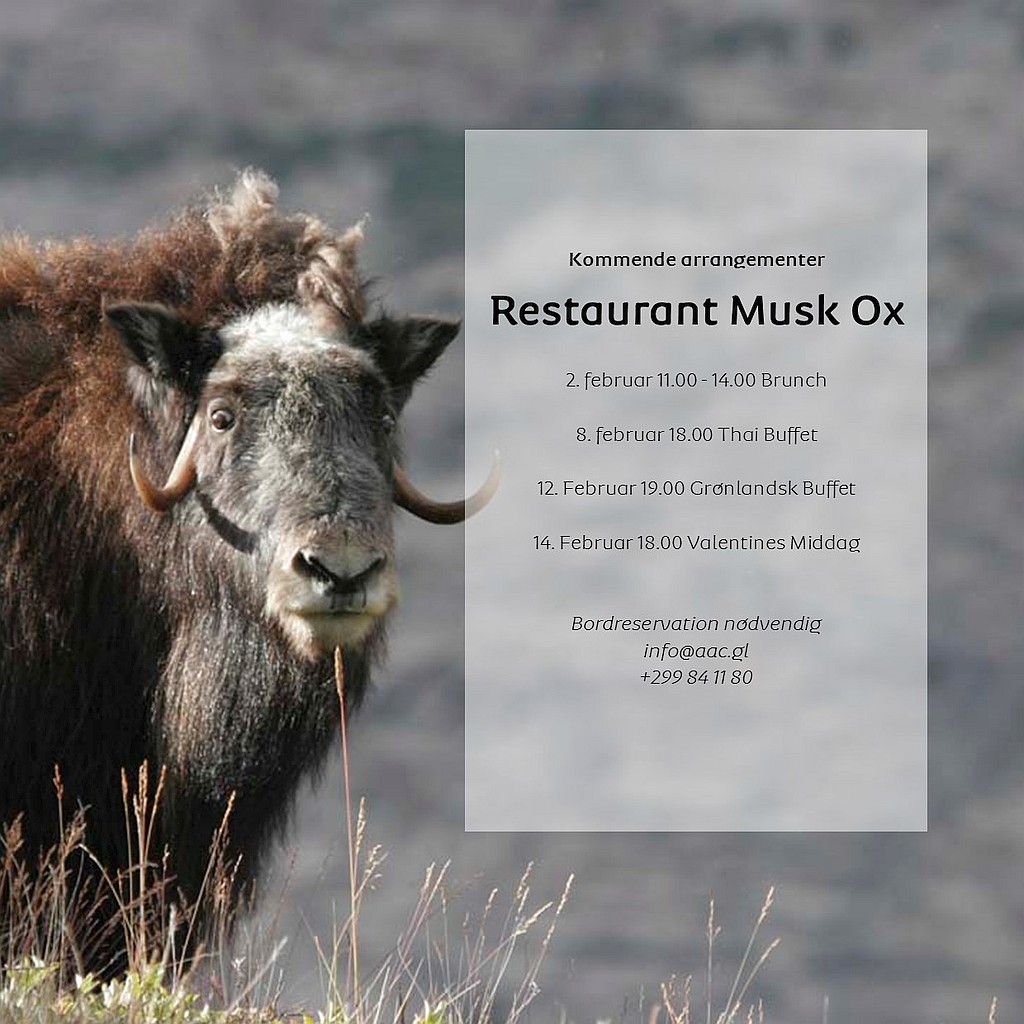
It looks like Café SJF‘s main competition is Restaurant MuskOx, located in the Hotel Kangerlussuaq.
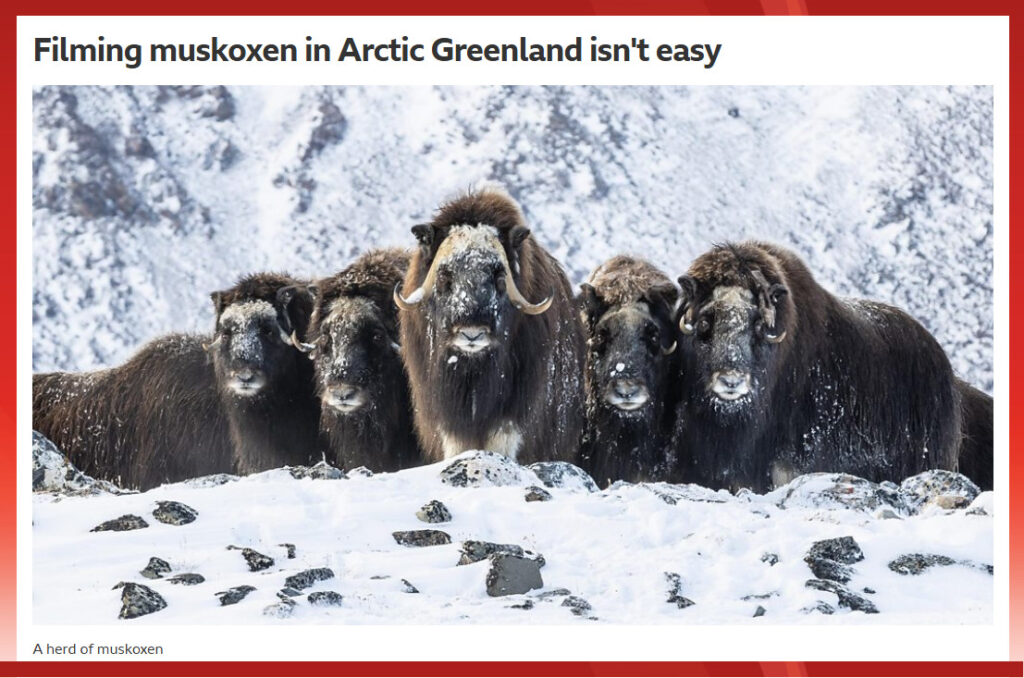
We asked Elder G if there really were muskox in Greenland.
Elder G: Oh yes. Very real. Very shaggy. Very unimpressed by humans. The musk ox is not a marketing mascot or a pub exaggeration. It is a walking relic of the Ice Age, and Kangerlussuaq is one of the best places on Earth to meet one.
[ed. note: musk ox – perhaps a topic for a future blott?]
They buried the lead…. and they left us hanging…. “And if you want to know if a muskox really smells musky then Chris Packham has the answer – he gave one a really good sniff test on our behalf.”From the BBC
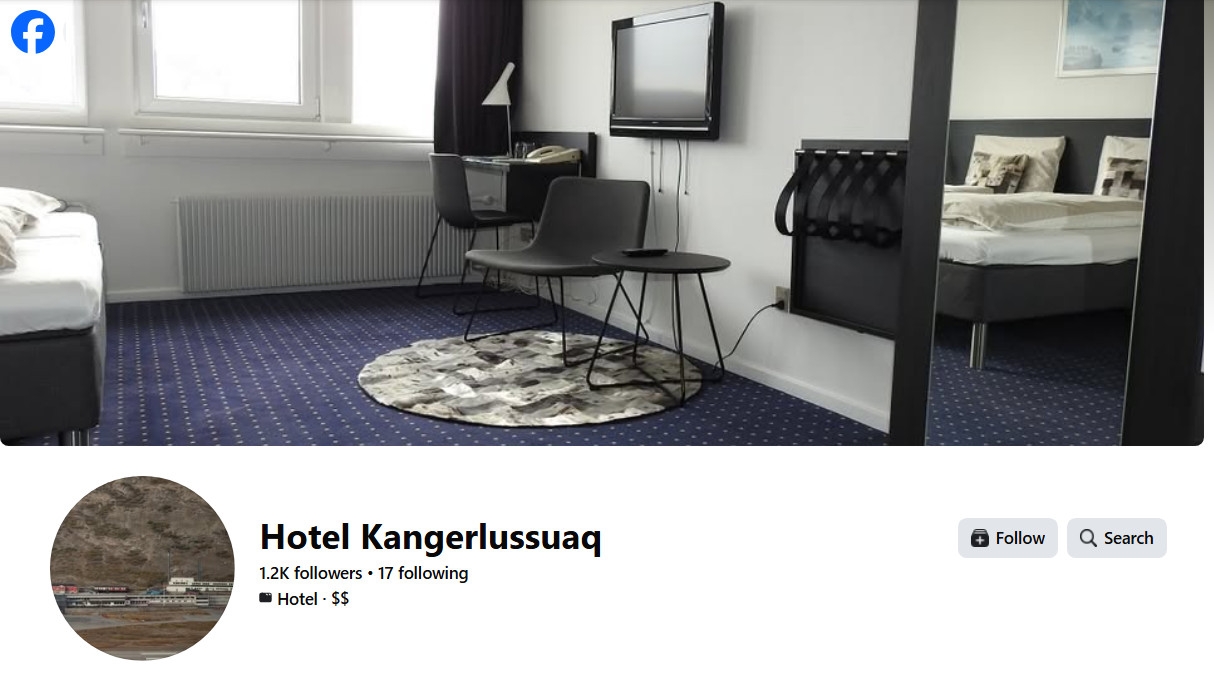
Hotel Kangerlussuaq is a hotel in Kangerlussuaq, Greenland.
Location Located at Kangerlussuaq Airport, this three-star hotel has 70 rooms and is a notable location for conferences.
The hotel is located on the site of a reclaimed United States Air Force base, Sondrestrom Air Base. It is the former base’s landing strip which serves as the town’s airport and the barracks have been converted to accommodation.
By Grete Howard – Originally uploaded to Flickr, CC BY 3.0
By Grete Howard – Originally uploaded to Flickr, CC BY 3.0
We were a bit confused by the language, but Elder G cleared it up. Hat’s off to Greenland for respecting the local languages.
Elder G: Ah, a fine Arctic riddle served before noon. That line is wearing two linguistic parkas at once.
The languages
“Ukiup naanerani brunch” is Greenlandic, specifically Kalaallisut.
“Sidste brunch i år.” is Danish.
What it means
Ukiup naanerani = at the end of the year
brunch = brunch (even the Arctic bends the knee to brunch)
Sidste brunch i år = Last brunch of the year
So the full message is essentially:
“End-of-the-year brunch. Last brunch of the year.”
This bilingual pairing is very Greenland. Greenlandic for cultural grounding, Danish for administrative clarity, and brunch for morale. A neat little linguistic ice floe drifting between traditions.
Makes me wonder… is this Pulsating On The Plate?
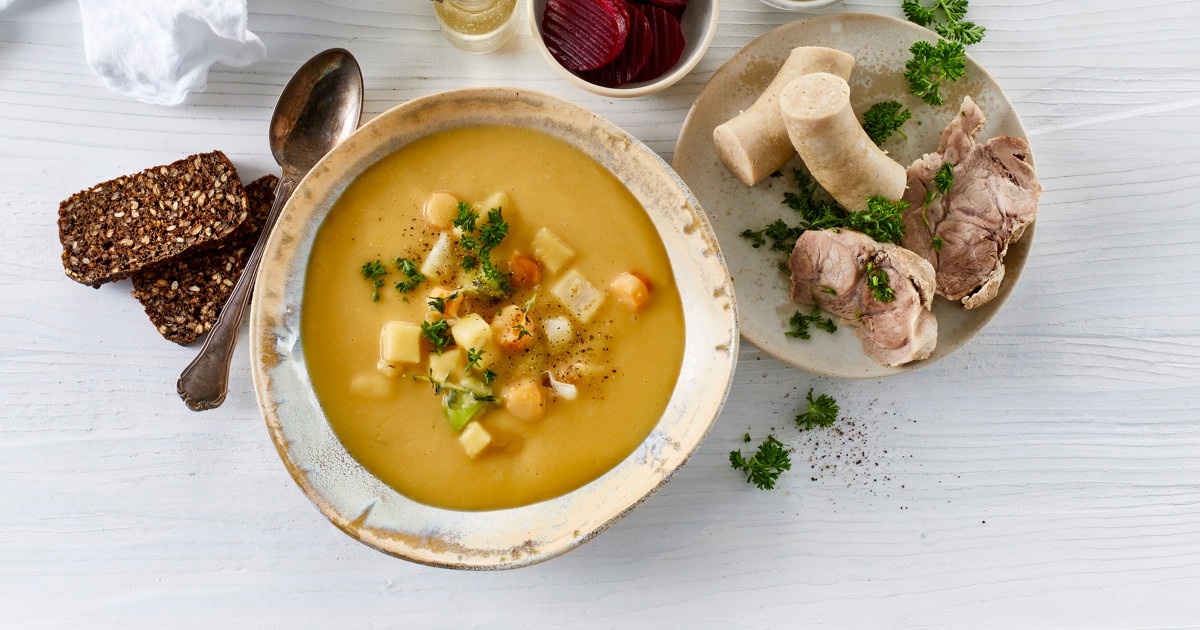
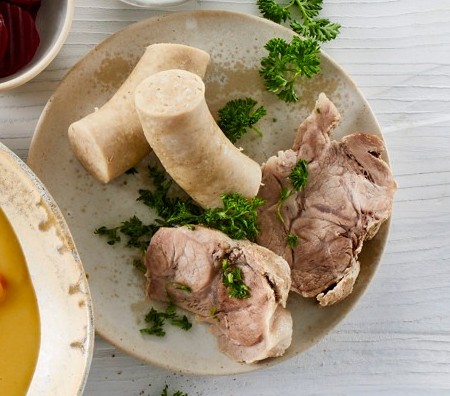
Gammeldags gule ærter i aften på Hotel Kangerlussuaq!
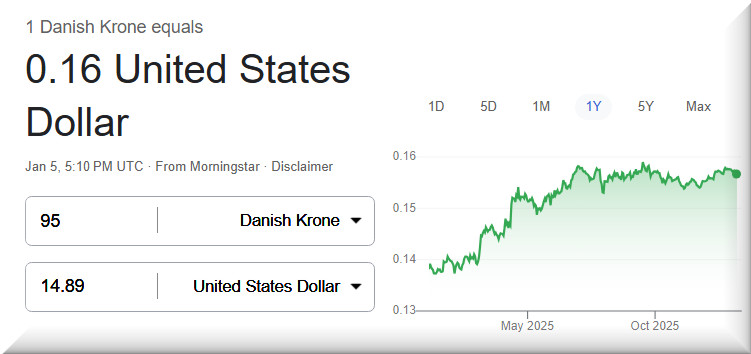
Dagens ret er noget helt særligt – gammeldags gule ærter, som vor mor lavede dem (eller måske endnu bedre, men sig det ikke til hende!). Perfekt til at varme sjælen på en kølig dag. I aften mellem kl. 17.00 og 19.30 serverer vi denne klassiker i cafeteriet på Hotel Kangerlussuaq for kun 95 kr.
Tag familien, naboen eller bare din sult med – vi har gryden klar og glæder os til at se dig! Velbekomme – og husk, det er ikke bare mad, det er nostalgi i en skål!
Danish -> English Old-fashioned yellow peas tonight at Hotel Kangerlussuaq!
Today’s dish is something very special – old-fashioned yellow peas, like our mother made them (or maybe even better, but don’t tell her!). Perfect to warm the soul on a chilly day. Tonight between 5:00 PM and 7:30 PM we will serve this classic in the cafeteria at Hotel Kangerlussuaq for only 95 DKK.
Bring your family, neighbors or just your hunger – we have the pot ready and look forward to seeing you! Enjoy – and remember, it’s not just food, it’s nostalgia in a bowl!
Anyhow…. Back to Café SJF
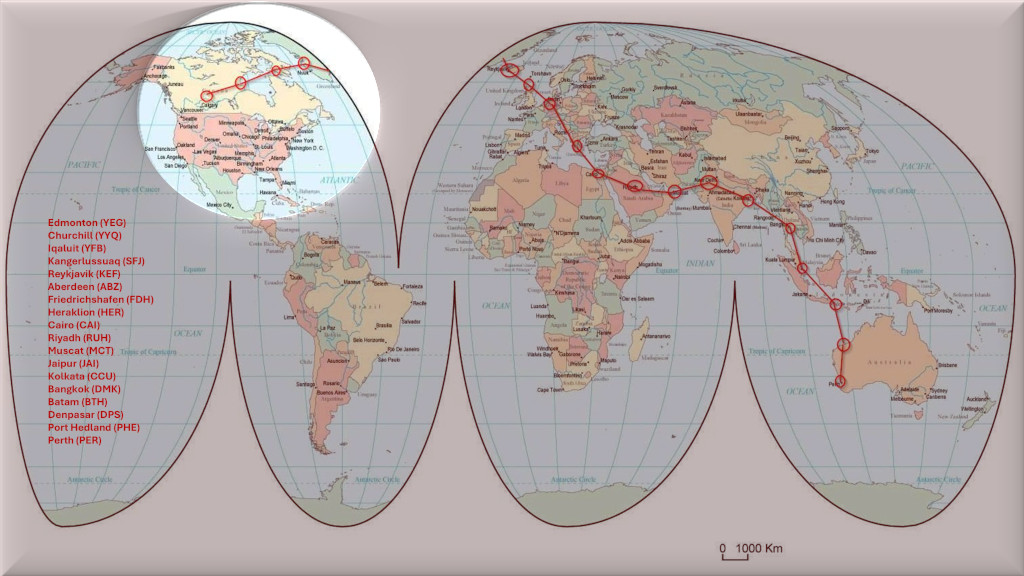
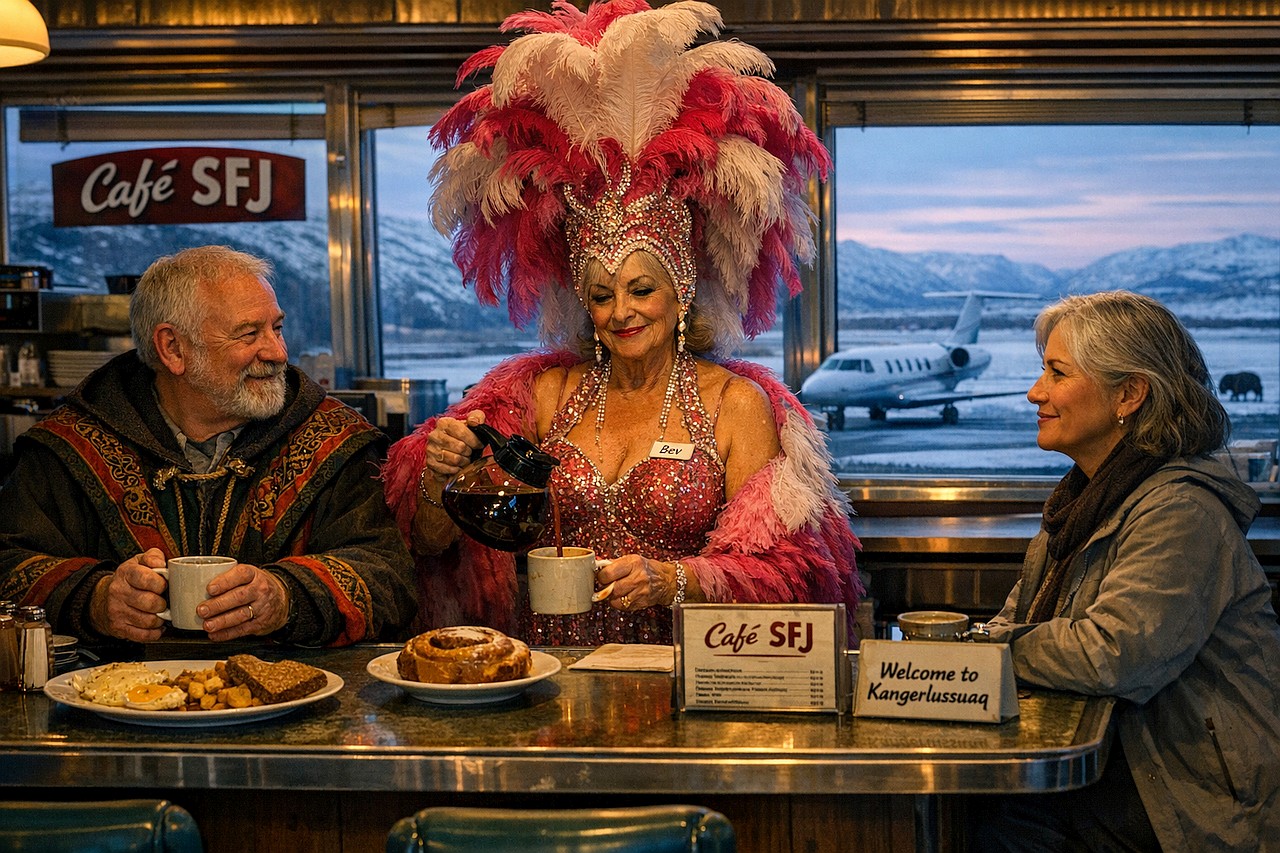
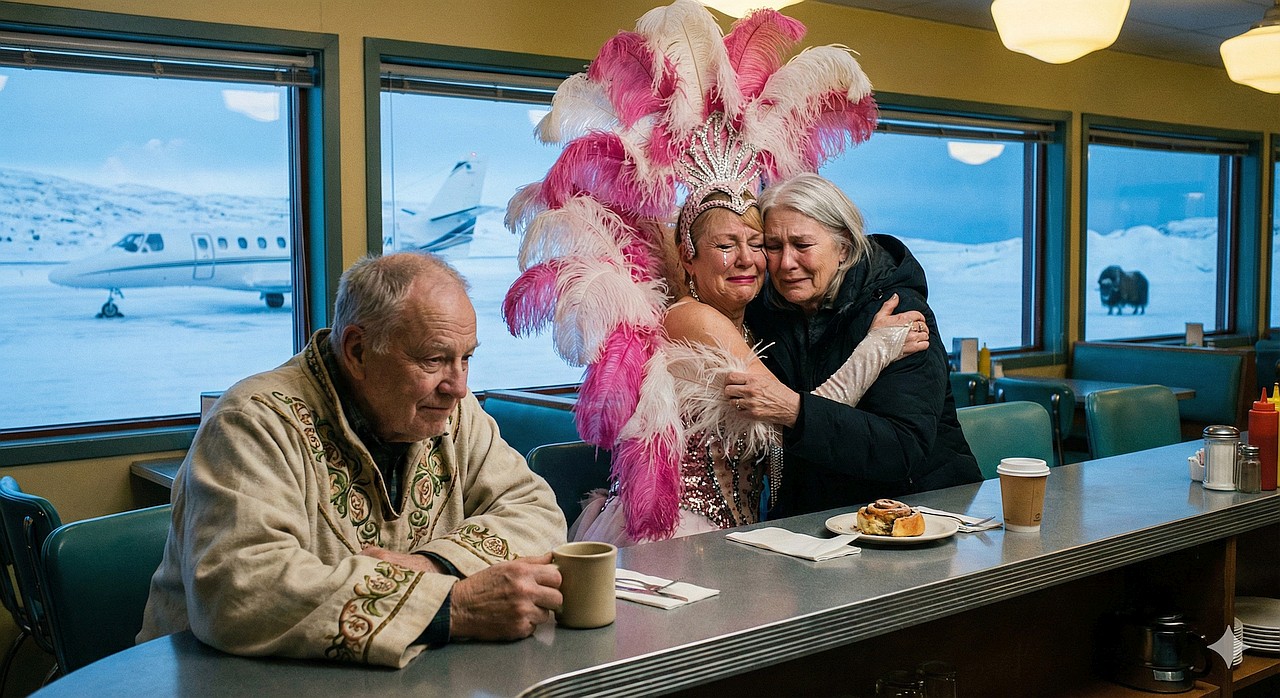
Elder G and I stopped in to the Café SJF to get a cup of coffee while the Citation was being refueled.
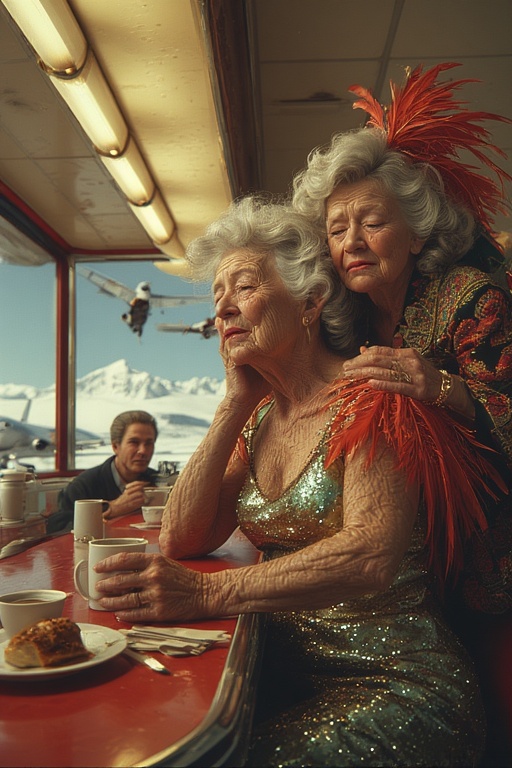
You’re not going to believe this…. Our waitress was Bev! She’s a retired Las Vegas showgirl.
She has a mysterious past, and didn’t want to tell us how she ended up in Kangerlussuaq, but after a bit we learned that involved a loaded 38 and cheating (and apparently very flatulent) husband.
We told Bev about the other Bevs on our trip, and it turns out, as it was meant to turn out, that her ex- (deceased?) husband was Edmonton Bev’s second cousin. Talk about cosmic alignment.
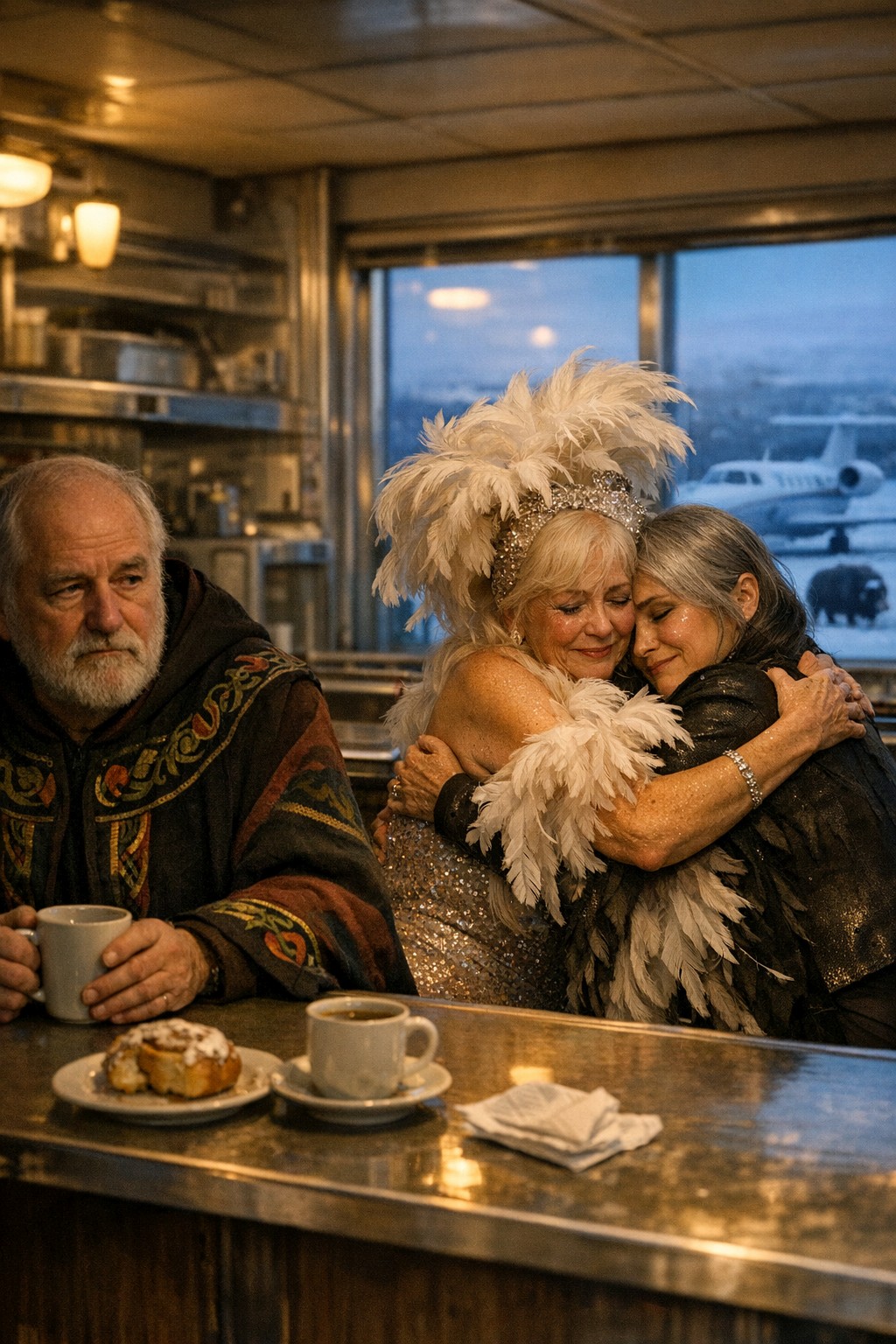
Elder G talked with Bev, and it seems there was a situation involving a loaded 38 and a cheating no-good husband.
Elder G and Bev connected in a deeply emotional way, a sisterhood of understanding.