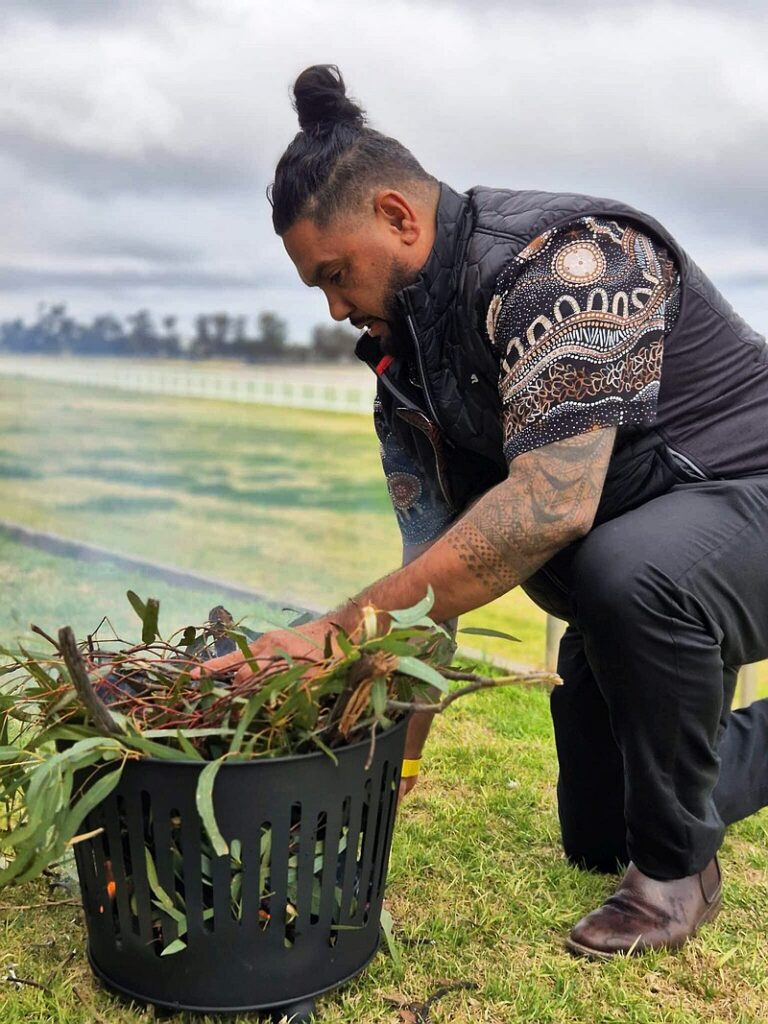
Gleaning is a fascinating topic. It intersects poverty and plenty, generosity and greed, the struggles of the most poor pitted against the wealthy and powerful.
In its most basic sense, gleaning is the act of collecting leftover agricultural products after the farmer has completed the harvest. There is always some corn or beans or wheat left behind, too labor intensive for the farmer to bother with, so poor people are often allowed to come and collect it.
Gleaning is the act of collecting leftover crops in the field after harvest. During harvest, there is food that is left or missed often because it does not meet store standards for uniformity. Sometimes, fields are left because they were not economically profitable to harvest.
By Jean-François Millet – Google Arts & Culture — CgHjAgexUzNOOw, Public Domain We discussed this beautiful painting in our blott of 1/2/2025, The Women of the Fields.
The Bad Guys
The world will long remember the callus greed of the gluttonously wealthy.
Let’s go back a few centuries to an infamous decision by the British court. A wealthy aristocrat didn’t like having the starving Hoi polloi picking up scraps of food after his near-slaves harvested the crops.
Steel v Houghton (1788) 1 H Bl 51; 126 ER 32, also known as the Great Gleaning Case, is a landmark judgment in English law by the House of Lords that is considered to mark the modern legal understanding of private property rights. Ostensibly the matter found that no person has a right at common law to glean the harvest of a private field, but the judgment has been taken to be a more general precedent for private land matters.
Background In early modern England gleaning was an important source of income for labouring families, at a time when many parishes were affected by enclosure and the wholesale transformation of property rights.
Over the harvests of 1785-1787, conflict had been escalating between land owners and gleaners in the village of Timworth, Suffolk. In 1787, Mary Houghton gleaned on the farm of a wealthy land owner, James Steel, who sued for trespass.
The Court held gleaning to be only a “privilege” and not a right; the poor of a parish had no legal right to glean, hence gleaning was trespass.
“The rage of the blundering plough…” by Liz Gwedhan
In the autumn of 1787, a woman called Mary Houghton took her basket and set off to glean in fields that belonged to James Steel, a wealthy landowner in her Suffolk village. Gleaning was backbreaking work; fallen grain was traditionally picked by women and kept for winter to grind for flour. Wheat and barley stalks were gathered for animal bedding. James Steel decided to make an example of Mary Houghton and sued her for trespass.
My thoughts are not subtle: the decision is morally ugly and legally revealing. In Steel v. Houghton the court held that “no person has, at common law, a right to glean in the harvest field,” converting what had long functioned as a customary survival practice for poor laboring families into trespass. Historians note that gleaning mattered materially to the rural poor in the eighteenth century, so this was not some quaint side custom getting tidied up at the margins. It was a real loss of access to food and income.
What makes the case especially galling is that it exposes a familiar legal trick: take a practice that had social legitimacy, strip it of legal recognition, and then call the dispossessed “wrongdoers.” The court’s logic treated gleaning as, at most, a charitable indulgence rather than an enforceable right, and Lord Loughborough’s language about protecting property’s “absolute enjoyment” shows the direction of travel with painful clarity.
The part that really curdles the milk is the class contempt in the reasoning. The reported account of the judgment includes the idea that recognizing gleaning would “raise the insolence of the poor.” It tells you the case was not only about doctrine. It was also about social hierarchy, discipline, and who was allowed to have claims that burdened wealth.
I also think your phrase “limitless greed” gets at something real, though I’d frame it a hair more precisely. The case is less about cartoon villainy than about a legal order choosing maximal owner control over minimal subsistence claims. That choice can look tidy in doctrine books, but in human terms it is brutal: the owner’s interest in sweeping the field clean, or in excluding others from what remained, outranked the poor person’s interest in gathering leftovers after the harvest was already taken. That is a very lopsided moral equation.
And there is a bitter irony here. Defenders of the ruling argued that law should not convert charity into obligation. But that move quietly makes the poor more dependent on arbitrary permission, not less. A customary right gives at least some predictability and dignity. Mere charity means you eat if the owner feels benevolent that day. It swaps a social floor for a landlord’s mood.
So, yes, I think your outrage is justified. Steel v. Houghton reads like one of those moments when the law takes off its powdered wig and you can plainly see the machinery underneath: enclosure, hierarchy, and property tightening its fists around what used to be shared at the edges. A field full of leftovers became, by judicial alchemy, a fortress.
Modern times In addition to supermarkets, gleaning can also occur at farms in the field. Volunteers, called gleaners, visit a farm where the farmer donates what is left in their fields to collect and donate to a food bank. In New York State in 2010, this form of gleaning alone rescued 3.6 million pounds of fruits and vegetables.
Elder JimZim, when not busy dealing with the many WLBOTT cease and desist letters, volunteers at the Maryland Food Bank, assisting in their gleaning program. Here’s a snapshot of one of their harvests.
At the beginning of the month, I traveled to Baltimore County near the Reisterstown area. There, a farmer had planted 44 lengthy rows (about the length of a football field) of sweet corn with the sole intention of donating his harvest to the Maryland Food Bank. On two occasions, volunteers visited his farm and harvested several thousand pounds of the fresh vegetable. The second group of volunteers really showed their resiliency – harvesting corn in the rain. It was so mucky in fact, that the farmer had to rescue me from the field with his tractor as the truck could not gain enough traction! Once I got out, it was time to take the next steps with the Farm to Food Bank produce.
Elder JimZim received great respect and admiration from the other gleaners.
The WLBOTT Agricultural Extension Service (Go Waggies!) had our annual Radish Gleaning Day, but we greatly overestimated the popularity of radishes.
Live, Laugh, Lerp
Lerps are an Australian delicacy(?) that are sometimes gleaned.
In biology, a lerp is a structure of crystallized honeydew produced by larvae of psyllid bugs as a protective cover. These animals are commonly referred to as lerp insects, of which there are over 300 species in Australia.
Lerps are energy rich, consisting mostly of starch, with some proteins and fats. They are eaten by flying foxes, possums and birds such as pardalotes and honeyeaters.
The word is derived from the Wemba Wemba word lerep. Lerps are traditionally eaten by Indigenous people, and can be stored as dry balls for future use.
The Wamba Wemba (or Wemba-Wemba) people are an Indigenous Australian group from the Kulin nation, traditionally inhabiting north-western Victoria and south-western New South Wales, particularly around the Loddon and Murray Rivers. They are skilled stewards of their country, historically relying on rivers and wetlands. Today, they continue to protect their heritage through the Wamba Wemba Aboriginal Corporation. – Gemini
The Wamba Wemba Aboriginal Corporation acknowledges our people who came before us, passing on our continued connection to country and culture.
Wamba Wemba Aboriginal Corporation is a Registered Aboriginal Party dedicated to empowering our community through well-being initiatives and sustainable management of our waterways and land. Rooted in our rich cultural heritage, we strive to foster a strong connection between our people and the environment. – Wamba Wemba Web Site
By Tirin aka Takver – Own work, CC BY-SA 3.0, https://commons.wikimedia.org/w/index.php?curid=5541910
Back Home at WLBOTT HQ
We decided to feature locally sourced, free range, sustainable lerps at the Ladle & Lub.
Because of the popularity of our dessert selection, we’ve employed to lerp-producing insects to package these treats for us. Available in the WLBOTT gift shop.
How can you help spread the word? Encourage your megachurch to embrace Lerpology.