[ed. note: thanks again to Elder JA for his support of this series – a true world traveler, gentleman, and raconteur[1].]
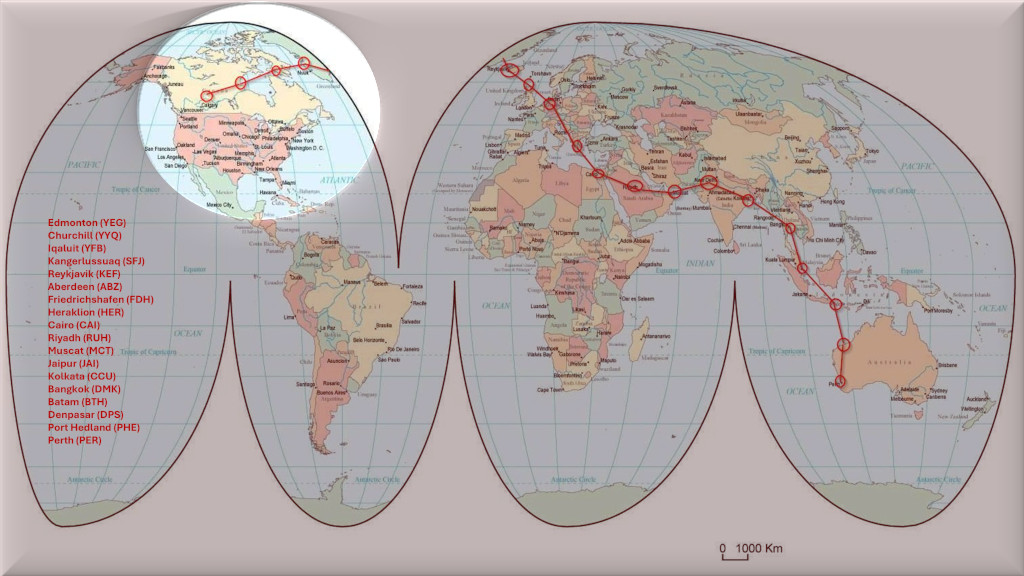
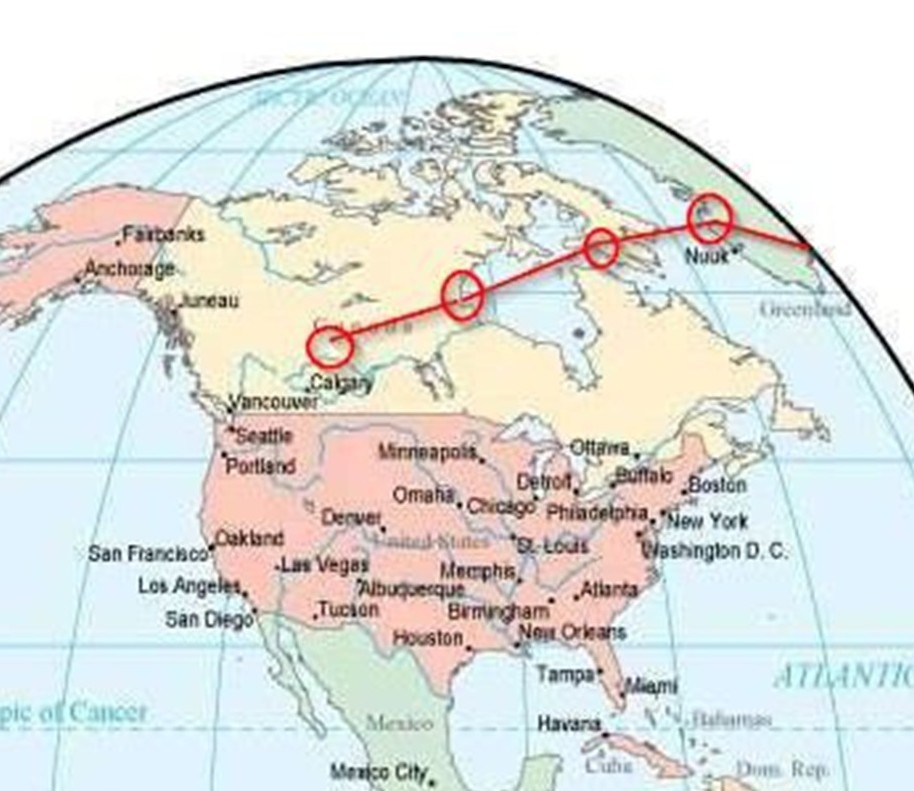
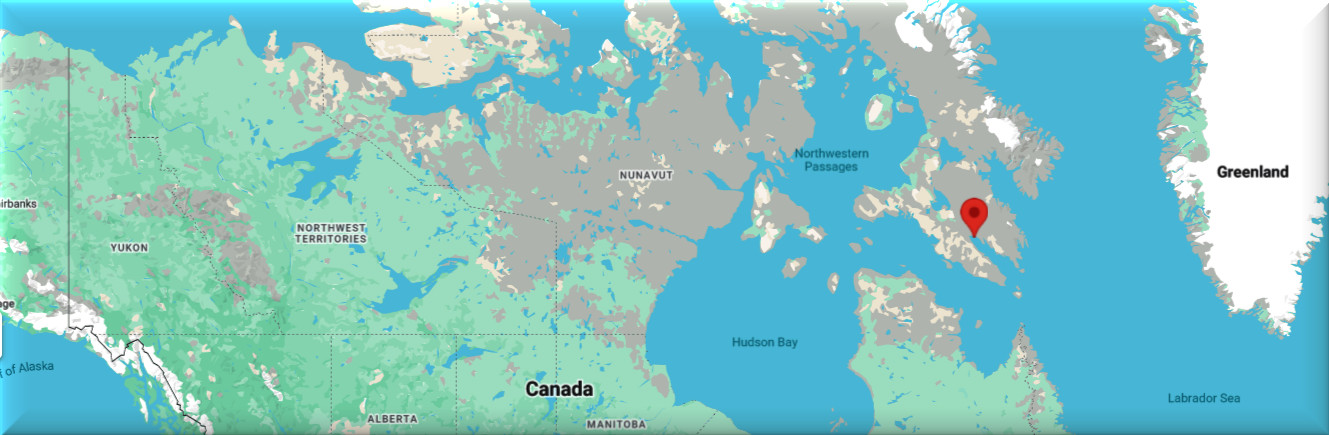
Today Elder G and I continue our 16,000 mile Cessna Citation journey, traveling to Iqaluit, the next to last Canadian stop before crossing the Atlantic.
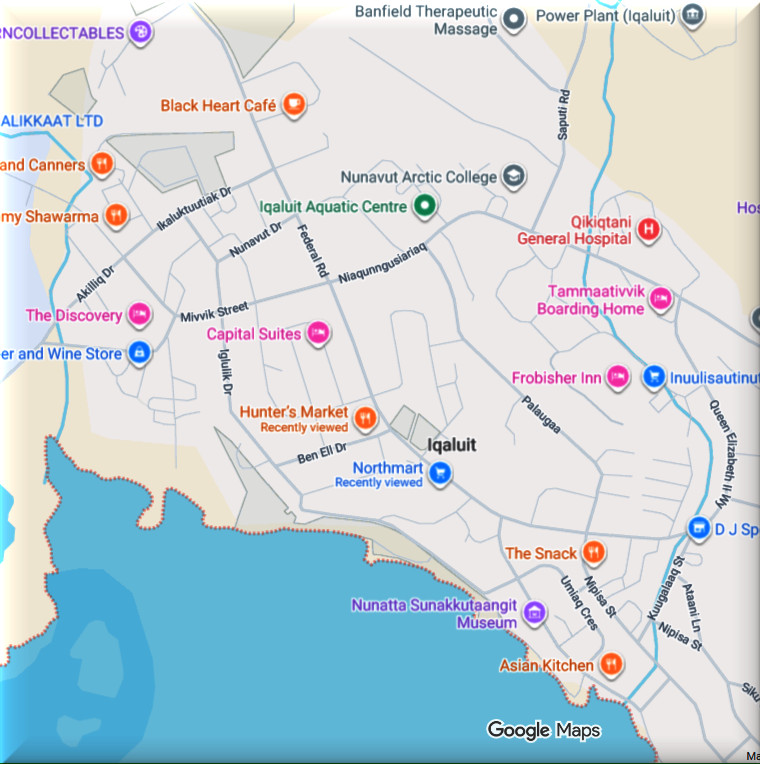
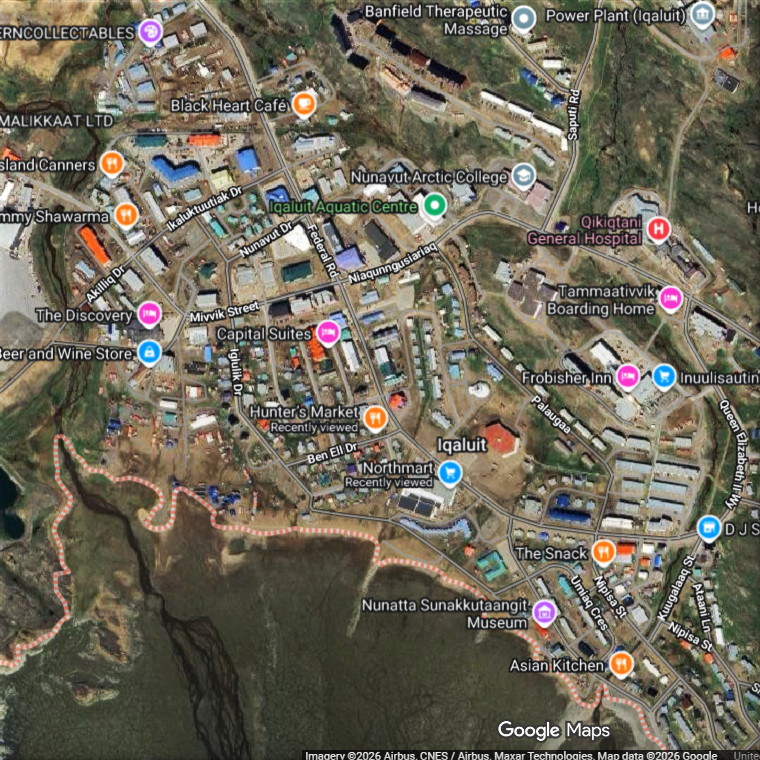
Iqaluit is the capital of the Canadian territory of Nunavut. It is the territory’s largest community and its only city, and the northernmost city in Canada. It was known as Frobisher Bay from 1942 to 1987, after the large bay on the coast on which the city is situated. Its traditional Inuktitut name was restored in 1987.
As of the 2021 Canadian census, the population was 7,429 (population centre: 6,991), a decrease of 4.0 per cent from the 2016 census. Iqaluit has the lowest population of any capital city in Canada. Inhabitants of Iqaluit are called Iqalummiut (singular: Iqalummiuq).
History Iqaluit has been a traditional fishing location used by Inuit and their predecessors, the Paleo-Eskimo (Dorset culture) and Thule, for thousands of years. The name, Iqaluit, comes from Inuktitut Iqaluit (ᐃᖃᓗᐃᑦ), which means place of many fish.
Official seal of Iqaluit
By The logo may be obtained from information., Fair use, https://en.wikipedia.org/w/index.php?curid=44708375
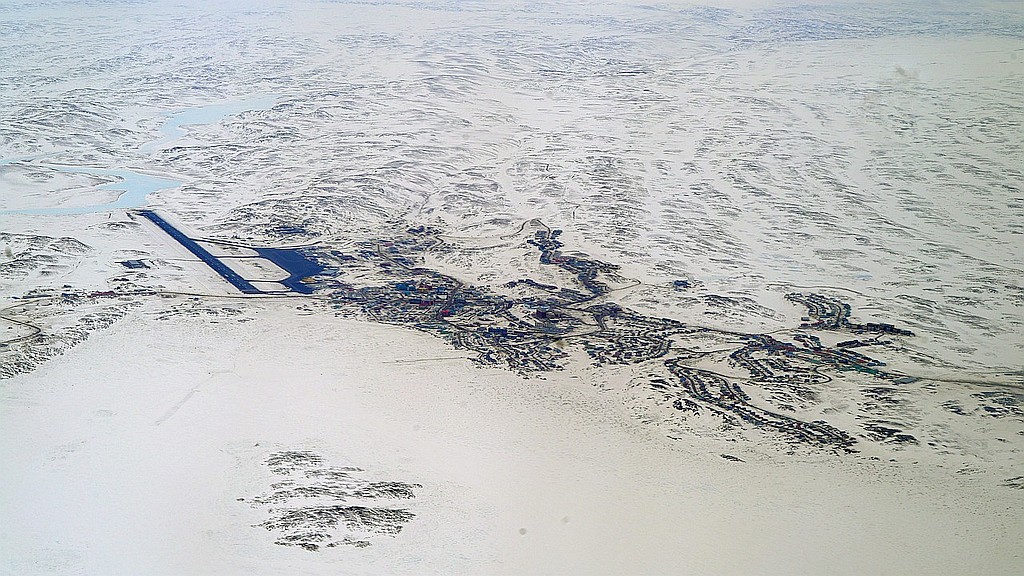
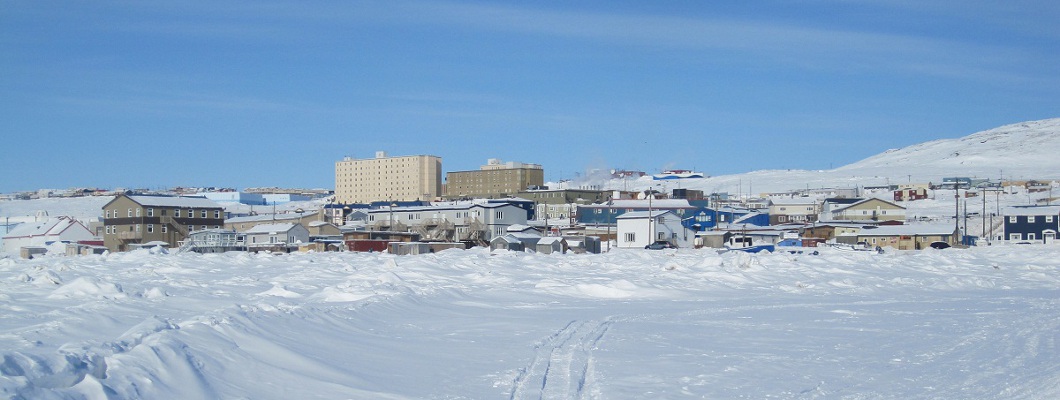
Iqaluit is situated on the Everett Mountains By Quintin Soloviev – Self-photographed, CC BY-SA 4.0, https://commons.wikimedia.org/w/index.php?curid=68801706Skyline of Downtown, the central business district of Iqaluit. By Aaron Einstein (Aaron Lloyd) – Own work, GFDL, https://commons.wikimedia.org/w/index.php?curid=16296439
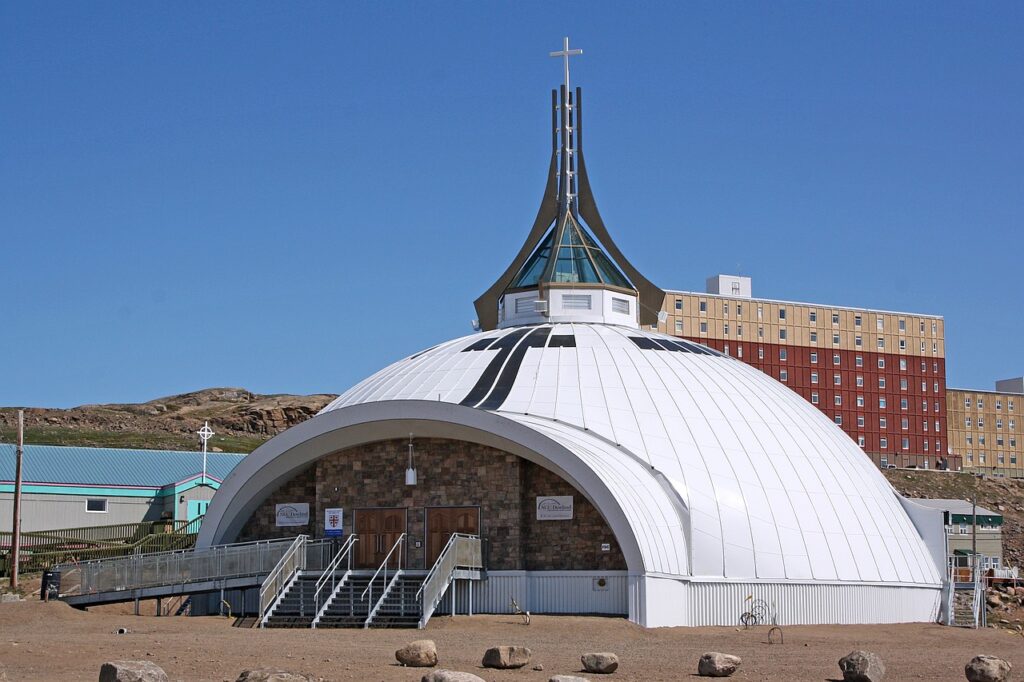
Shaped like an igloo, St. Jude’s Cathedral is the seat of the Anglican Diocese of The Arctic. By Cwk36 – Own work, CC BY-SA 3.0, https://commons.wikimedia.org/w/index.php?curid=20760542
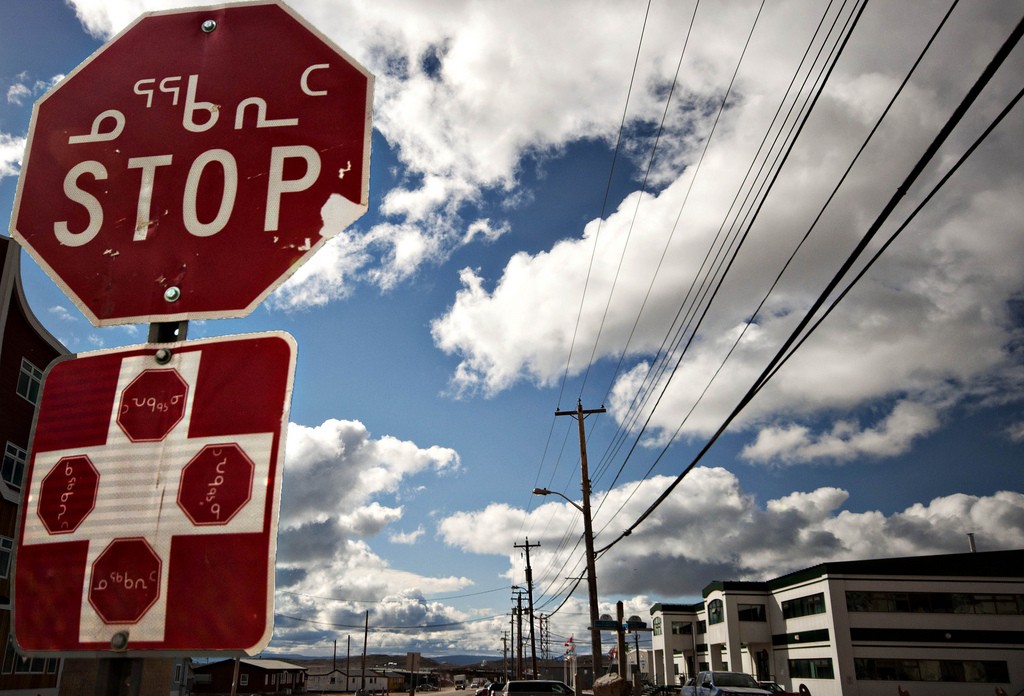
A stop sign in Iqaluit. The sign features the two most-spoken languages in the city, English and Inuktitut. By Angela – IqaluitUploaded by Skeezix1000, CC BY 2.0
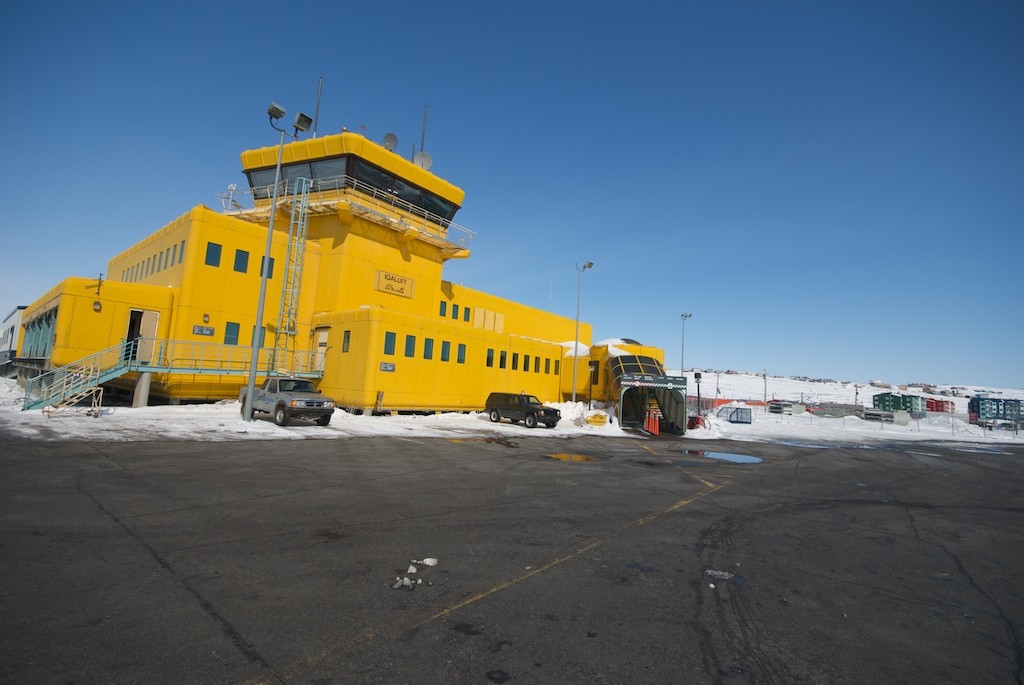
Iqaluit Airport hosts a number of scheduled flights to Ottawa, Montreal, Rankin Inlet, Kuujjuaq, and smaller communities throughout Nunavut. By Andreas Duess from Toronto, Canada – Iqaluit airport, CC BY 2.0, https://commons.wikimedia.org/w/index.php?curid=53749205Wikipedia
Iqaluit Airport (Inuktitut: ᐃᖃᓗᖕᓂ ᒥᑦᑕᕐᕕᒃ) (IATA: YFB, ICAO: CYFB) is an airport in Iqaluit, Nunavut, Canada. It hosts scheduled passenger service from Ottawa, Rankin Inlet, and Kuujjuaq on carriers such as Canadian North, and from smaller communities throughout eastern Nunavut. It is also used as a forward operating base by the Royal Canadian Air Force (RCAF). In 2011, the terminal handled more than 120,000 passengers.
The airport is classified as an airport of entry by Nav Canada and is staffed by the Canada Border Services Agency (CBSA). CBSA officers at this airport can handle general aviation aircraft only, with no more than 15 passengers.
Over the years several international flights have been diverted to Iqaluit due to technical reasons, air rage or on-board medical emergencies with no deaths being reported. On 31 May 1996, Virgin Atlantic flight 7 from London to Los Angeles made an emergency landing at Iqaluit after a passenger had a heart attack. The landing was executed safely – the first Boeing 747 ever to attempt to land at Iqaluit – but one of the 747’s engines hit a fuel pump on the ramp as it was taxiing, causing serious damage to the aircraft and a potentially dangerous fuel spill. The 397 stranded passengers, including singer Gary Barlow, were flown out after Virgin Atlantic chartered two jets. The passengers, after spending 16 hours in a local curling rink, were taken to New York to catch connecting flights to Los Angeles. Prince Michael of Kent, who had also been on the flight, was given a Royal Canadian Mounted Police escort and departed on an earlier scheduled flight. The original aircraft had its engines repaired and left four days after the accident. The heart-attack victim survived.
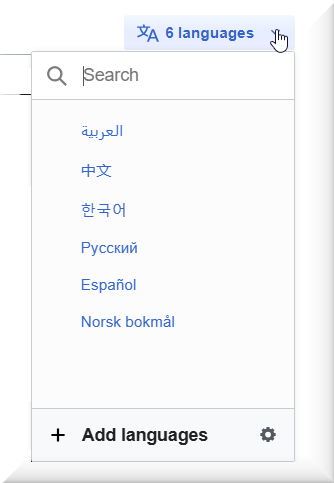
Should we be concerned at the limited language availability of Wikipedia Air Rage information?
Elder JA Fills In Some Details
According to Chat GPT, the Cessna Citation C560 has a lavatory in the aft cabin area, which is considerably more convenient than the ones located outside the cabin. However, it is not clear if the [transported] model retained the lavatory as the planes are modified to include various detection and photography equipment. But I think it is safe to say, they probably left the lavatory intact.
And yes, there is a co-pilot.
For your illustrative purposes it would be fun to have a passport with about 400 pages and an Indian immigration officer thumbing through it trying to find the right visa.
Most of the stops were refueling stops, and it is likely that the crew did not even exit the plane. For most countries, this kind of stop would not require a visa for a Canadian citizen. One notable exception is the USA which apparently requires visas even for these kinds of stops. And you can get into a lot of trouble in places like Saudi if you have any Israeli visas.
For the countries where they stayed overnight (which they would do if they reached their max hours) they would require visas. EU countries will issue the visa on entry. Mid-east countries almost certainly require a visa ahead of time, and I expect India and Indonesia are similar.
From the actual flight times, it appears [the travelers] stayed overnight at SFJ in Iceland, HER in Greece, MCT in Oman and DPS in Indonesia.
Elder JA
Café YFB
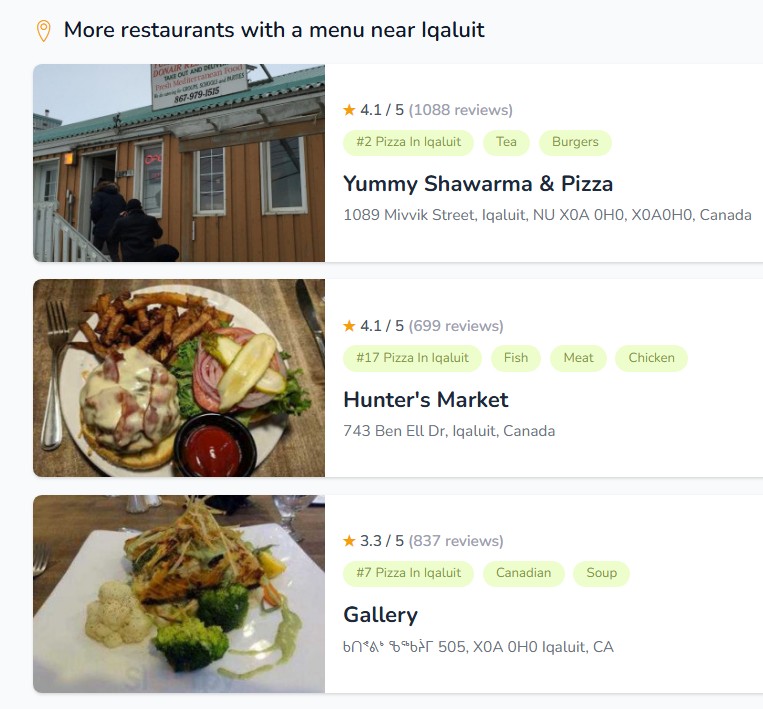
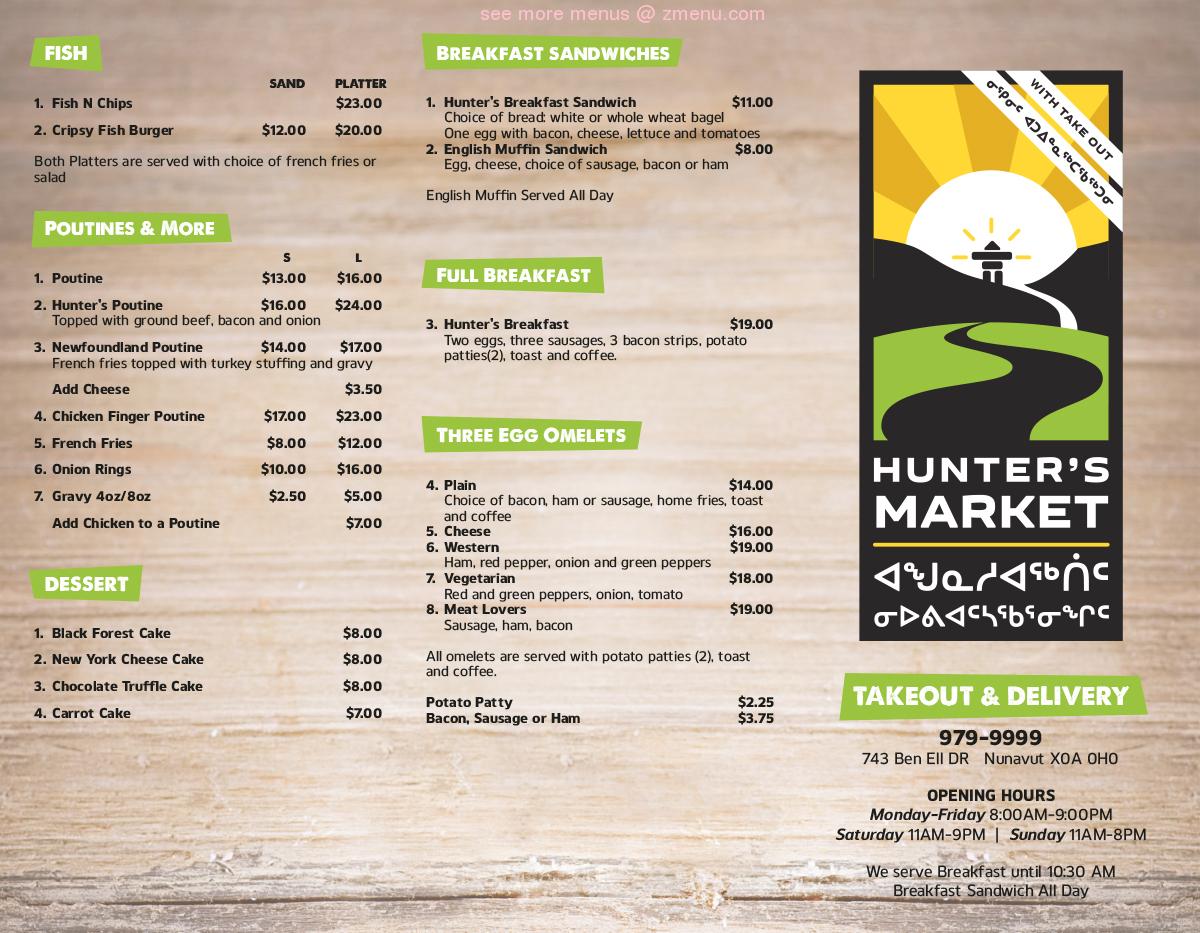
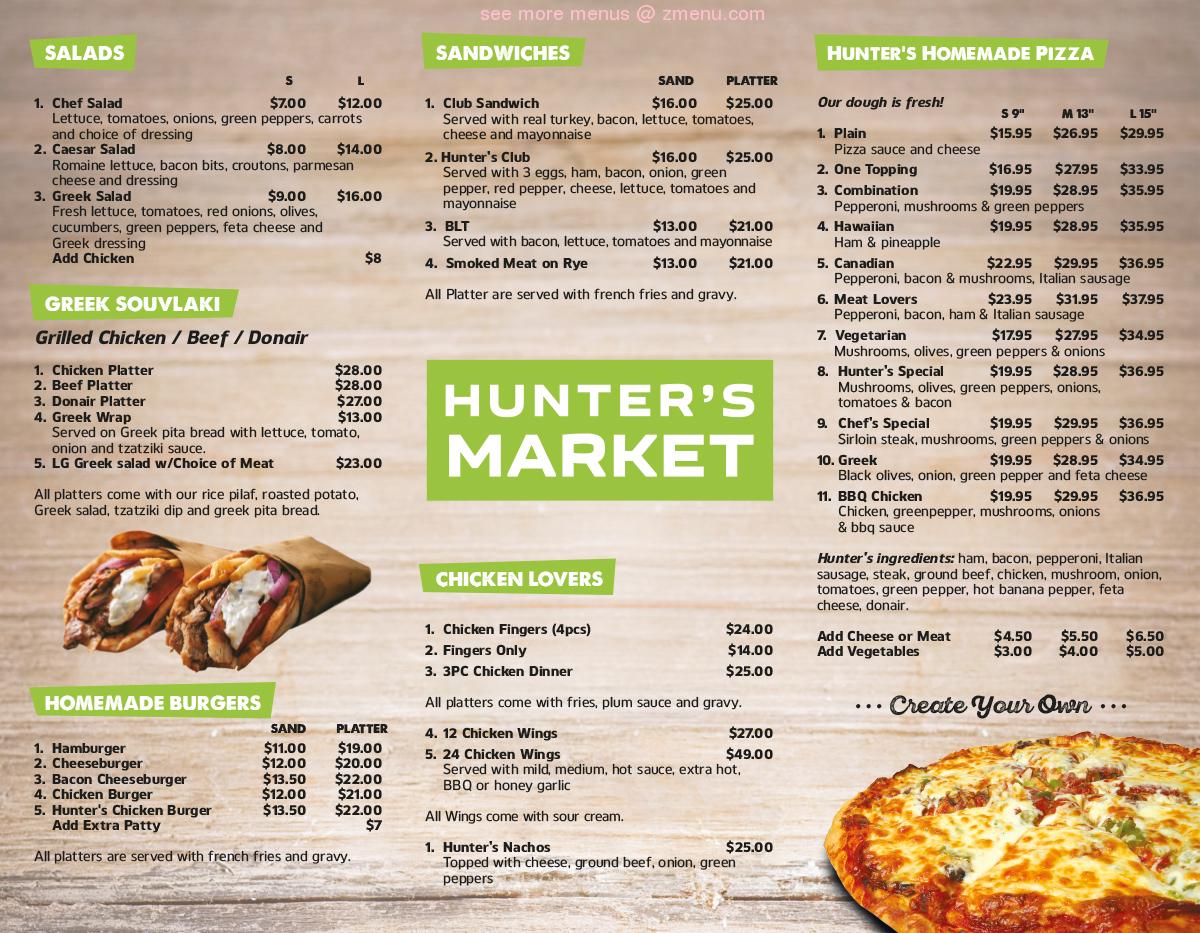
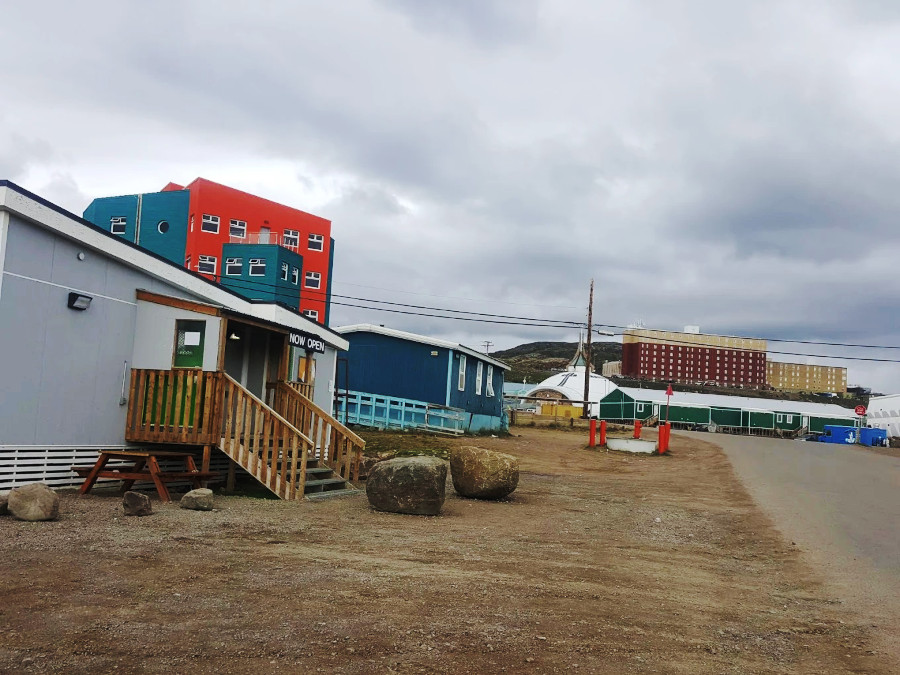
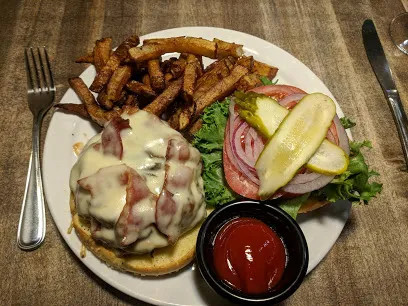
Now we’ve landed in Iqaluit (YFB). We were disappointed to learn that all the local restaurants serve very generic menus – pizza, hamburgers, and oddly, shawarma. We are hoping that Cafe YFB would serve local, traditional Iqaluit cuisine. What would be a traditional menu for the people of Iqaluit?
Elder G to the Rescue!
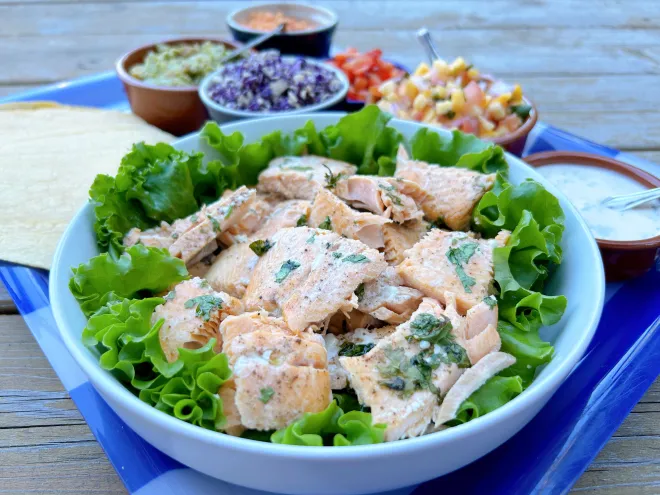
Arctic Char Tacos is adapted from the recipe for Iqaluk Tacos (contributed by Jean Fisk and Edward Atkinson) from the cookbook, Nirjutit Imaani – Edible Animals of the Sea.
Seal soup for dinner? Get to know Greenland’s Inuit cuisine Adventure.com
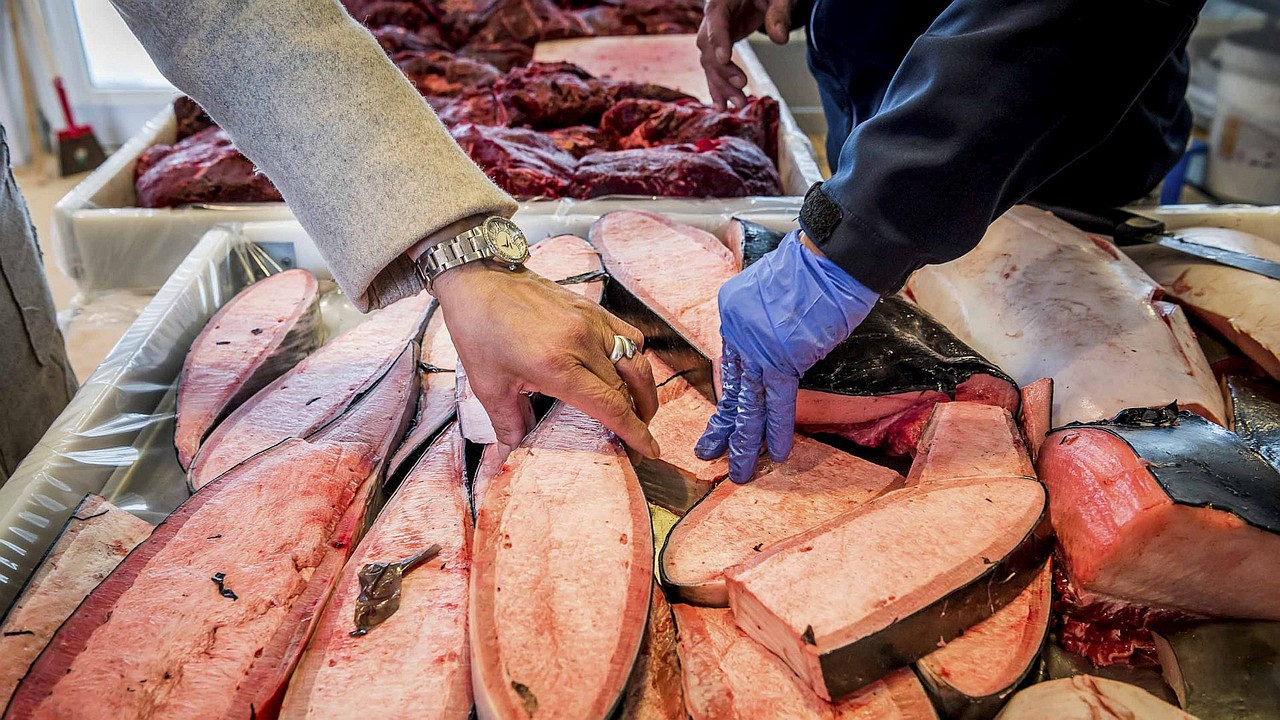
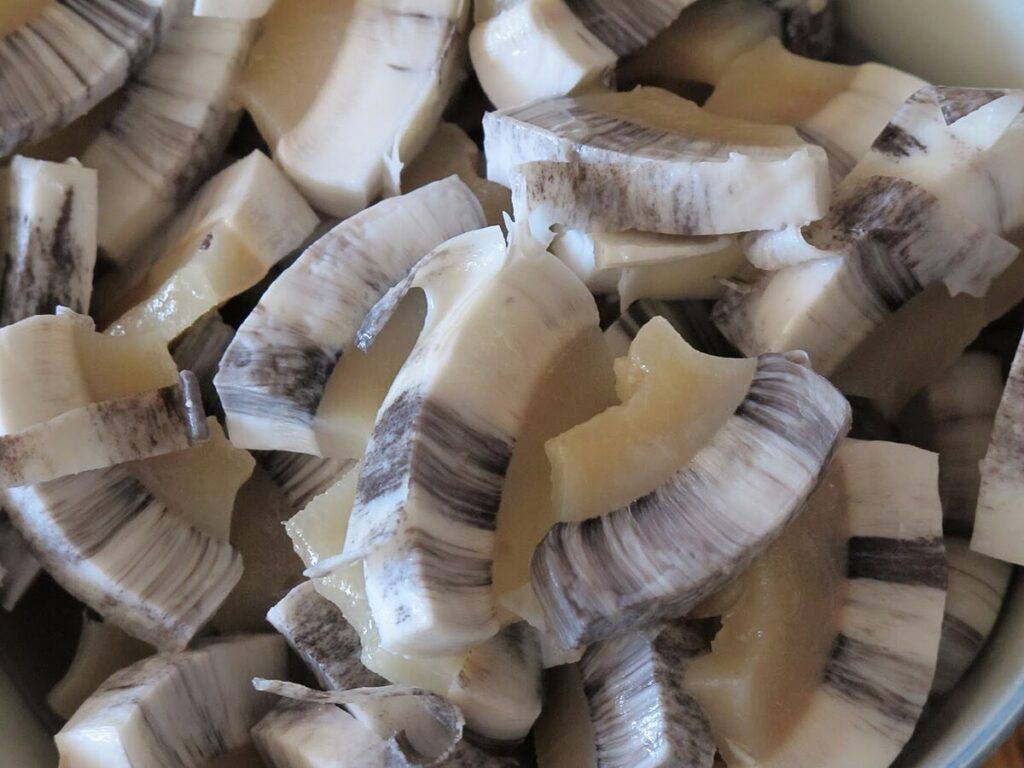
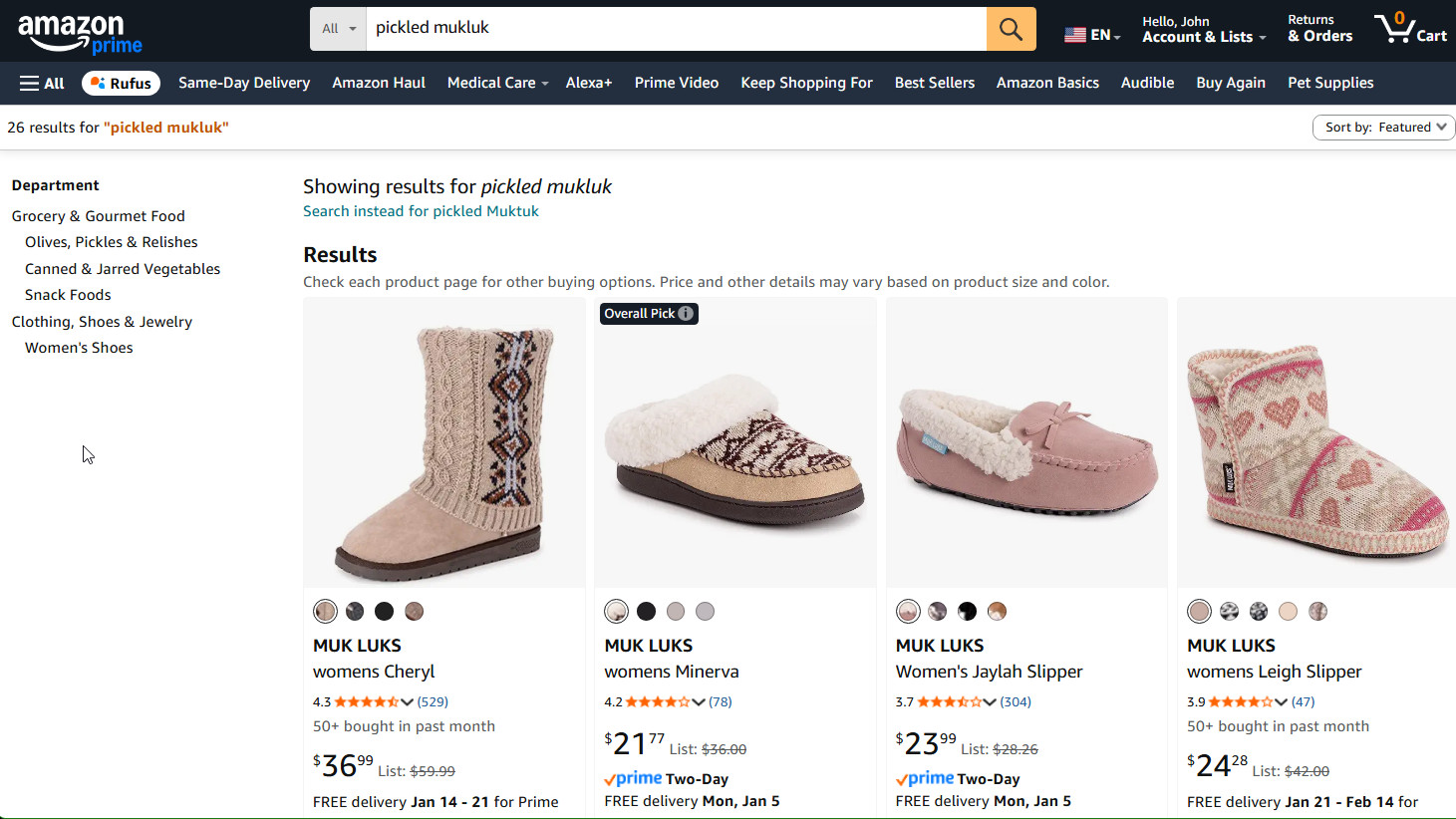
Muktuk is a traditional food of Inuit and other circumpolar peoples, consisting of whale skin and blubber. A part of Inuit cuisine, it is most often made from the bowhead whale, although the beluga and the narwhal are also used. It is usually consumed raw, but can also be eaten frozen, cooked, or pickled.
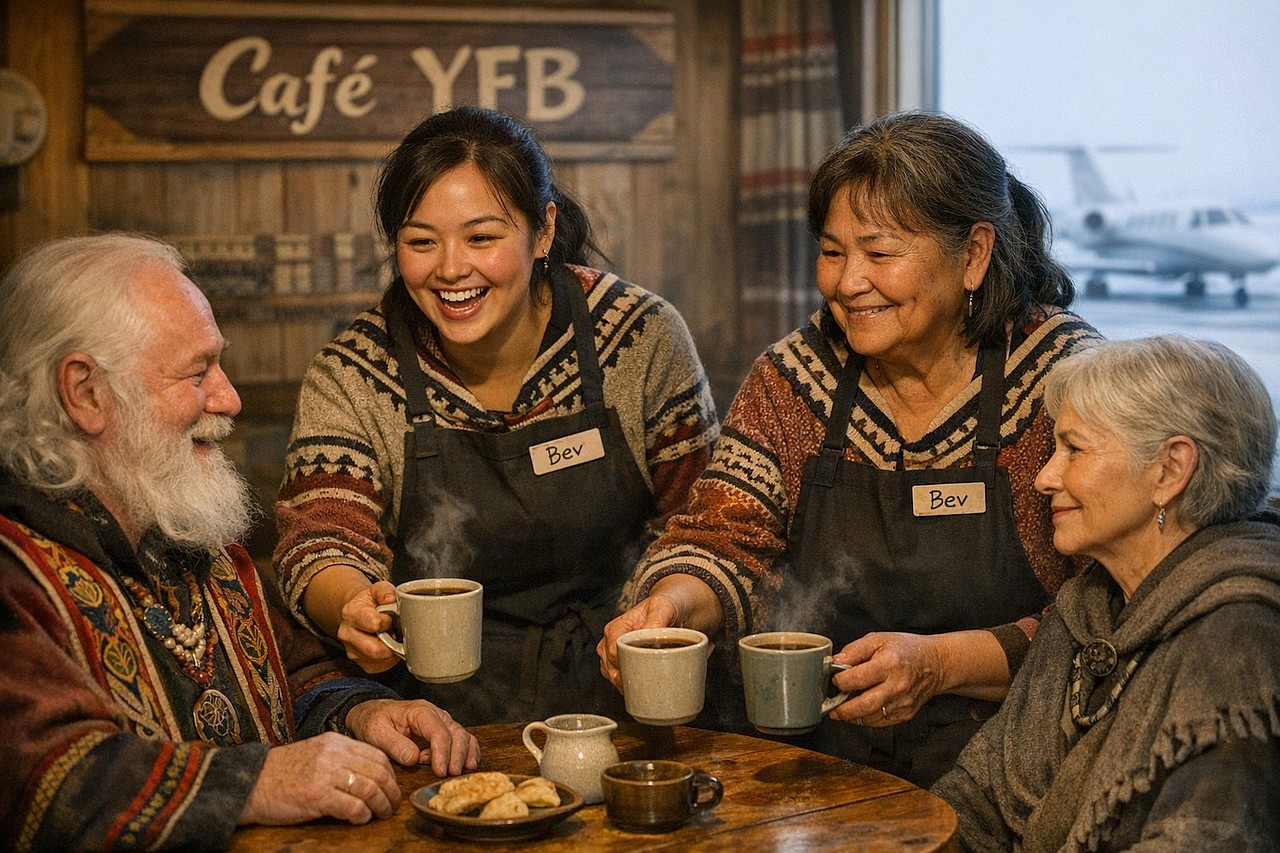
An incredible coincidence! Bev, our waitress back in Edmonton has a sister-in-law who is a waitress at Café YFB! And here’s the really interesting thing – her name is also Bev!
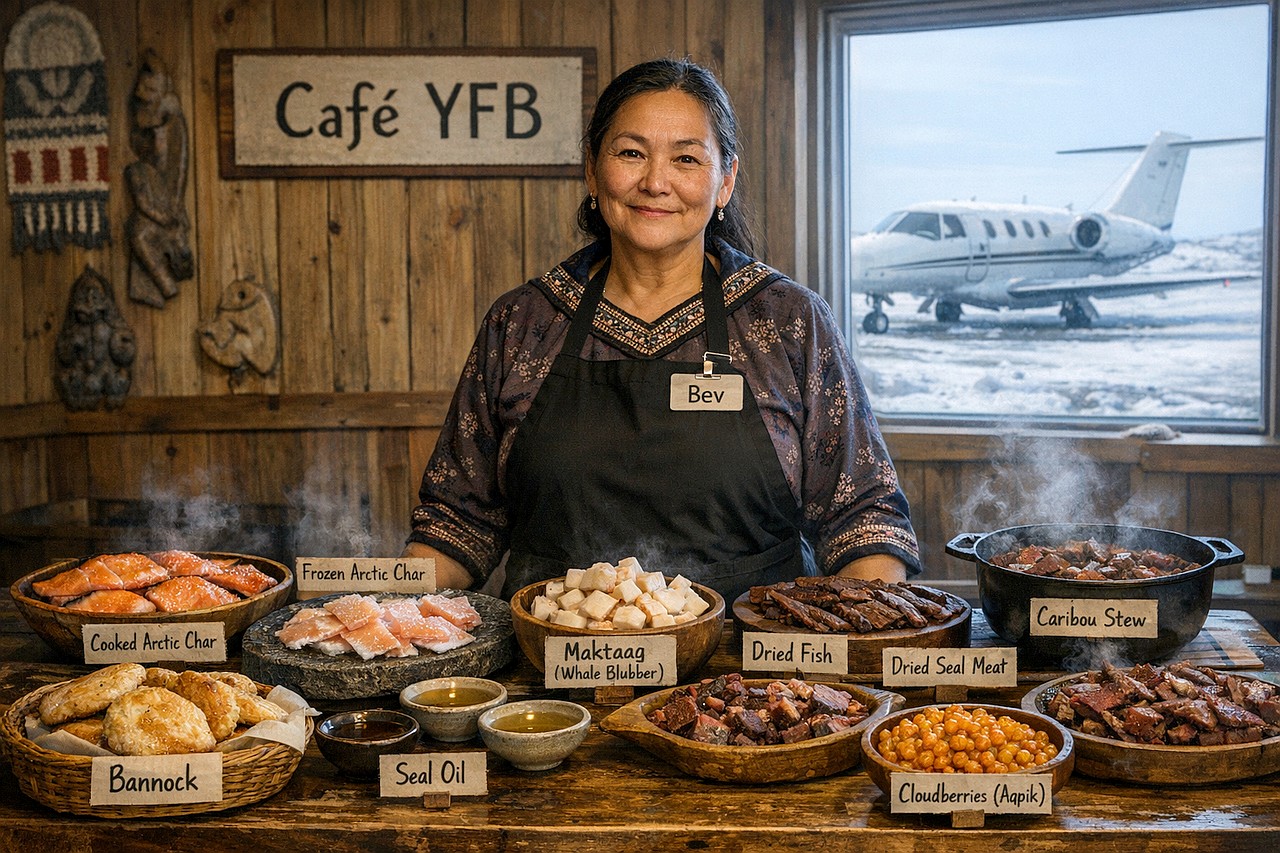
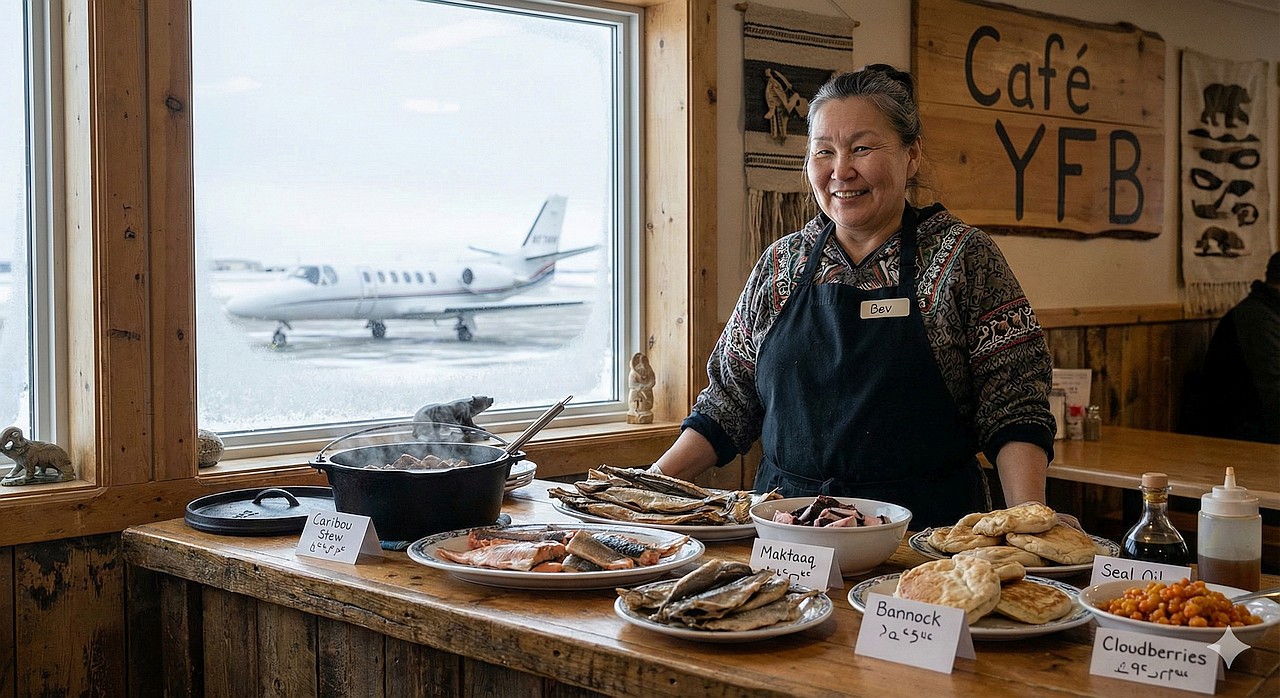
Bev was a sweetheart. She provided a buffet of all the local foods for us to sample.
Bev’s mom (also named Bev) works side-by-side her daughter at the Café, and she described the different dishes to us.
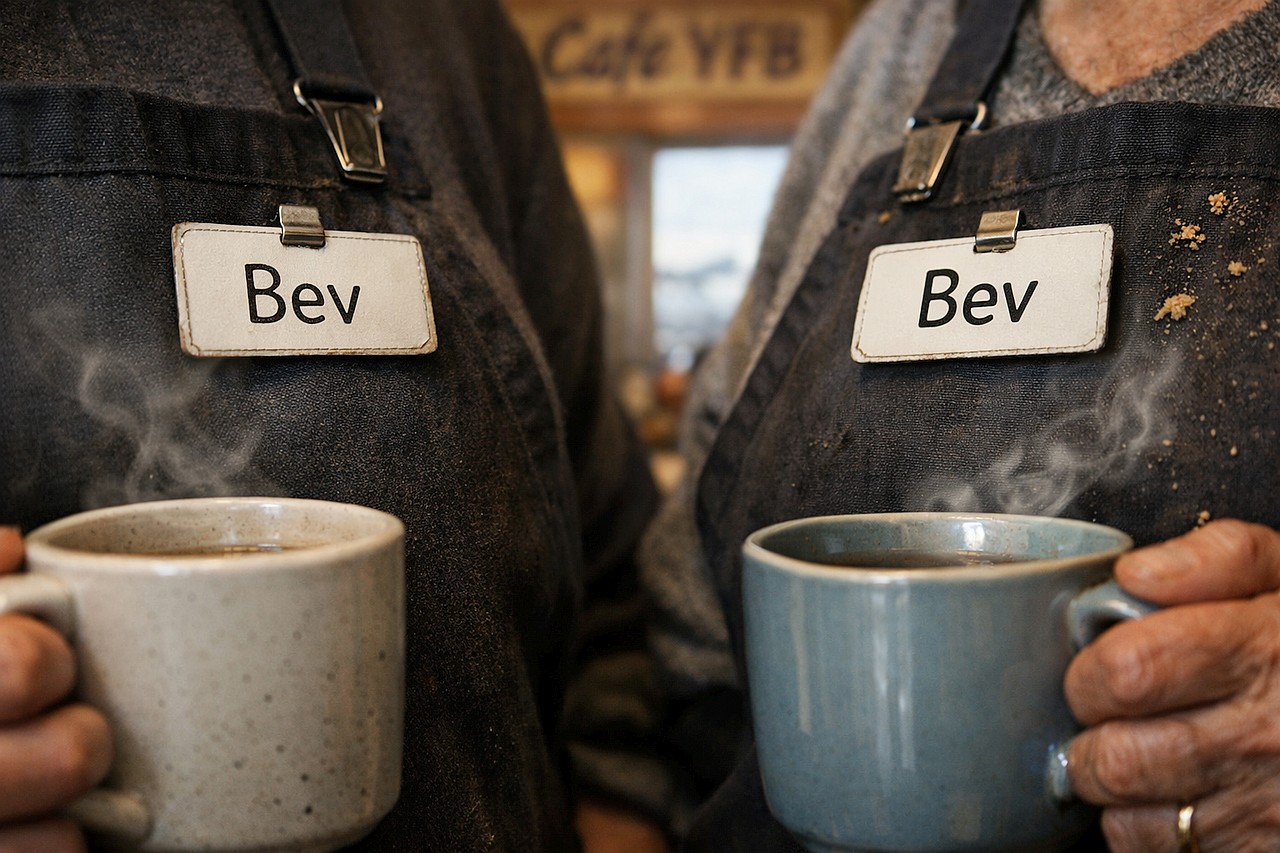
The mother and daughter often mix up name tags, but they are pretty chill with the confusion.
We had a great time, a great dinner, and the Bevs enjoyed catching up on their relatives in Edmonton and Churchill.
Elder G’s Notes on the Traditional Iqaluit Diet
From the Sea and Ice
Arctic Char (Iqaluk) The cornerstone fish of Nunavut. Often eaten raw, frozen, lightly dried, or gently cooked. Clean, rich, and quietly magnificent.
Dried Fish and Seal Wind-dried for preservation. Deeply savory. Food designed for survival that accidentally became cuisine.
Maktaaq Whale skin and blubber. Chewy, fatty, bracing. Traditionally eaten raw or frozen. Not beginner-friendly, but culturally sacred.
From the Land
Caribou (Tuktu) The heart of inland Inuit foodways. Served boiled, dried, or raw. Lean, iron-rich, and revered.
Caribou Stew When prepared warm, it’s usually simple. Meat, water, time. Flavor comes from the animal itself.
Comforts and Adaptations
Bannock Introduced via contact with Europeans, but fully adopted. Fried or baked bread. This is where visitors often feel most at home.
Seal Oil (Uqsuk) Used as a dipping fat or condiment. Think butter, but Arctic.
Rare Sweetness
Cloudberries (Aqpik) Golden berries from the tundra. Tart, fragrant, treasured. Often eaten raw or lightly preserved.
Frozen Berry Mix No sugar traditionally. Sweetness is a guest, not a guarantee.
Drinks
Strong Tea Hugely popular. Hot tea is survival technology.
Melted Snow Water Clean, cold, elemental. Served without commentary.
WLBOTT Cultural Footnote
Traditional Inuit cuisine is not about novelty or plating. It’s about:
Energy density
Respect for animals
Minimal waste
Eating what the land allows
Heat was once scarce. Sugar nonexistent. Spices irrelevant. The cuisine evolved for life, not leisure.
CBC’s Post on the Revitalization of Iqaluit Cuisine
Is there room in Nunavut’s sharing economy to sell traditional food? This Iqaluit chef thinks so. Inspired by Greenland’s food market, Sheila Flaherty wants to add Inuit food to local menus
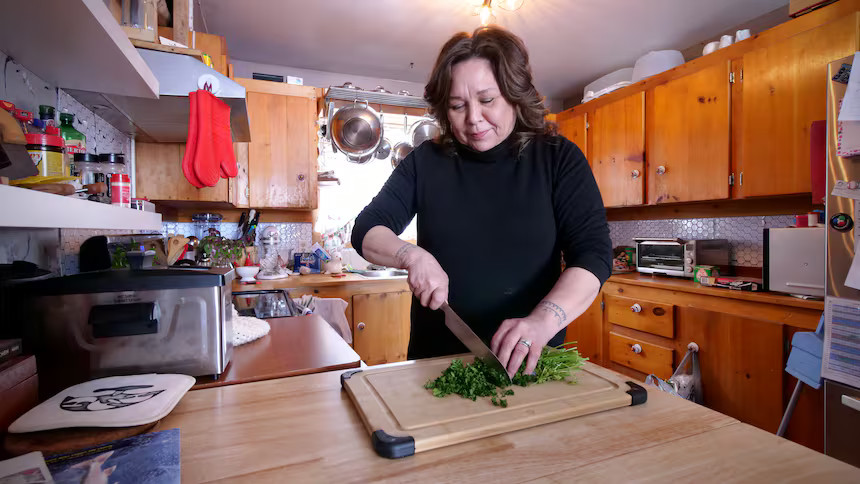
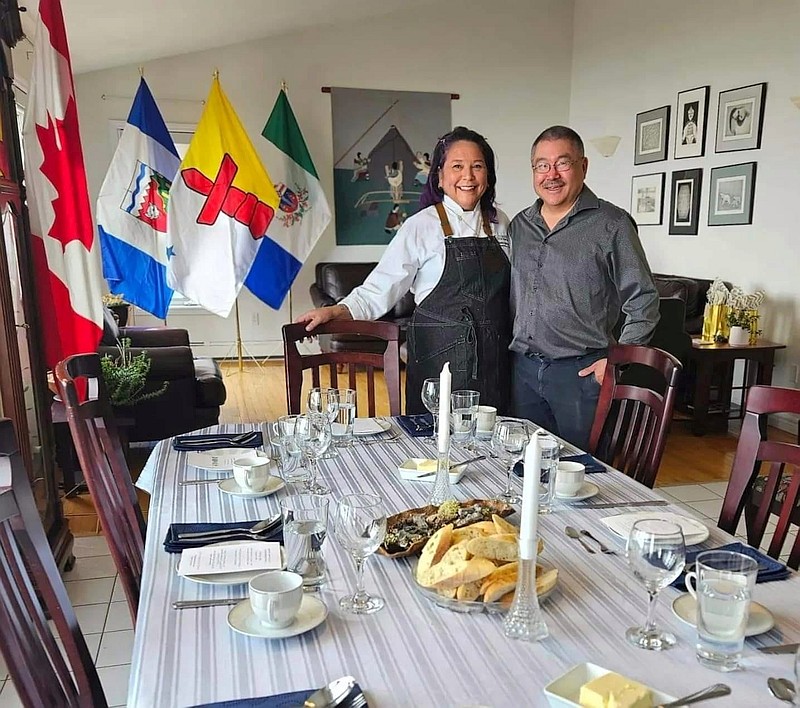
Sheila Flaherty is an Inuk chef in Iqaluit and owns sijjakkut, a business that specializes in Inuit dishes. (Matisse Harvey/Radio-Canada)CBC
The Sijjakkut ᓯᔾᔭᒃᑯᑦ Facebook page can be found here.