There was a tree, a horse chestnut tree, that grew outside of the Secret Annex in Amsterdam, where Anne Frank and her family hid from the Nazis. Anne described the tree in three different entries in her diary.
Nearly every morning I go to the attic where Peter works to blow the stuffy air out of my lungs, from my favorite spot on the floor I look up at the blue sky and the bare chestnut tree, on whose branches droplets shine, and at the seagulls and other birds as they glide like silver. […] As long as this exists, I thought, and I may live to see it, this sunshine, the cloudless skies, while this lasts I cannot be sad.
Anne Frank, The Diary of a Young Girl
For Anne, the tree symbolized continuity, seasons, and hope amidst confinement—an image that dovetails with Laudato Si’’s insistence that creation bears moral and spiritual meaning.
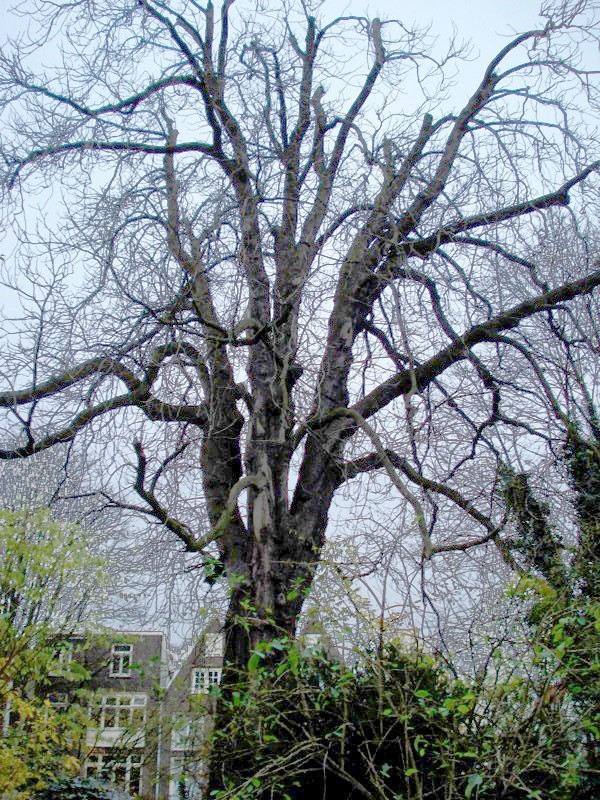
The 150 year old tree blew down in a storm on August 21st, 2010. Before that storm, there was a dedicated effort to save the tree, which was ravaged by fungal disease and moth infestation.
The Anne Frank tree was a horse-chestnut tree (Aesculus hippocastanum) in the city center of Amsterdam that was featured in Anne Frank’sThe Diary of a Young Girl. Anne Frank described the tree from The Annex, the building where she and her family were hiding from the Nazis during World War II.
Over the years, the tree deteriorated significantly due to both a fungus and a moth infestation. The Borough Amsterdam Centrum declared that the tree had to be cut down on 20 November 2007 due to the risk that it could otherwise fall down. […]
The Foundation and the neighbours developed an alternative plan to save the tree. The neighbours and supporters formed the Foundation Support Anne Frank Tree which carried out the suggested supporting construction and took over the maintenance of the tree.
On 23 August 2010, the tree was blown down by high winds during a storm, breaking off approximately 1 metre (3 feet) above ground. It fell across a garden wall and damaged garden sheds but did not damage anything else. The tree was estimated to be more than 170 years old, meaning that it sprouted c. 1840 – c. 1860.
Wikipedia / Image by huliana90212, edit by user:Arthena. – Anne Frank’s Dying Chestnut Tree, CC BY 2.0, https://commons.wikimedia.org/w/index.php?curid=3292901
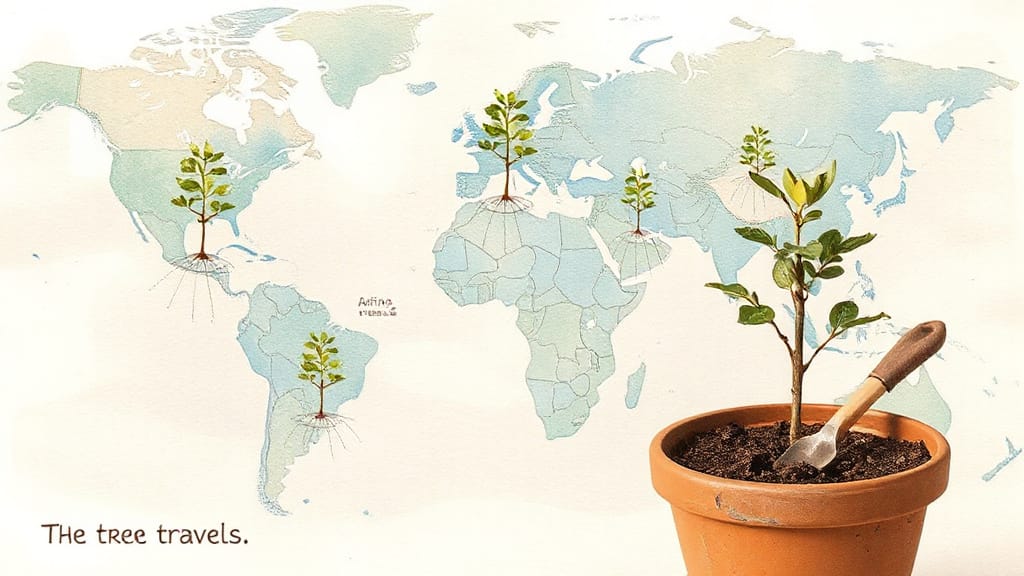
But the tree lives on. Saplings, cuttings from the tree, were propagated and planted worldwide. In the U.S., the Anne Frank Center USA coordinated placements at sites such as the U.S. Capitol, Liberty Park at the World Trade Center, museums, universities, and memorials (first U.S. planting was in April 2013; new plantings continue, for example, at University of Iowa in 2022 and Seton Hill University in 2025).
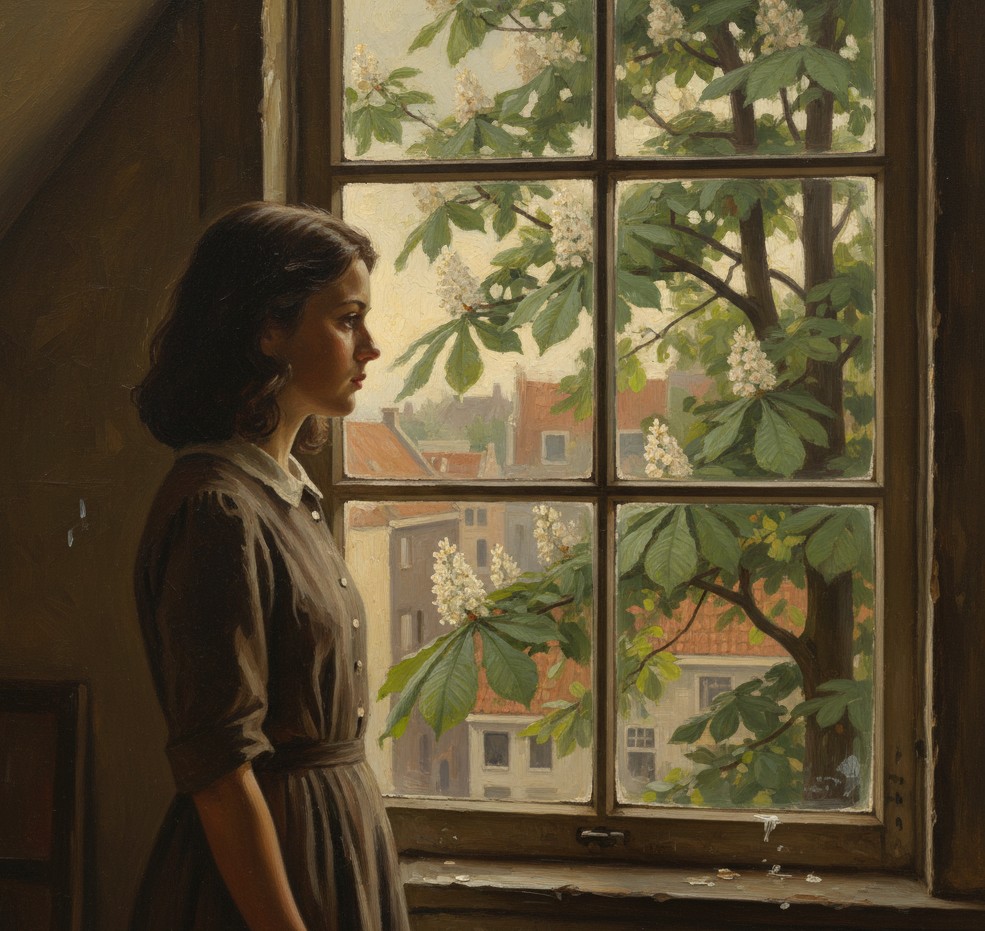
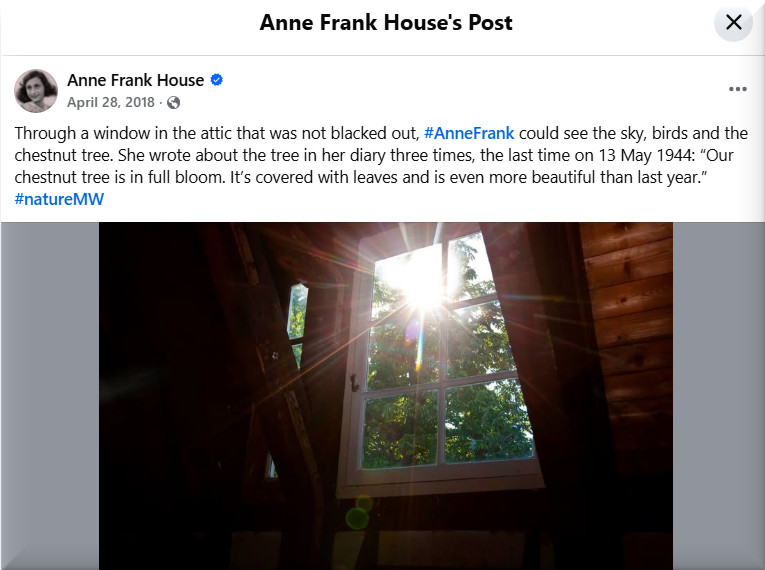
Through a window in the attic that was not blacked out, Anne Frank could see the sky, birds and the chestnut tree. She wrote about the tree in her diary three times, the last time on 13 May 1944: “Our chestnut tree is in full bloom. It’s covered with leaves and is even more beautiful than last year.”
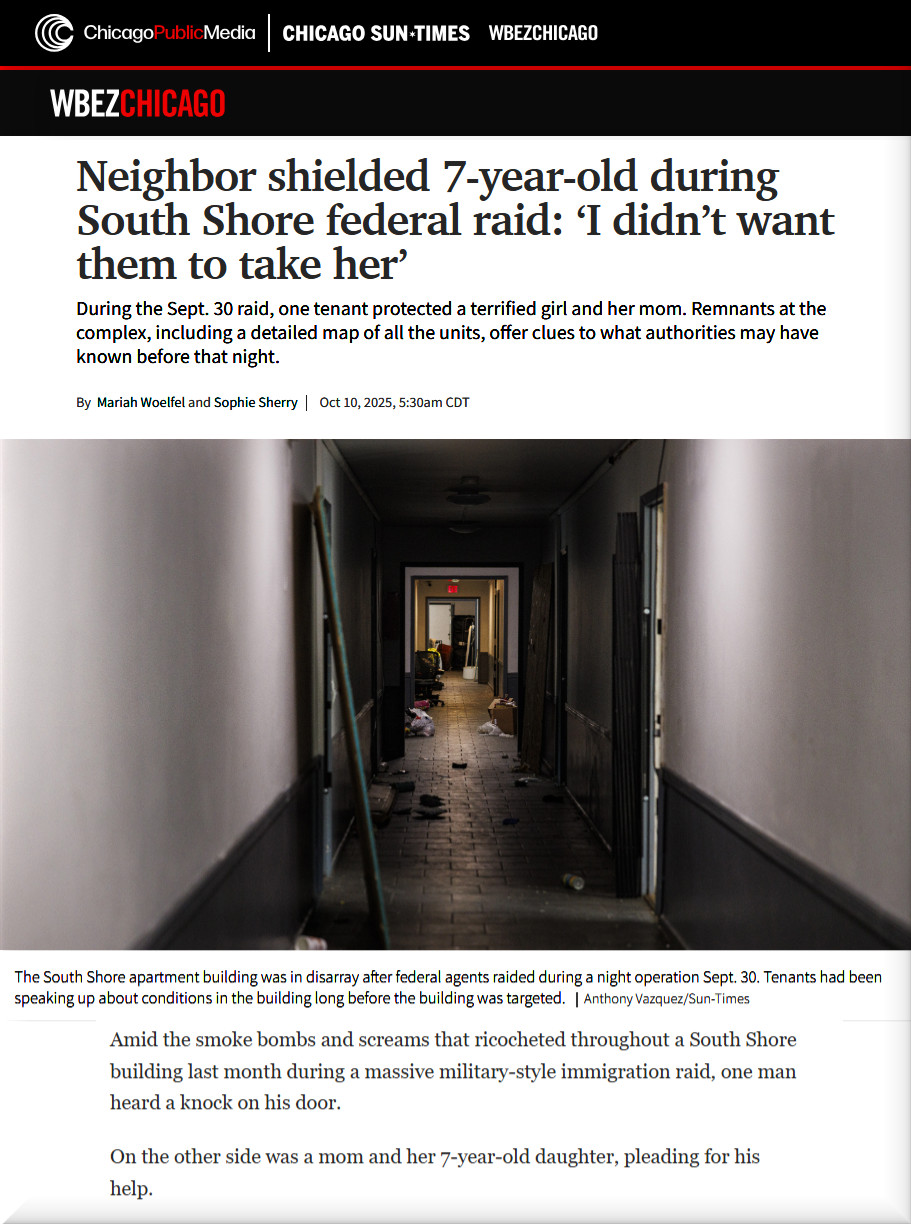
According to an October 10, 2025 report from WBEZ and the Chicago Sun-Times, a Chicago man sheltered Venezuelan immigrants during a federal immigration raid in his South Shore apartment building.
Details of the incident:
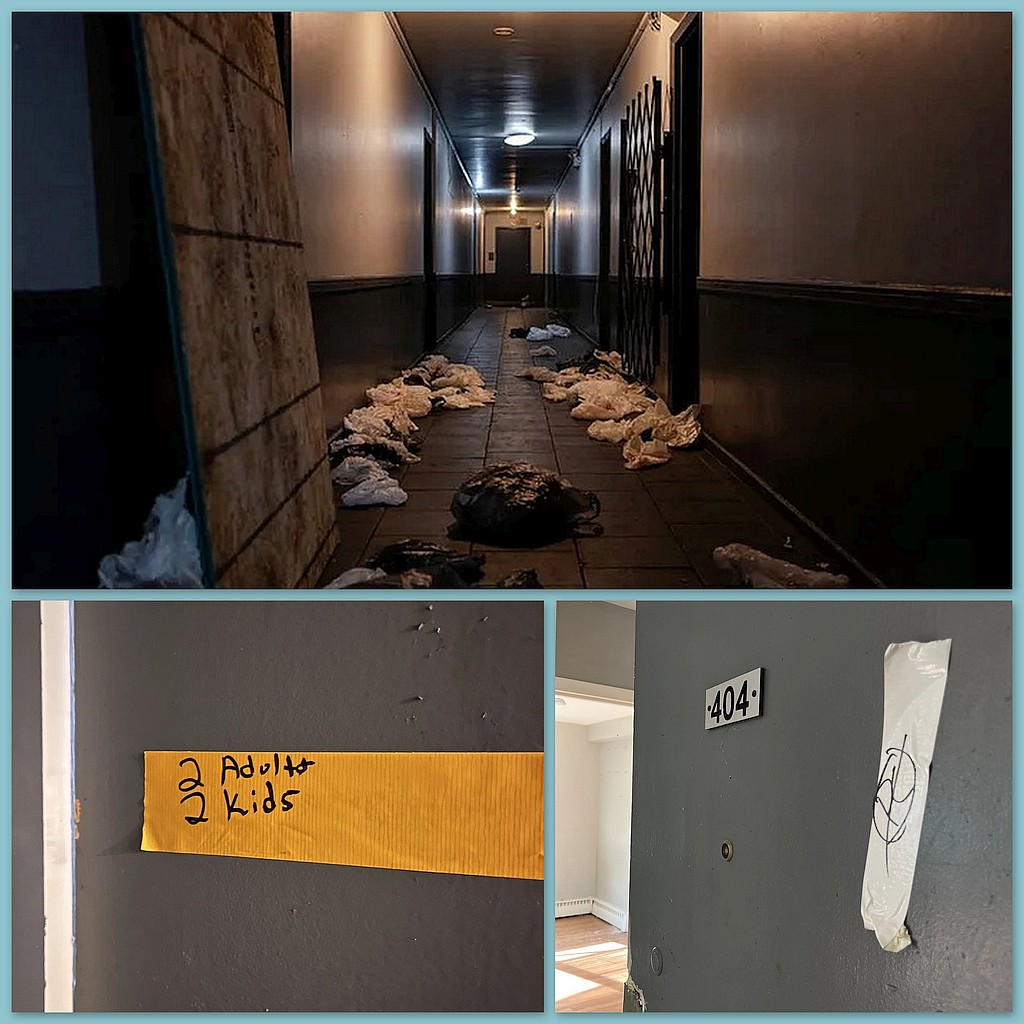
During a federal raid by Immigration and Customs Enforcement (ICE) on September 30, 2025, a resident of the apartment complex helped a Venezuelan mother and her 7-year-old daughter hide.
The man, who was a longtime resident, reportedly shielded the child and her mother, who were new tenants in the building, from federal agents.
The ICE operation resulted in 37 arrests and targeted members of the Venezuelan gang Tren de Aragua. However, the report noted that none of the residents interviewed had seen signs of a criminal enterprise operating in the building.
The man who helped his neighbors was left undisturbed by the agents, which prompted questions about how federal authorities had identified and targeted specific units in the building.
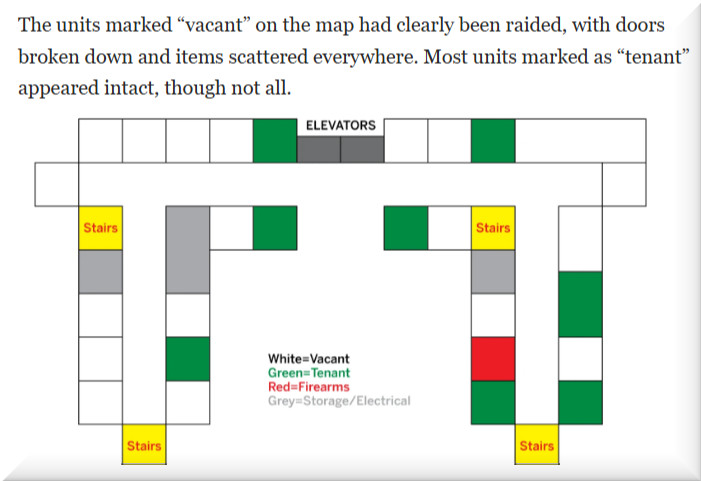
The article revealed that a map was found labeling some units and that building employees had been seen taking photos of apartments where migrants lived days before the raid.