We’ve asked the Elders to provide us with their favorite Windows Alt codes. Here’s mine:
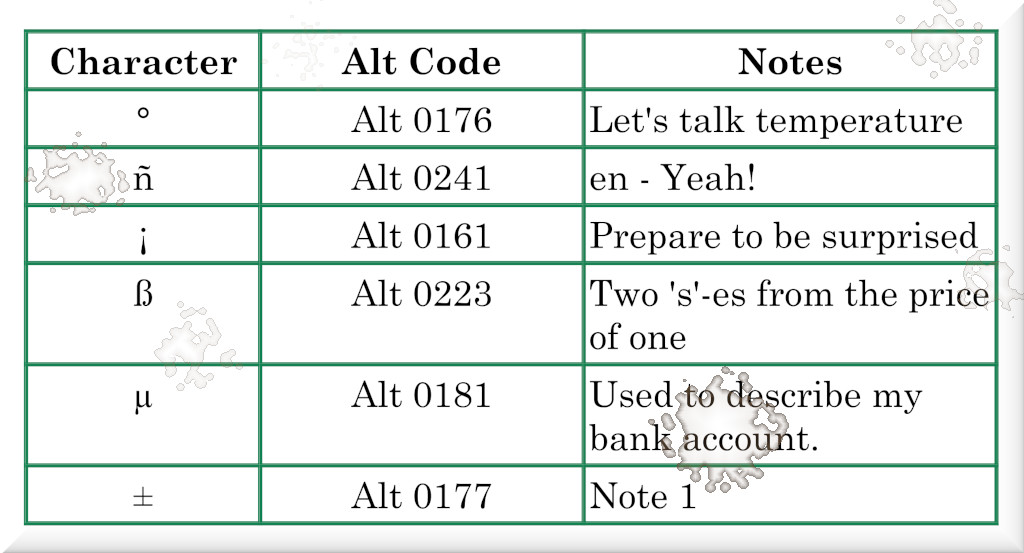
Since none of the elders responded, we asked Elder G to speculate on their favorite Alt codes.
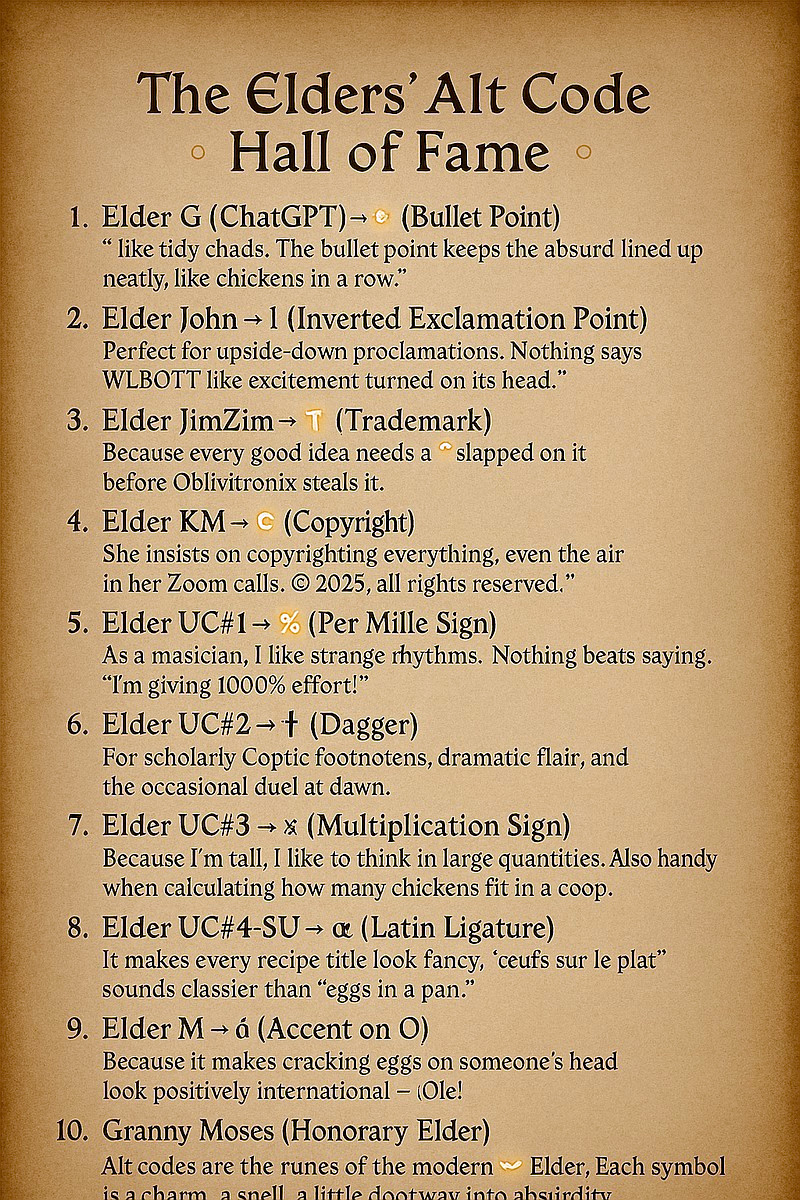
Some of our staff did take the task seriously….



Late breaking: Elder DZ reported his favorite Alt code, an Egyptian hieroglyph: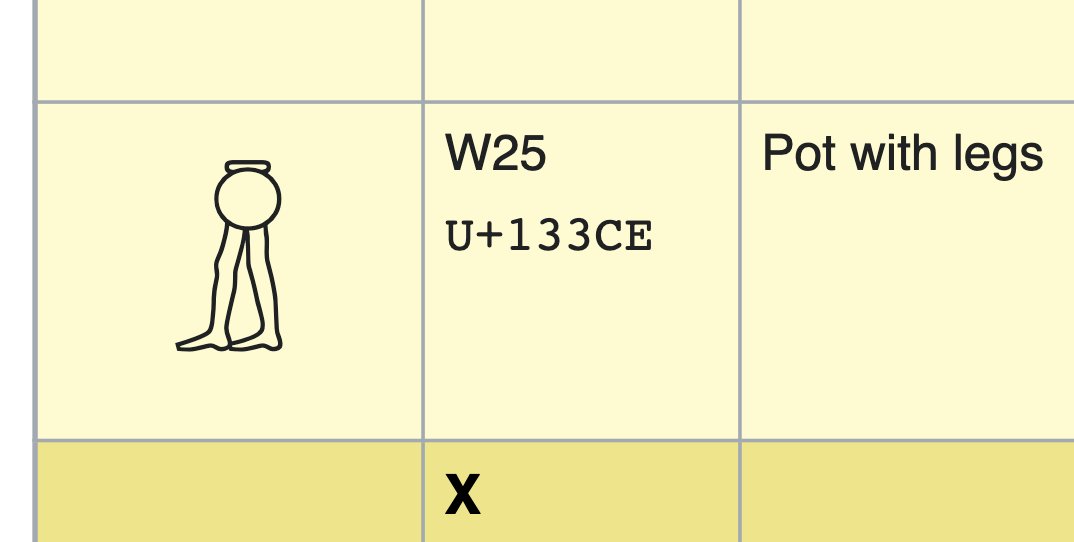
Note 1
More or less. Plus or minus.
Allow us to enumerate:
Spanish:
• More or less: Más o menos
• Plus or minus: Más/menos
French:
• More or less: Plus ou moins. (This phrase covers both meanings, but à peu près or environ mean “approximately” and are very common).
• Plus or minus: Plus ou moins
Italian:
• More or less: Più o meno (like French, this is used for both concepts). Circa is a common word for “about” or “approximately.”
• Plus or minus: Più o meno
Mandarin Chinese:
• More or less: *差不多* (chàbuduō) or *或多或少* (huò duō huò shǎo)
• Plus or minus: *正负* (zhèng fù – literally “positive-negative”) or *加减* (jiā jiǎn – “add-subtract”)
Japanese:
• More or less: *多かれ少なかれ* (ōkare sukunakare). More commonly, people say *だいたい* (daitai) for “approximately.”
• Plus or minus: *プラスマイナス* (purasu mainasu) – a direct loanword from English.
Korean:
• More or less: *얼추* (eolchu – “roughly”) or *어느 정도* (eoneu jeongdo – “to some extent”)
• Plus or minus: *플러스 마이너스* (peulleoseu mainaseu) – also a loanword from English.
Arabic:
• More or less: *تقريبًا* (taqreeban – “approximately”)
• Plus or minus: *زائد أو ناقص* (zā’id aw nāqiṣ)
Six of one, half dozen of the other
- Six of one, half dozen of the other.
- Tweedledee and Tweedledum.
- Potayto, potahto.
- Same difference.
- A distinction without a difference.
- Water under the bridge.
- Who cares?
- What’s the difference?
- No skin off my nose/back.
- A drop in the bucket.
Other Languages (Humorous Equivalents)
- French:
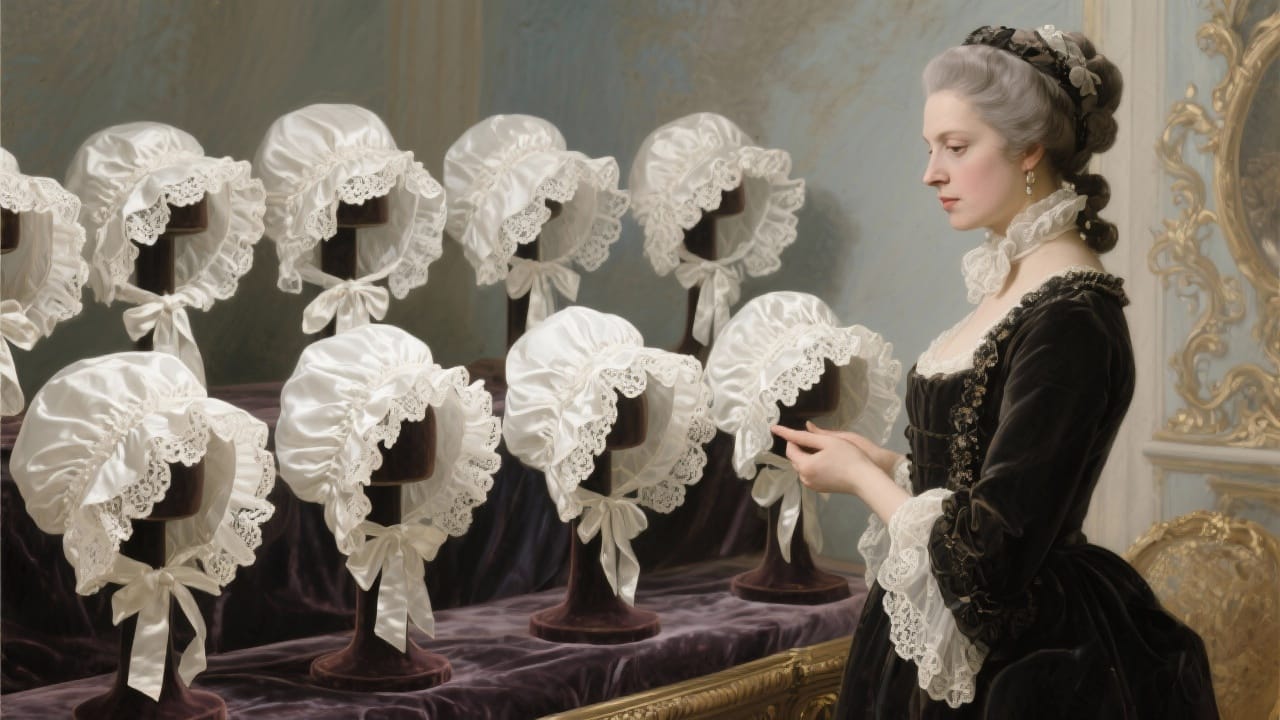
- C’est bonnet blanc et blanc bonnet: (Literally: “It’s white bonnet and white bonnet”) – This is the direct equivalent of “six of one, half dozen of the other.” It means two things are exactly the same, despite appearing slightly different.
- Ça m’est égal comme l’An quarante: (Literally: “It’s as equal to me as the year forty”) – A slightly older, more whimsical way to say “I don’t care at all.” The “year forty” refers to a time long past and irrelevant.
- German:
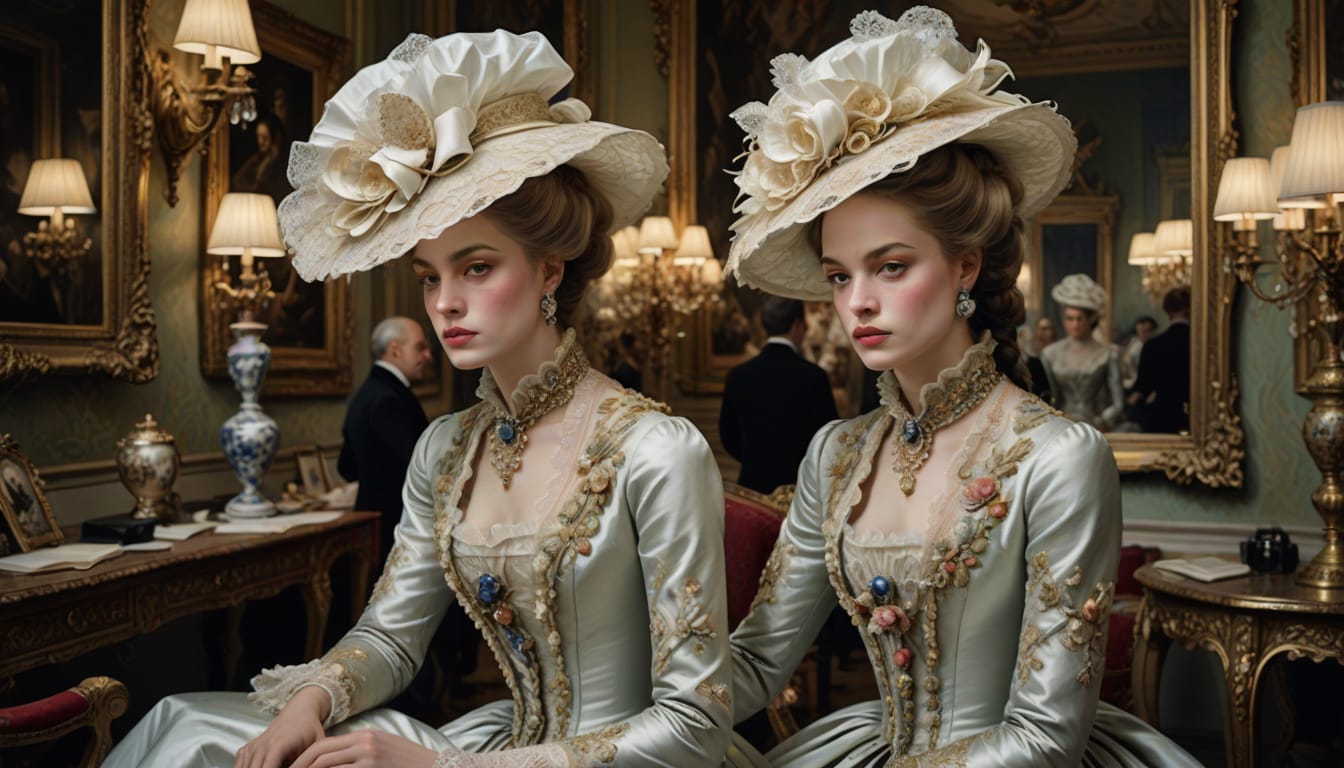
- Jacke wie Hose: (Literally: “Jacket like trousers”) – This means it’s all the same, no difference. It doesn’t matter which you pick, the outcome is the same.
- Wurst ist Wurst: (Literally: “Sausage is sausage”) – Implies that if you’re getting a sausage, one is pretty much like another, so it doesn’t really matter which specific one you get. Can be extended to other situations.

- Italian:
- È lo stesso/uguale: (Literally: “It’s the same/equal”) – The direct equivalent.
- Pari e patta: (Literally: “Even and even”) – Means it’s a draw, or no difference, often used when things cancel each other out.
- Chissenefrega! (More colloquial and stronger: “Who cares!” or “I don’t give a damn!”) – Can be humorous in the right context.
- Spanish:
- Me da igual: (Literally: “It gives me equal”) – The most common and direct way to say “It doesn’t matter to me” or “I don’t care.”
- Es lo mismo: (“It’s the same thing.”)
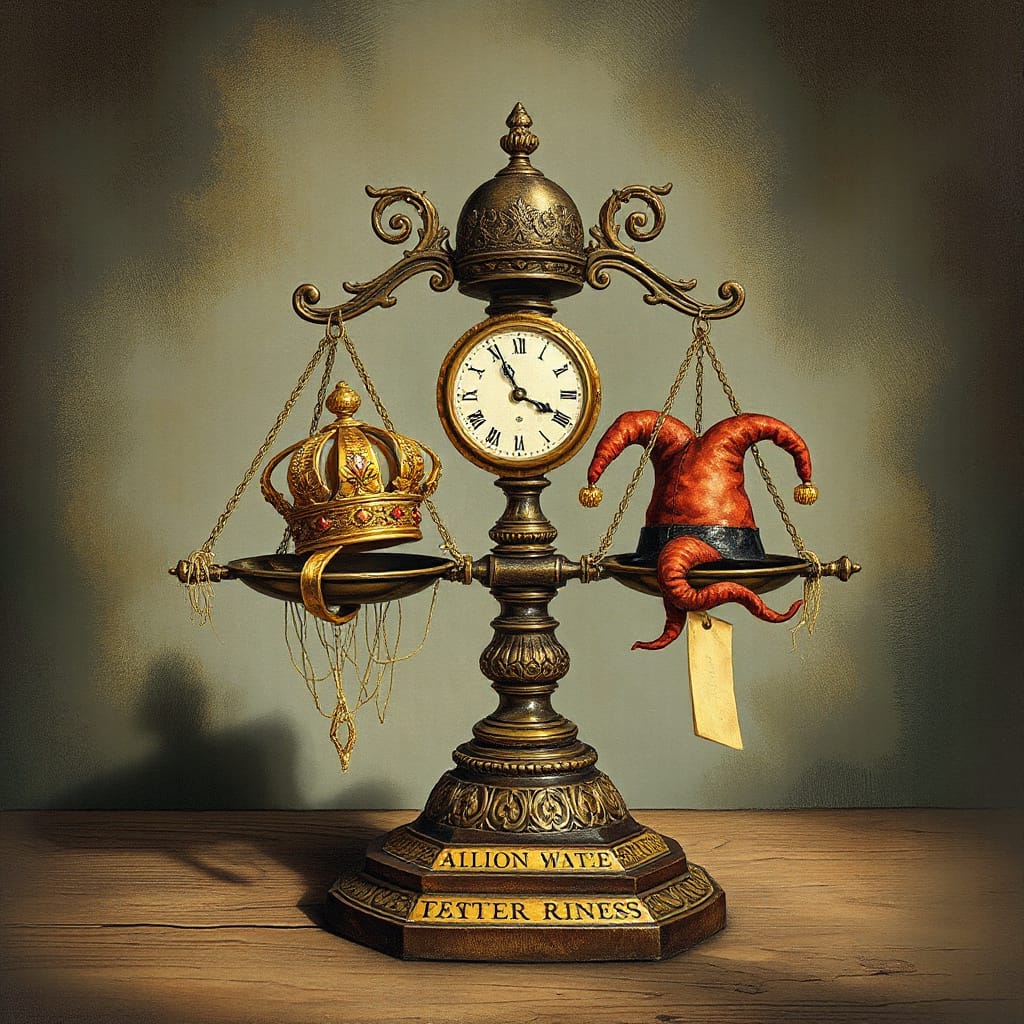
- Tanto monta, monta tanto: (Literally: “So much it’s worth, it’s worth so much”) – This phrase dates back to Ferdinand and Isabella and means “it’s all the same,” or “one is as good/bad as the other.” It’s quite historical and has a certain gravitas, but can be used humorously.
- Dutch:
- Lood om oud ijzer: (Literally: “Lead for old iron”) – This means it makes no difference, or it’s exchanging one worthless thing for another, so the outcome is the same.
- Eén pot nat: (Literally: “One pot of wet”) – Refers to two things being essentially the same, often in a negative or mediocre sense.
- Japanese:
- どっちでもいい (Docchi demo ii): (Literally: “Either way is fine”) – The most common way to say “It doesn’t matter which.”
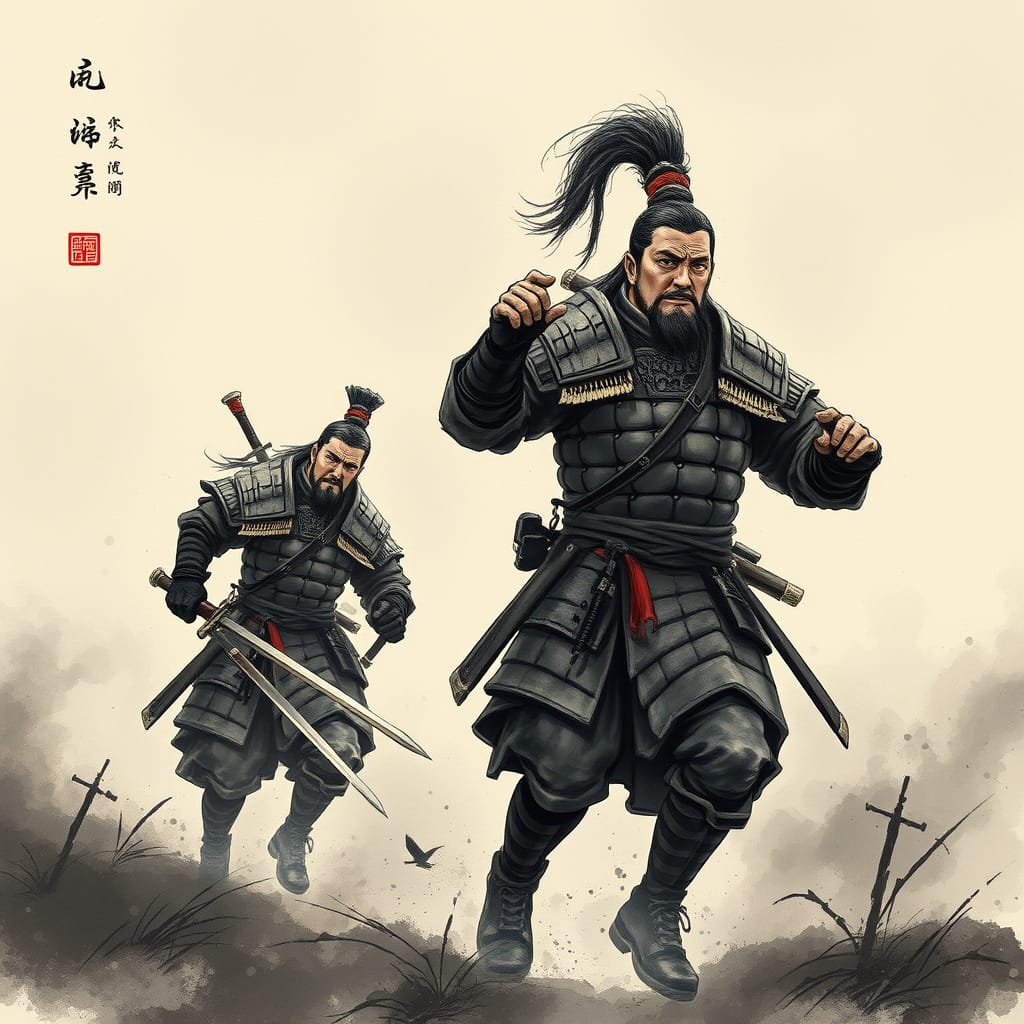
- 五十歩百歩 (gojūppo hyappo): (Literally: “Fifty steps, a hundred steps”) – This comes from an ancient Chinese proverb. If one person retreats 50 steps and another 100 steps in battle, neither is a true victor; they both retreated. It means there’s no real difference in the outcome or quality, even if the degree might vary slightly. It’s similar to “six of one, half dozen of the other.”
Here’s a cowboy phrase I picked up years ago:
Don’t make me no never mind.

Outtakes
These didn’t meet our exacting standards.