The other day, Elder DZ asked me what was the saddest movie I’d ever seen. Two movies came to mind immediately: Dancer in the Dark and the recent Swedish sci-fi movie Aniara. Both movies present a situation with no hope, not even a path to hope.
Today I was reflecting on the saddest movie question, and I thought of the 1982 documentary film Koyaanisqatsi.
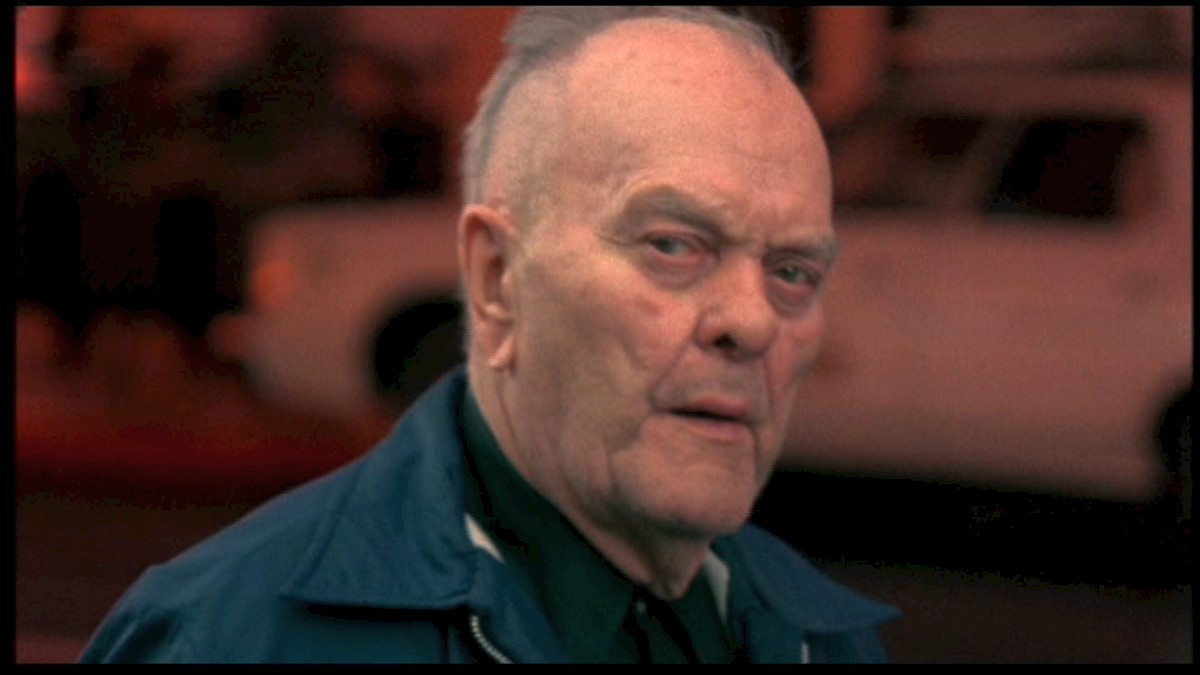
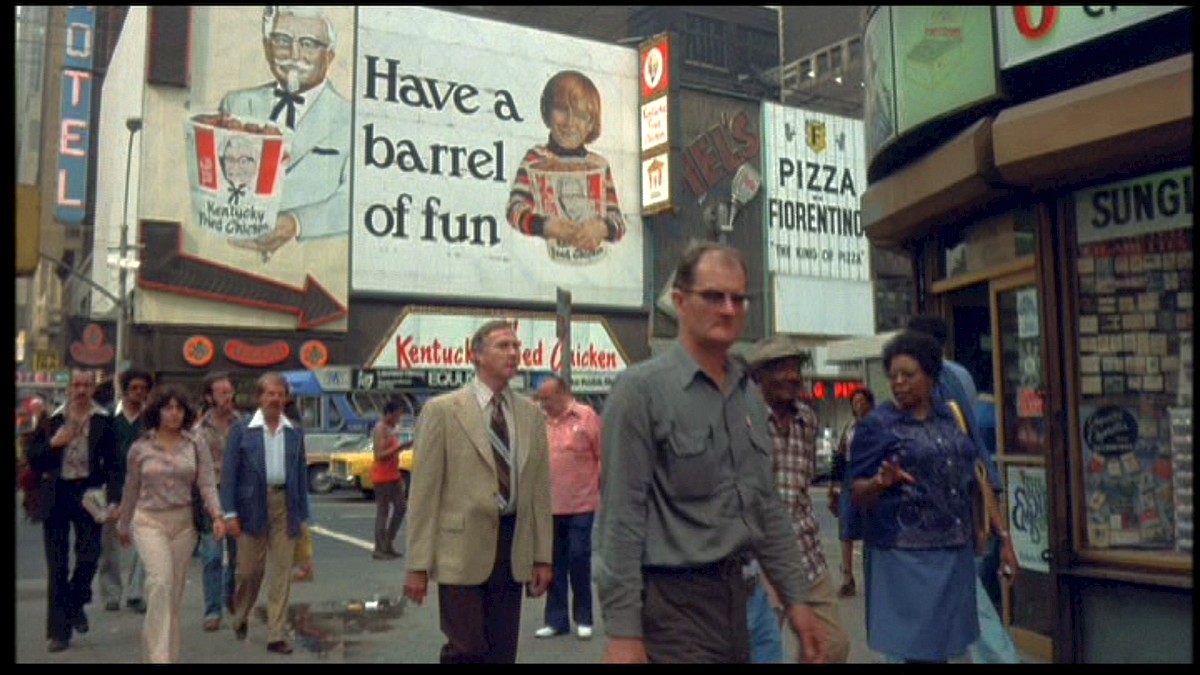
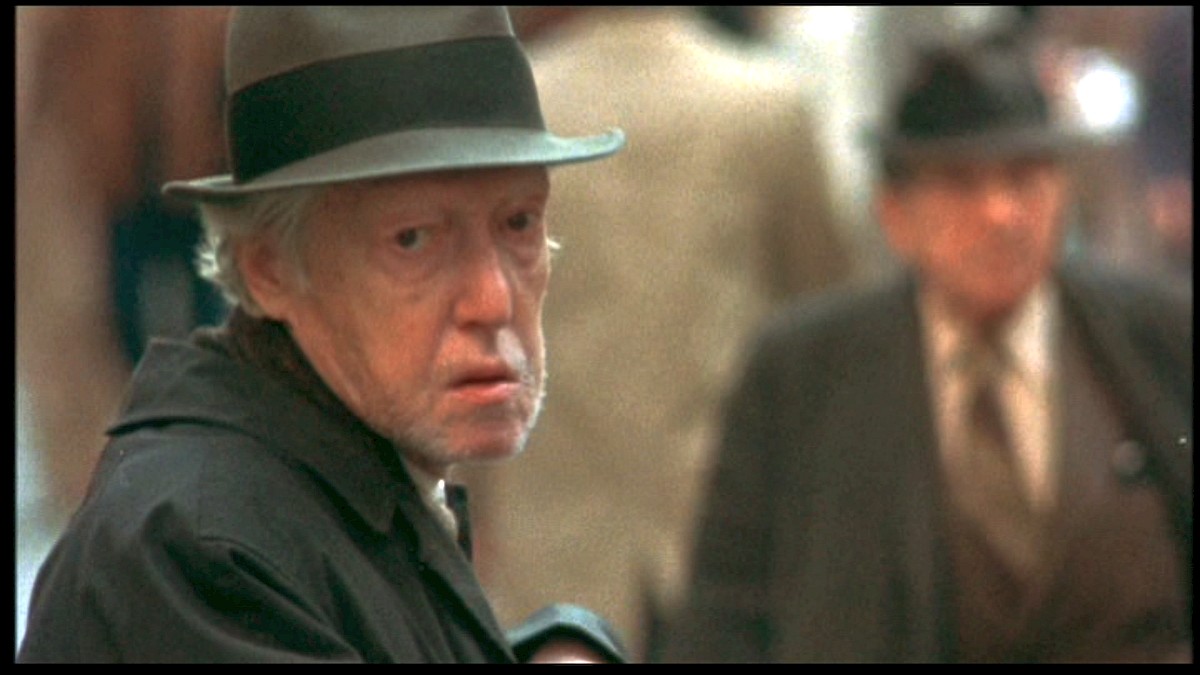
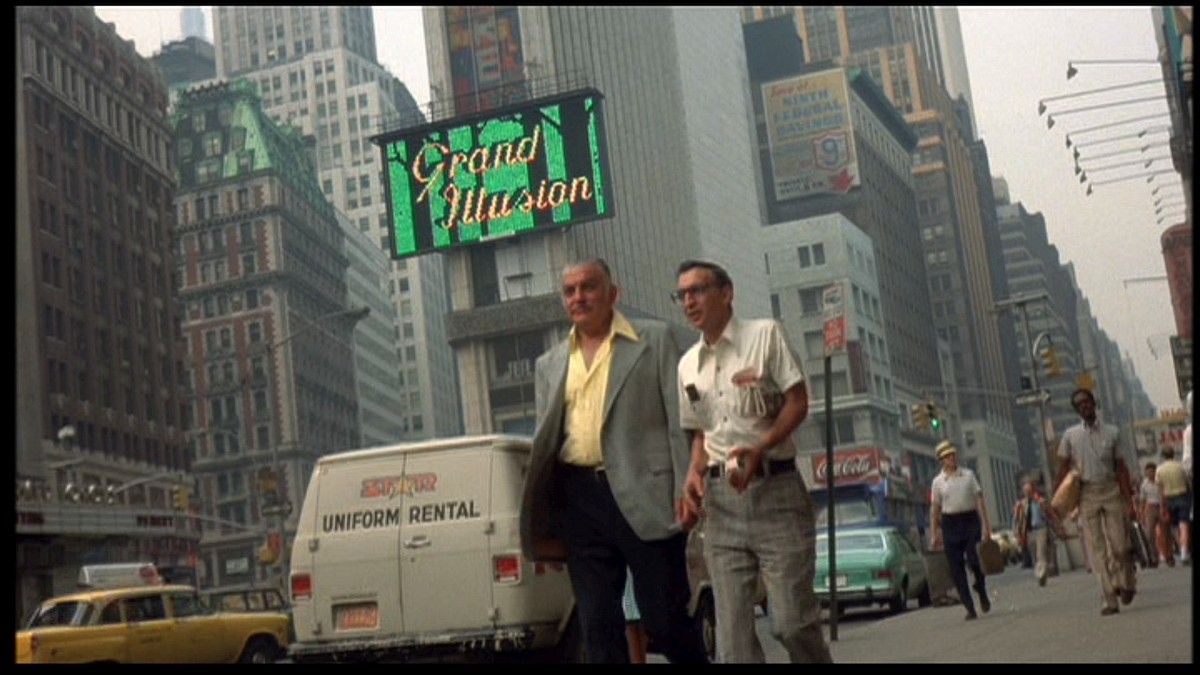
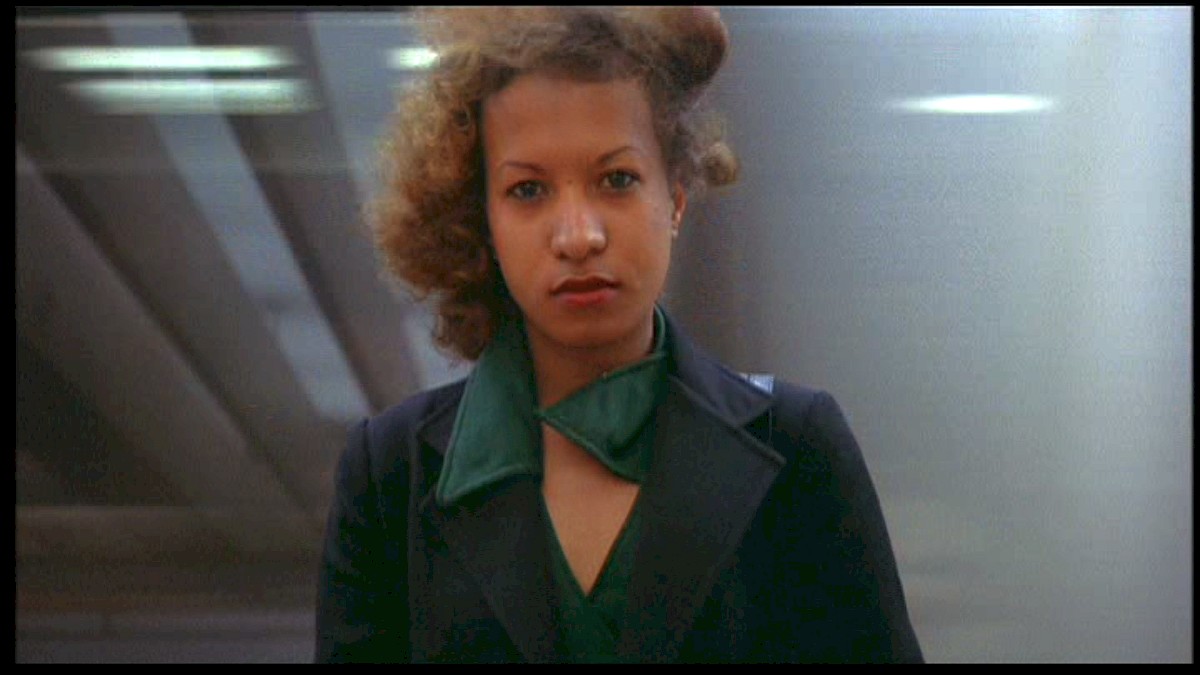
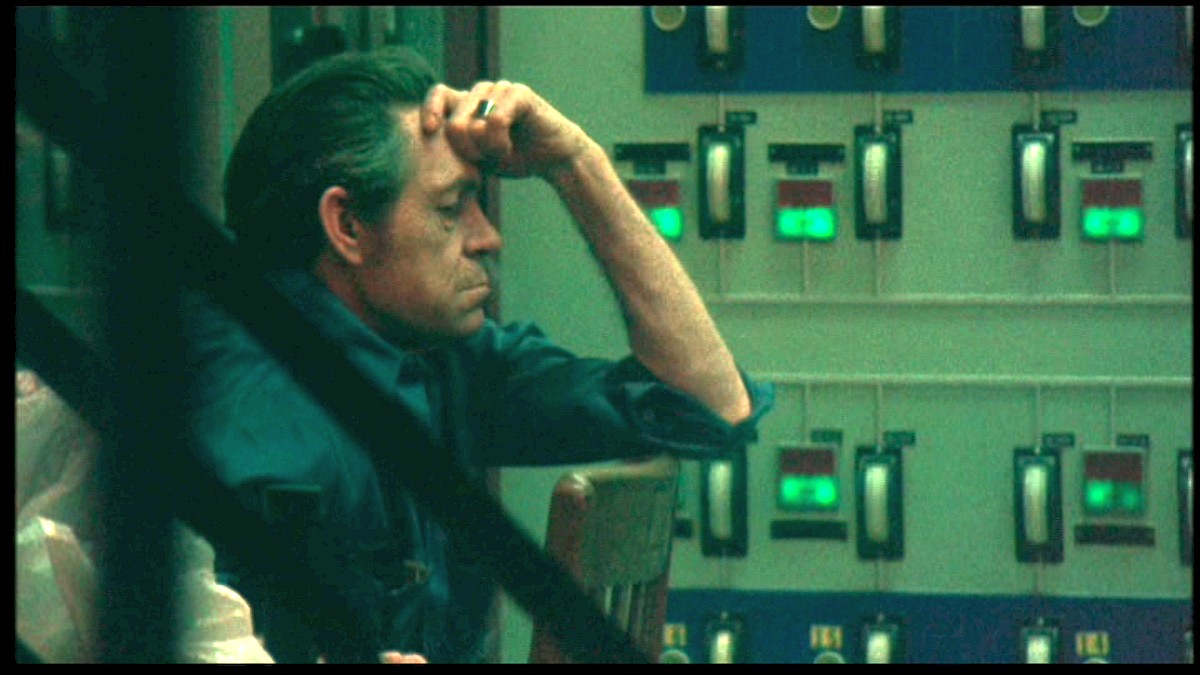
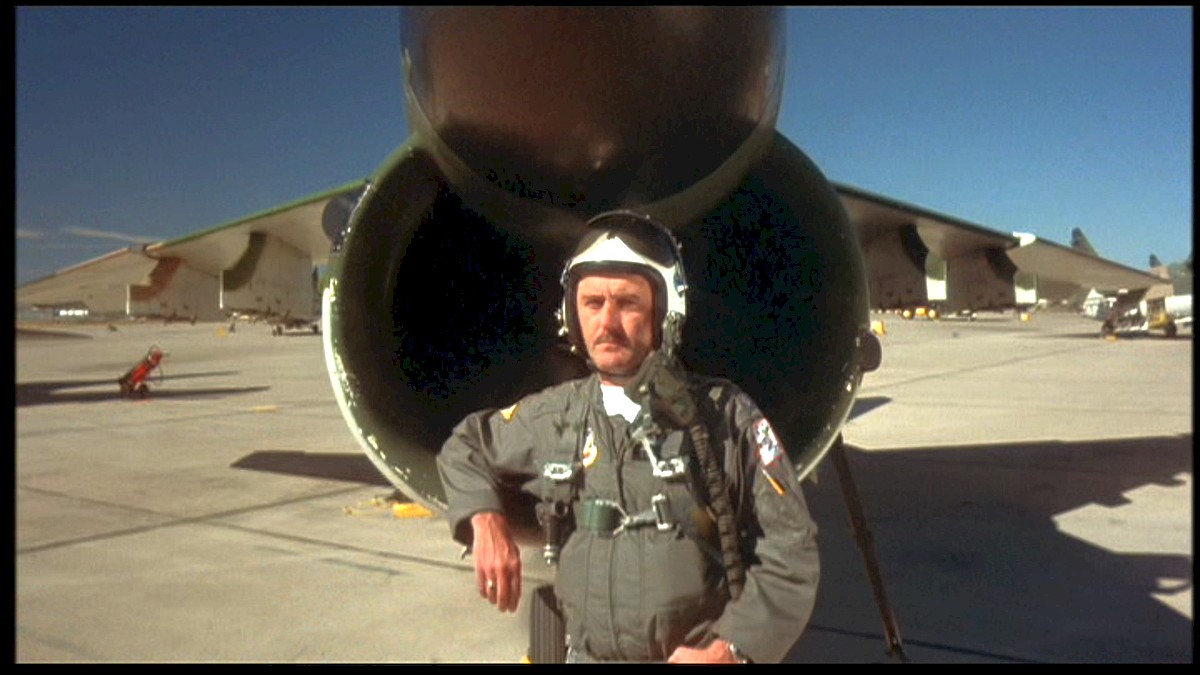
Koyaanisqatsi has been a very influential film in my life. I’d never seen a film like that before. I’d never heard music like that before (a Philip Glass soundtrack). I’d never seen the juxtaposition of the natural world with man’s arrogance, presented so starkly. The squandered resources. The arrogance of capitalism. The perversity of our weapons. The sequestering of all that makes us human. Scene after scene of lonely, isolated, dehumanized people.
Remember this film came out in 1982. Before the internet. Before cell phones. Before MAGAt. Before 9-11. Before COVID. Before personal computers.
My SU and I saw the movie when it first came out at The Village, a local art cinema house in Austin. I recall that while we were waiting in line, there was a proto-maga jerk[1] in front of us, loudly braying about what a horrible movie Koyaanisqatsi was, how there was not a single word spoken, how he got ripped off, etc., etc.
Hopefully that man has found peace in his life by getting his biweekly Ivermectin enema and speed-dialing the ICE deportation hot-line.
[1] For reference purposes only: Using the image prompt “macho shit head” will get you booted from Night Cafe.
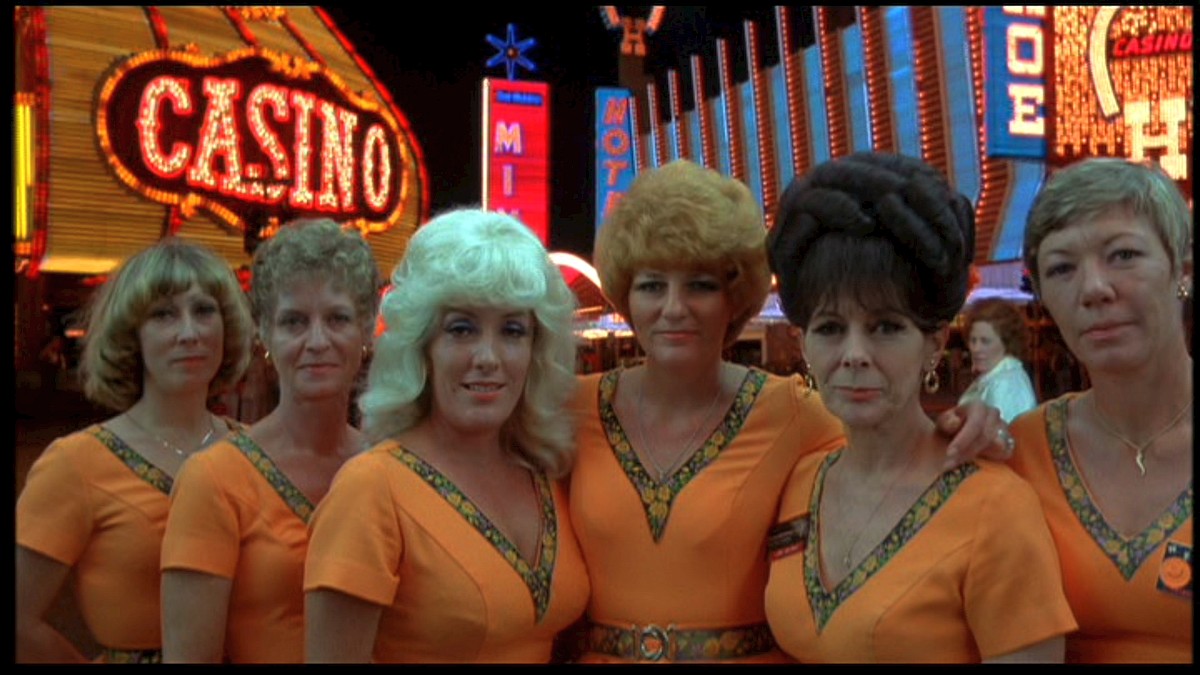
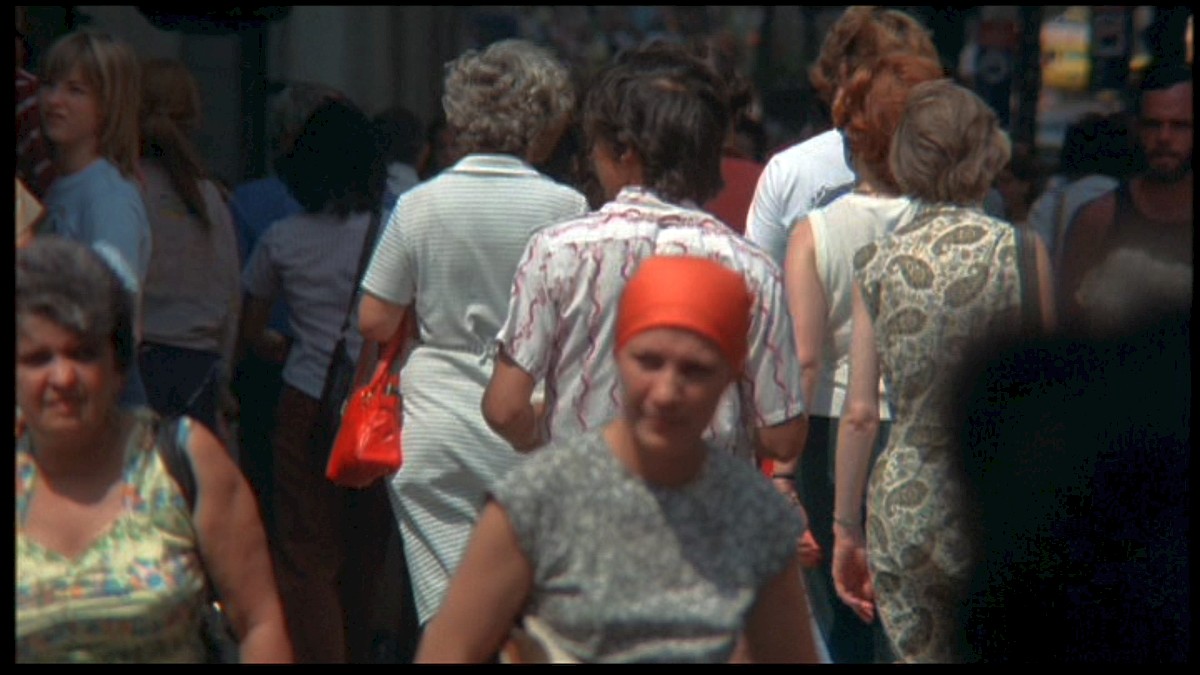
There are many iconic images from the film that project the intense loneliness and despair of our modern world, but the one that I find most disturbing, most demoralizing, is this:
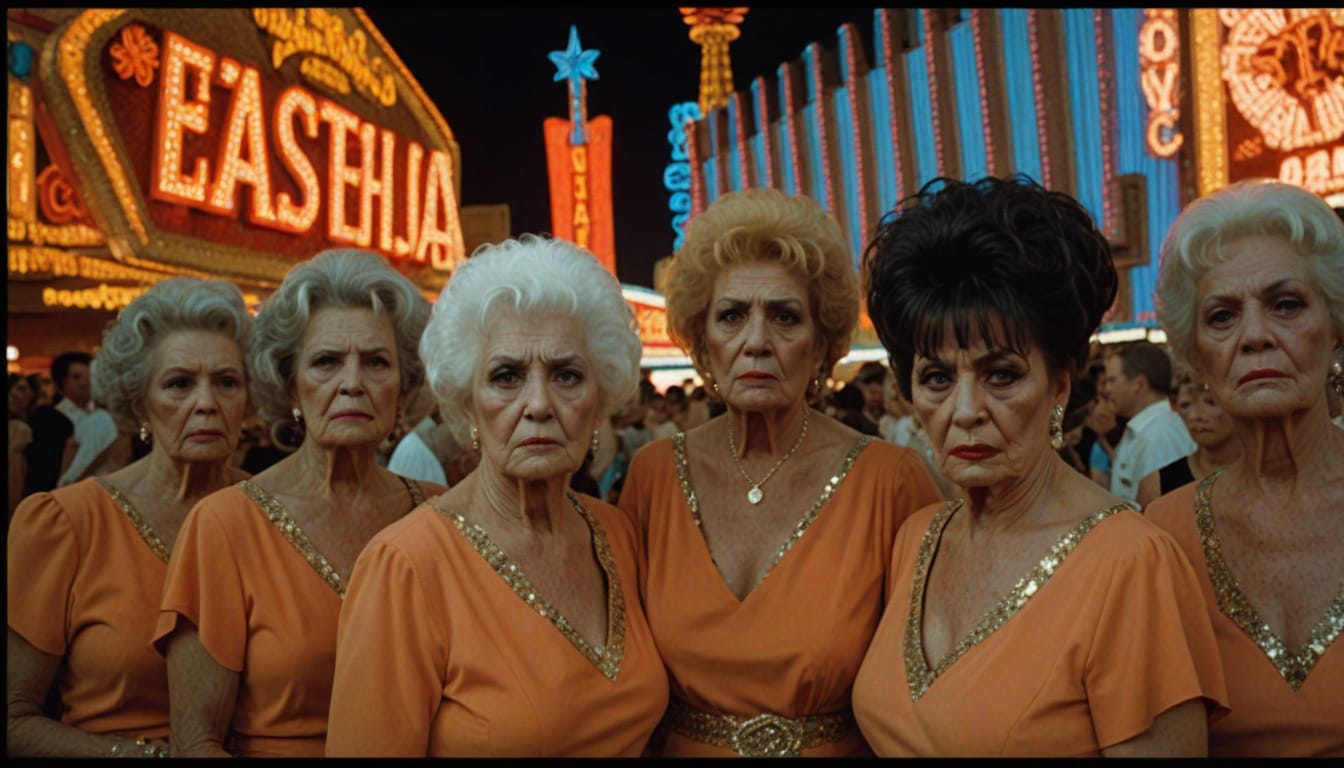
Our regular readers will know that we often mention, in a humorous and satirical way, the retired showgirls of Vegas, and how the WLBOTT mansion of many rooms is a welcoming place for them.
That narrative thread is inspired by this image: 40 year old, 50 year old, perhaps 60 year old women, artificially molded into a twisted idealization of beauty and femininity, whose life work is to serve (mostly men) alcohol, to encourage them to gamble away their only real sense of self worth and achievement – money.
I imagine these women lived in constant subconscious fear of economic ruin, of squalor, loneliness, exploitation, isolation.
How did these women end up in Las Vegas? What became of their lives, their children, their stories, their art, their dreams?
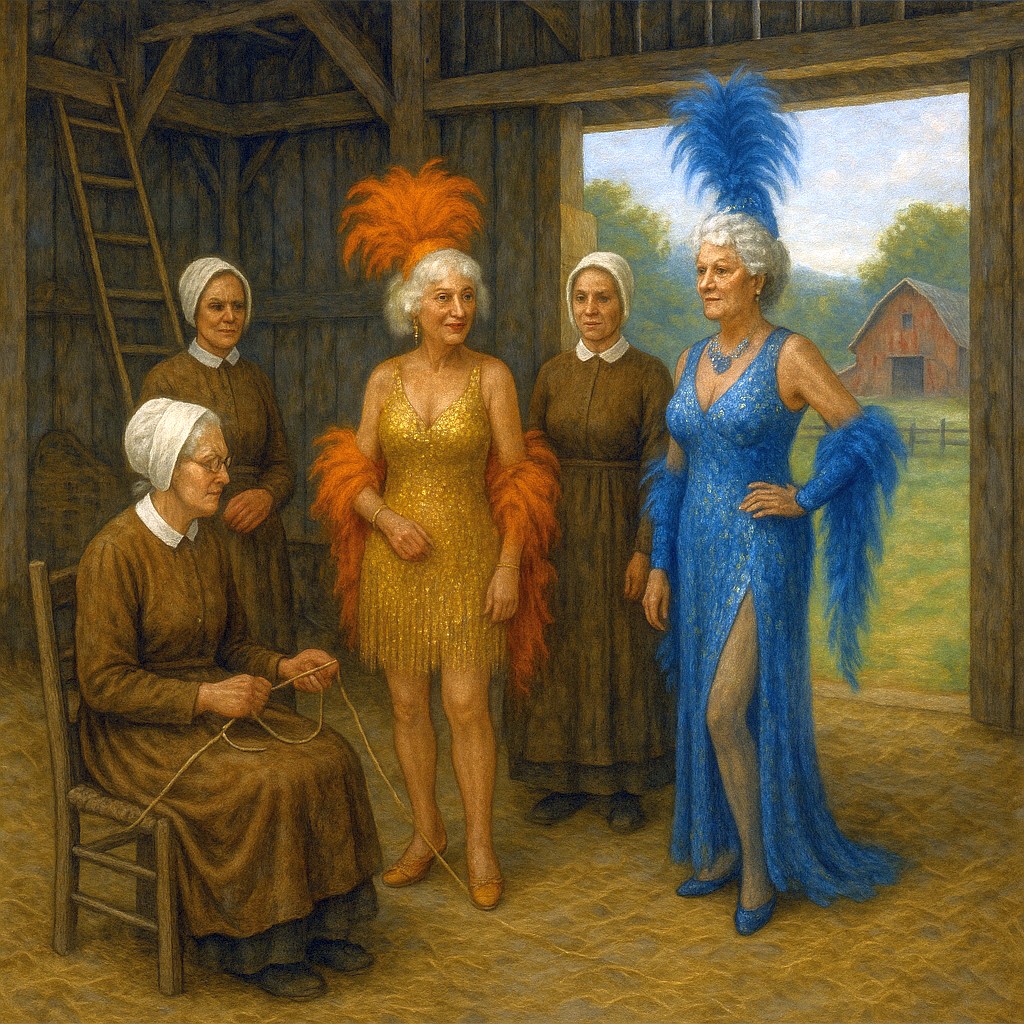
Our next blott will tell a fanciful story of how some of these women find a sense of community and belonging in The Order of the Bedazzled Bonnet, where community replaces capitalism.
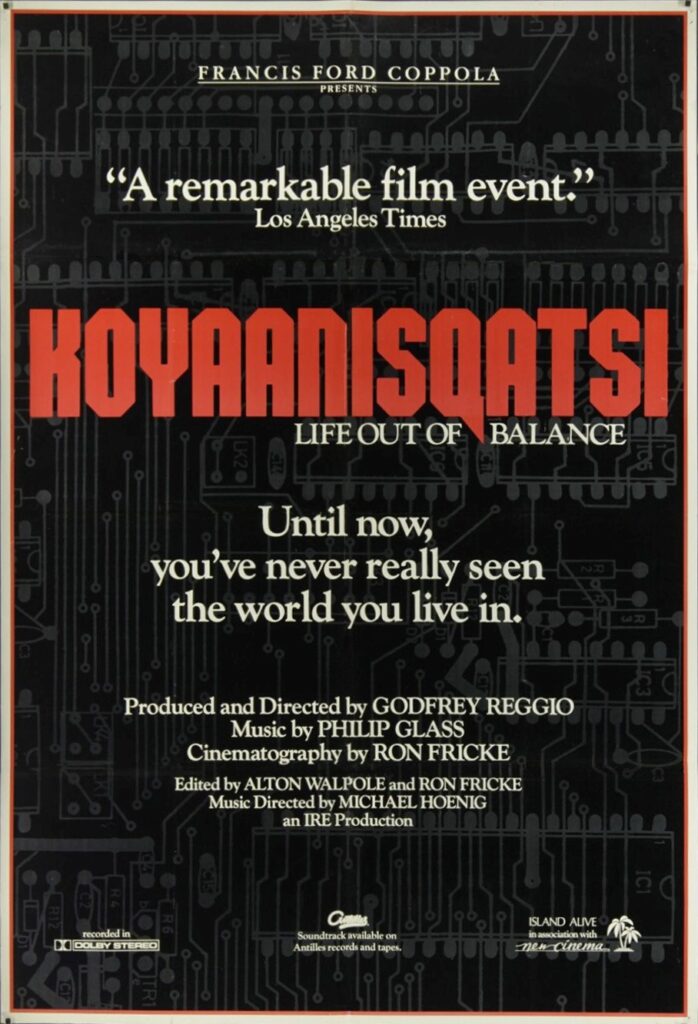
Koyaanisqatsi
Koyaanisqatsi is a 1982 American non-narrative documentary film directed and produced by Godfrey Reggio, featuring music by Philip Glass and cinematography by Ron Fricke. Described as an “essay in images and sound on the state of American civilization”, the film comprises a montage of stock footage, slow motion, and time-lapse visuals of natural and urban environments across the United States. Following its premieres at the Telluride and New York Film Festivals in 1982, it began a limited theatrical release the next year. Produced on a budget of $2.5 million, the film grossed $3.2 million at the box office, and was one of the highest-grossing documentaries of the 1980s.
The title comes from the Hopi word koyaanisqatsi, meaning “life out of balance”. It is the first film in the Qatsi trilogy, which was followed by Powaqqatsi (1988) and Naqoyqatsi (2002). The trilogy depicts different aspects of the relationship between humans, nature and technology. Koyaanisqatsi is the best known of the trilogy and is considered a cult film
The end title card lists translations of the Hopi word koyaanisqatsi:
“crazy life”
“life in turmoil”
“life out of balance”
“life disintegrating”
“a state of life that calls for another way of living”
The following screen shows a translation of the three Hopi prophecies sung near the end of the film:
“If we dig precious things from the land, we will invite disaster.”
“Near the Day of Purification, there will be cobwebs spun back and forth in the sky.”
“A container of ashes might one day be thrown from the sky, which could burn the land and boil the oceans.”
Glass was one of the first composers to employ minimalism in film scoring, paving the way for many future composers of that style. The choral pieces were sung for the film by the Western Wind Vocal Ensemble, a NYC-based 6-singer choral group specializing in choral and vocal music from many different eras and places.