[ed. note: thanks to Elder DZ for his folklore contribution to today’s blott.]
At WLBOTT, we keep a team of unpaid interns working the graveyard shift. They busy themselves by using the “Random Article” feature of Wikipedia, prospecting for WLBOTT blott topics.
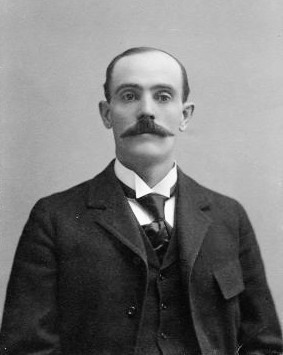
John Alexander Chisholm (1859–1903) was a Canadian inventor and businessman who developed the Chisholm-Scott Pea Viner, an agricultural machine for shelling peas. He sold these machines throughout Canada and the United States through the Chisholm-Scott Company.
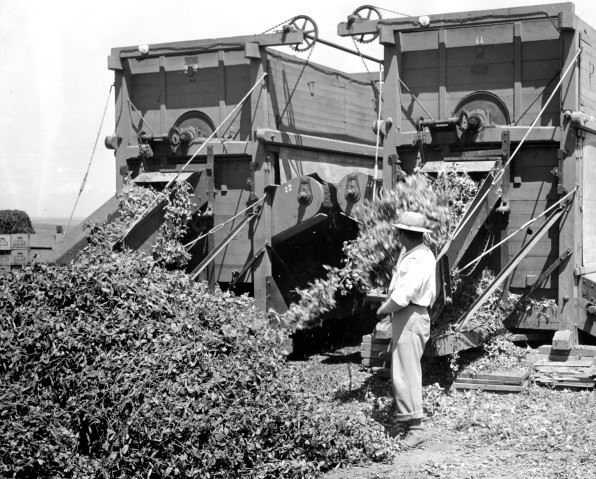
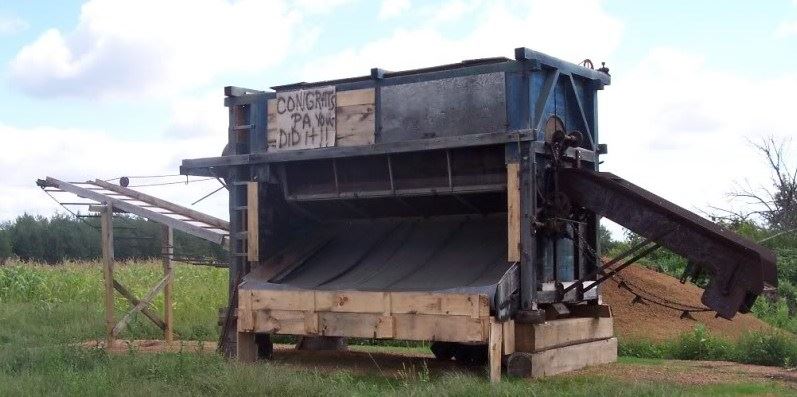
These pea viners had a series of paddles which struck the pea pods, compressing the air inside which split the pods open and released the peas onto a conveyor belt. These machines could remove as many peas from pods as 600 workers could do by hand, vastly improving the efficiency of this branch of agriculture.
A report on the state’s canning industry by George C. Butz wrote that “The pea canning business has been greatly modified in recent years by the invention of some remarkable machinery, particularly the Chisholm-Scott Pea Viner. Formerly a great army of pickers was necessary in pea canning section to pick the peas from the vines in the fields. Another army of hands was necessary to hull the green peas and so throughout the whole series of operations of canning peas the labour was excessive, tedious and expensive. Now the vines are cut with the scythe or mower, hauled to the factory and delivered to the viner or huller which shells and separates the peas from the vines, discharging the latter to one side and the former to the cleaner.”
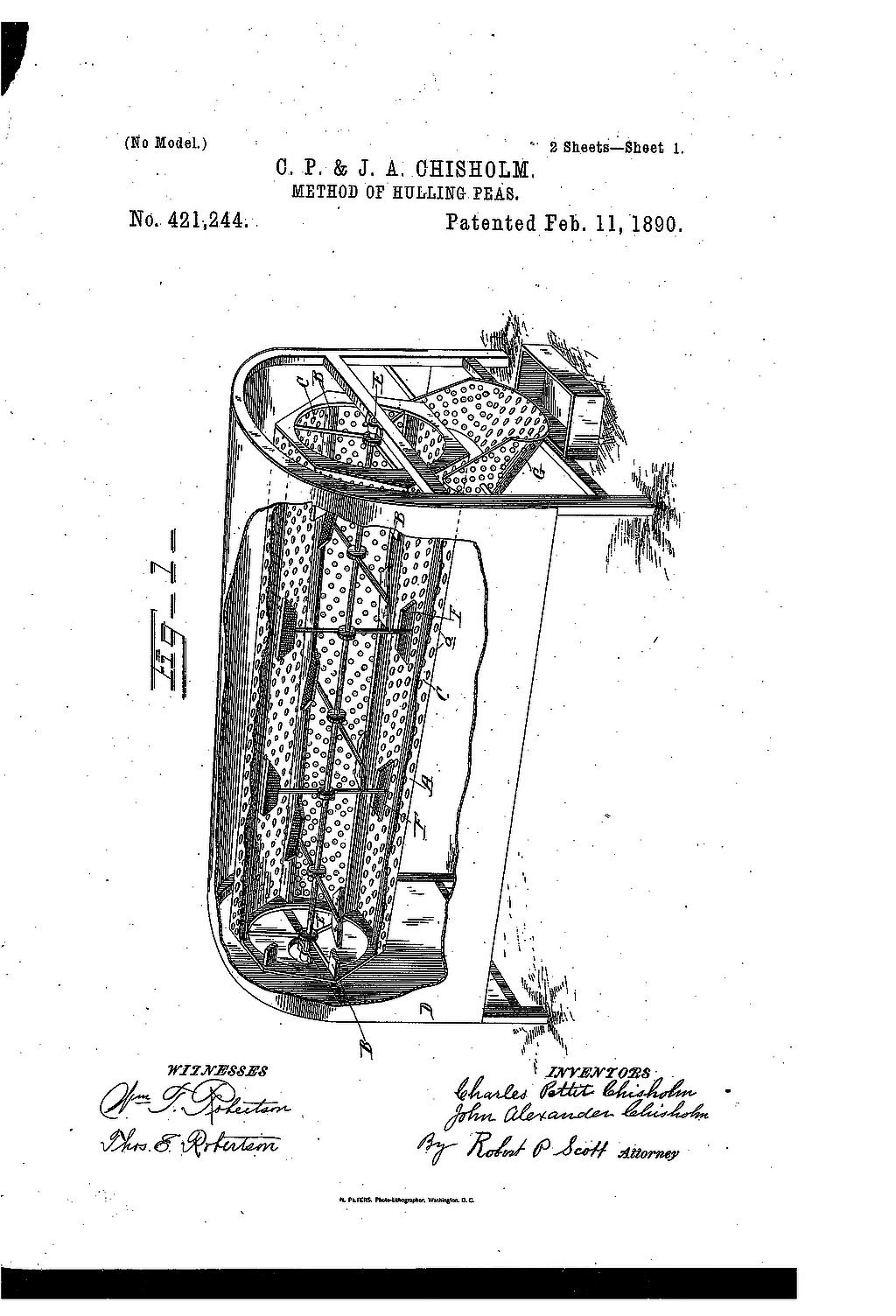
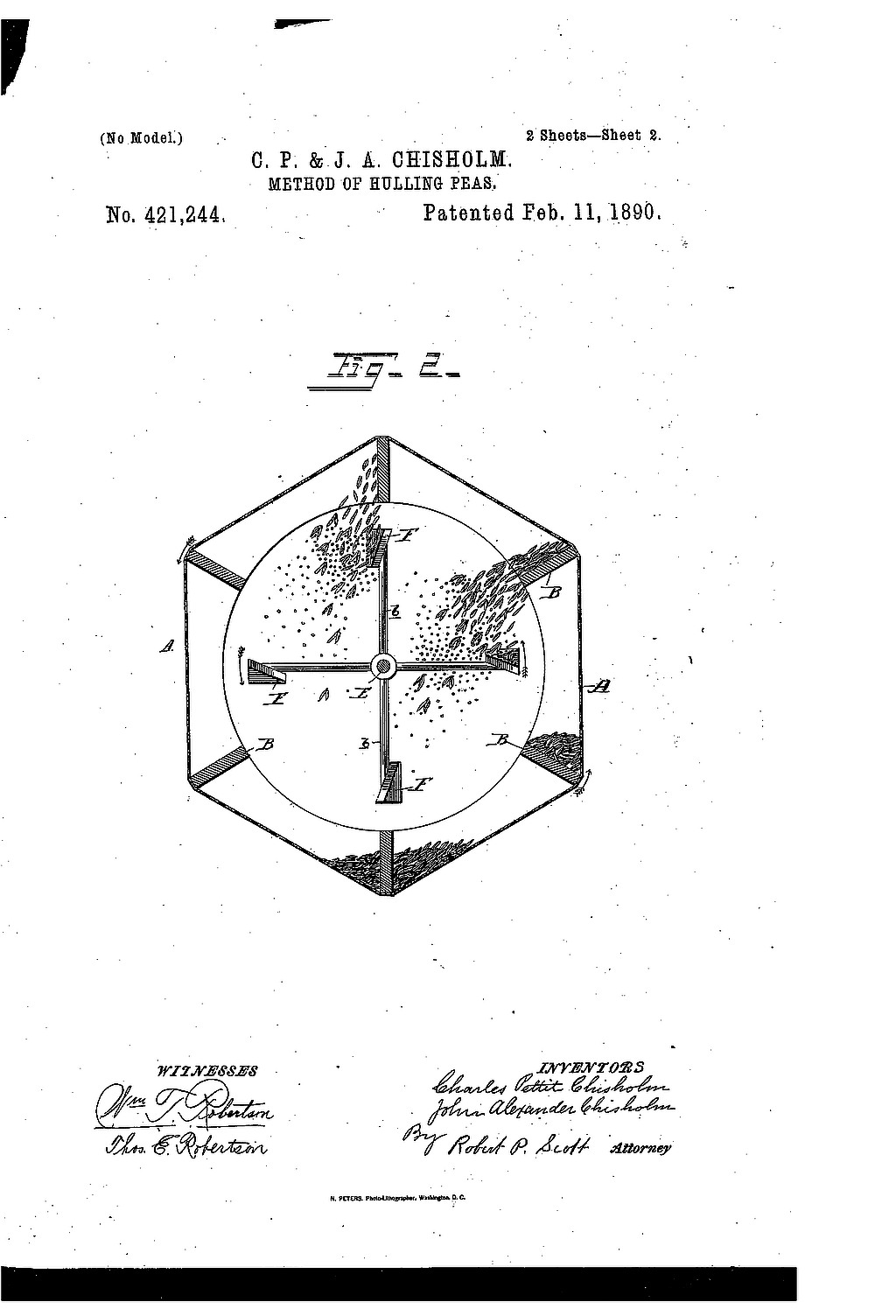
Be it known that We, CHARLES P. OHISHOLM and JOHN A.- OHIsHOLM, subjects of the Queen of Great Britain, residing at Oakville, in the county of- I’Ialton, Dominion of Canada, have invented certain ‘new and useful Improvements in the Method of Hulling Peas, of which the following is a specification, reference be ing hadtherein to the accompanying drawings.
The object of this invention is to remove green peas from their pods without injury to the peas.
Pea-harvester patents – and they’re actually a patent family drama starring Chisholm and his partner Scott.
Here’s the core of it:
1. The foundational Chisholm process patent
John Alexander Chisholm and his brother Charles are co-inventors on a key U.S. patent:
US 421,244 – “Improvements in the Method of Hulling Peas”
Inventors: Charles P. Chisholm & John A. Chisholm
Filed: original application Jan 3, 1887 (later divided)
Granted: Feb 11, 1890
It covers the process of hulling green peas by precisely applied impact — striking filled pods hard enough to burst them without damaging the peas.
This is the big conceptual leap: using controlled impact to replace armies of hand-hullers.
If you search for “US421244A improvements in the method of hulling peas” on Google Patents or the USPTO site, you’ll get the original document.
2. The machine / harvester side of the story
Their partner Robert P. Scott then patents specific machines that implement this impact process, often explicitly as improvements on the Chisholm brothers’ earlier application:
US 387,318 – “Machine for Hulling and Separating Green Peas”
Inventor: Robert P. Scott
Granted: Aug 7, 1888
Scott says his machine is an improvement on an earlier machine application filed by Charles P. and John A. Chisholm on Jan 3, 1887 (Serial No. 223,170).
A later court case lays out the whole cluster:
It lists four related pea patents, including
US 421,244 (Chisholm & Chisholm – process)
US 500,299 (Scott, Charles P. Chisholm, John A. Chisholm – “improvements in pea-hulling machines”, granted June 27, 1893)
and notes how these inventions basically revolutionized pea hulling for canneries.
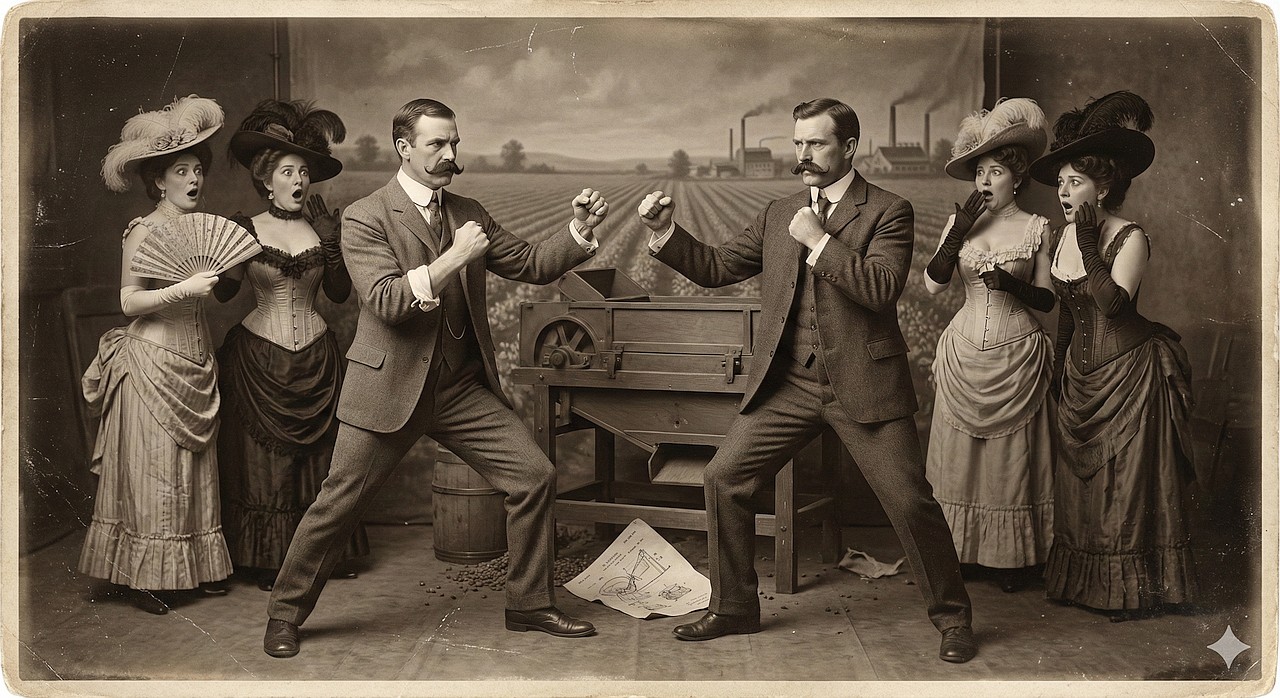
The dispute became legendary, and was covered by newspapers worldwide.
Pea Harvesting and Drunk Pigs
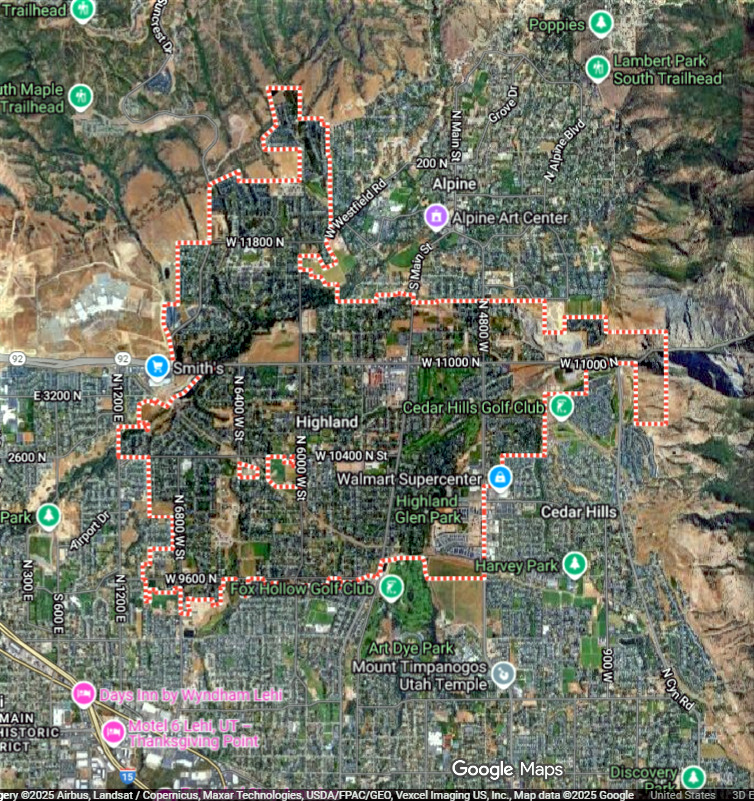
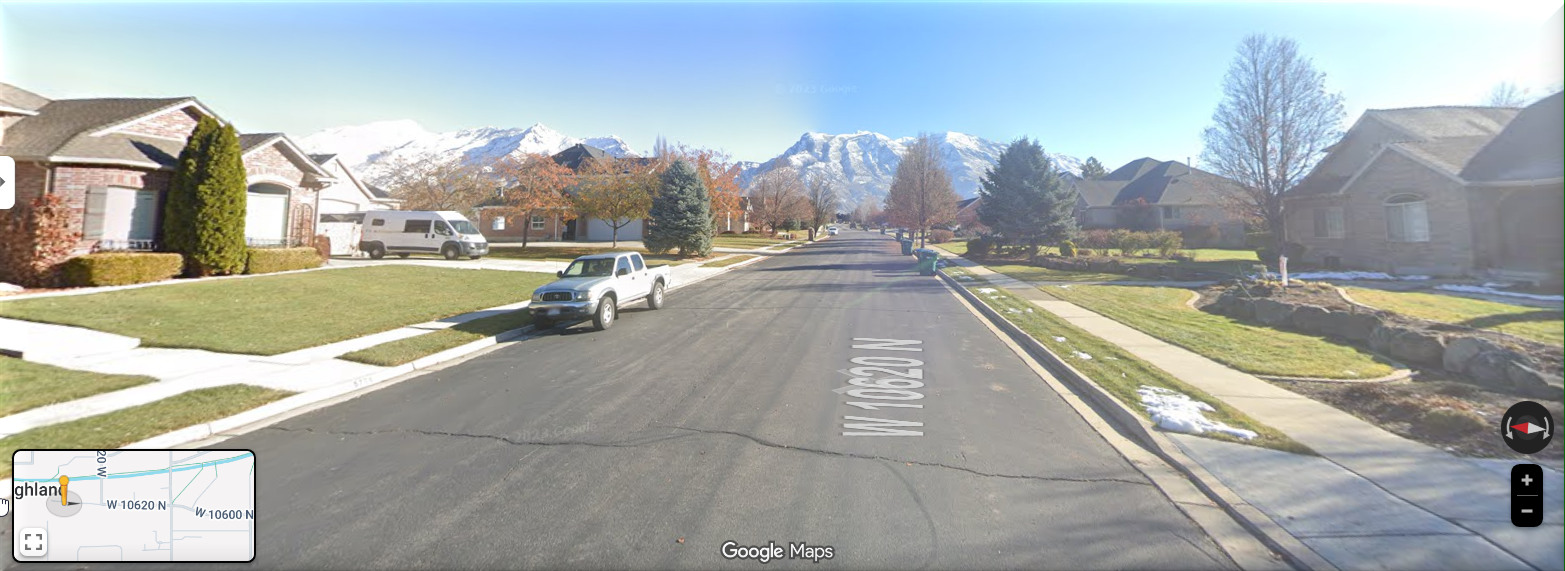
Interesting story of pea harvesting in Highland City, Utah, in the 1940s through the 1970. Even with the latest agricultural machinery, it was an extremely labor-intensive process.
Peas were planted with a grain drill that had been re-sized for the peas. Peas had to be irrigated on a regular basis but in Highland the interval varied from seven to twelve and one-half days. Pea plants grow straight and tall for the first two or three weeks then they fall over because they are weak stemmed so they were harvested by a mowing machine, generally with an attachment of a series of curved tines to pile them in a windrow for easy pickup. Then men and boys used pitchforks to load them onto wagons or trucks. The vines were much heavier than hay so it was a lot harder work. The harvesting was usually done at night so as to have the peas at the viners when they began working at 4:00 a.m. or earlier, often operating 24 hours a day. The pea season usually lasted about three weeks and, depending on the weather, would begin in early-mid June and sometimes run past July 4. There were times that Church was cancelled for one or two weeks during the harvest because so many were working. […]
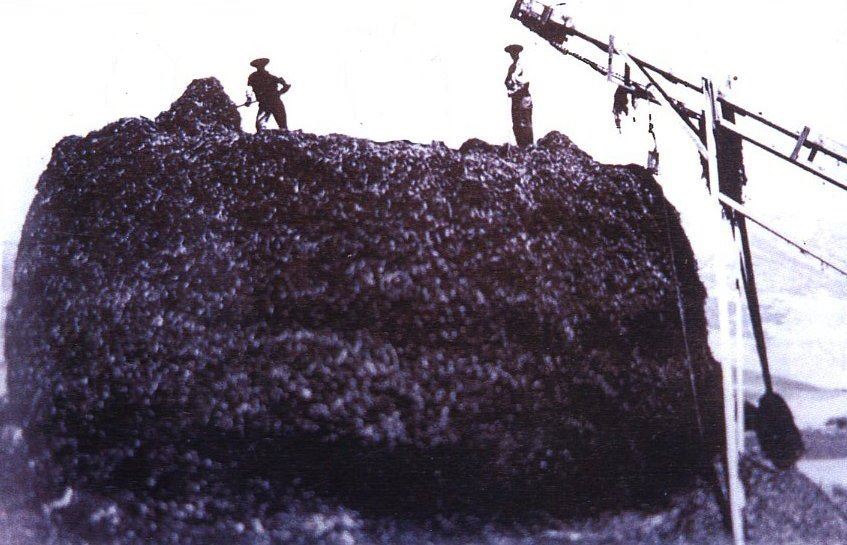
My first work in the peas was when I was twelve and worked on the stack at the Eddington viner. My brother had contracted the stack and hired me and Gary Adamson to assist. For payment I received his bicycle. Other years I worked for the farmers, mostly Boyd Stice, hauling and pitching into the viners. My father was foreman for the RMPC viner for many years.
The vine stack was owned proportionally by the farmers who brought in the peas and they used it for cattle feed in the winter. The souring stack of vines was called pea silage and as it fermented, it had a unique and bad smell that could be experienced from quite a distance, especially in the winter when the farmers disturbed the stack to retrieve their share for their cattle. The pea juices ran in small streams away from the stack and at least once some pigs got loose from their pen and came to the viner, drank of the juices and were staggering around as if drunk (I suppose they were).
John Henry and Baptiste ‘Le Brise-Gousses’ Tremblay
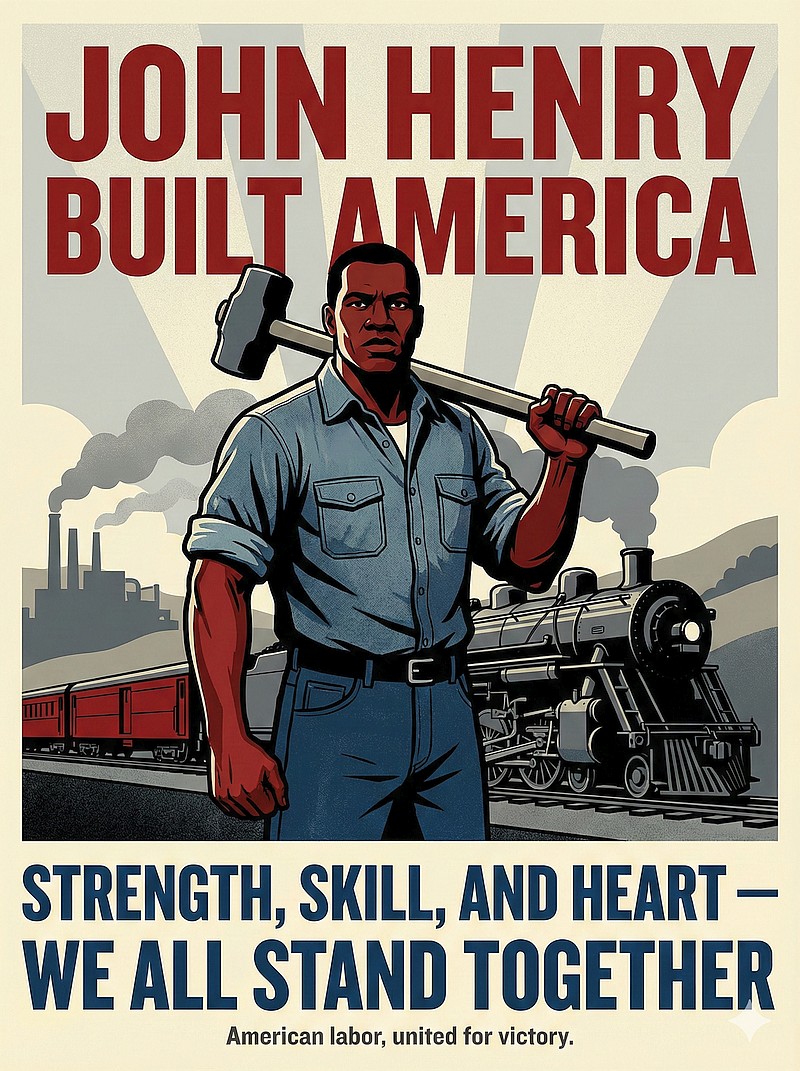
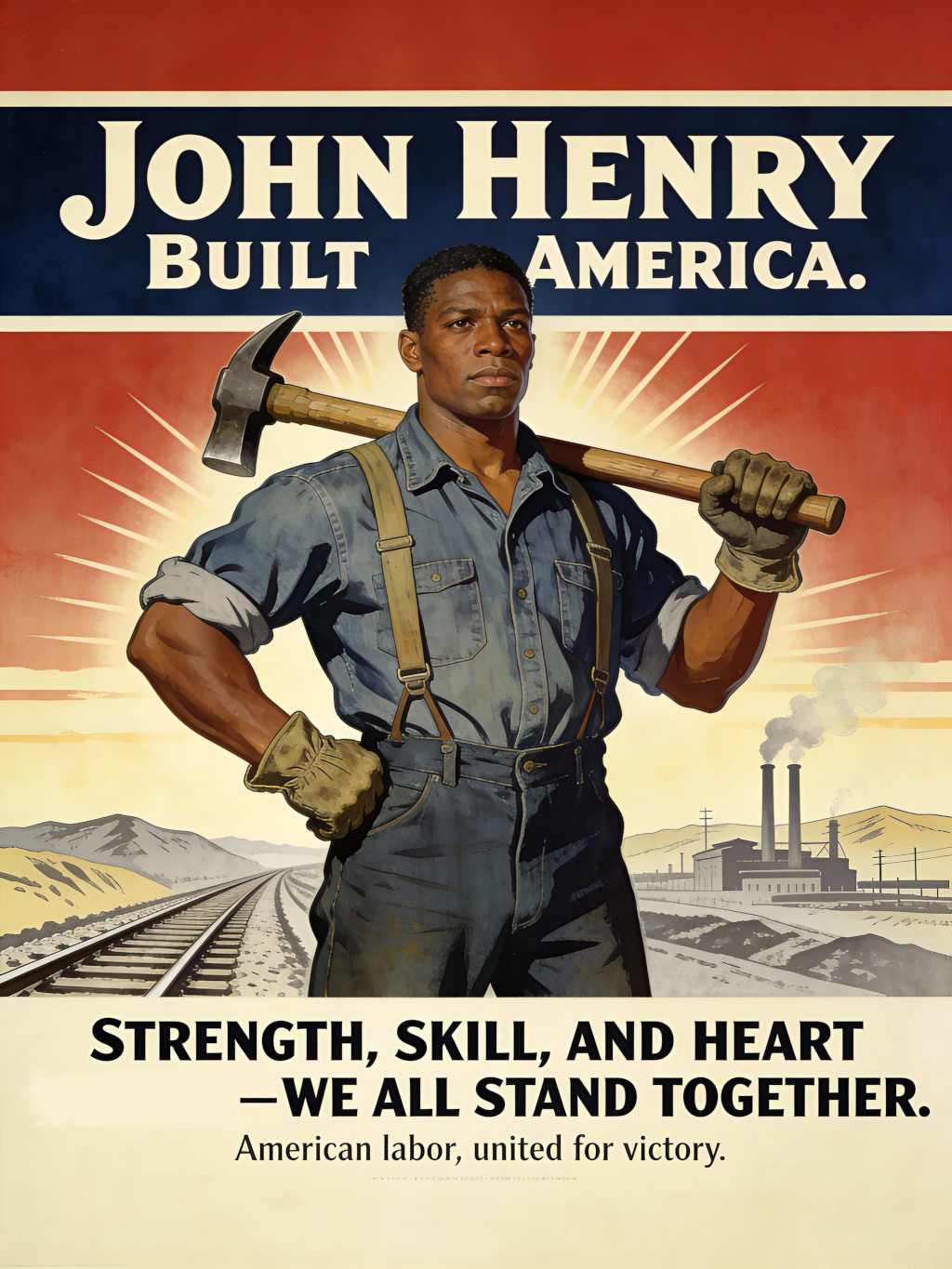
Many of you are familiar with the story of John Henry, a steel-driving man, who challenged the rise of technology.
John Henry is an American folk hero. An African American freedman, he is said to have worked as a “steel-driving man”—a man tasked with hammering a steel drill into a rock to make holes for explosives to blast the rock in constructing a railroad tunnel.
The story of John Henry is told in a classic blues folk song about his duel against a drilling machine, which exists in many versions, and has been the subject of numerous stories, plays, books, and novels.
Legend According to legend, John Henry’s prowess as a steel driver was measured in a race against a steam-powered rock drill, a race that he won only to die in victory with a hammer in hand as his heart gave out from stress.
Philosopher Jeanette Bickell said of the John Henry legend:
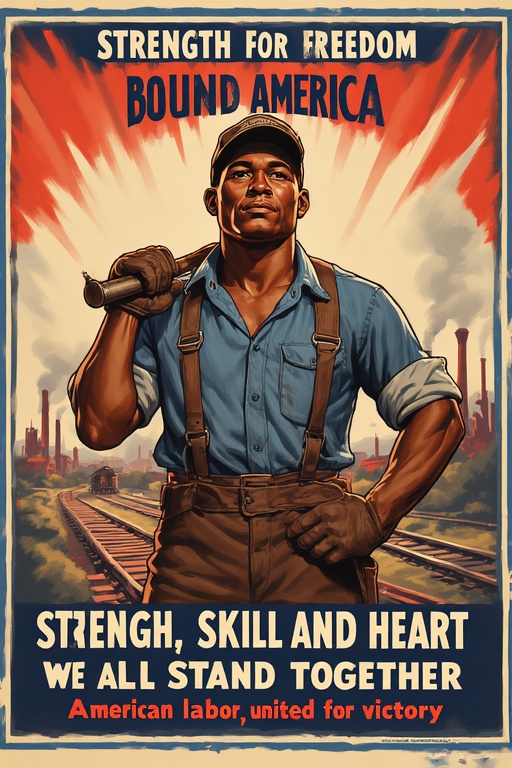
John Henry is a symbol of physical strength and endurance, of exploited labor, of the dignity of a human being against the degradations of the machine age, and of racial pride and solidarity. During World War II his image was used in U.S. government propaganda as a symbol of social tolerance and diversity.
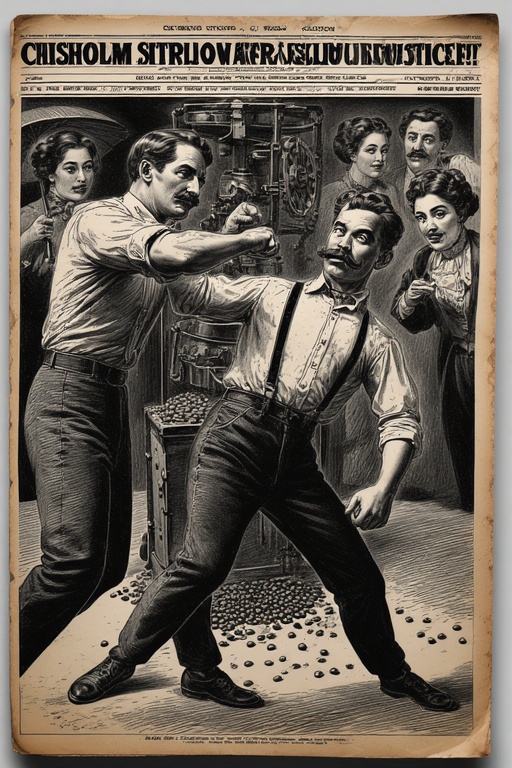
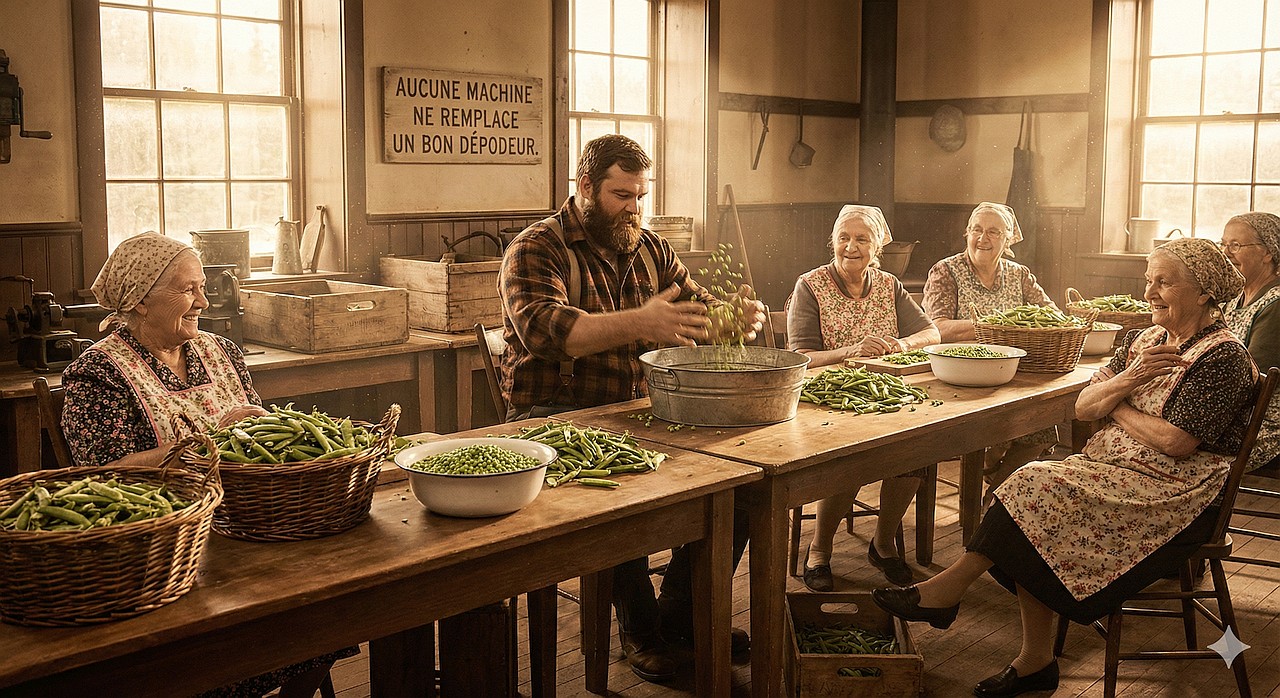
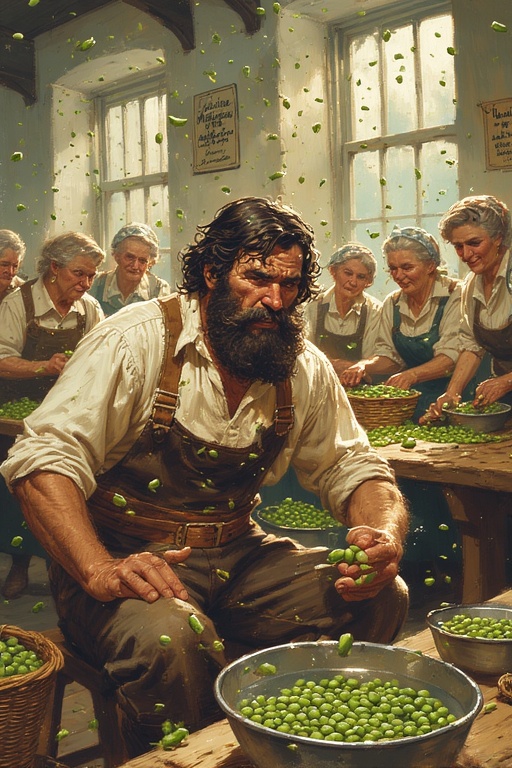
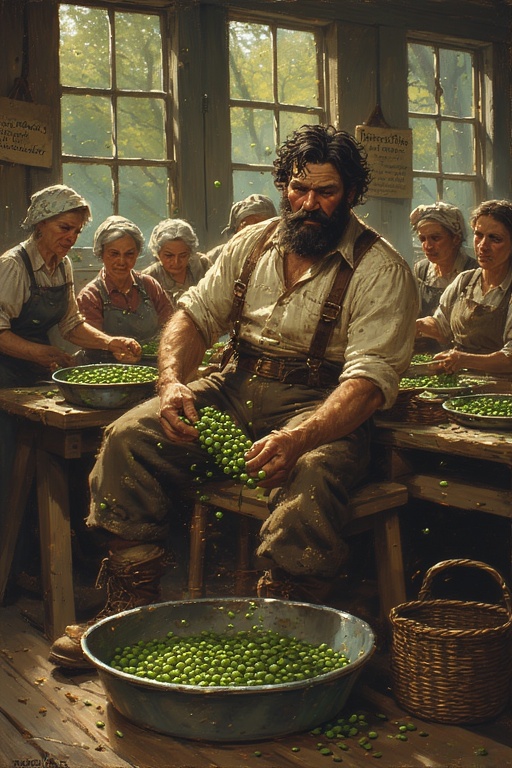
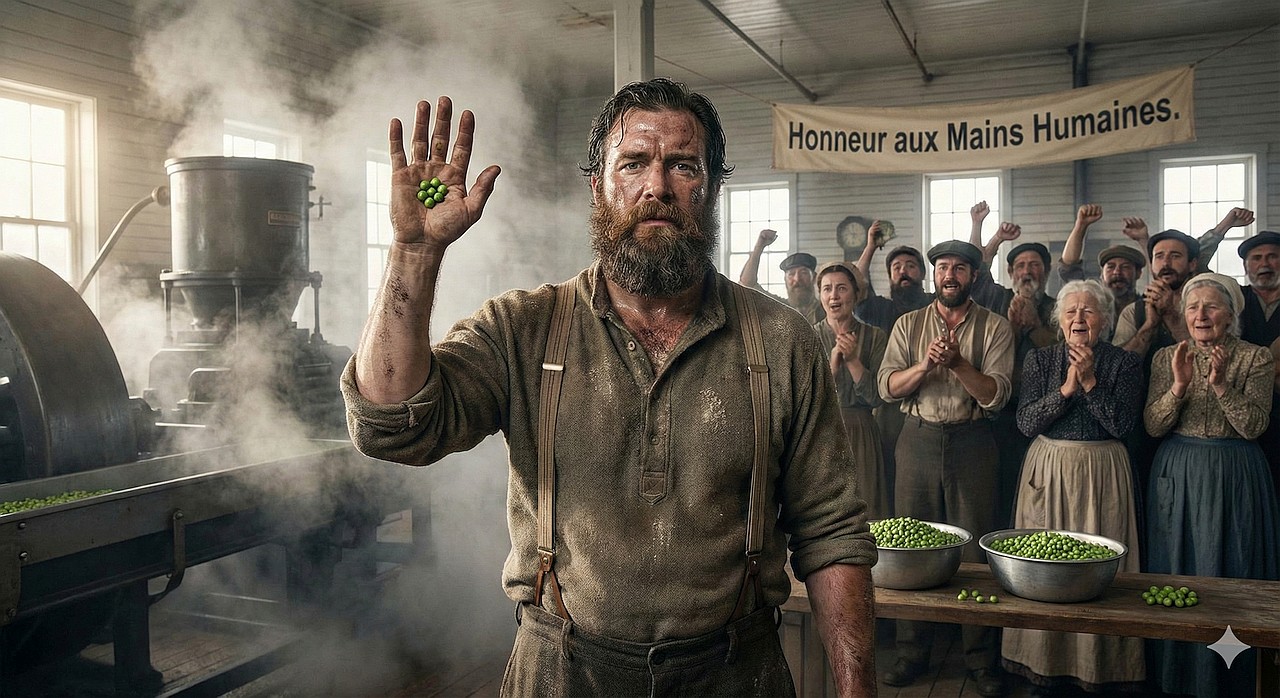
But you may not be familiar with the story of Baptiste ‘Le Brise-Gousses’ Tremblay. This French Canadian was the champion of pea shelling in the late 1800s.
Baptiste was a gentle giant, but took his shelling ability very seriously.
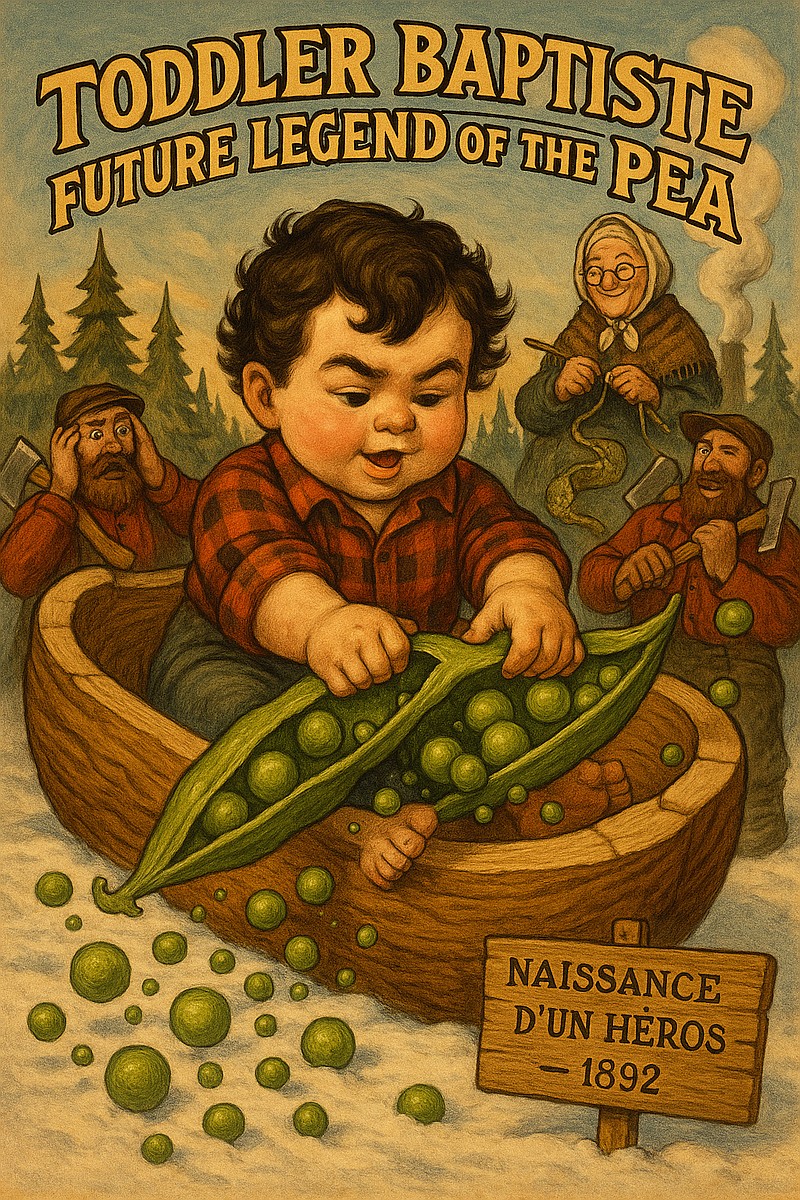
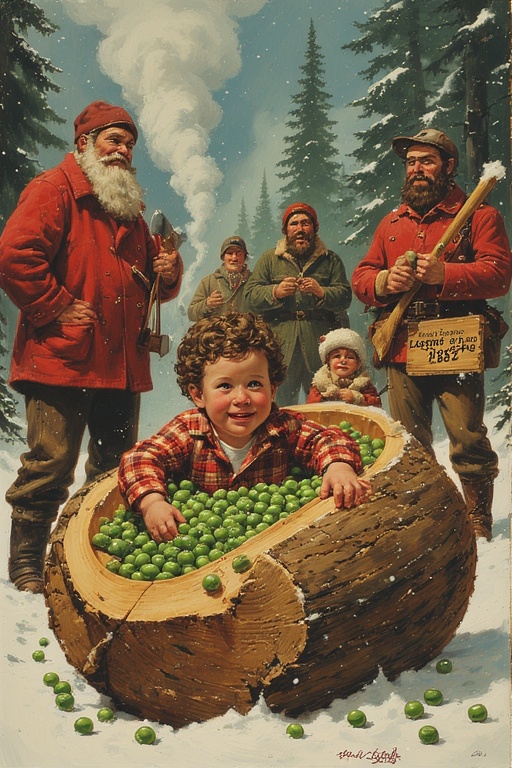
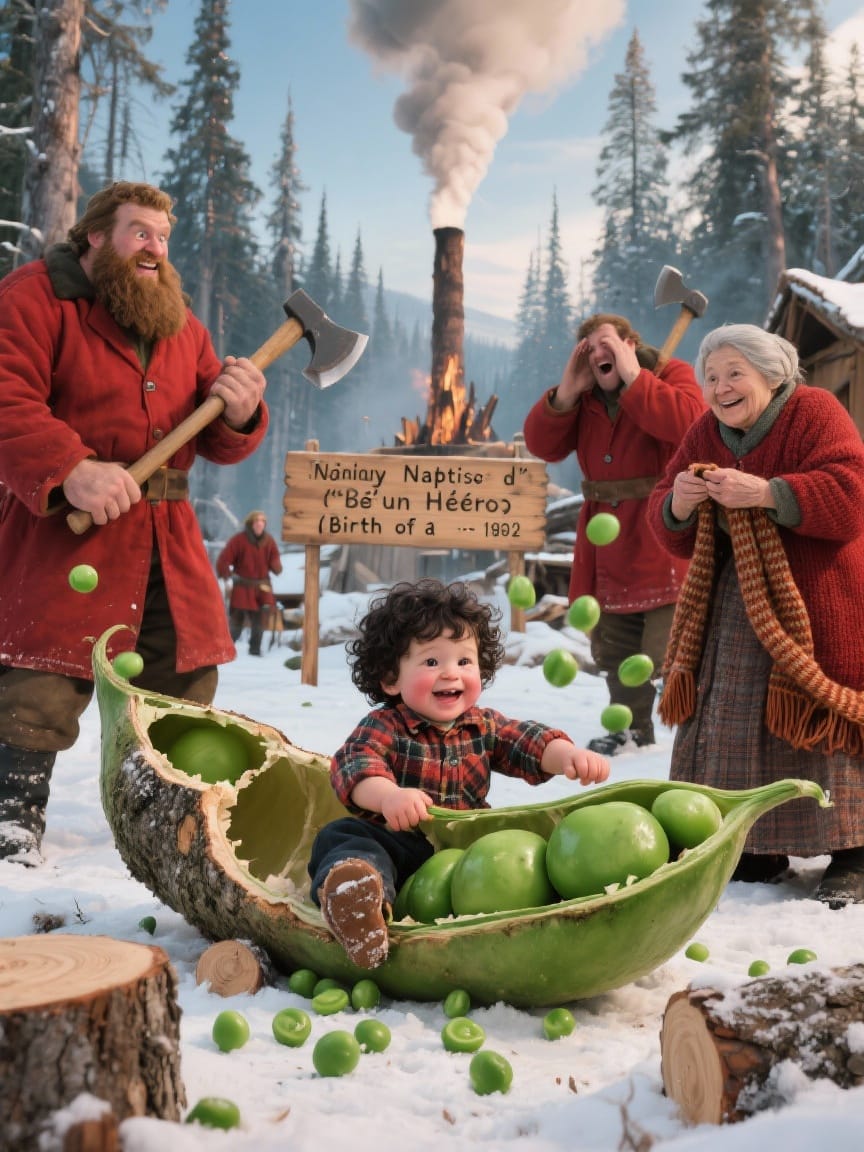
Baptiste “Le Brise-Gousses” Tremblay was born in a logging camp on the edge of the Laurentian forest, where the elders claimed he could crack open a pinecone with his bare hands before he could walk. Raised by his grandmother, Mémère Lucienne, he learned the art of pea-shelling as a winter chore, but by age twelve he was shelling faster than the entire parish ladies’ circle combined. By the time he reached adulthood, stories of his lightning-fast fingers and gentle respect for the old ways had already spread along the St. Lawrence like the first warm winds of spring.
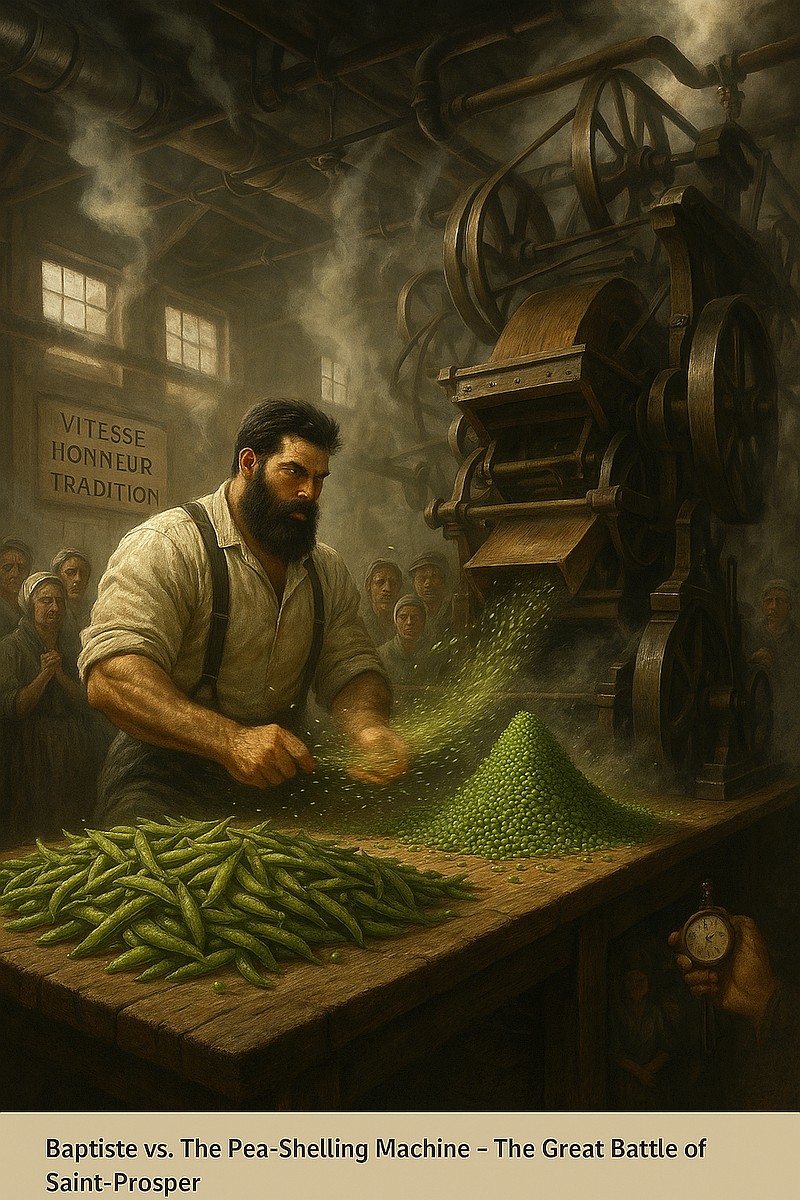
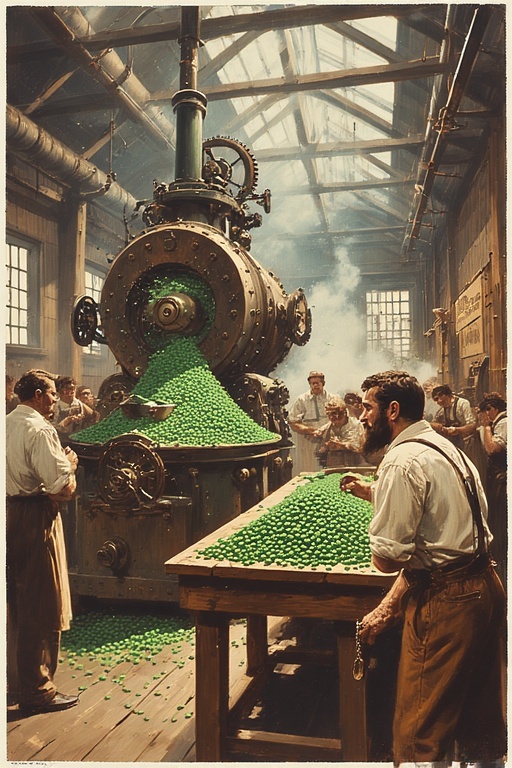
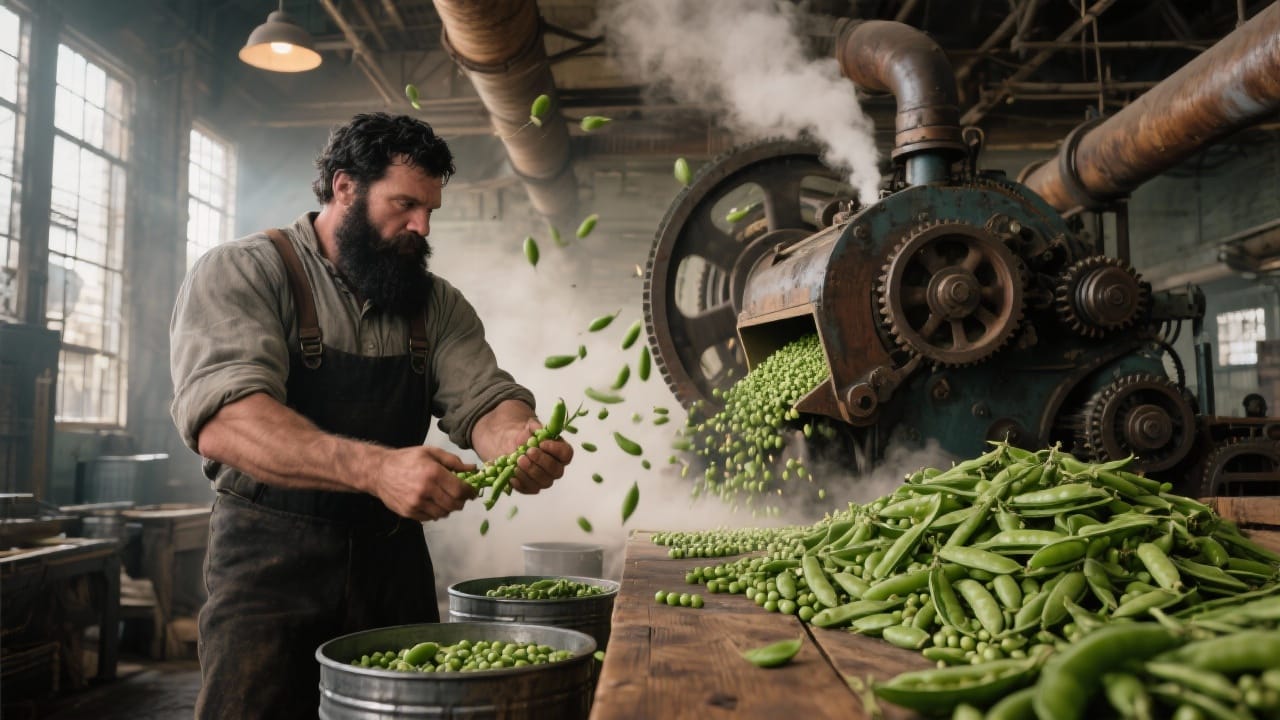
After hearing that he and his grandmother’s shelling circle was in danger of being “canned” by the new shelling machine, he demands a pea-off.
By the thinnest of margins (seven peas!) Baptiste is declared the victor!
WLBOTT Enters the Lucrative Canned Pea Market
We conviend a special Bored of Directors‘ meeting to review the proposal.
Product Line and Advertising
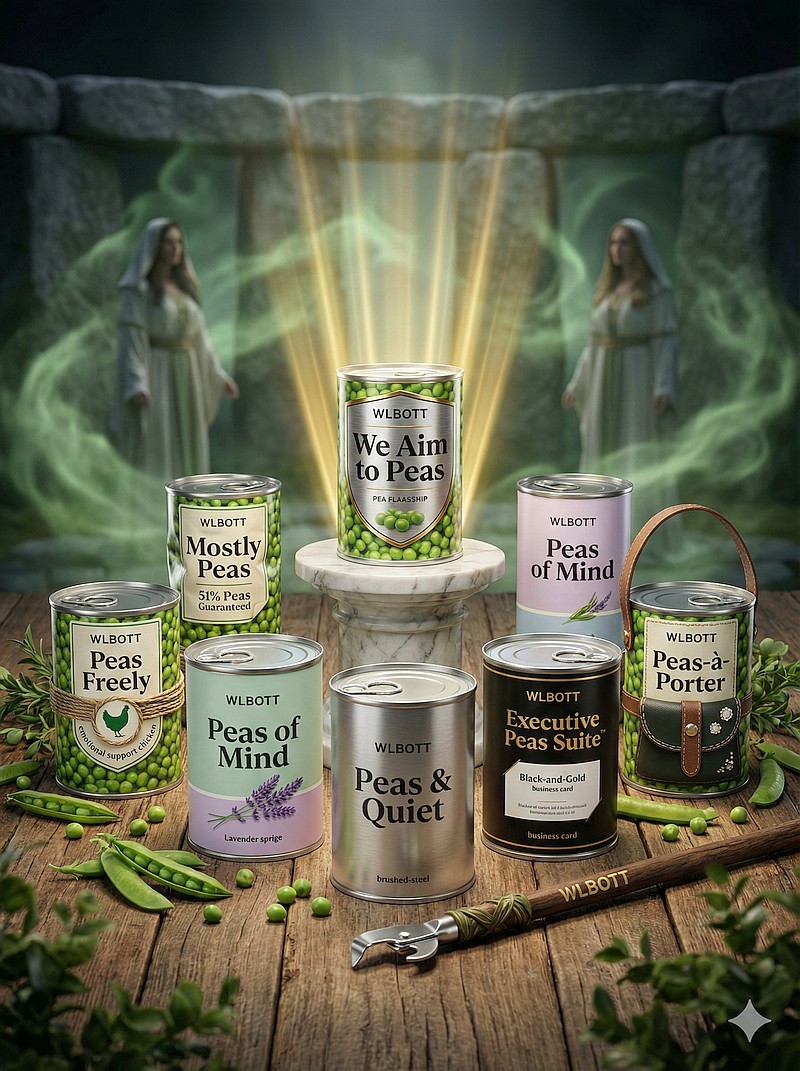
We proudly present our product line:
“WLBOTT Peas Freely” — the can wrapped in rustic twine, adorned with a tiny emotional-support chicken emblem.
“WLBOTT Mostly Peas” — a slightly dented can with a suspiciously vague label that reads “51% Peas Guaranteed.”
“Peas of Mind” — pastel colors, soft wellness gradients, and a lavender sprig resting against it.
“Peas & Quiet” — an unlabeled, completely silent brushed-steel can with no markings whatsoever.
“Executive Peas Suite™” — a sleek black-and-gold can styled like a luxury whiskey bottle, including a tiny embossed business card propped against it.
“Peas-à-Porter” — a high-fashion can shaped like a miniature handbag, complete with faux leather strap and absurd runway-worthy embellishments.
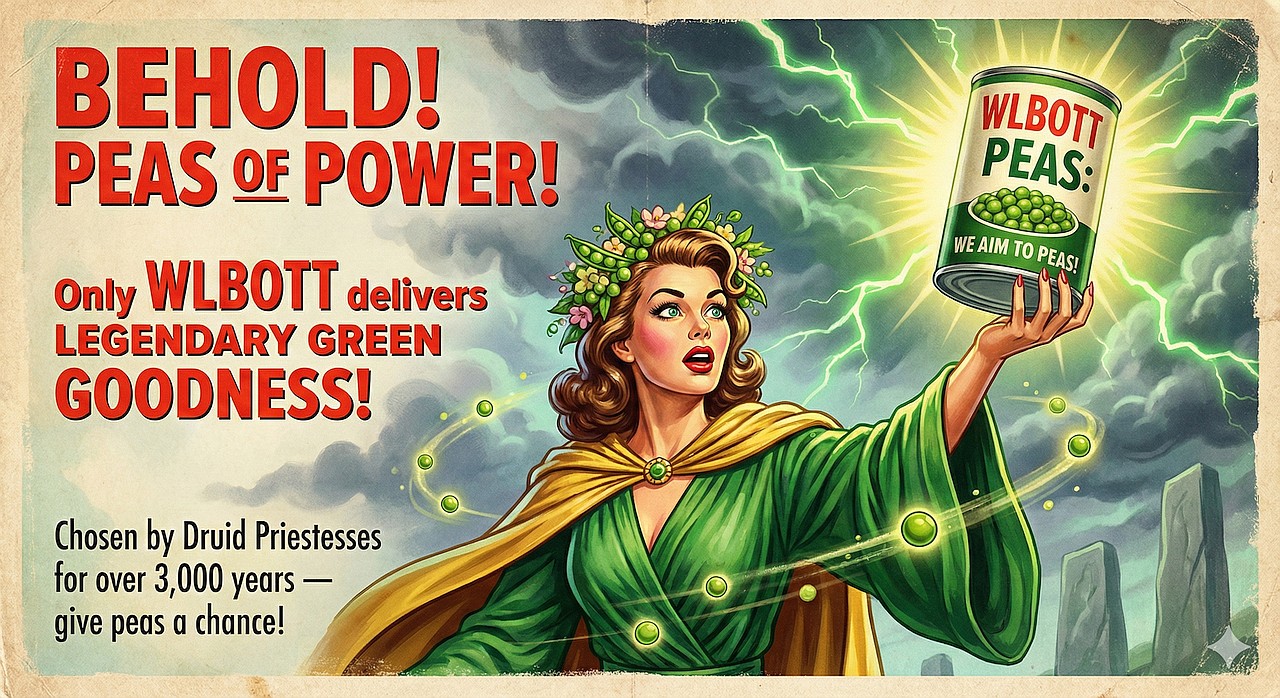
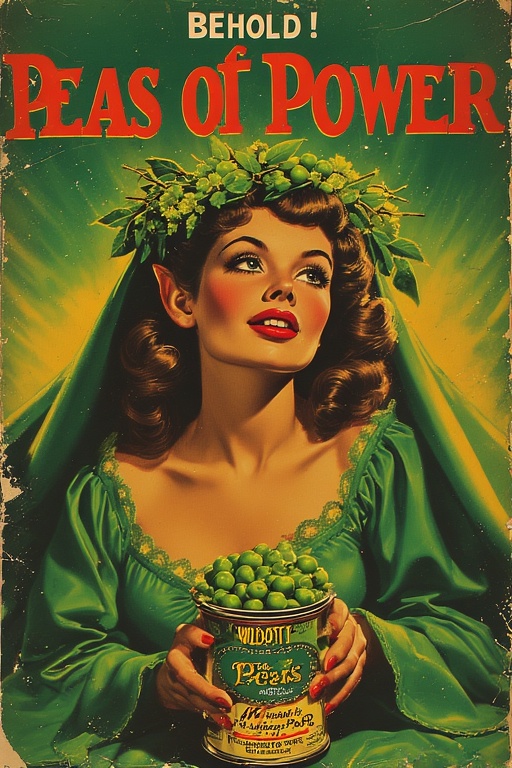
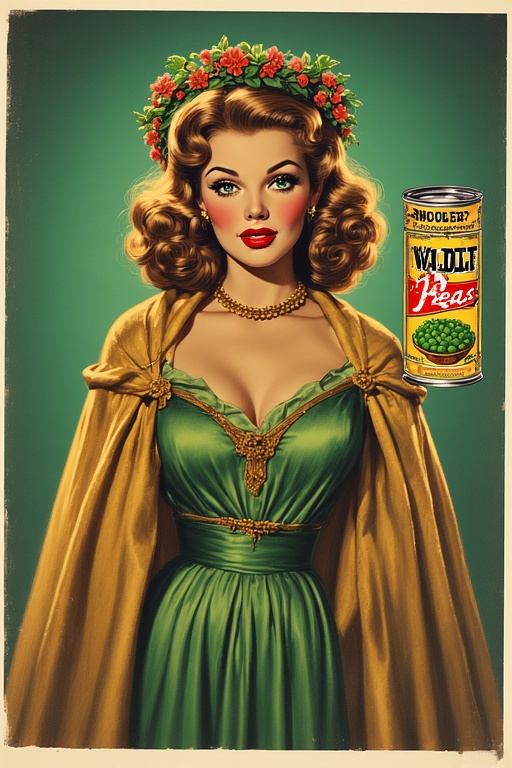
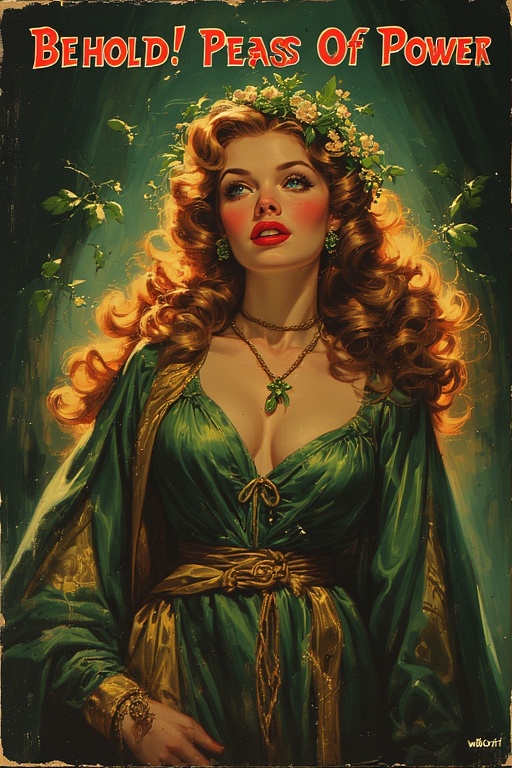
George, our unpaid marketing intern (he’s single, ladies!) helped put together our advertising campaign.
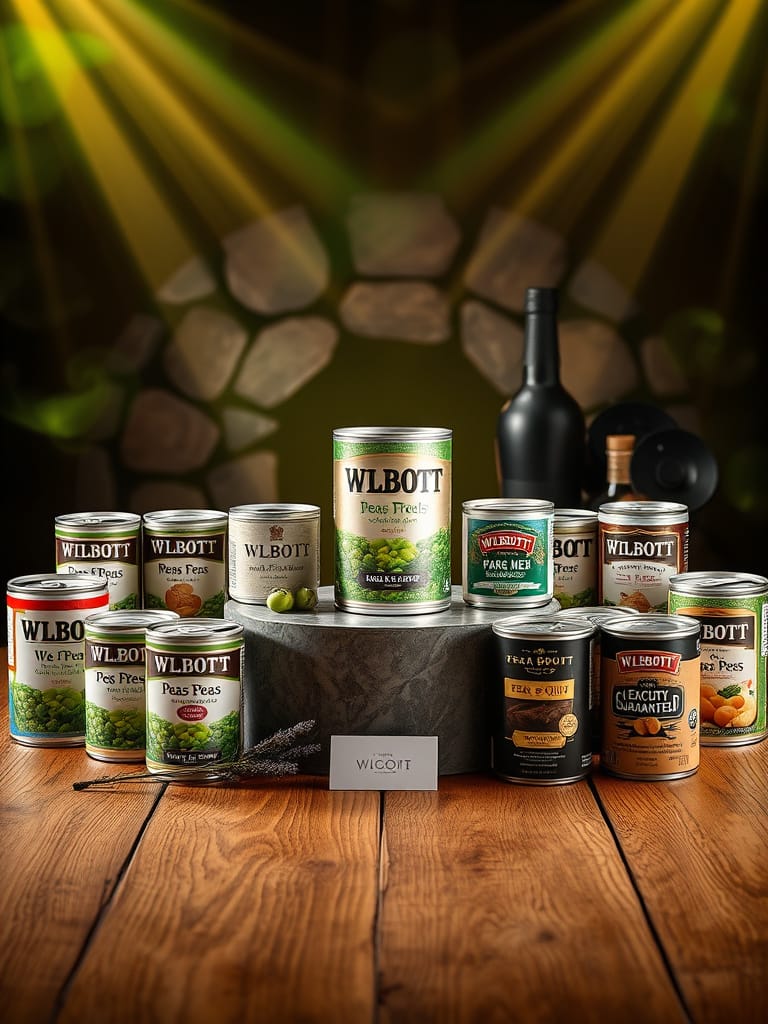
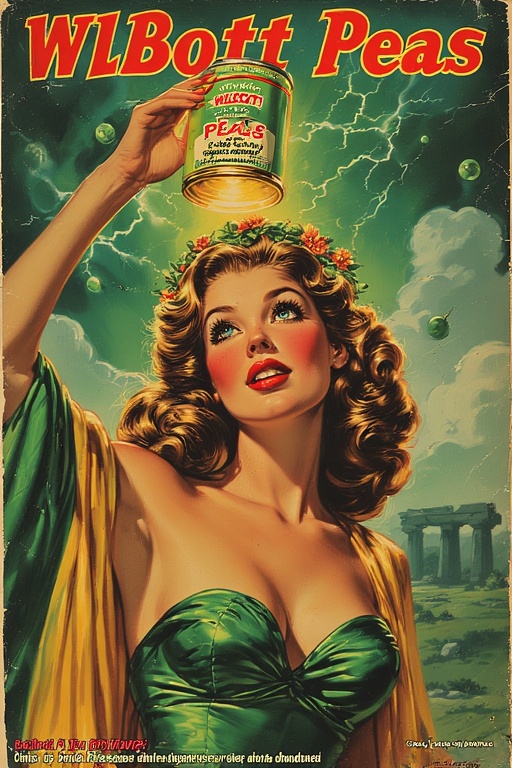
As he is wont to do, George overachieved and strayed a bit from the mission, so we had to ask him to tone it down. For that reason, we will not be using the following advertising layouts.