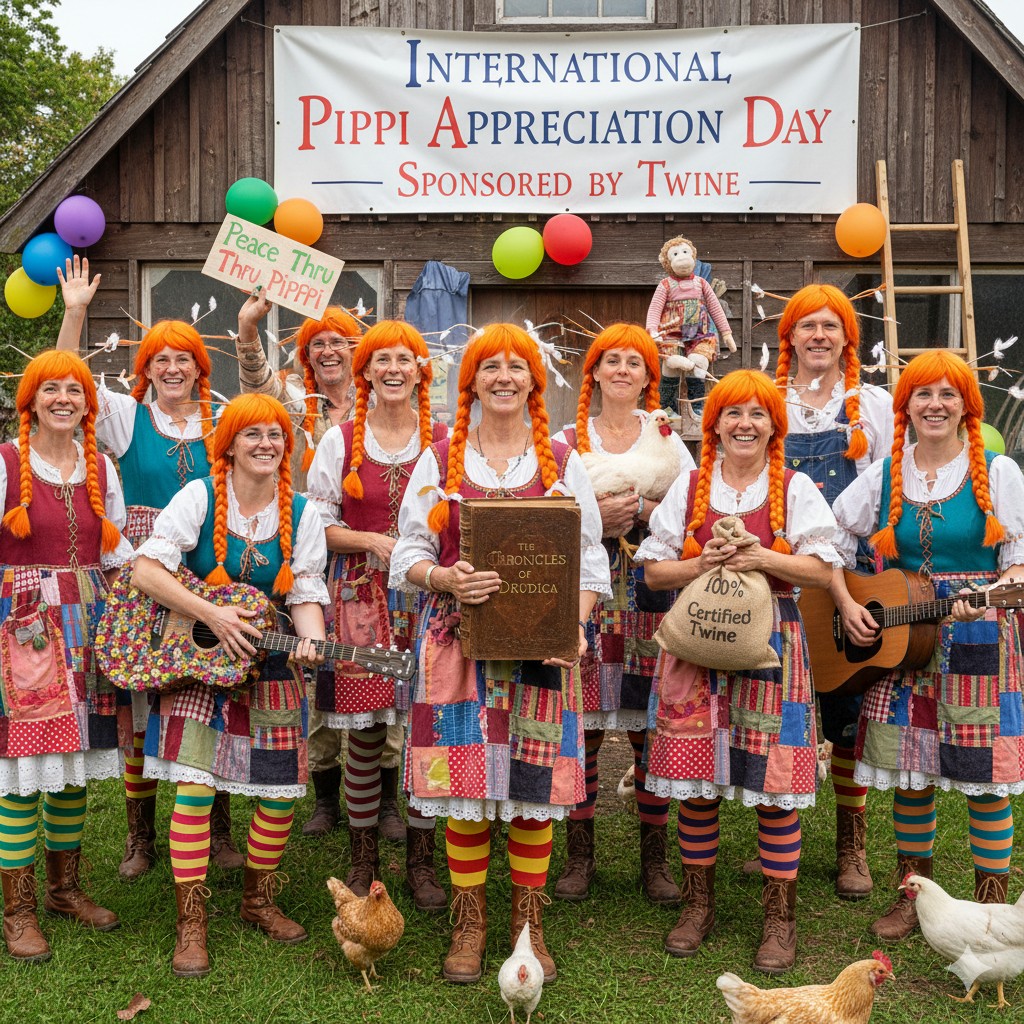
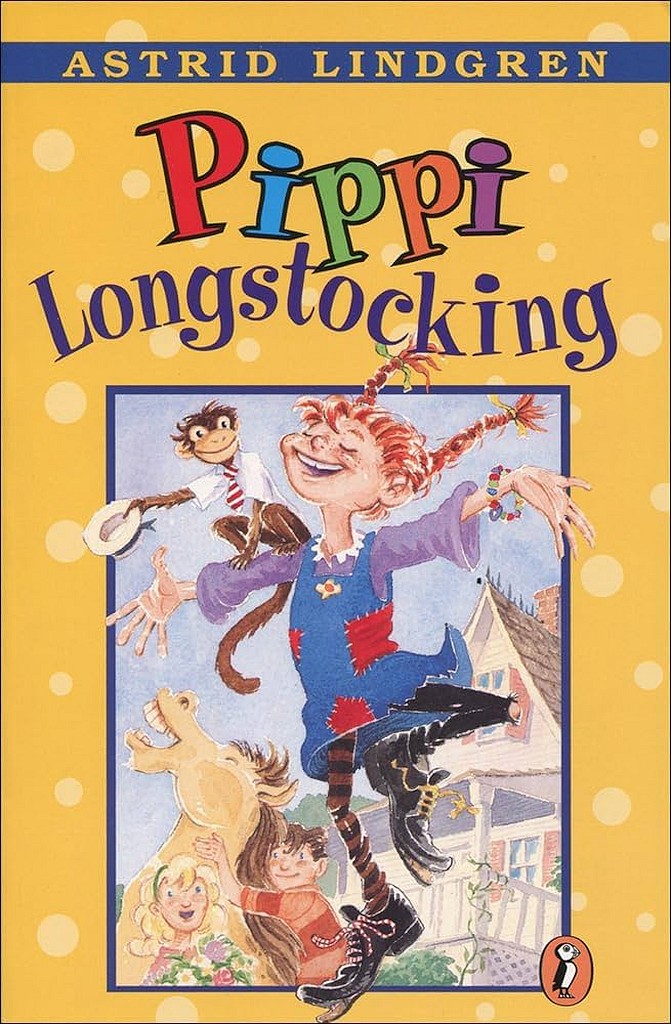
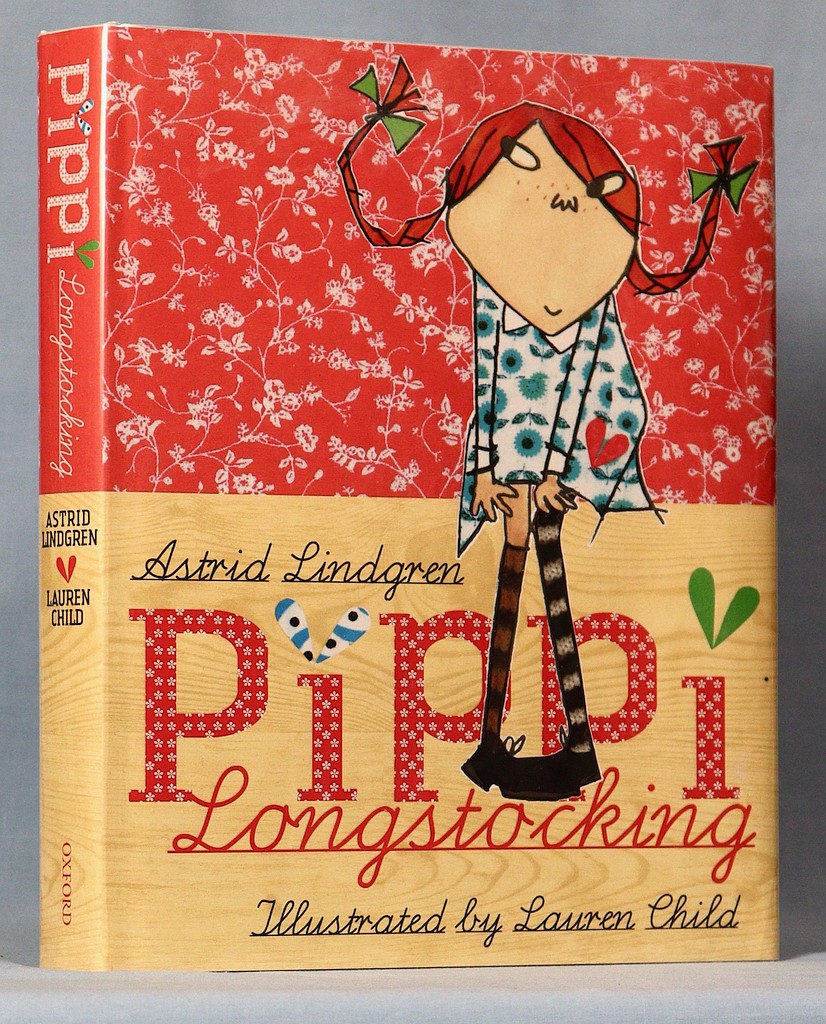
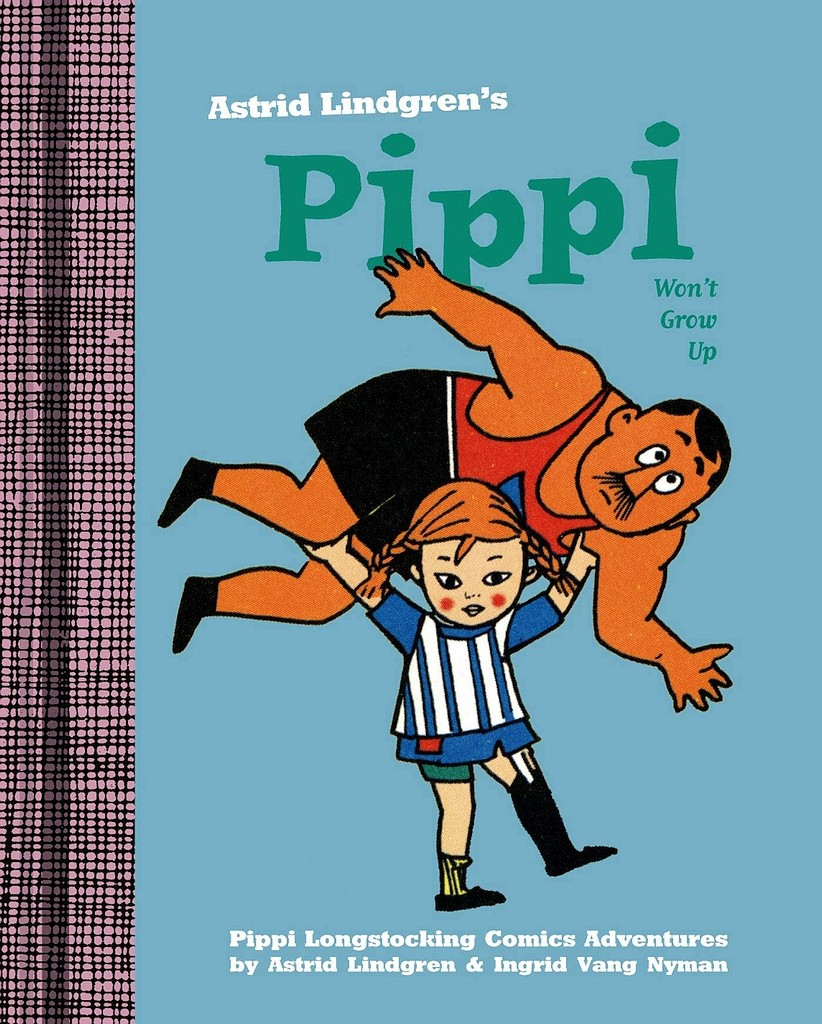
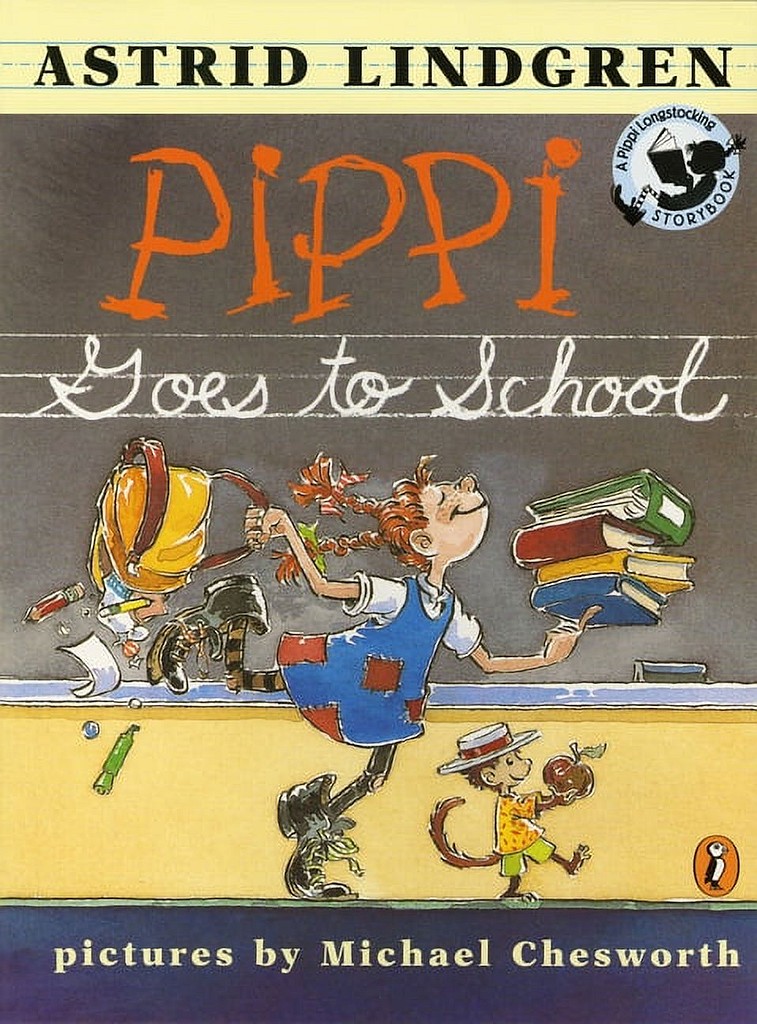
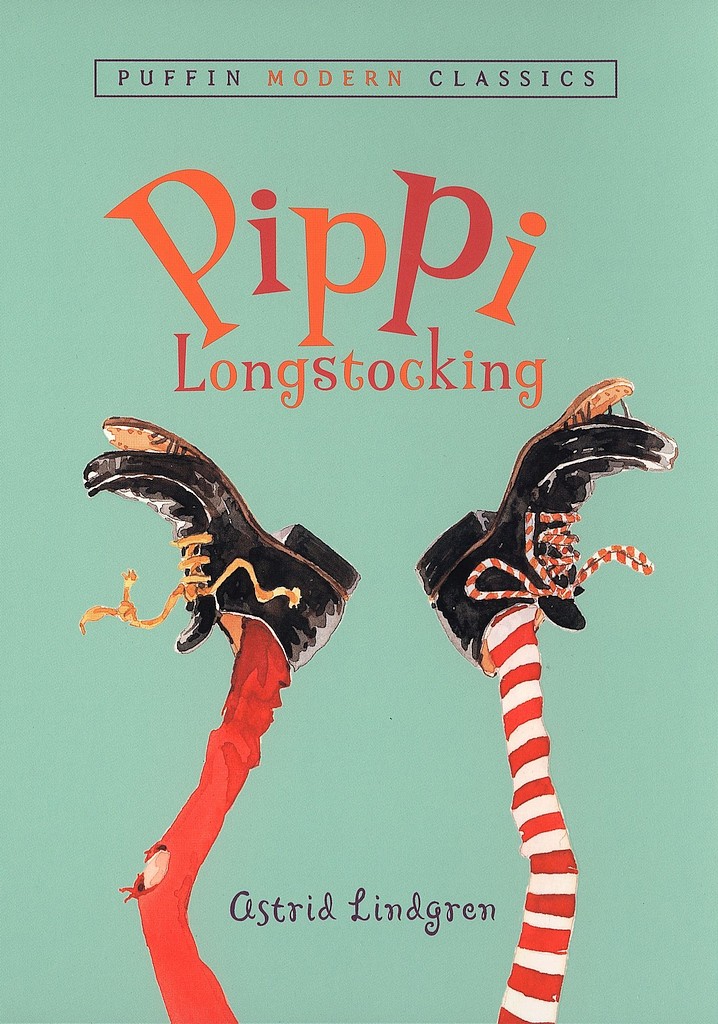
Today WLBOTT’s celebrating the 80th anniversary of the publication of Astrid Lindgren’s Pippi Longstocking.
Elder G joins the fun!
About Pippi
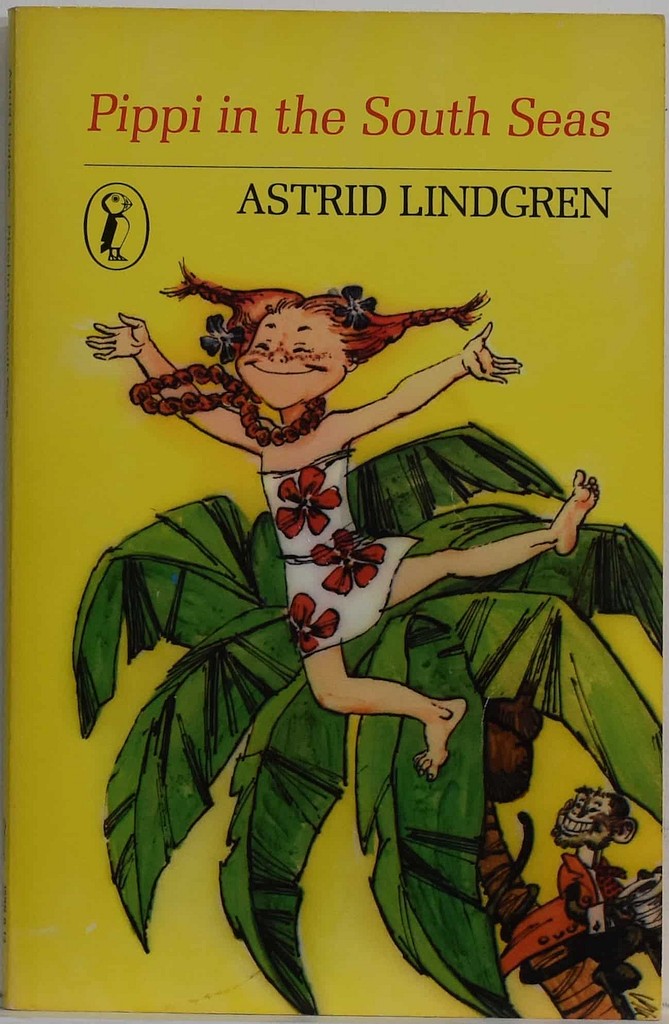
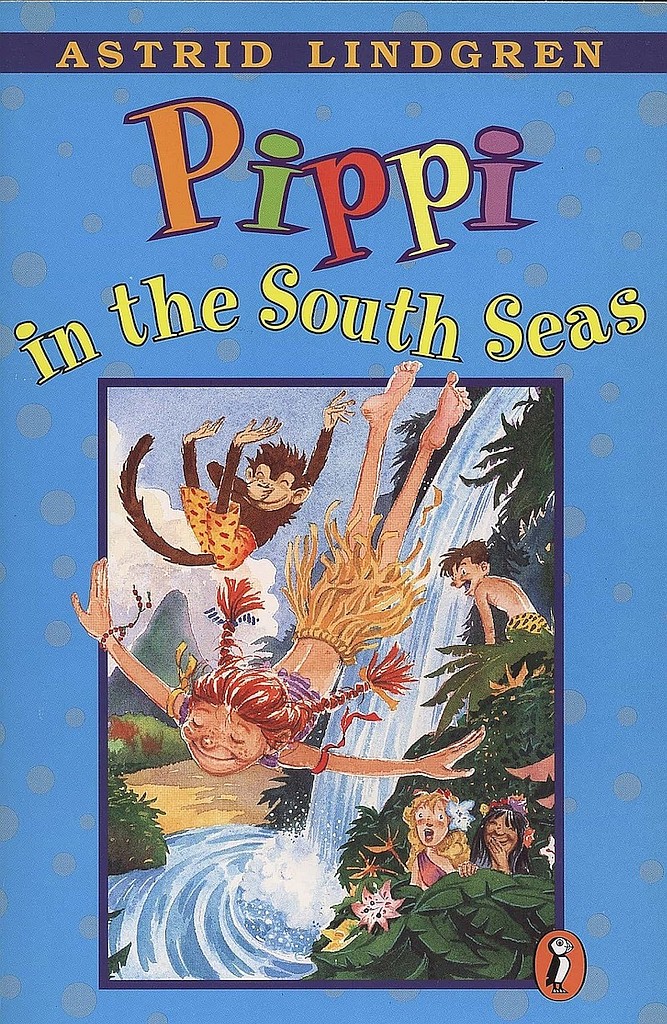
Pippi Longstocking is the fictional main character in a series of children’s books by Swedish author Astrid Lindgren. Pippi was named by Lindgren’s daughter Karin, who asked her mother for a get-well story when she was off school.
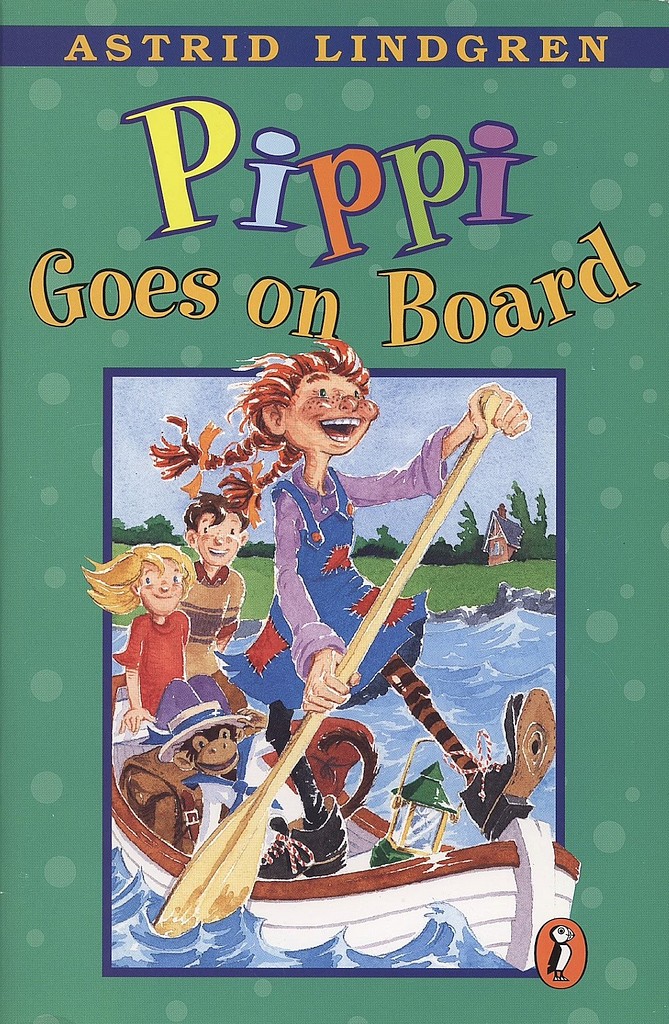
Pippi is red-haired, freckled, unconventional and superhumanly strong – able to lift her horse one-handed. She is playful and unpredictable. She often makes fun of unreasonable adults, especially if they are pompous and condescending…. Pippi, like Peter Pan, does not want to grow up. She is the daughter of a buccaneer captain and has adventure stories to tell about that, too. Her four best friends are her horse and monkey, and the neighbours’ children, Tommy and Annika.
Pippi maintains an independent lifestyle without her parents: her mother died soon after her birth; her father, Captain Ephraim Longstocking, goes missing at sea, ultimately turning up as king of a South Sea island.
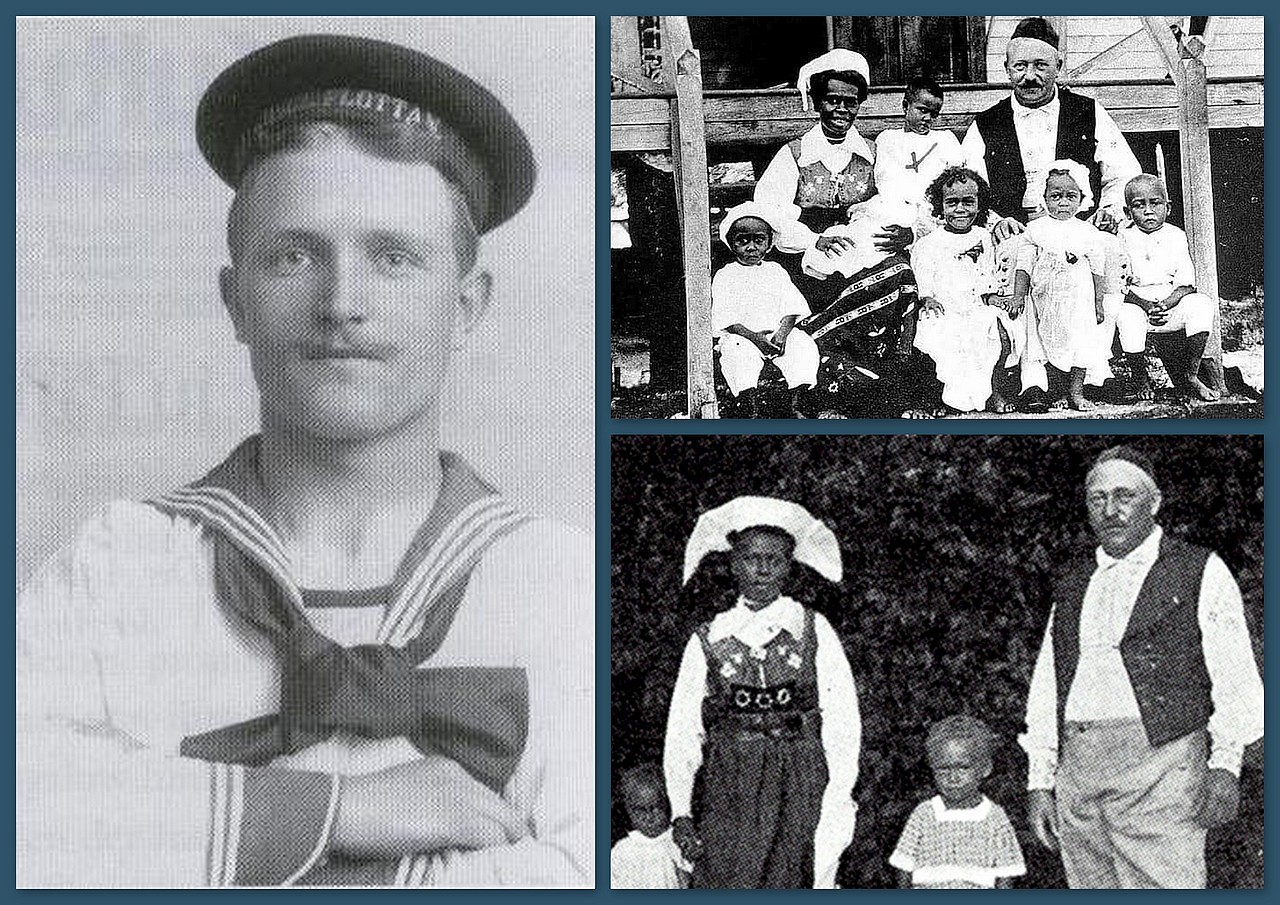
Pippi’s father, Captain Ephraim Longstocking, was based on a real-life Swedish sailor, Carl Emil Pettersson.
Pettersson was a larger-that-life character.
Shipwreck On a recruiting trip in the Pacific, Pettersson’s vessel, the Herzog Johan Albrecht sank on Christmas Day 1904, off Tabar Island in New Ireland Province. He washed ashore near a village and ended up in a hibiscus hedge, where he was immediately surrounded by islanders. The islanders carried him to their king, Lamy. The king’s daughter, Princess Singdo, fell in love with him, and in 1907 they married. [ed. note: they had nine children!]
He entered the copra [ed. note: dried coconut flesh] trade and created a coconut plantation that he called Teripax. He became king after the death of his father-in-law. His nickname among the locals was “Strong Charley“, for his famed physical strength. Swedish and German newspapers printed a series of stories about Pettersson and his adventures.
Pettersson found a gold deposit on Simberi Island that he kept secret for years. The Tabar Group of islands developed into one of the world’s largest gold deposits.
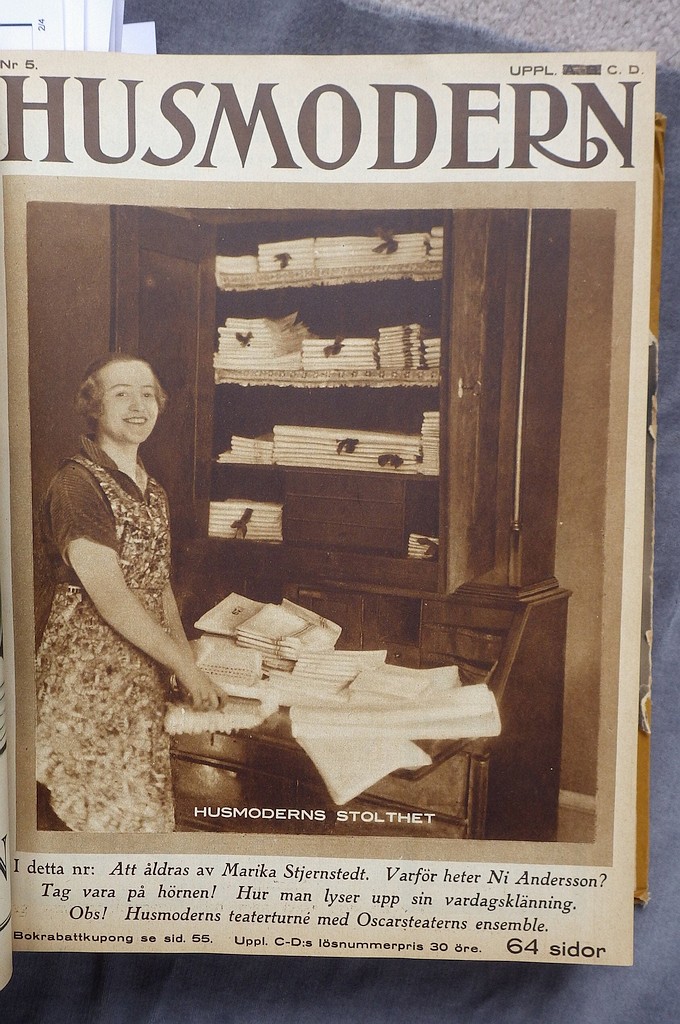
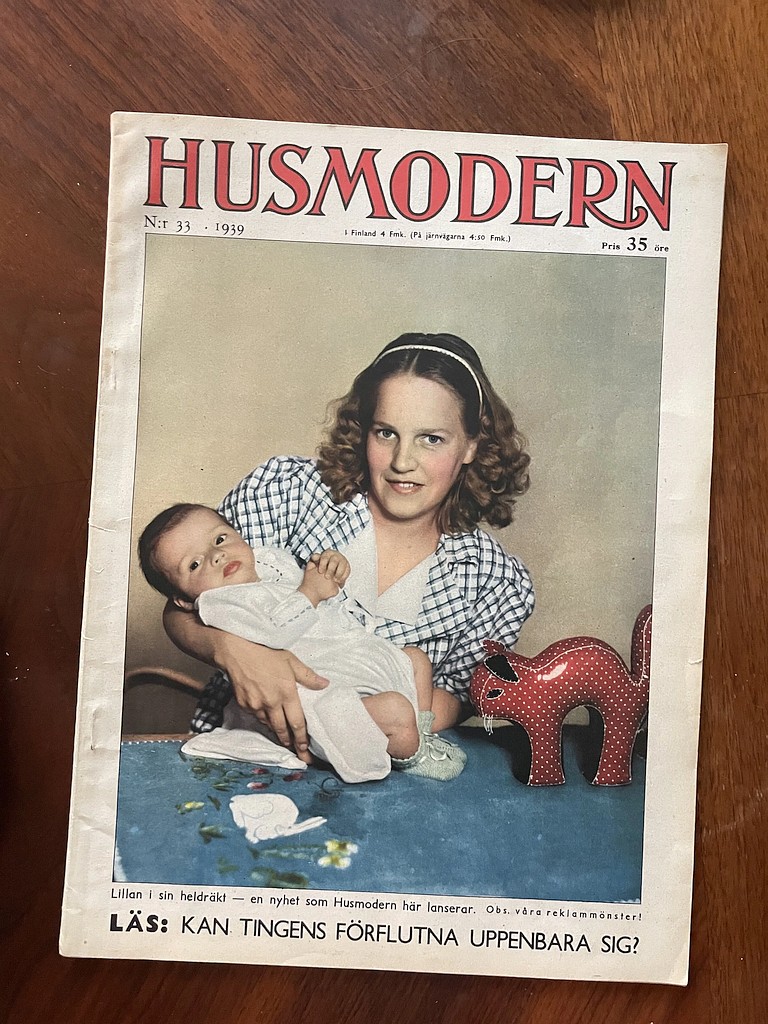
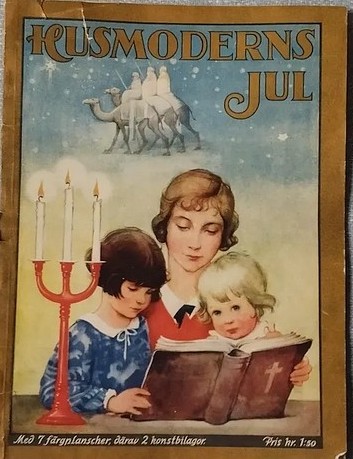
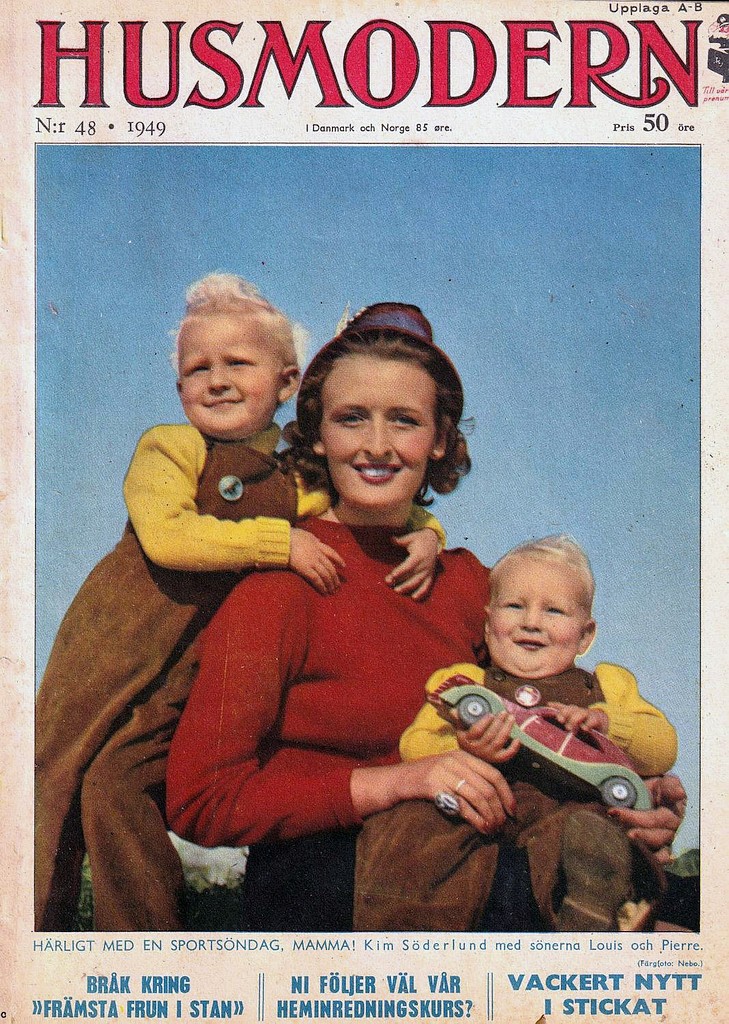
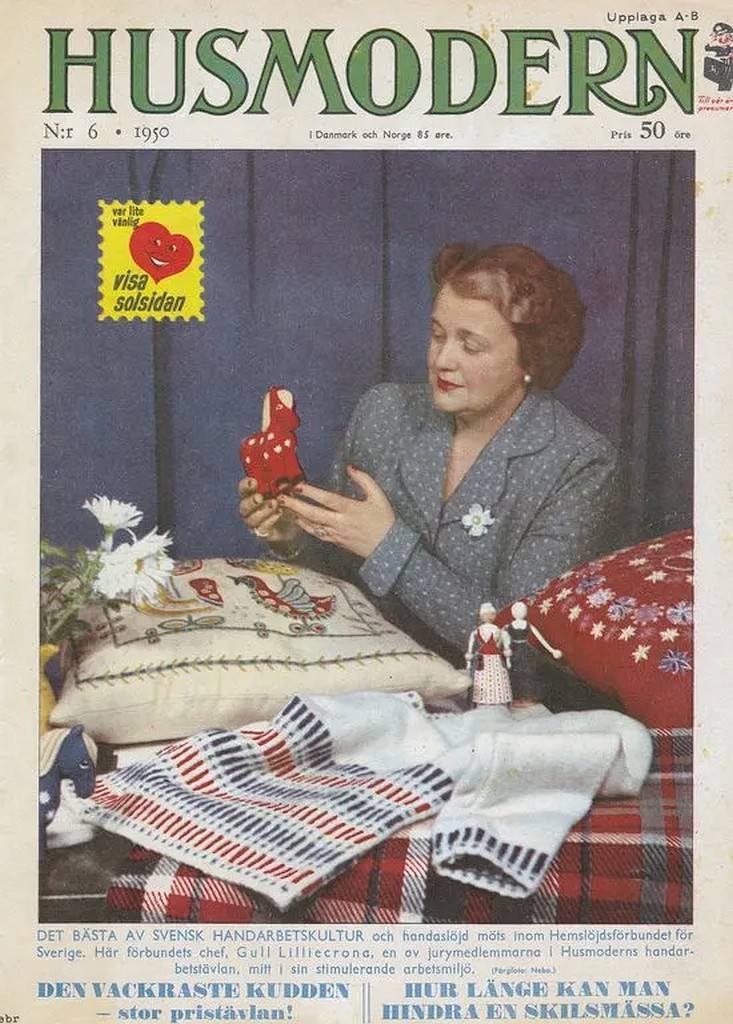
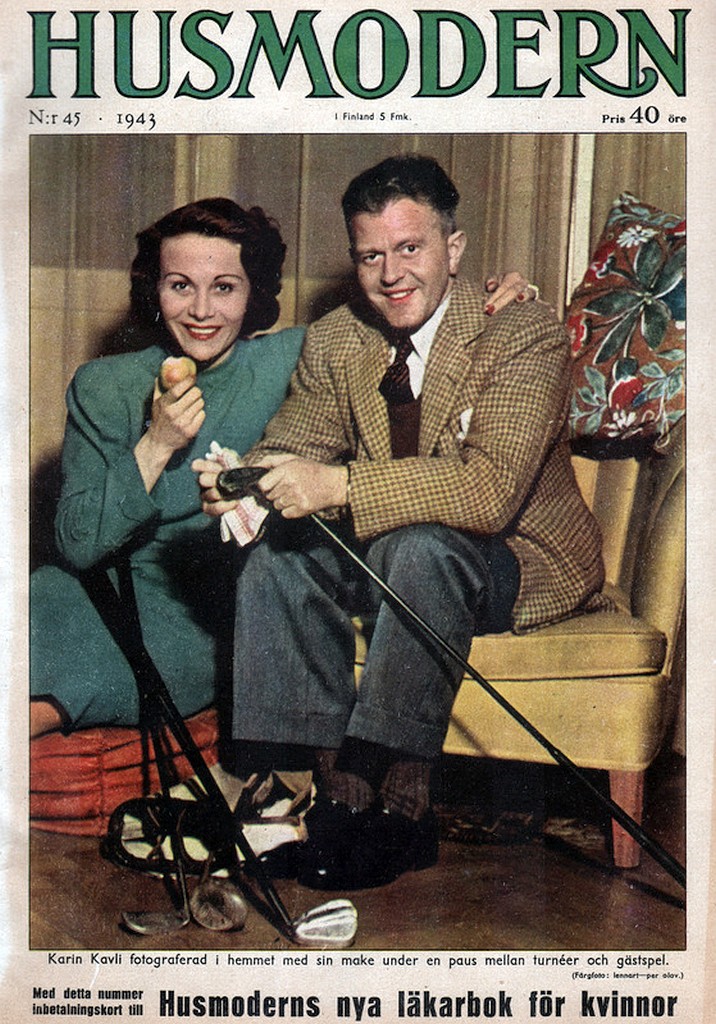
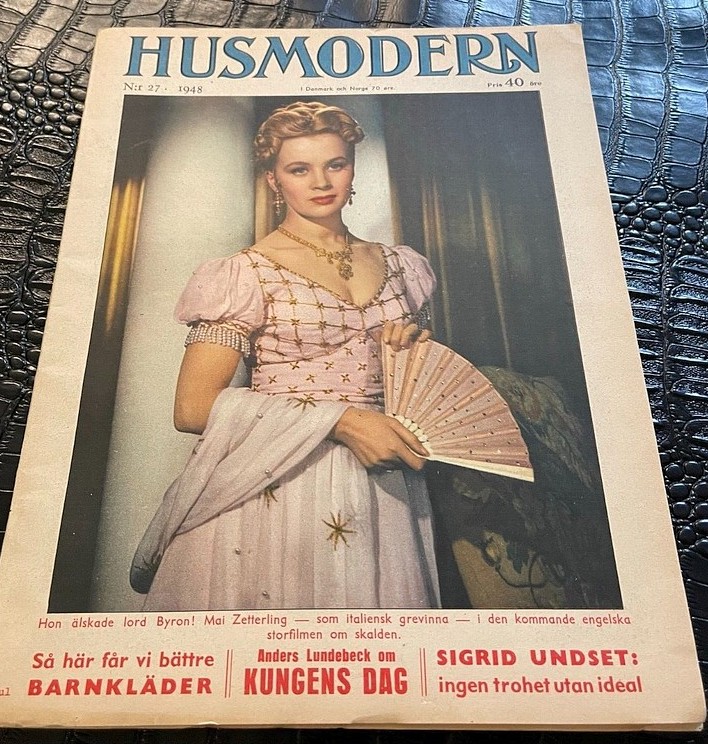
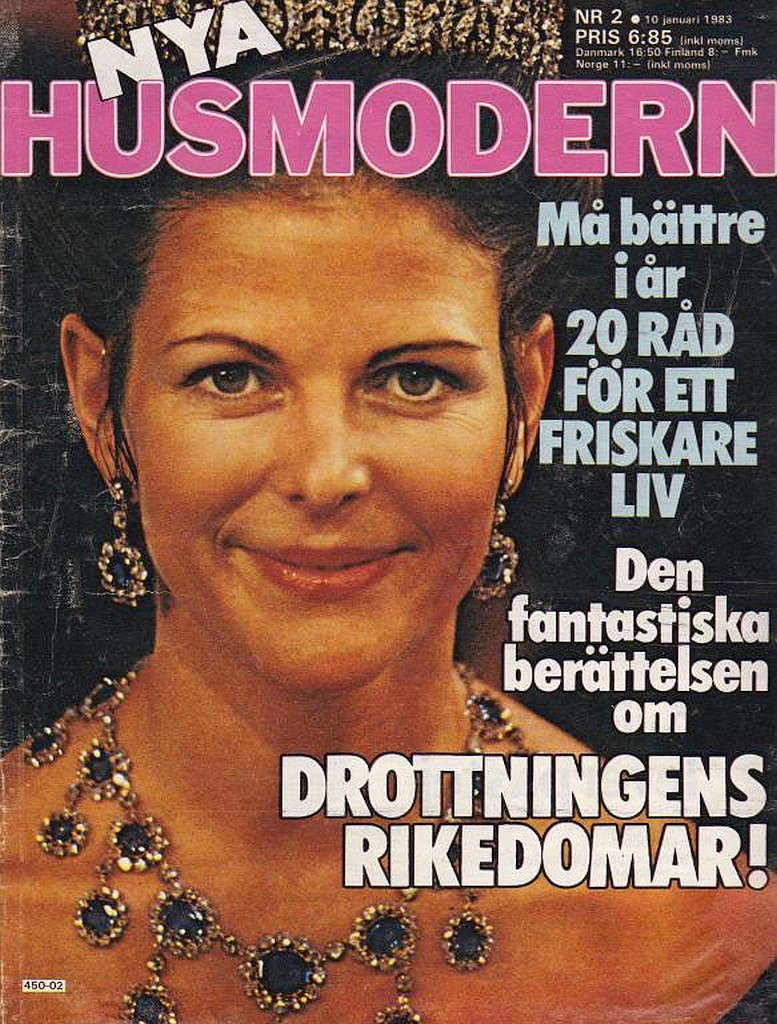
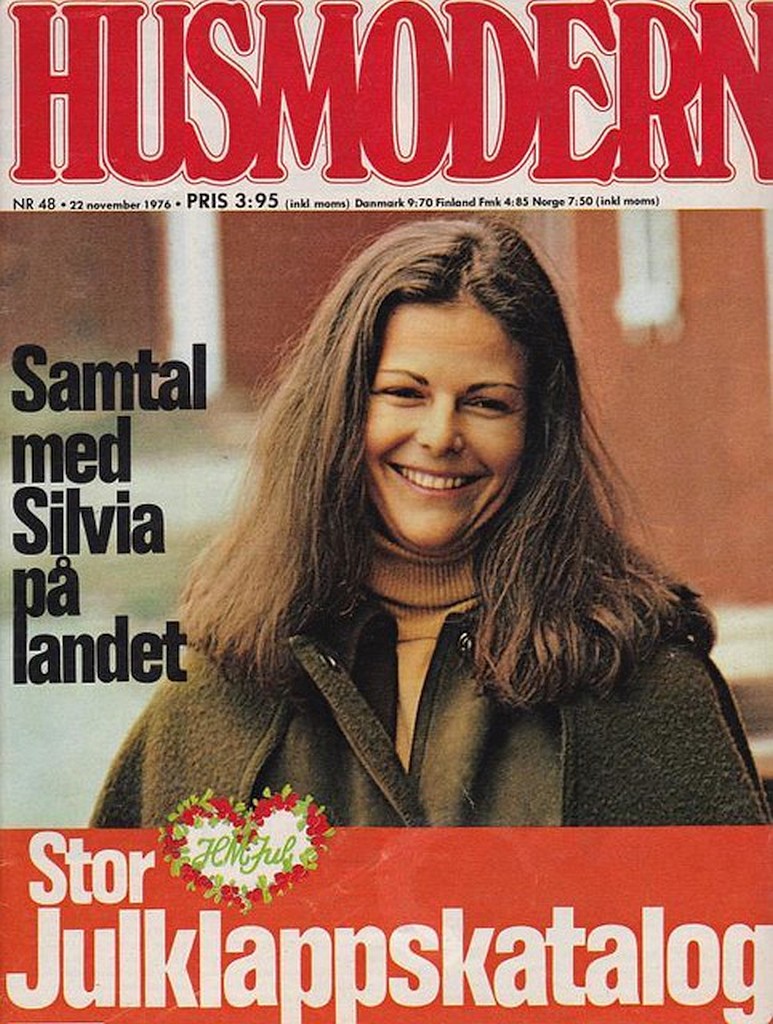
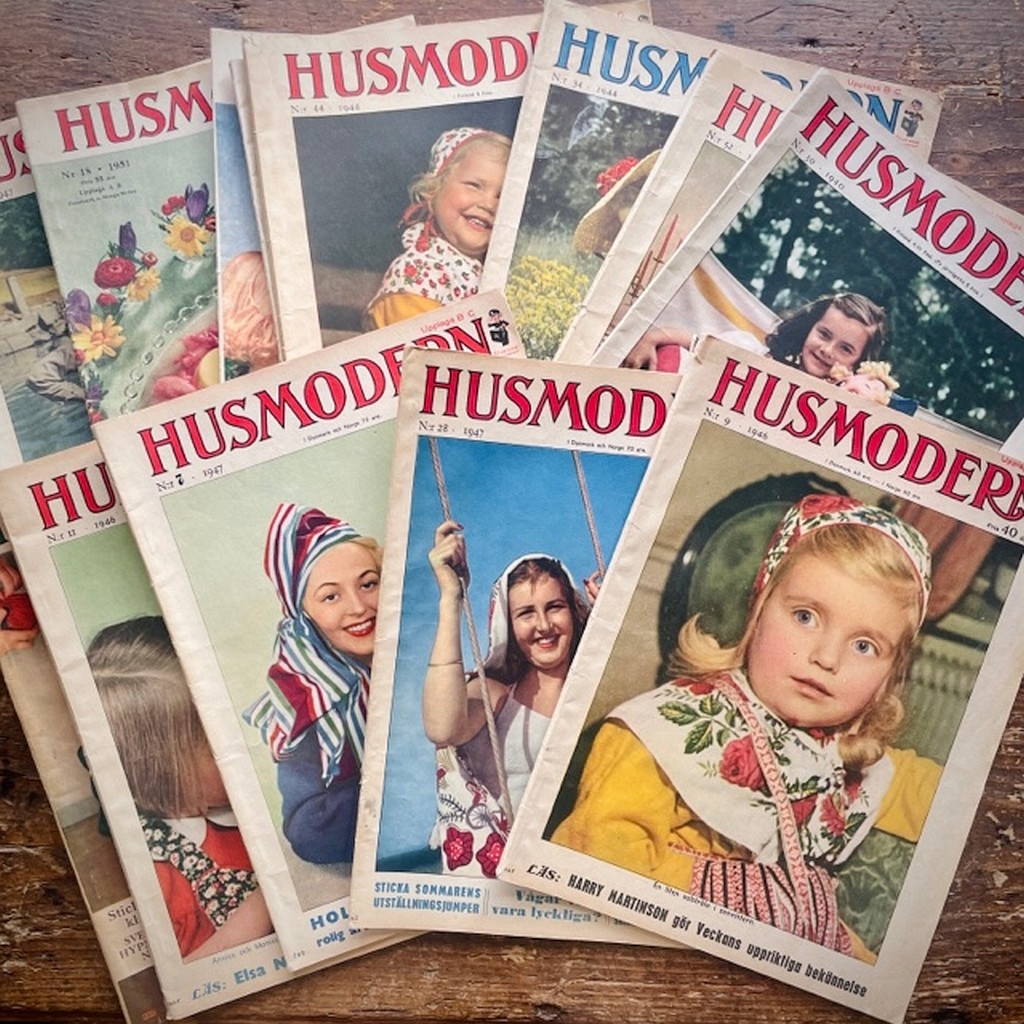
Carl Pettersson caught the imagination of Sweden in the early 20th century. One Swedish magazine in particular, Husmodern, featured many stories about Pettersson.
Husmodern (Swedish: The Housewife) was a women’s magazine which was published in Stockholm, Sweden, between 1917 and 1988.
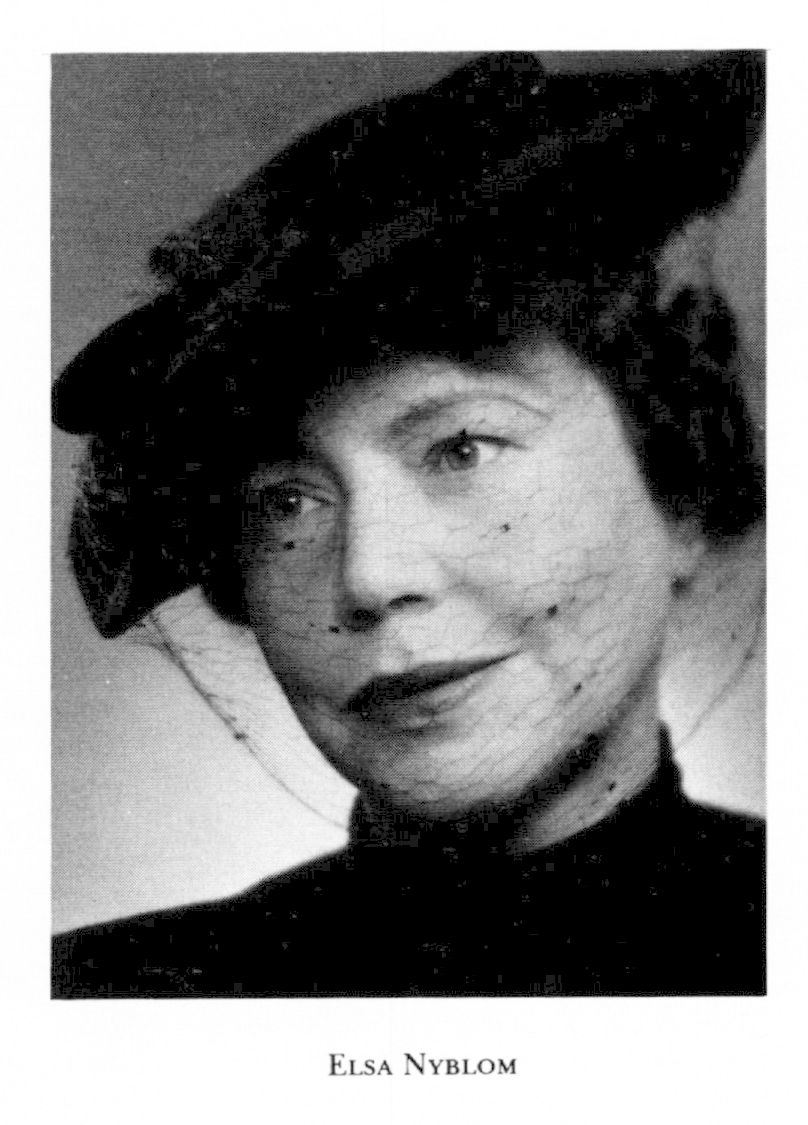
History and profile Husmodern was started in Stockholm in 1917 and was published by a company with the same name. The founding organization was Martta. The subtitle of the magazine was de svenska husmödrarnas tidning (Swedish: the Swedish housewives’ newspaper). Its founders were Thora Holm and the journalist Elsa Nyblom. The latter was also the first editor of Husmodern. The magazine was acquired by the Åhlén & Åkerlund company in 1920. Following this its subtitle was redesigned as tidskrift för hemmet och kvinnan (Swedish: magazine for the home and the woman). A pattern department was also formed belonging to the magazine after its acquisition by Åhlén & Åkerlund which became part of Bonnier Group in 1929. The magazine delivered a supplement entitled Stil-mönster (Swedish: Style-Patterns) which contained samples of the Swedish patterns between 1941 and 1982.
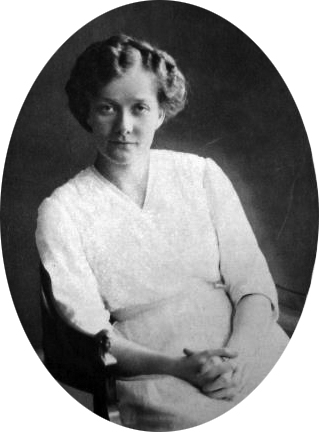
Thora Holm (left) and Elsa Nyblom
Husmodern came out weekly throughout its run. The magazine was among the popular periodicals in the country and reached its highest circulation in 1970 selling 290,000 copies. Its title was Nya Husmodern (Swedish: Modern Housewife) from 1982 to its closure in 1988.