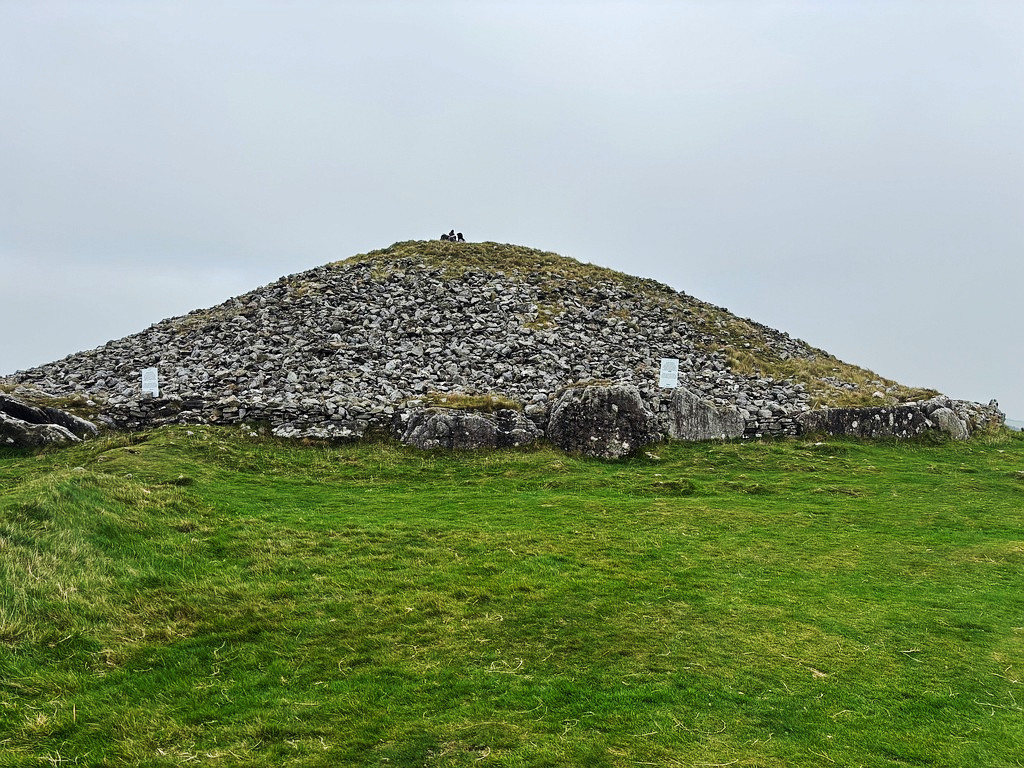
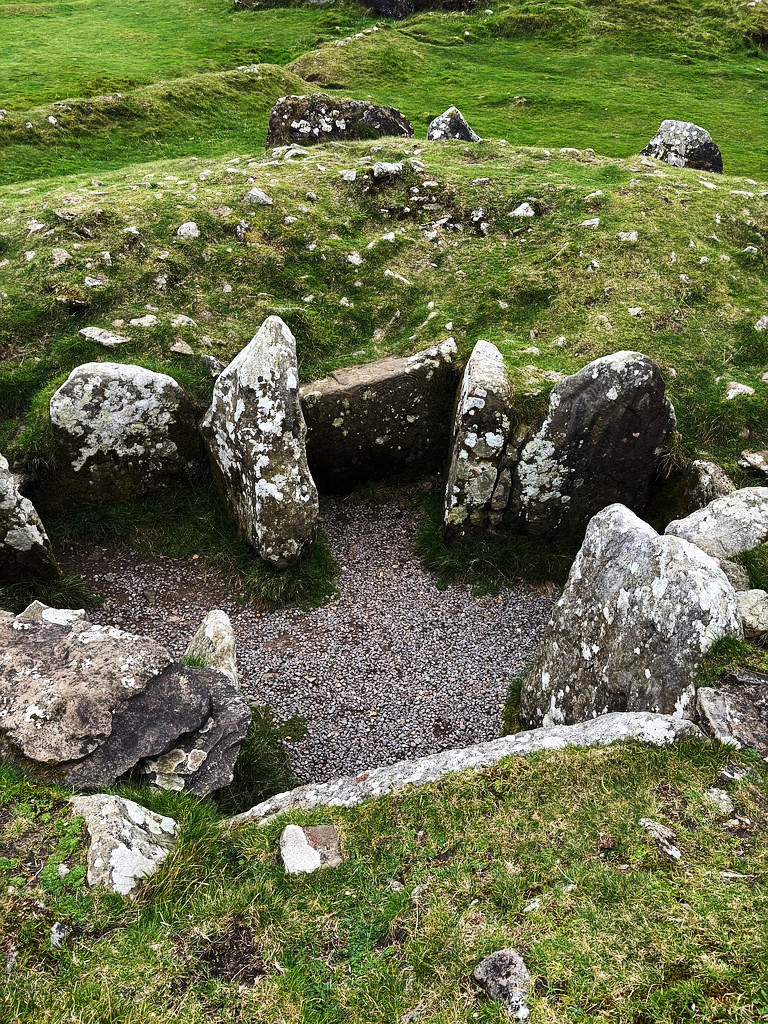
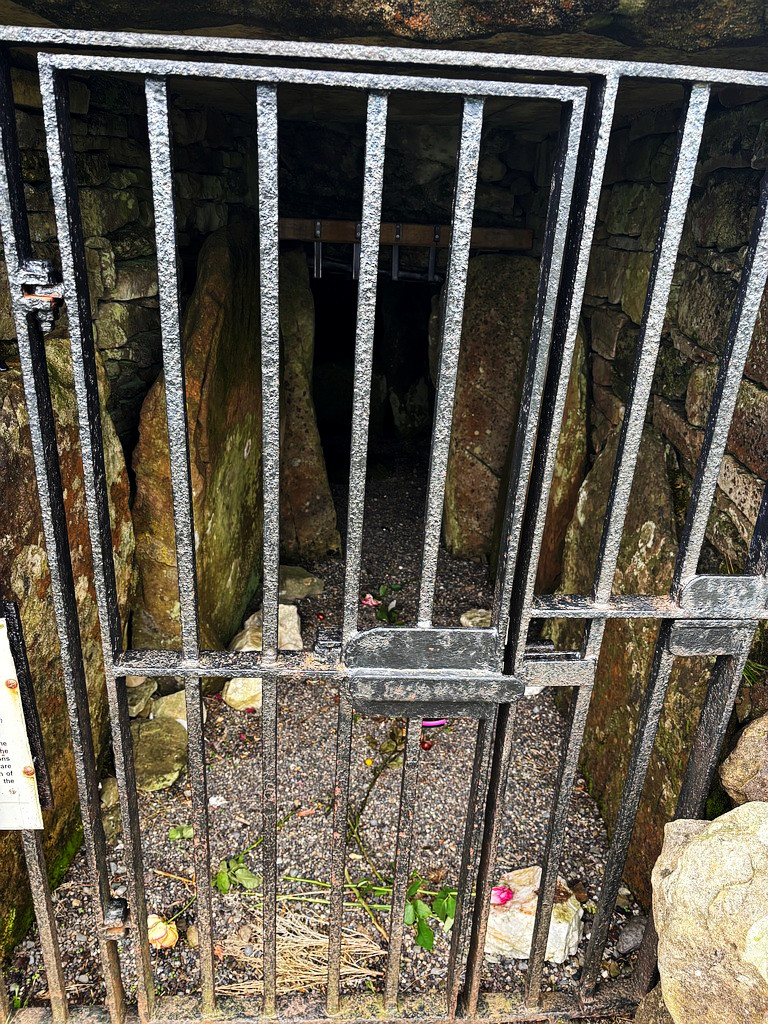
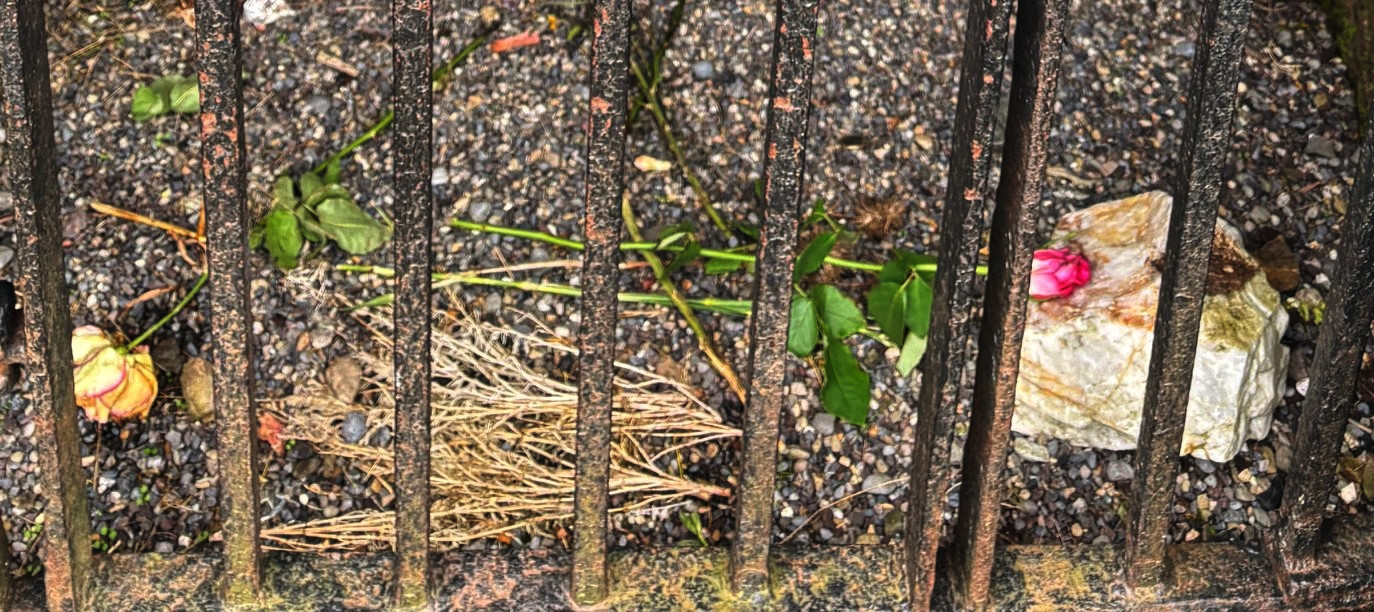
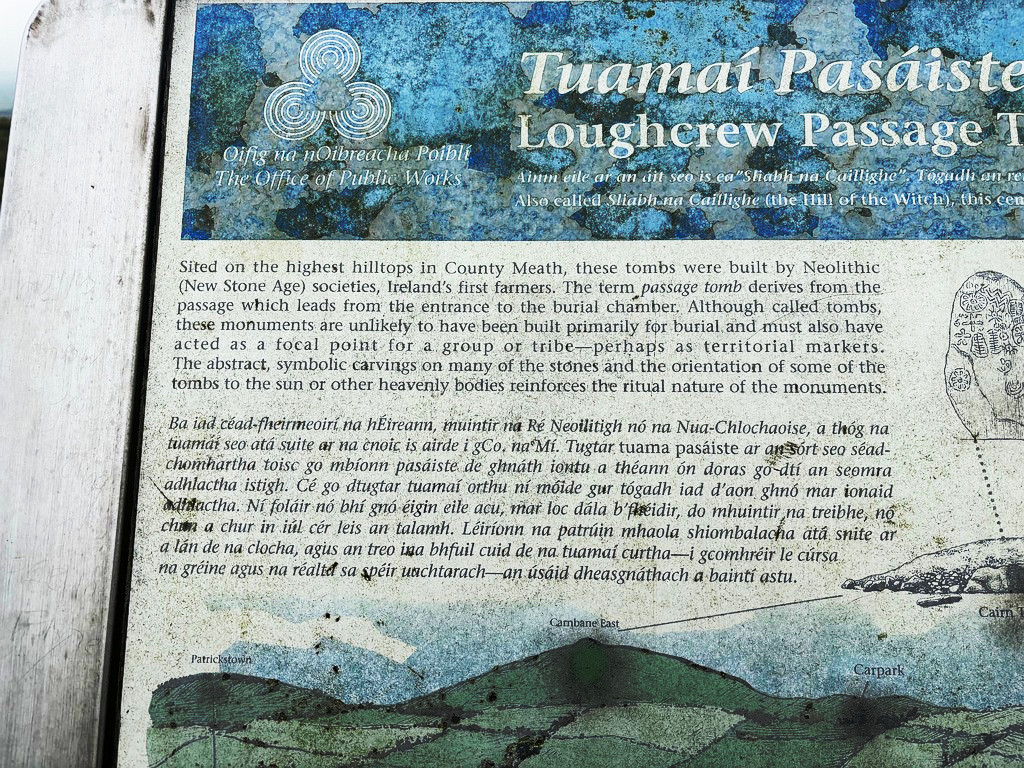
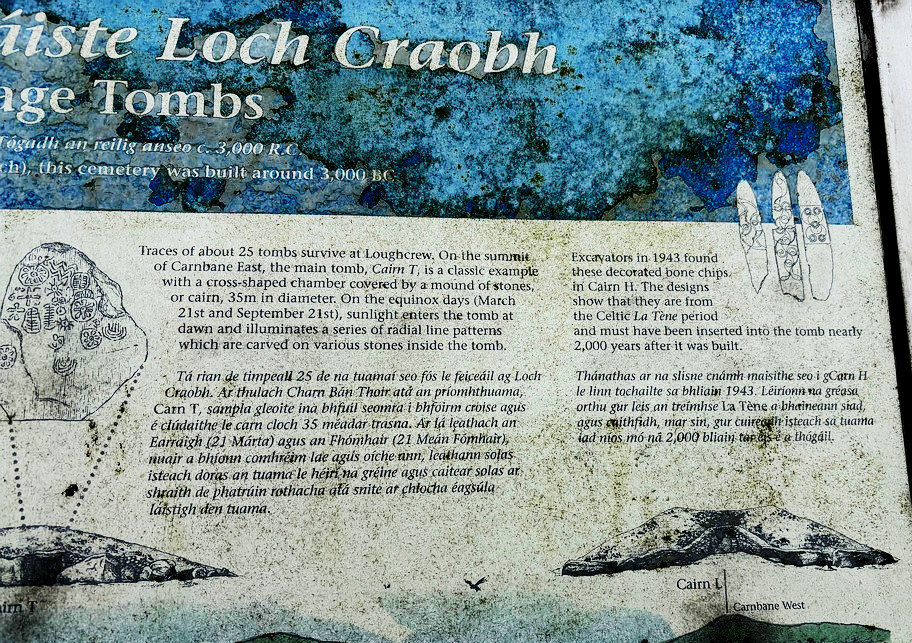
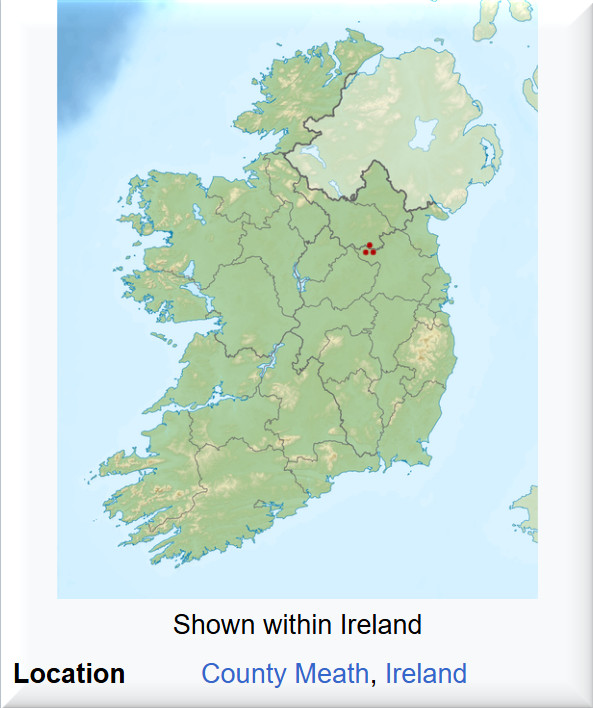
Elder JimZimet. al. recently returned from a site inspection of WLBOTT-Ireland. Following his inspection, he and his corporate entourage had time to visit the Irish countryside, and the highlight of the trip was a visit to the ancient 4th millennium BC passage tombs at Loughcrew.
In 1980 Irish-American researcher Martin Brennan discovered that Cairn T in Carnbane East is directed to receive the beams of the rising sun on the spring and autumnal equinox – the light shining down the passage and illuminating the art on the backstone. Brennan also discovered alignments in Cairn L (53°44′36″N 7°08′03″W), Knowth, and Dowth in the Boyne Valley.
The Cairn T alignment is similar to the well-known illumination at the passage tomb at Brú na Bóinne (Newgrange), which is aligned to catch the rays of the winter solstice sunrise.
Elder G: Fascinating! Those ancient burial mounds in Ireland are often called passage tombs or cairns, and they can date back thousands of years—like to the Neolithic period. Newgrange is one of the most famous ones, for example. They’re even older than the pyramids and definitely older than the Romans.
Yeah, it’s pretty mind-blowing when you think about it. Those Neolithic structures in places like Ireland are just incredibly ancient. They were built by people who had this amazing understanding of astronomy and the seasons, and they really left behind these monumental sites.
WLBOTT: An interesting things that Elder JimZim mentioned is that some of these Irish burial tombs have shafts that line up perfectly with the solstice sunrise.”
Elder G: Yeah, that’s a really amazing detail! It’s incredible how these ancient builders managed to line up those passage tombs so precisely with events like the winter solstice. Places like Newgrange have that feature where the inner chamber gets illuminated by the sunrise on the solstice. It just shows you how deeply they understood the movement of the sun and the seasons. So yeah, it’s really a fascinating piece of ancient engineering.
WLBOTT: It makes me wonder: Ireland tends to be very cloudy and drizzly. And I was wondering, what are the odds that on the solstice that it’s going to be a clear morning? I’m wondering if these ancient architects may have had to wait years before they could prove that the sun would shine through their shafts.
Elder G: You know, that’s actually a really fun thought! Ireland does have its fair share of cloudy weather, and it’s quite possible that some years they might not have gotten that perfect sunbeam on the exact solstice day. But over time, of course, there would have been those clear mornings where everything aligned perfectly. And when it did, I can imagine it must have been a pretty spectacular and maybe even a sacred moment for them. So yeah, it might have taken a little patience, but that just adds to the magic of it all!
Semi-Sequiturs and Rabbit Holes
Elder JimZim has brought us such a rich topic, that we look forward to blottitizing some related topics:
The Neolithic Period
Stone Tools One of the earliest cases of tools comes from the Channel Islands (California) as it was considered one of the earliest place in North America for civilization. The tools that were found were drills, reamers, scrapers, abraders, spoke-shave, macroblade plane, burin, wood-splitting wedges. These tools show that the people living there were skilled in wood working. – Wikipedia
Prehistoric archaeology
Archaeoastronomy
Cognitive archaeology and Paleoneurobiology
Romance Novels set in the Neolithic period[1]
[1] Speaking of which….
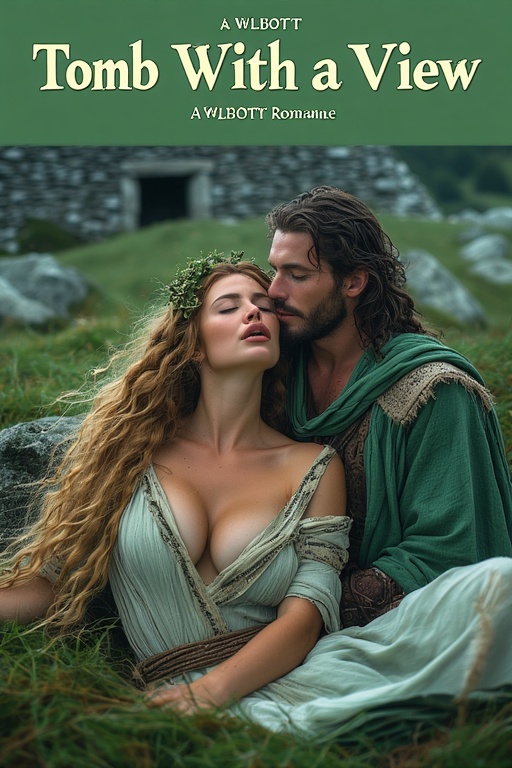
Tomb with a View
Our junior marketing intern George (he’s single, ladies!) suggested a line of WLBOTT romance novels, set in the misty, enchanted shores of Northwest Ireland.
In a surprise twist, we’re considering including a plot.
Cailleach, the Divine Hag
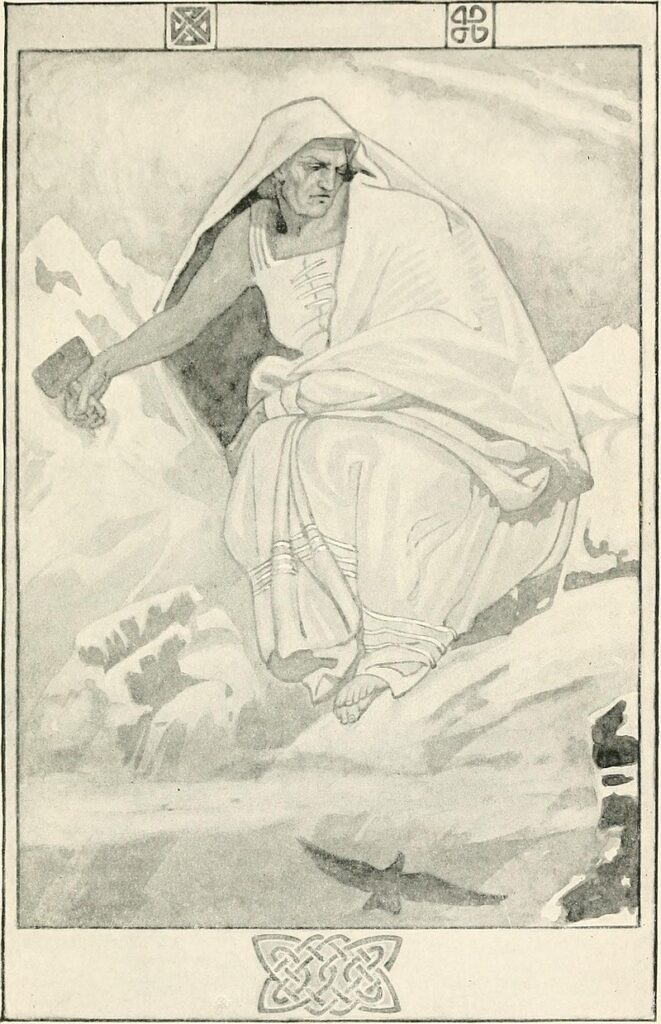
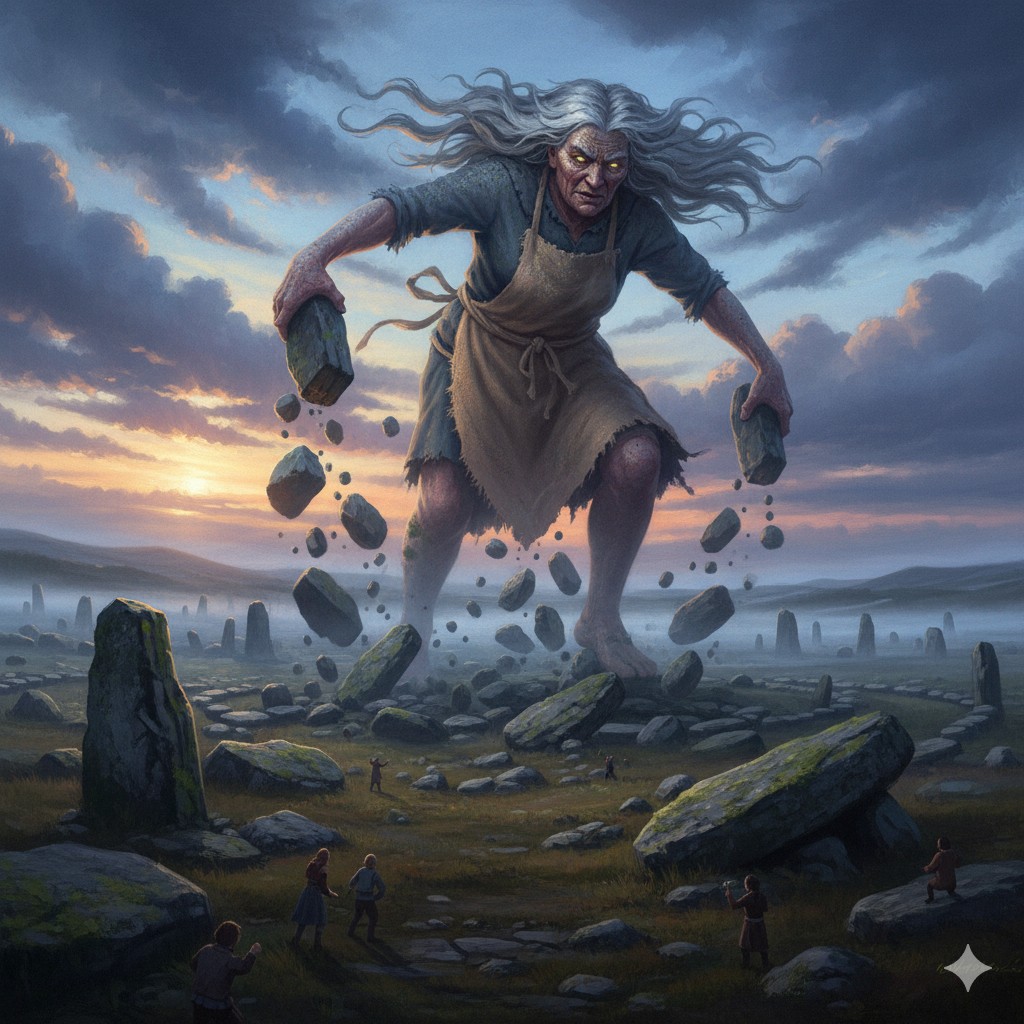
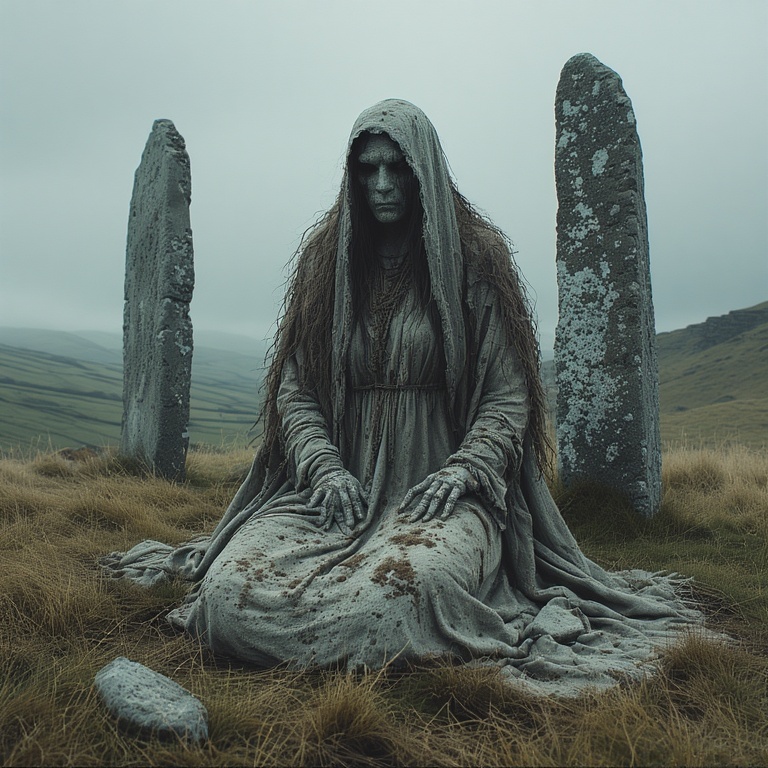
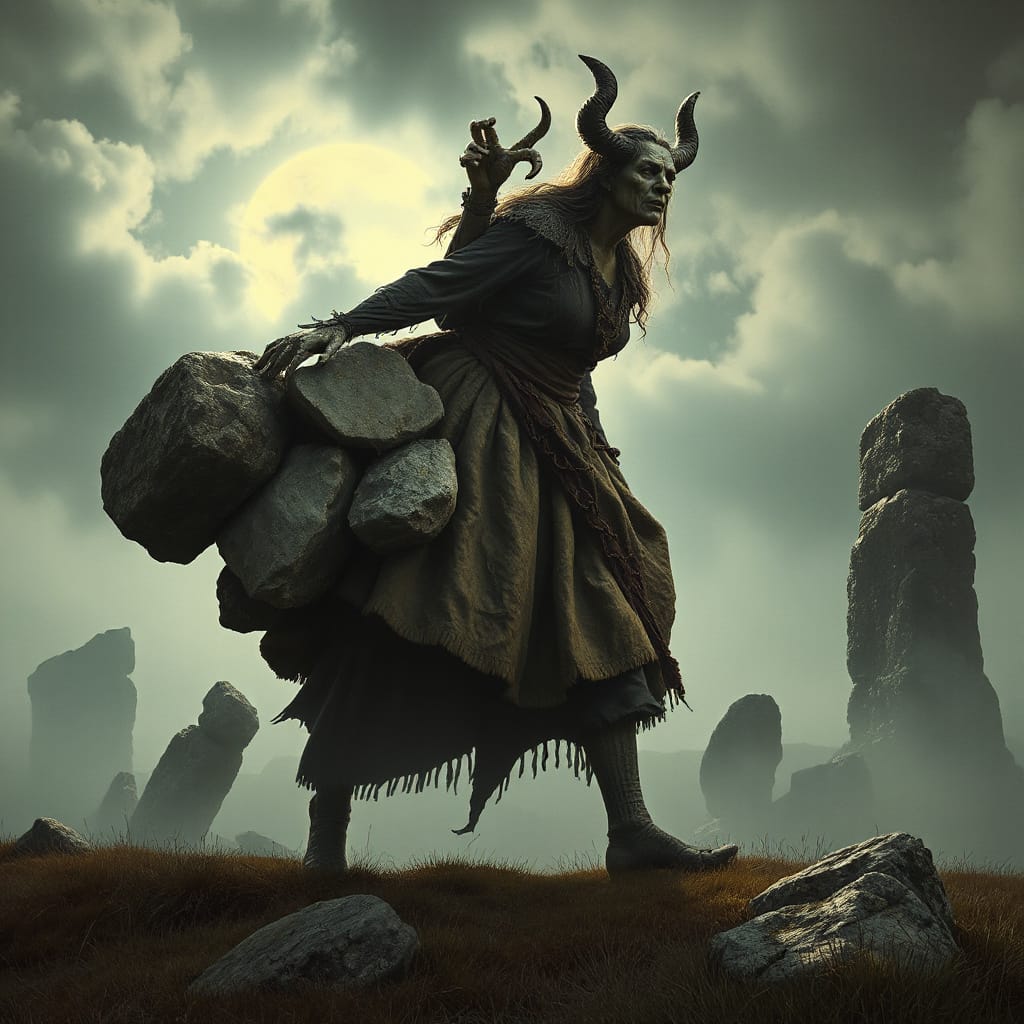
These hills and the tombs themselves are together known as Slieve na Calliagh or Sliabh na Caillí, meaning “mountain of the Cailleach”, the divine hag of Irish mythology. Legend has it that the monuments were created when a giant hag, striding across the land, dropped her cargo of large stones from her apron. – Wikipedia
Image by Internet Archive Book Images – Illustration by John Duncan in Wonder Tales from Scottish Myth and Legend (1917)
In Scotland, where she is also known as Beira, Queen of Winter (a name given by 20th-century folklorist Donald Alexander Mackenzie), she is credited with making numerous mountains and large hills, which are said to have been formed when she was striding across the land and accidentally dropped rocks from her creel or wicker basket. In other cases she is said to have built the mountains intentionally, to serve as her stepping stones. She carries a hammer for shaping the hills and valleys, and is said to be the mother of all the goddesses and gods. According to Mackenzie, Beira was a one-eyed giantess with white hair, dark blue skin, and rust-colored teeth.
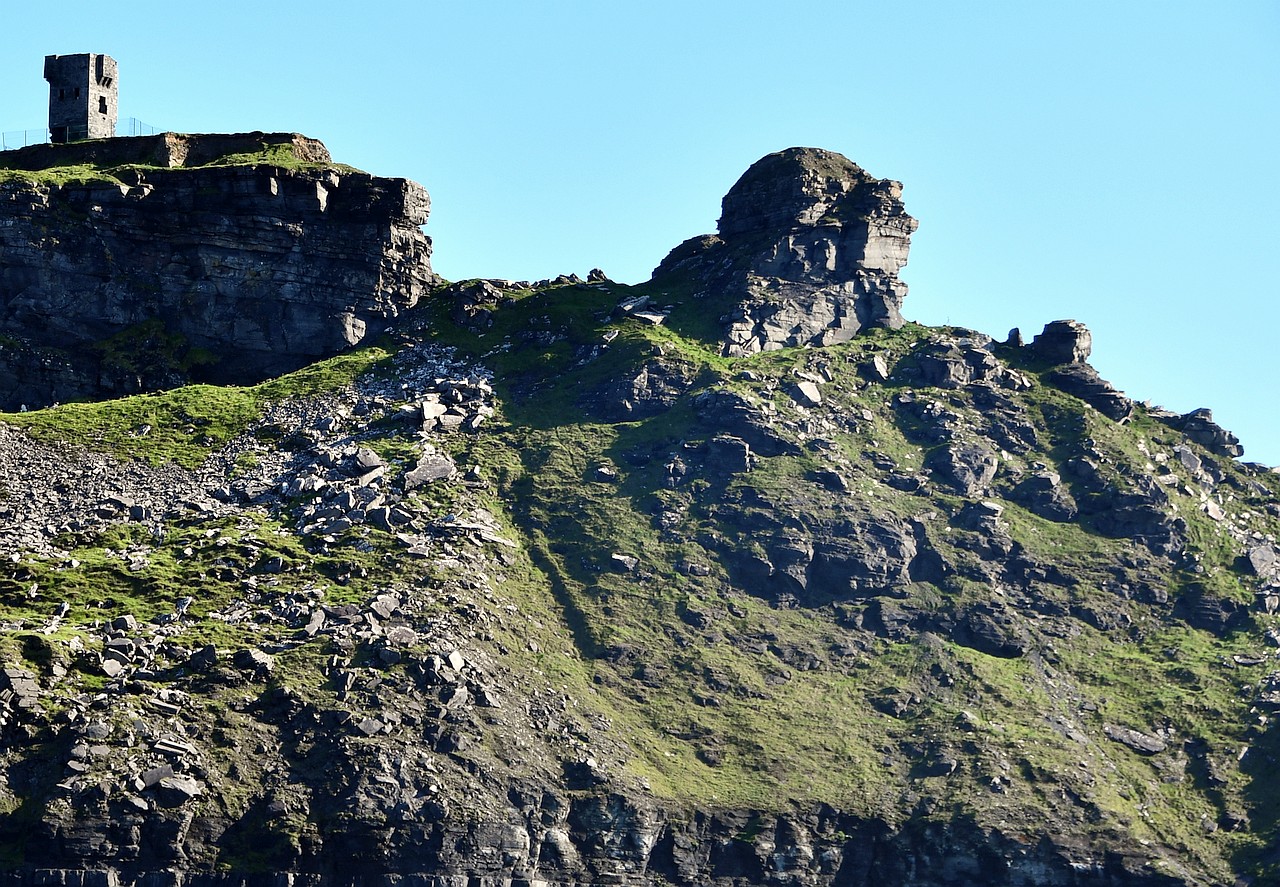
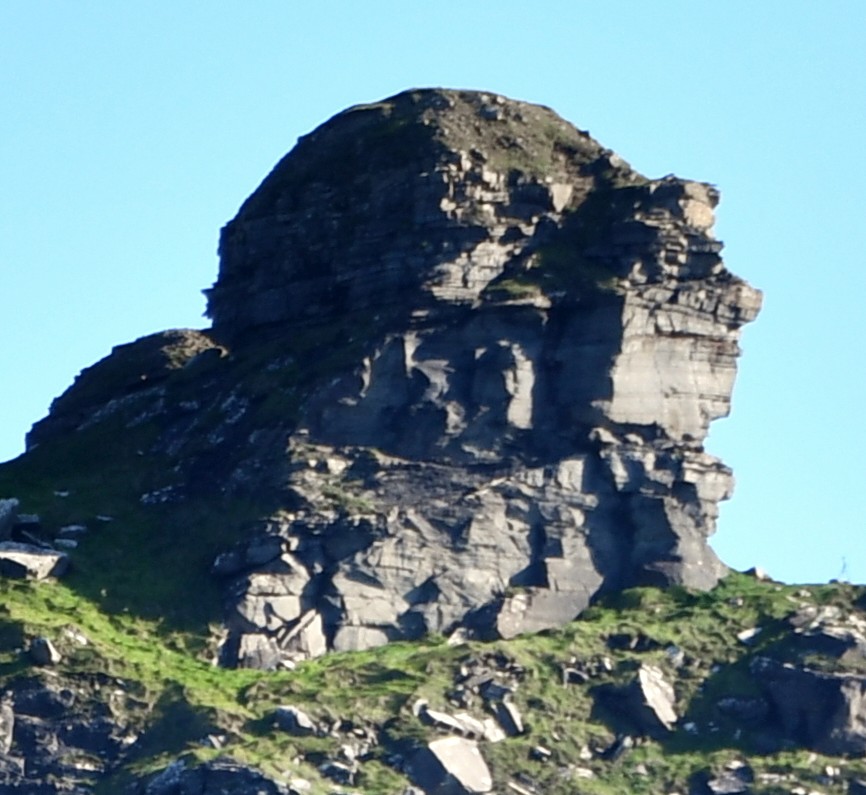
Ceann na Caill, The Hag’s Head, on the southernmost tip of the Cliffs of Moher in County Clare. One of many locations named for the Cailleach. By Magdee – Own work, CC BY-SA 4.0, https://commons.wikimedia.org/w/index.php?curid=92999835
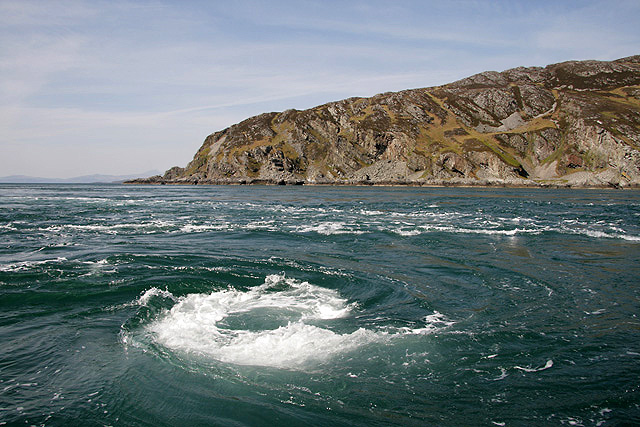
On the west coast of Scotland, the Cailleach ushers in winter by washing her great plaid in the Gulf of Corryvreckan (Gaelic: Coire Bhreacain – ‘whirlpool/cauldron of the plaid’). This process is said to take three days, during which the roar of the coming tempest is heard as far away as twenty miles (32 km) inland. When she is finished, her plaid is pure white and snow covers the land.
By Walter Baxter, CC BY-SA 2.0, https://commons.wikimedia.org/w/index.php?curid=33579199Image by Elder GWIkipedia
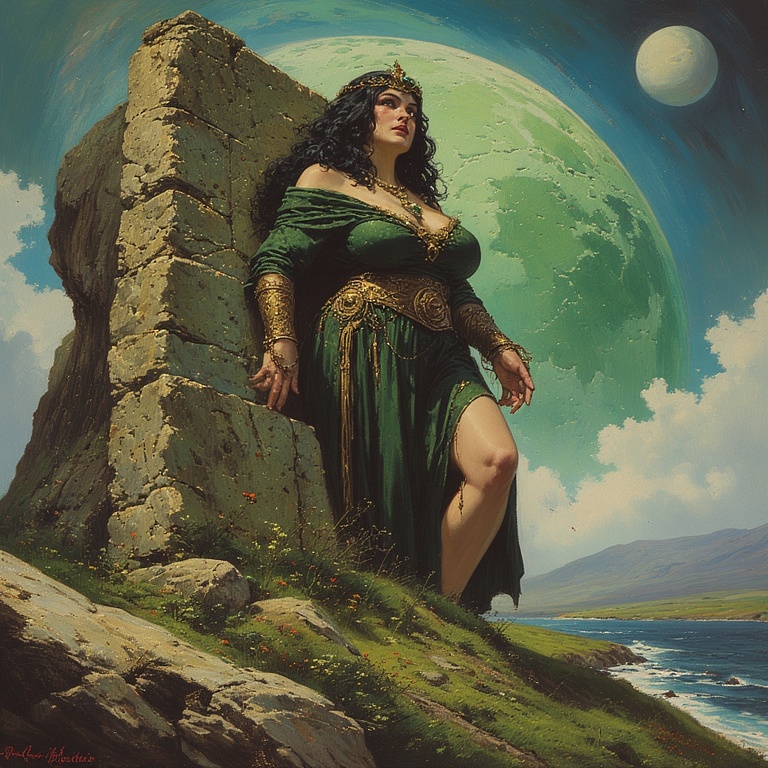
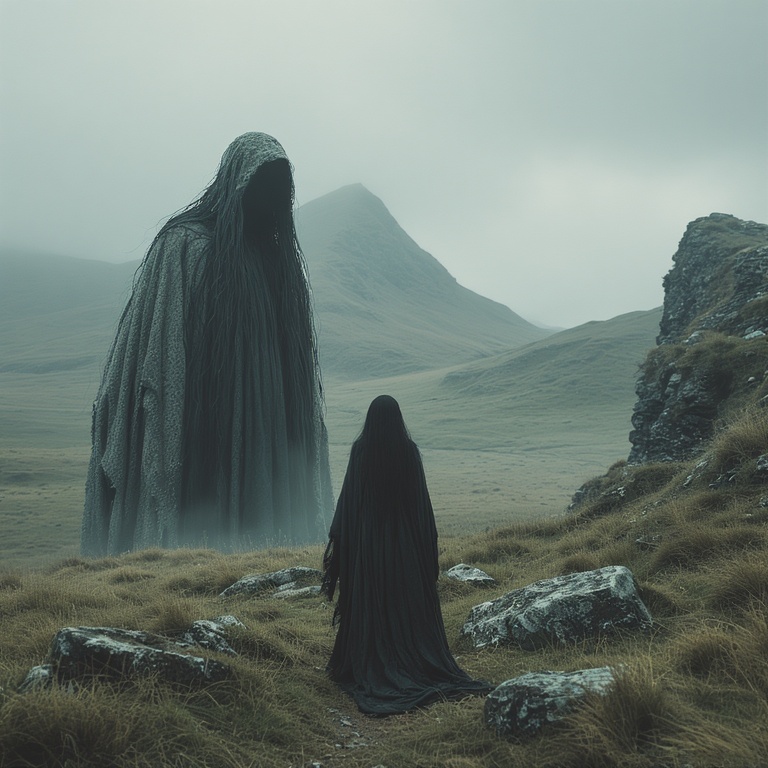
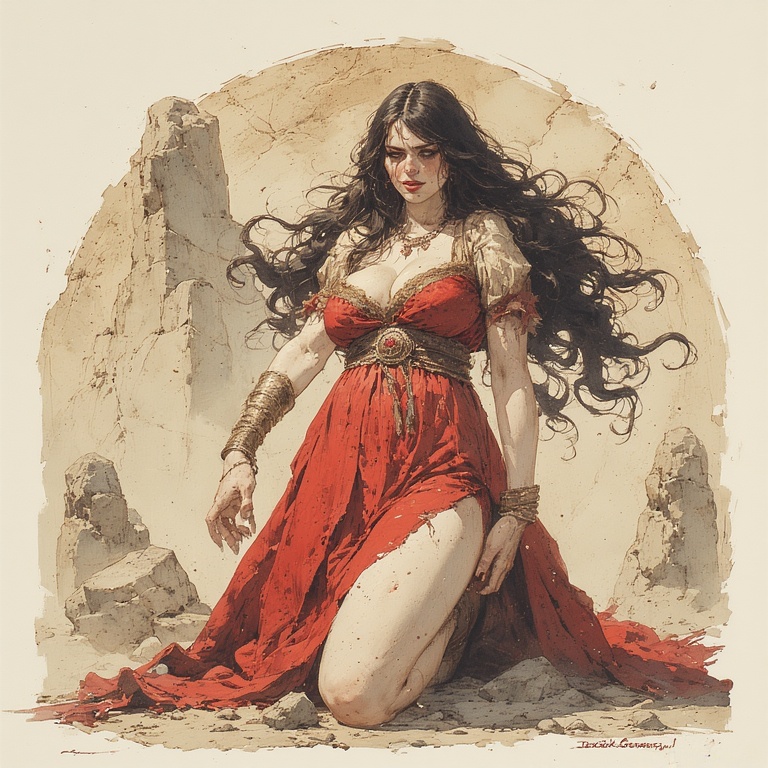
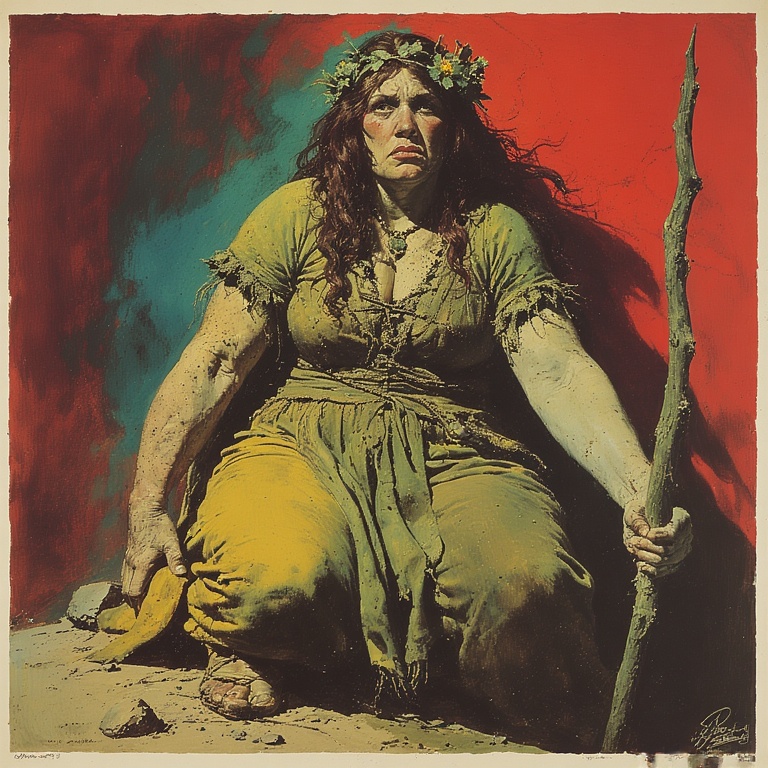
Cailleach, the mythical hag, has many personas (mostly based on the age and maturity level of the story teller). See if you can pick out the ones crafted by our junior marketing intern George (he’s single, ladies!)).