Across cultures, harbors have always been liminal spaces – between safety and peril, home and the vast unknown. Many traditions placed protective figures at the edge of the water, blessing or watching over departing sailors.
Mazu
The Chinese navigation guardian goddess originated with the deification of a kindhearted girl initially named Lin Mo (or Lin Moniang).
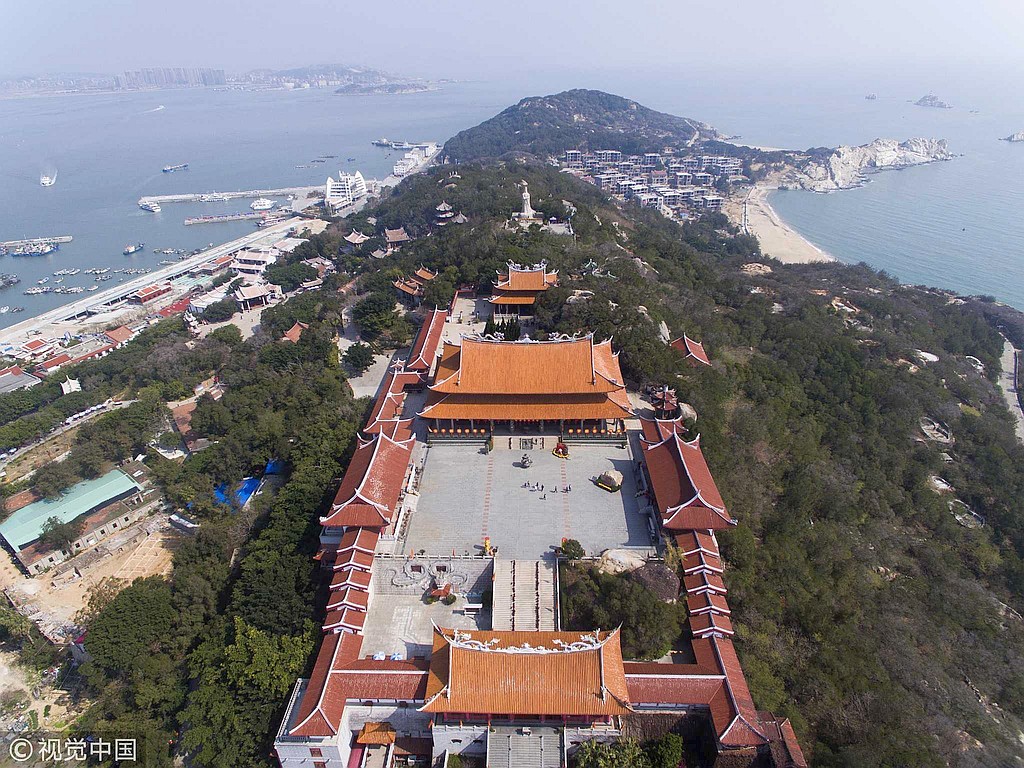
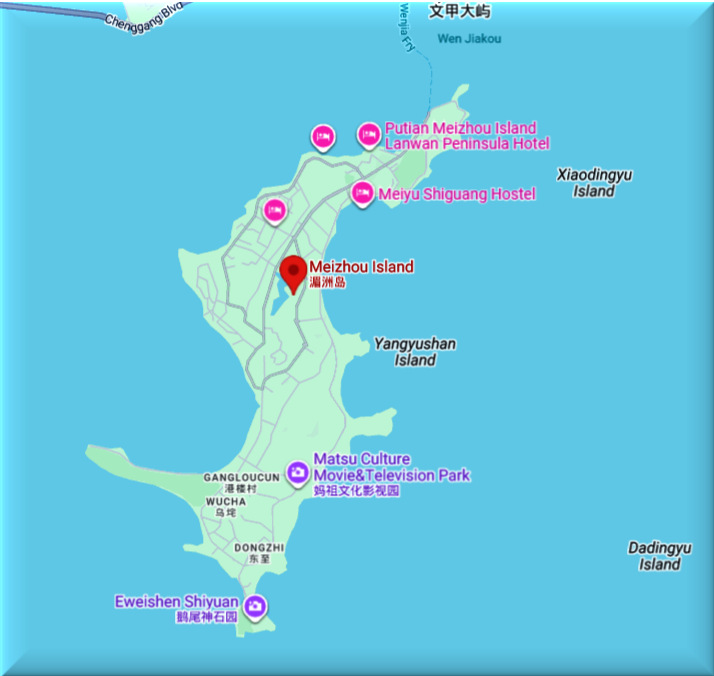
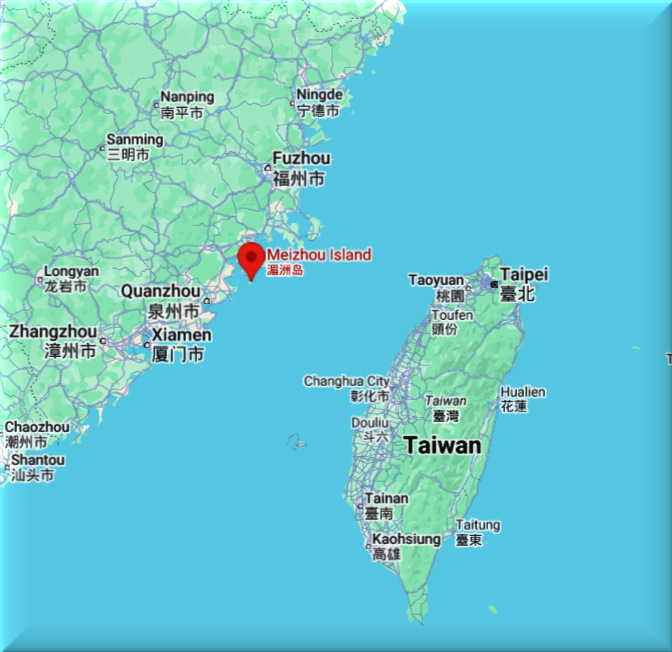
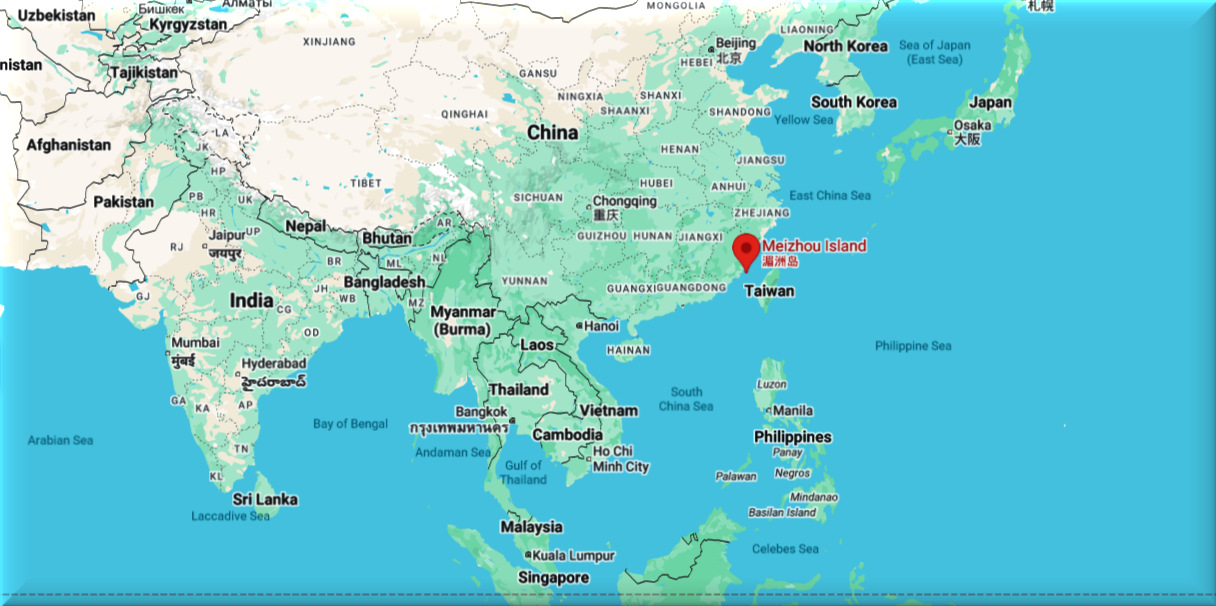
Born in an established family on Meizhou Island in Fujian Province in 960 AD, she showed remarkable intelligence at a young age. With a vast knowledge of astronomy and Chinese medicine, she is also well-known for outstanding swimming skill and prowess.
Throughout her life, Mazu helped coastal residents and local seafarers by making medicines, curing patients as well as forecasting the weather, planning safe routes and saving lives from shipwrecks.
There are several legends about her “death” and how she turned into the goddess. An oft-told version goes that Mazu eventually sacrificed herself at the age of 28 while trying to rescue the survivors of a shipwreck.
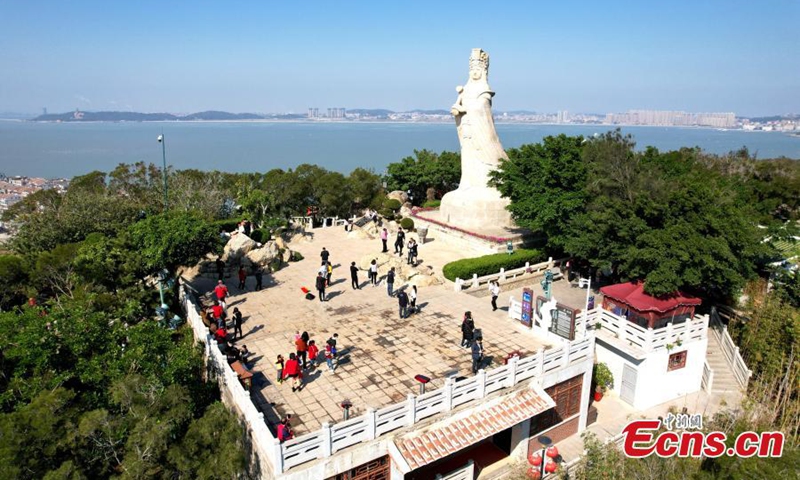
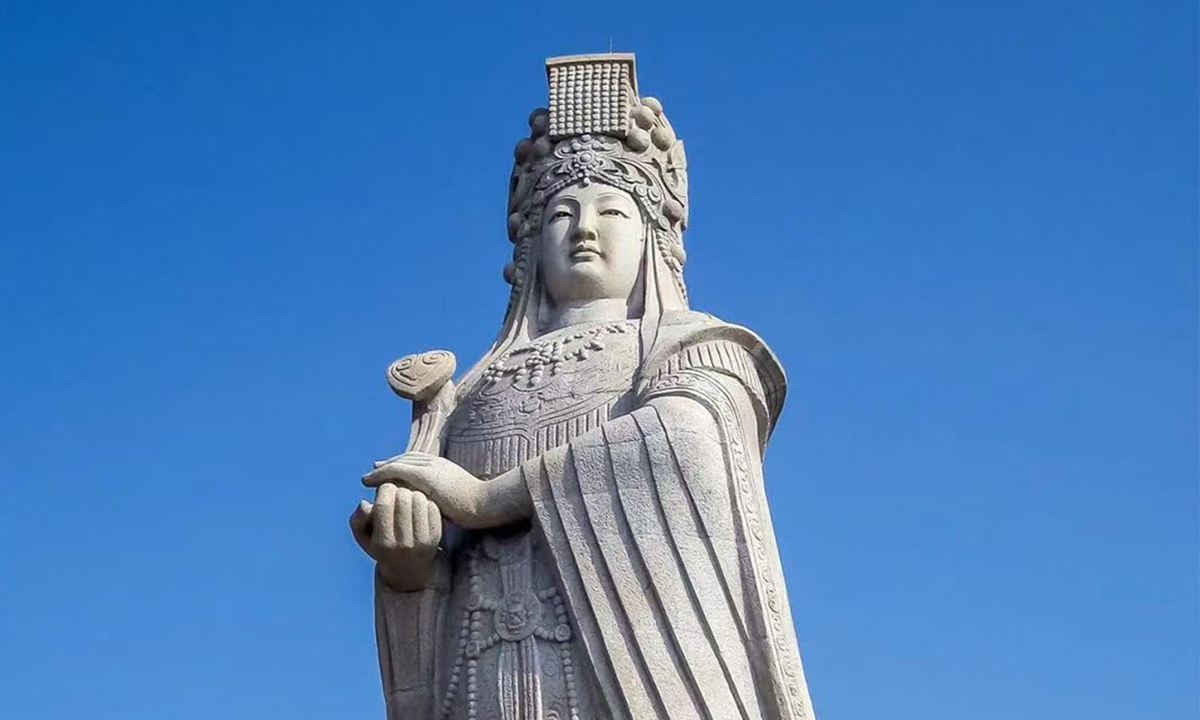
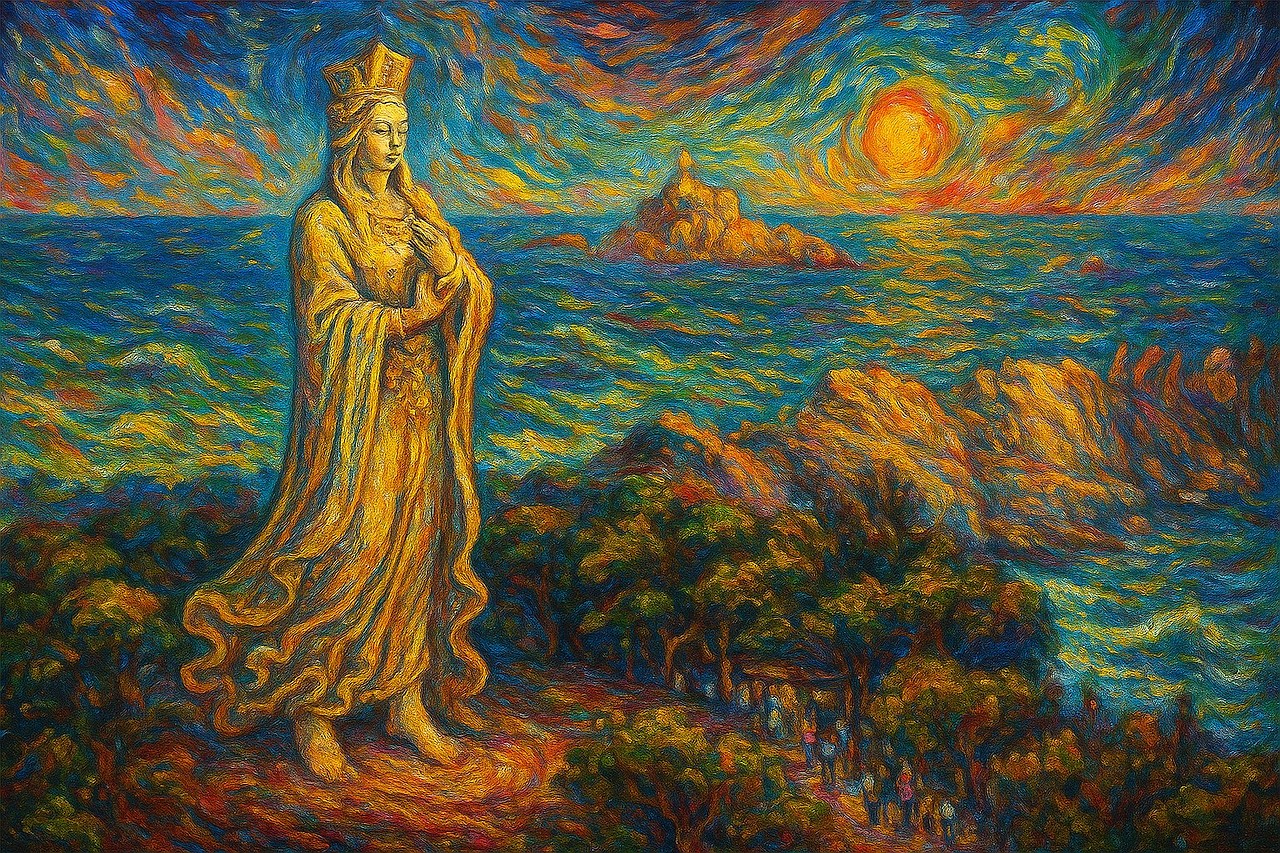
The giant statue of Mazu is erected at her hometown on Meizhou Island in east China’s Fujian Province.
Mazu belief and customs has spread over 20 countries and regions. There are more than 200 million devotees worldwide and over 5,000 temples devoted to her.
The Lugang Tianhou Temple in Taipei, China’s Taiwan region, built in 1685 is the most renowned one among over 1,000 Mazu temples in the island region that serve about 17 million Mazu devotees, more than two-thirds of the population on the island.
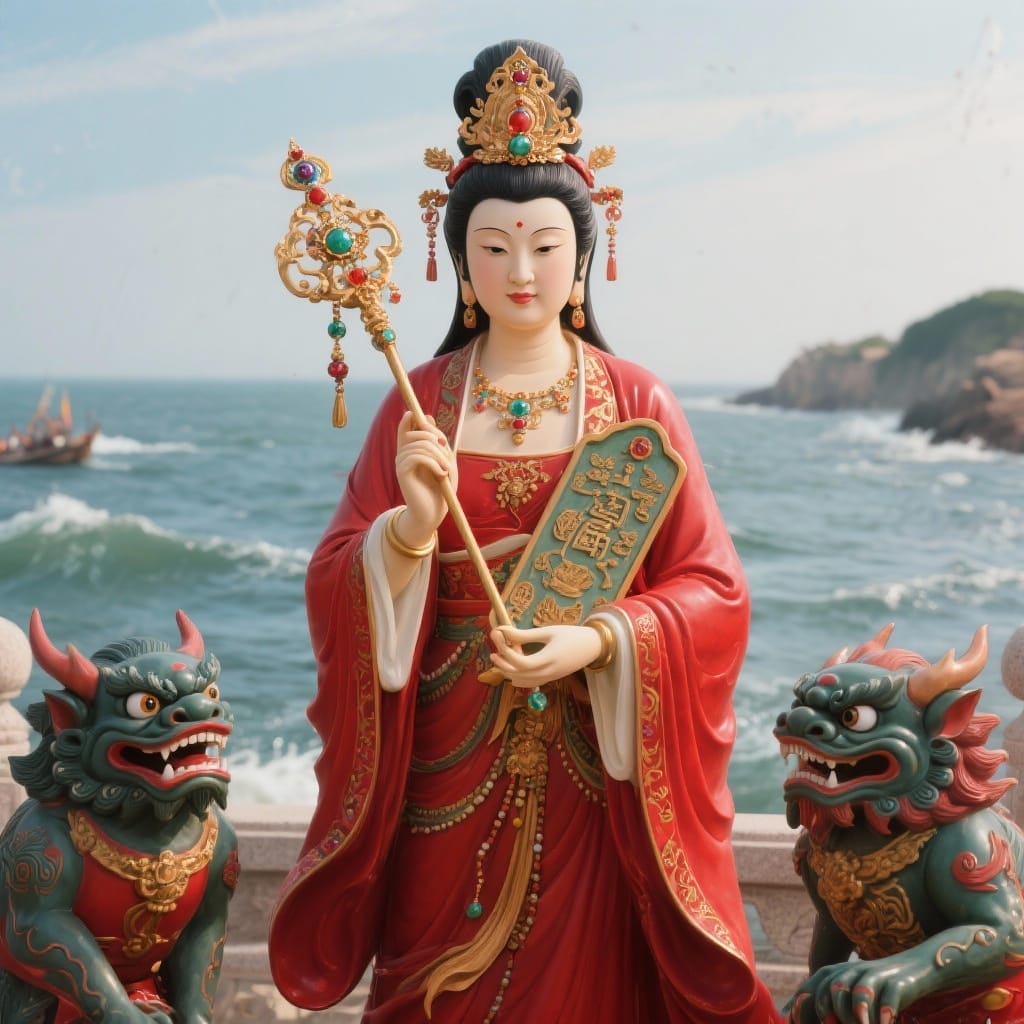
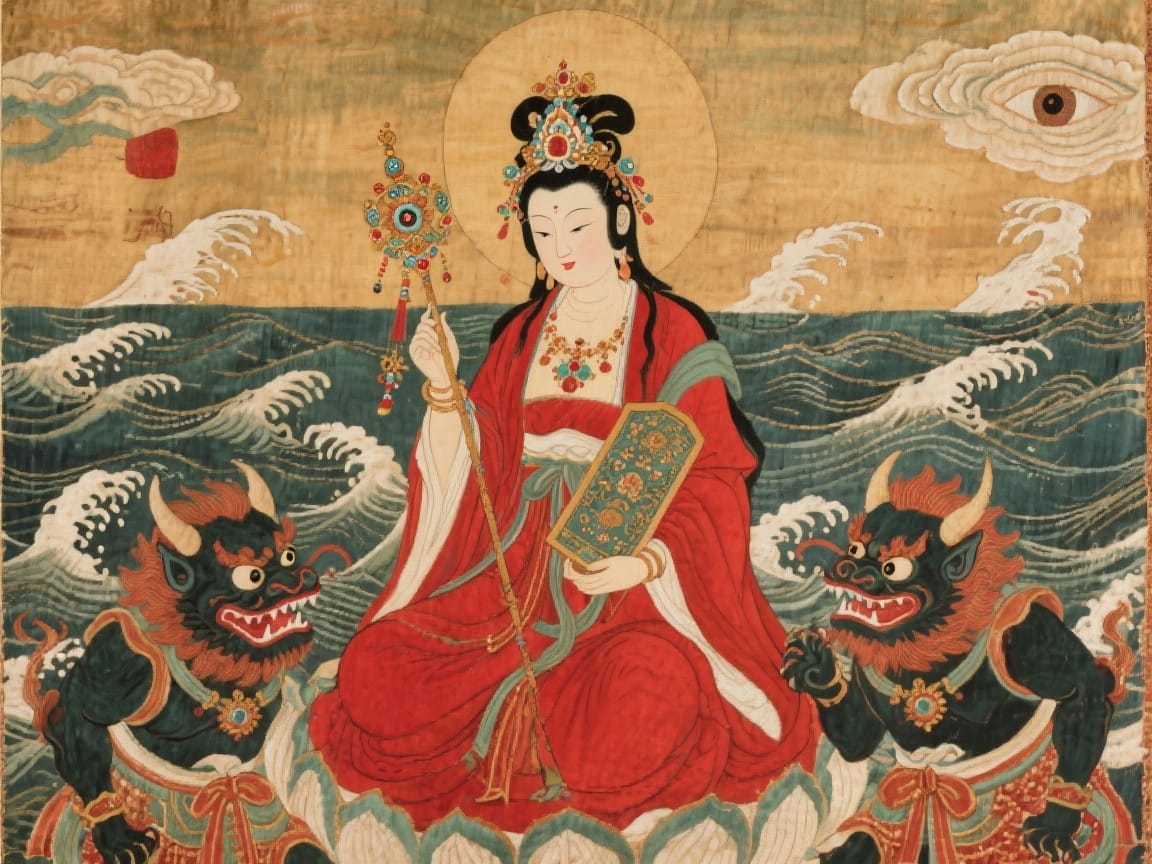
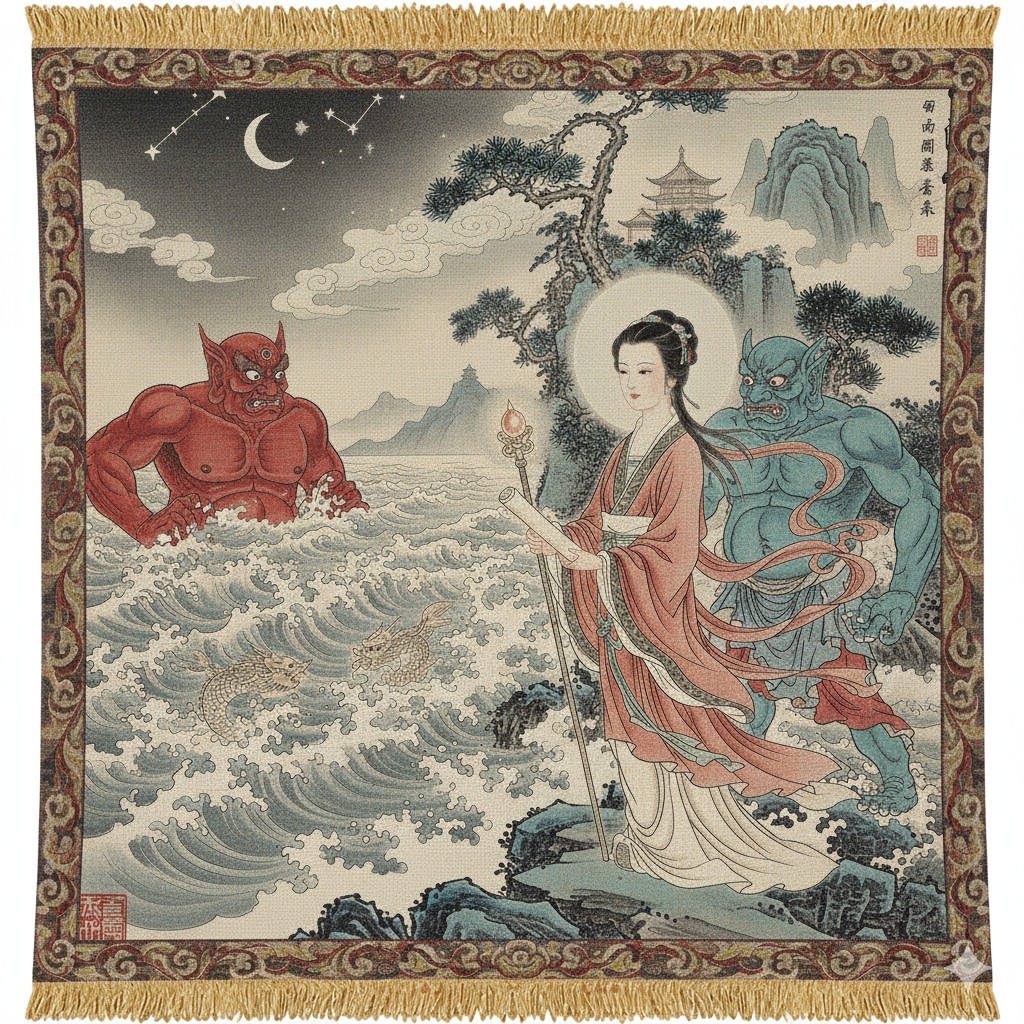
Mazu is often depicted in art and statues wearing red robes, which legend says she wore so that she could be easily seen by those lost at sea. She is sometimes shown holding a ceremonial tablet or a jeweled staff. She is often flanked by her two demon guardians, “Thousand Miles Eye” and “With-the-Wind Ear,” whom she is said to have tamed. These two guardians symbolize her ability to see and hear everything that happens on the water.
The Guanyin of Nanshan
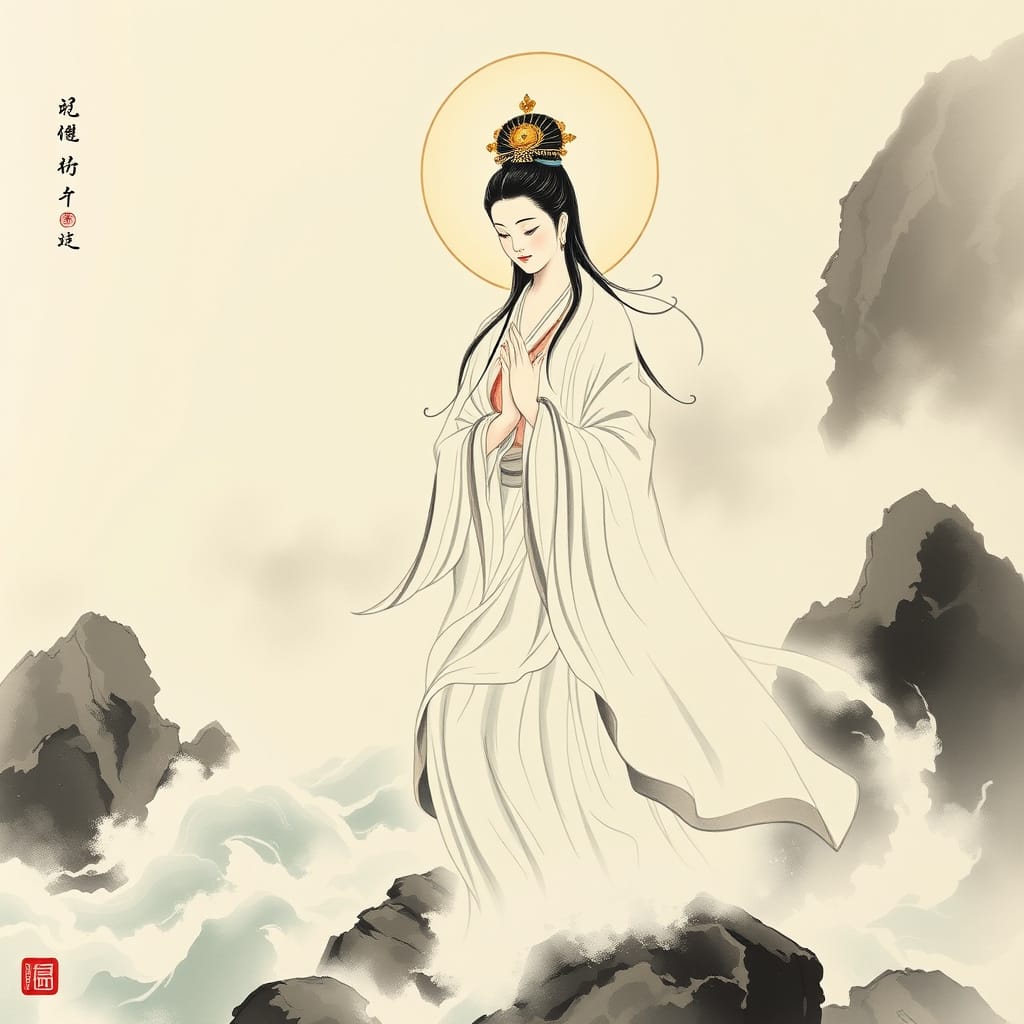
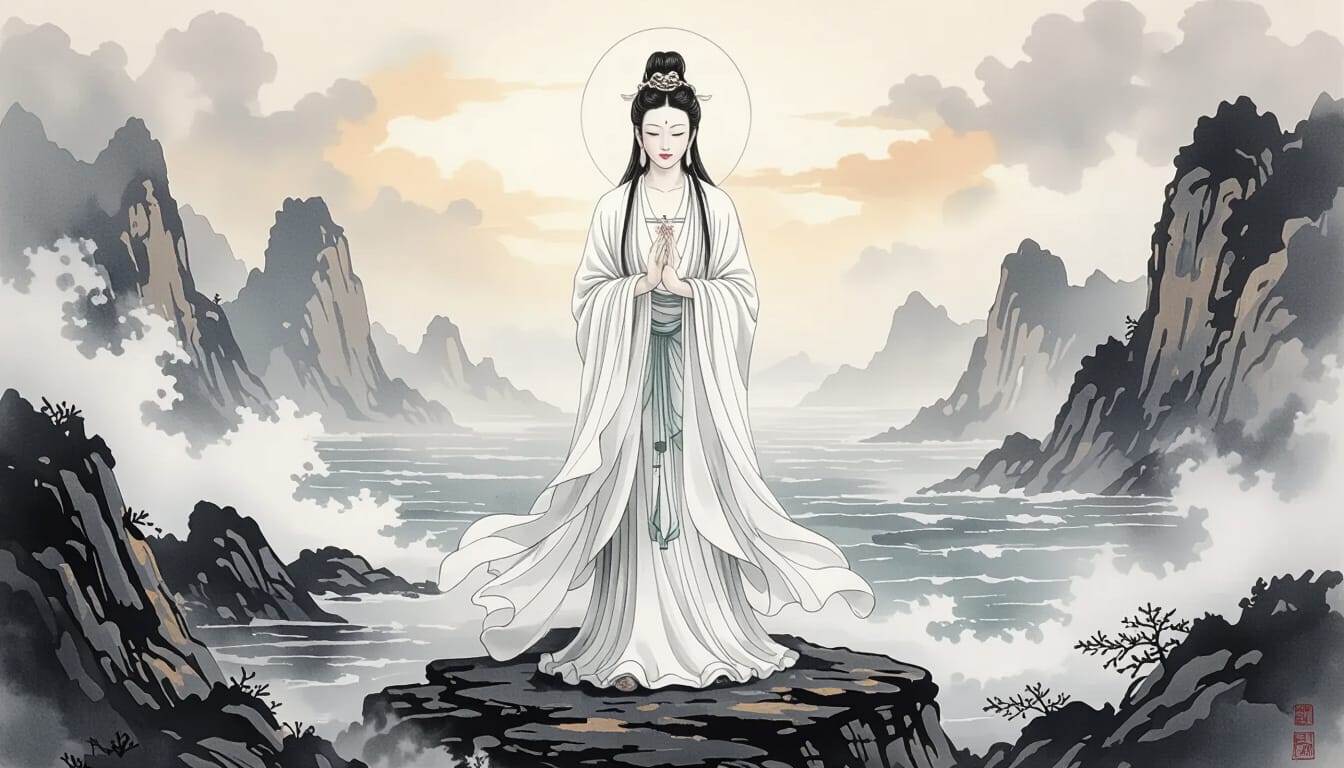
Guanyin is the Chinese name for the East Asian bodhisattva of compassion, originally a male figure in Indian Buddhism named Avalokiteśvara, who transformed into the revered female “Goddess of Mercy” after spreading to China.
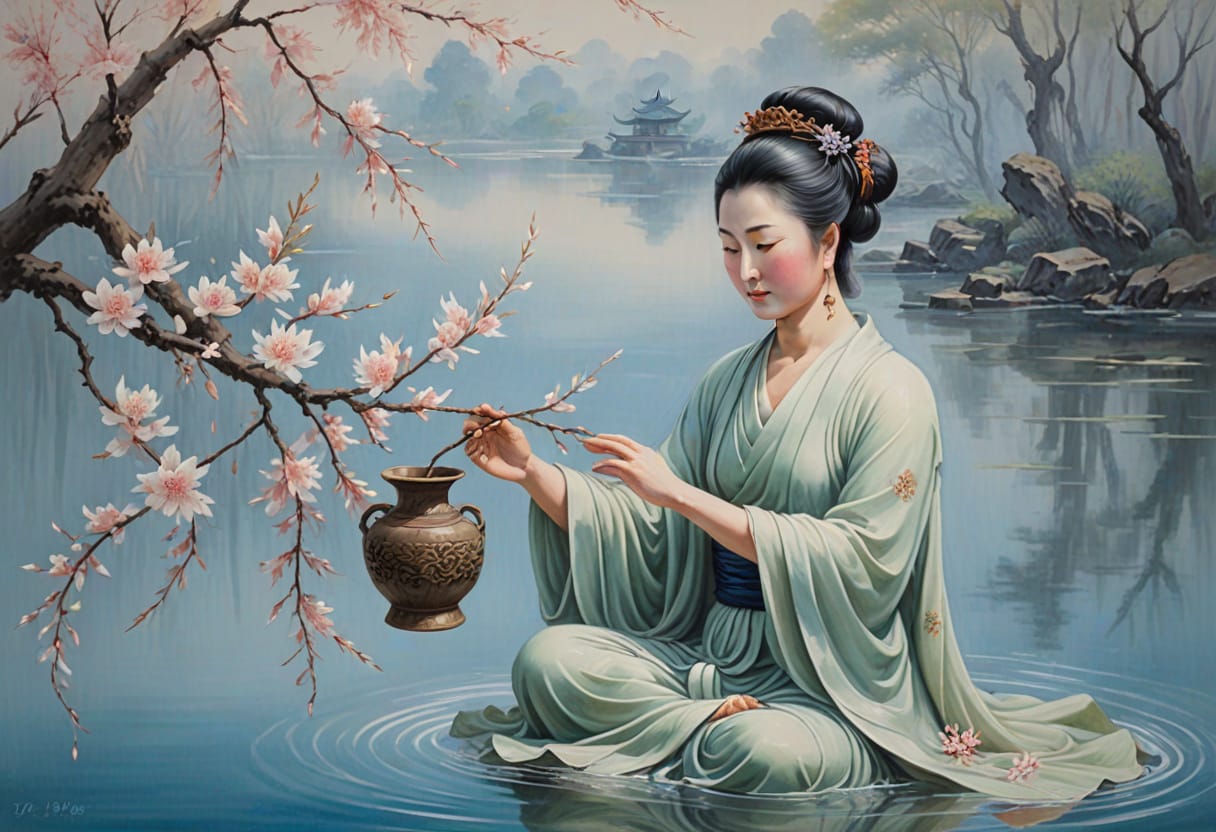
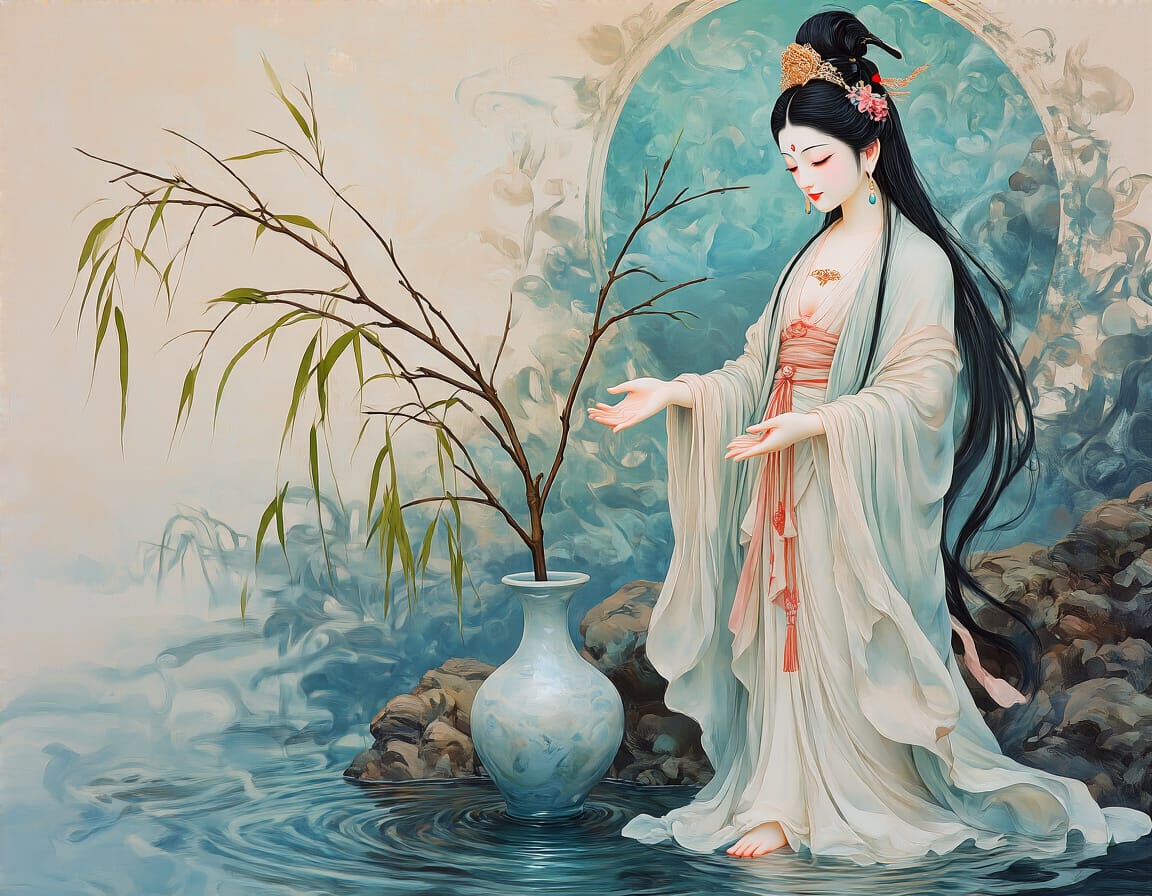
Revered in Chinese Buddhism, Taoism, and folk religion, Guanyin is known for listening to the cries of the world and offering boundless compassion and healing to those who pray to her, often depicted with a willow branch and a vase of pure water.
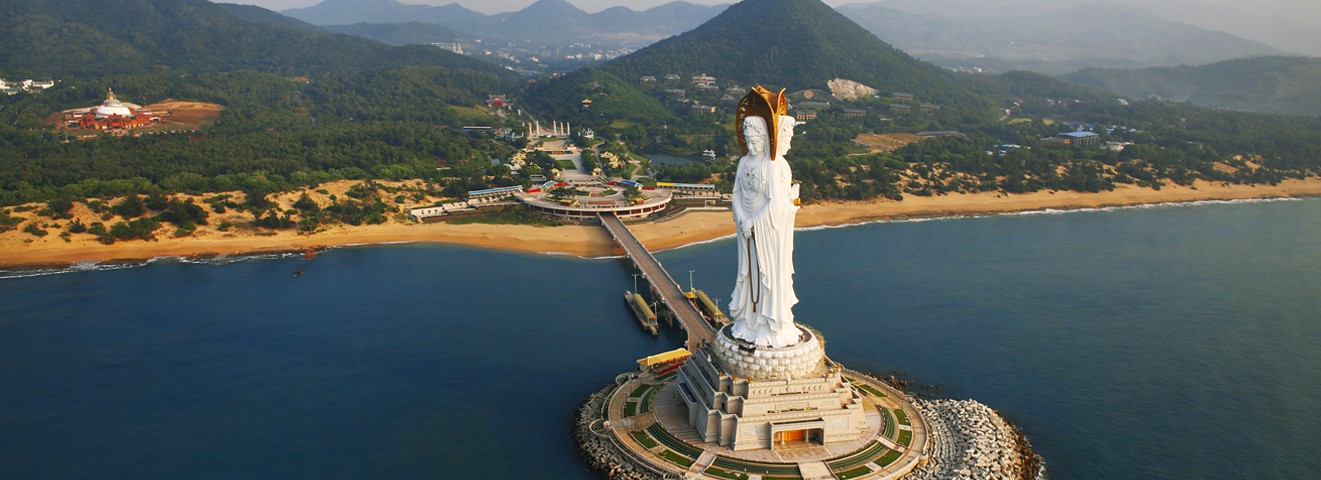
The Guanyin of Nanshan (Chinese: 南山海上观音圣像) is a 108-metre (354 ft) statue of the bodhisattva Guanyin, sited on the south coast of China’s island province Hainan on top of the Nanshan Temple of Sanya.
History The statue took six years to build and was enshrined on April 24, 2005, with the participation of 108 monks from various Buddhist groups in Taiwan, Hong Kong, Macao and mainland China, and tens of thousands of pilgrims. The delegation also included monks from the Theravada and Vajrayana traditions.
The construction of the Guanyin of Nanshan statue in Sanya, Hainan, China, spanned six years, beginning in 1999 and concluding in 2005. Made mostly of copper and painted white and gold, the statue features three distinct, three-sided representations of the goddess, with two facing the South China Sea and one facing inland. – Gemini
The Miserable Masses
The relation between Nanshan (the South Mountain) and Guan Yin bodhisattva (Buddha) is predestined and historically extended so long. It is said that among the Guanyin Bodhisattva’s 12 wishes, the second was to live in the South China Sea. Hence, Guanyin is also called South Sea Guanshiyin. Nanshan, located at the coast of South China Sea, resembles a huge legendary turtle, for which it was called Aoshan and deemed as Guanyin’s riding animal in ancient times. In Qiongzhou, the legend has passed for long that Guanyin has ever made the tour to the South China Sea in her effort to save the miserable masses.
Everyone in this area praises her for her benevolence. According to the legend, the two islands Dongmao and Ximao were formed of some clay carelessly dropped by Guanyin when she flew with it on her tour of salvation.
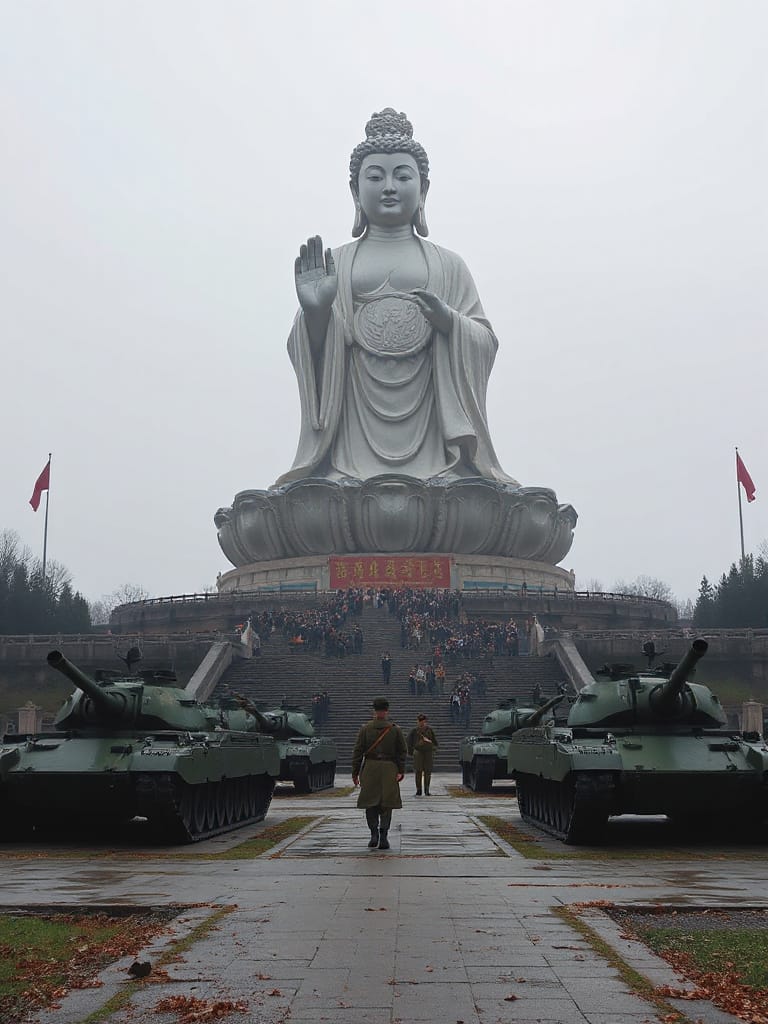
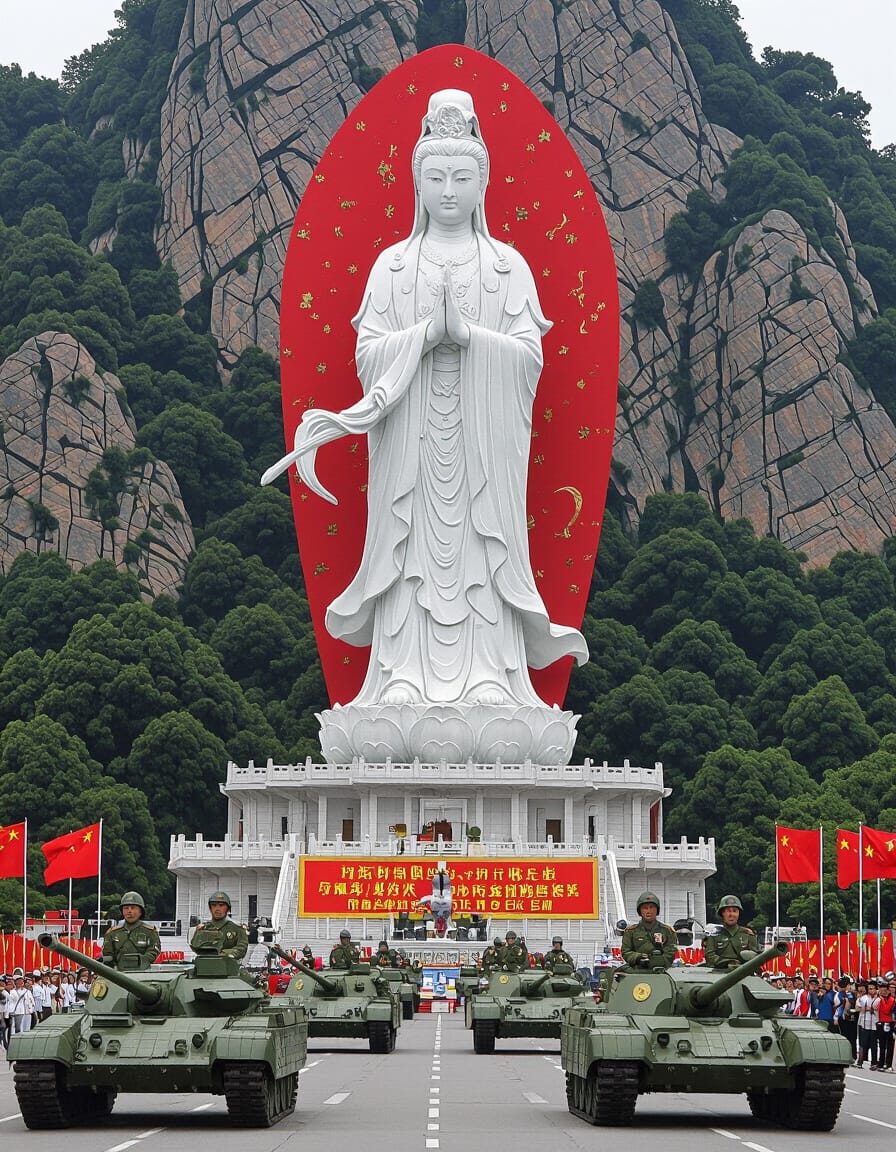
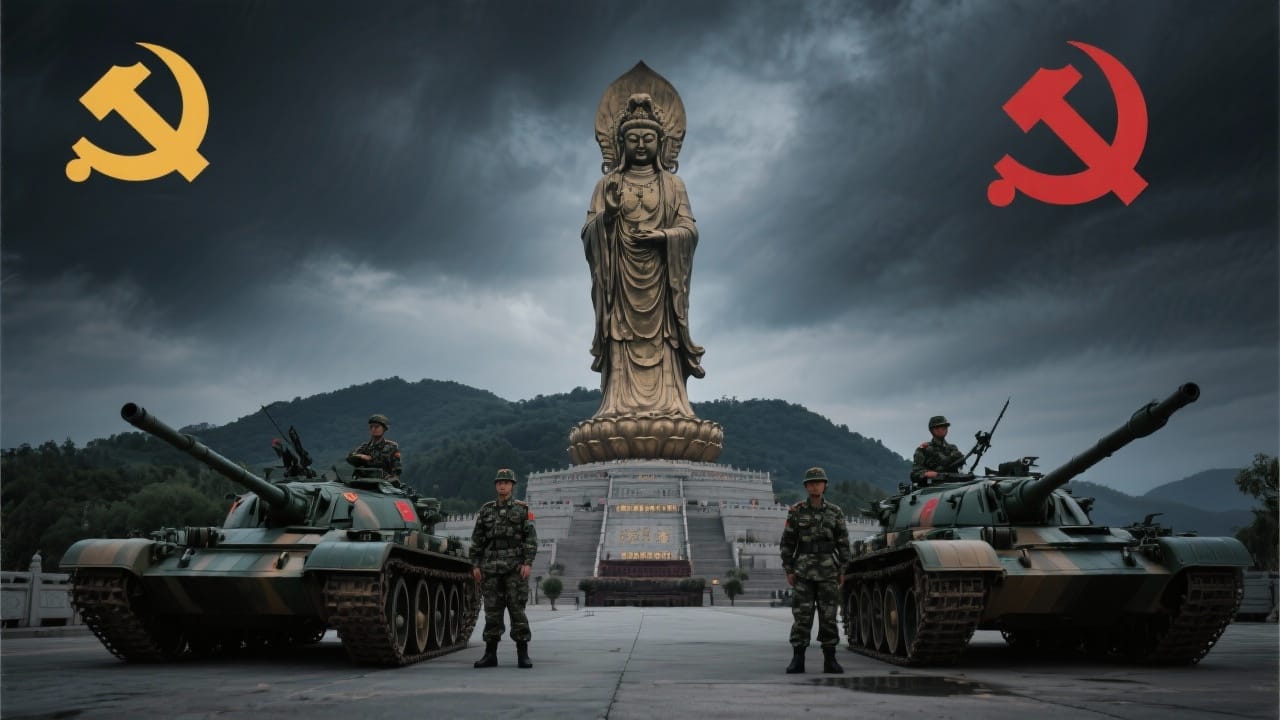
In researching the Chinese statues, the oppressive presence of the Chinese government keeps appearing. In some cases, the Chinese Communist Party (CCP) uses these statues as propaganda tools in their relationship to Taiwan (“See, we’re all brothers and sisters! Let’s share our common heritage!”) In other cases, there is overt suppression.
The War on Buddhist Statues Continues 01/09/2019, by Yao Zhangjin
China’s believers are trying to conceal religious statues and icons in order to save them from destruction.
To keep religion out of sight, the State Administration for Religious Affairs in 2017 issued a document forbidding anyone – organization or individual – to build large outdoor religious statues. And the construction of statues inside religious buildings is also strictly controlled.
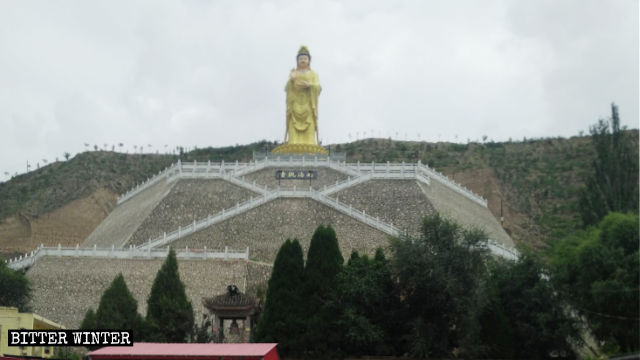
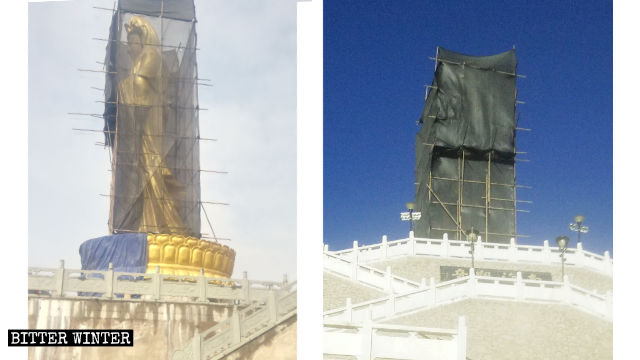
Under pressure from government officials, the villagers had no choice but to sheathe the entire Guanyin statue in a huge black sunshade mesh in October 2018. Since then, the Guanyin statue has been secluded from the world; from the outside, the entire appearance of the statue is indiscernible.
WLBOTT Wonders: Why is China, an officially atheist totalitarian government, subsidizing the statue of a Buddhist goddess?
Elder G: On the surface, it does seem odd that an officially atheist, Communist government would support such an enormous religious monument. But the Guanyin of Nanshan is a fascinating case study in how politics, economics, and religion can intersect in modern China.
1. Economic and Tourism Value
The statue was completed in 2005 as part of the Nanshan Cultural Tourism Zone near Sanya, Hainan. This area is marketed as both a religious pilgrimage site and a tourist attraction.
The government framed it less as a purely religious object and more as cultural heritage and economic development.
Hainan is a major resort island (the “Hawaii of China”), so the statue draws millions of visitors—boosting local tourism and revenue.
2. Controlled Religion
The Chinese Communist Party (CCP) doesn’t outright ban religion; instead, it allows state-sanctioned religious organizations to operate under tight control.
Buddhism (especially in its Mahayana, non-political, compassionate form) is often tolerated and even promoted as a “traditional Chinese value.”
The Guanyin of Nanshan project was sponsored by the Chinese Buddhist Association, which is officially recognized by the state.
By approving this project, the CCP could present itself as a protector of Chinese culture while ensuring religion stayed under government oversight.
3. Soft Power and International Image
Guanyin is revered not just in China but across East and Southeast Asia.
The statue became a diplomatic symbol, showing China’s cultural continuity and openness.
It allowed the government to promote an image of harmony, compassion, and cultural pride to both domestic and international audiences.
4. Atheism vs. Cultural Nationalism
While Marxist ideology is officially atheist, the CCP often emphasizes “cultural traditions” when it serves national unity.
Confucianism, Daoism, and Buddhism are selectively celebrated as part of a shared heritage.
The Guanyin of Nanshan could be justified as cultural nationalism rather than purely religious devotion.
✨ So in short: the government was “okay” with it because it boosted tourism, stayed within state-controlled Buddhism, reinforced national culture, and enhanced China’s international image—all while keeping religion under supervision.