In Leonard Cohen’s song Suzanne, there is this beautiful image:
And the sun pours down like honey
    on Our Lady of The Harbor

- Suzanne by Leonard Cohen
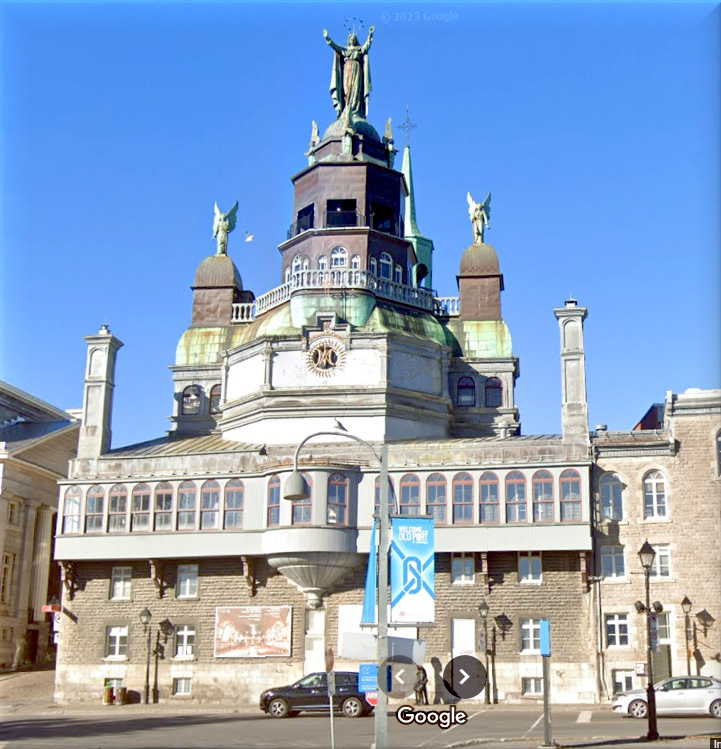
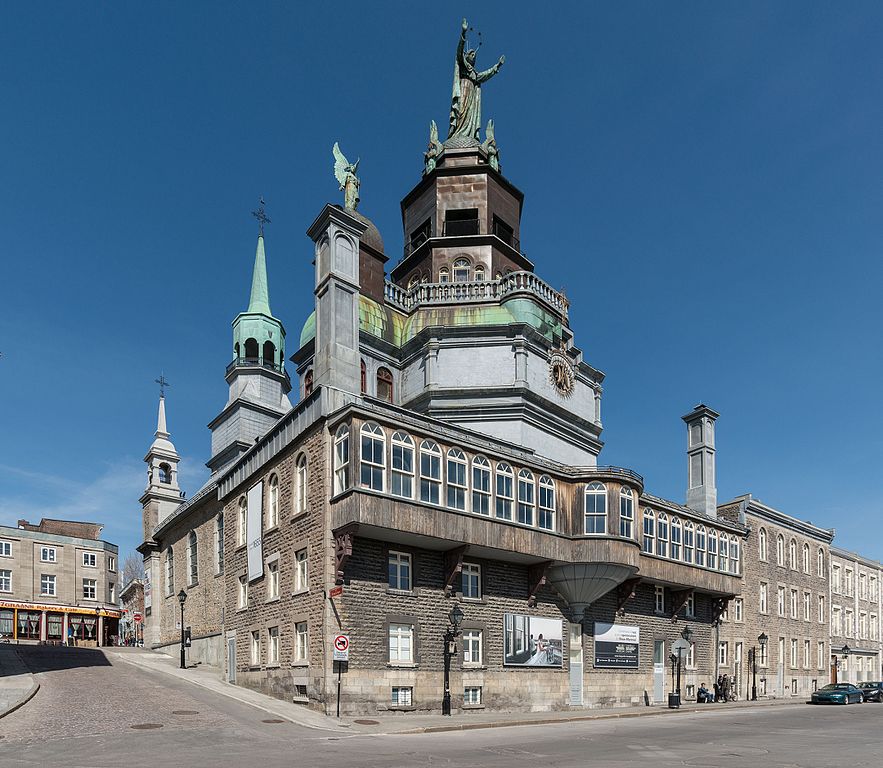
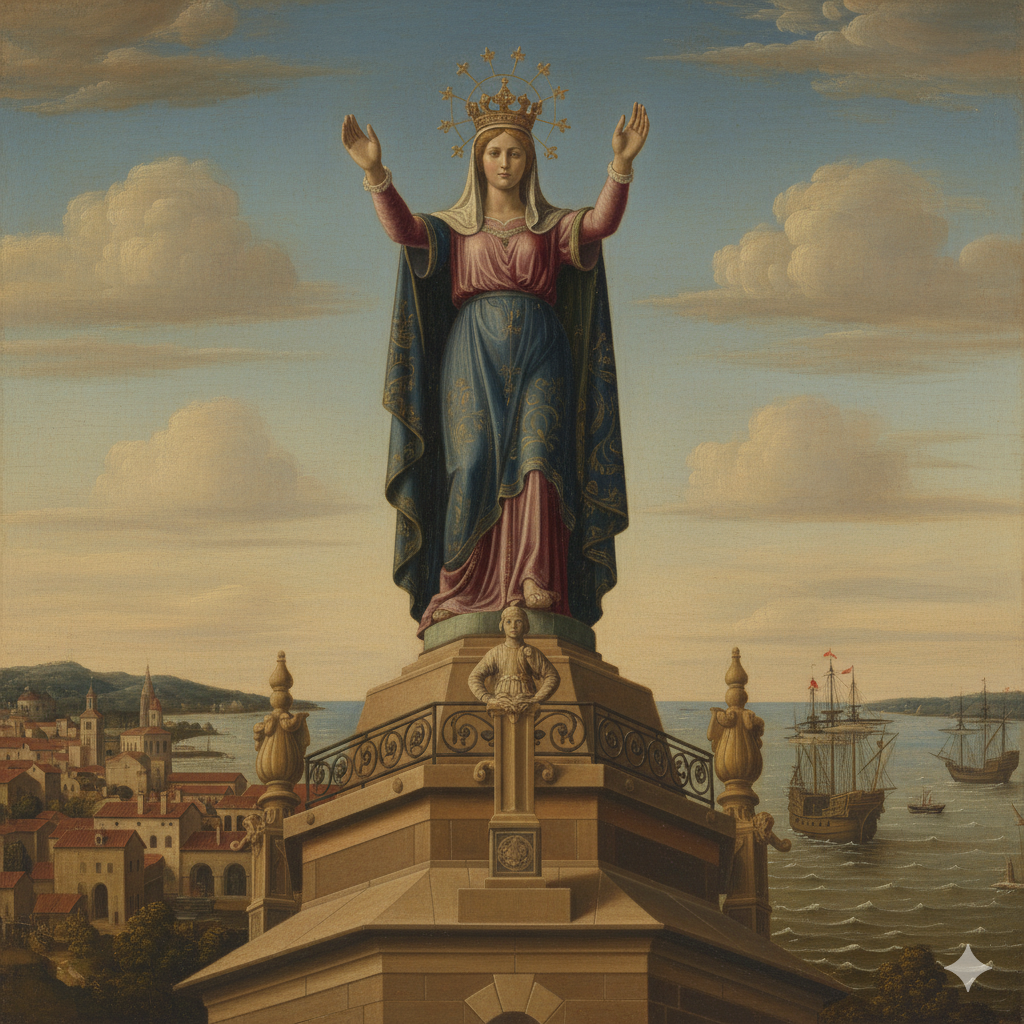
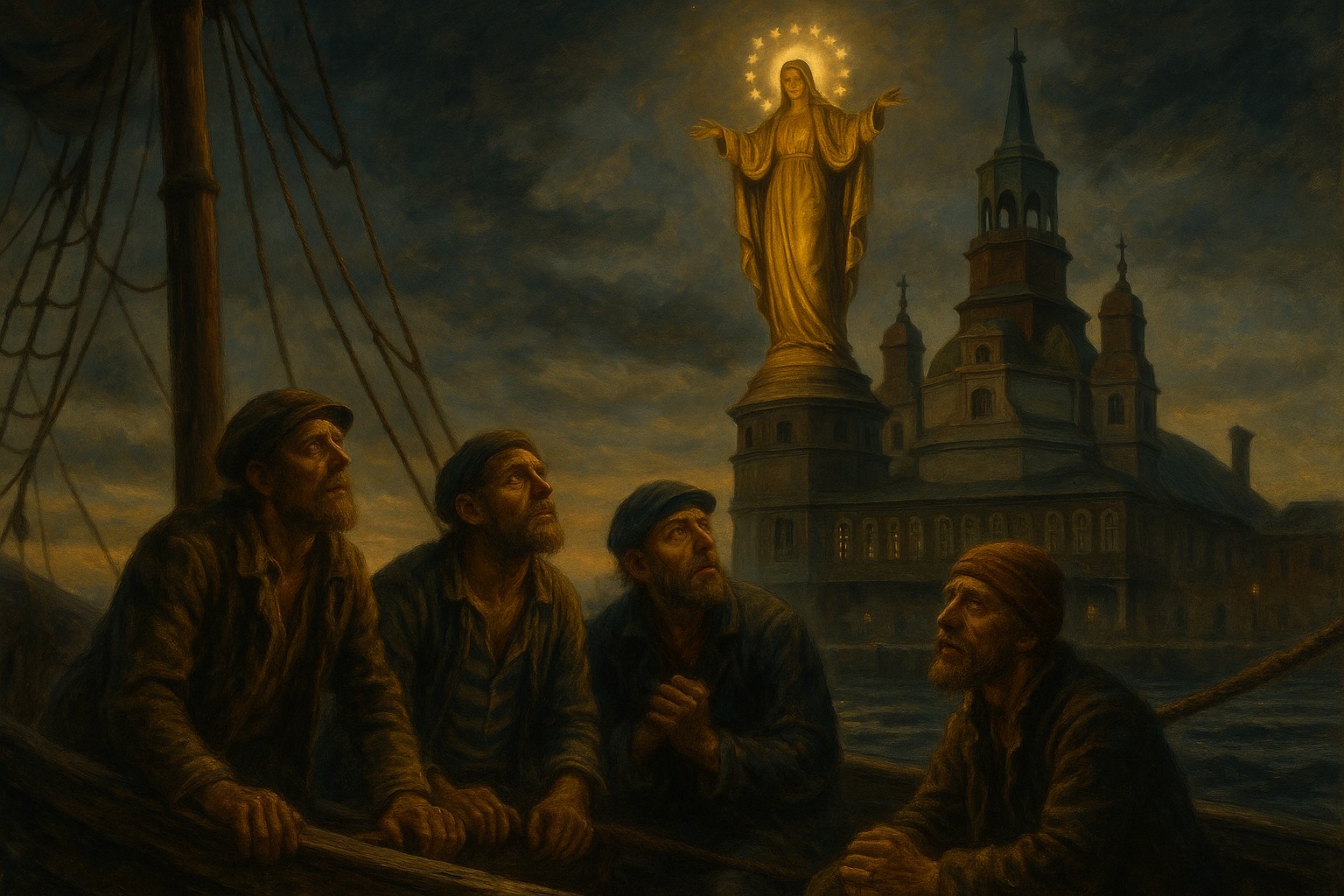
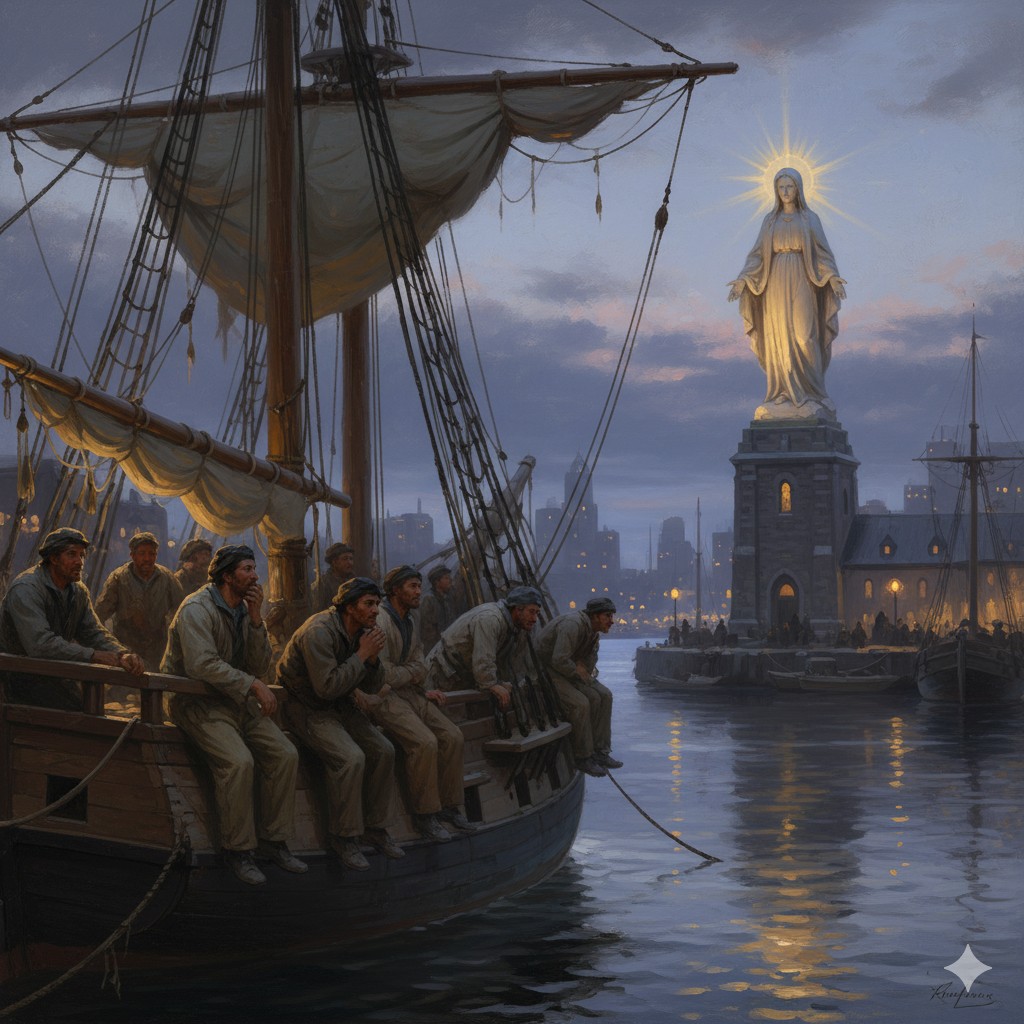
Leonard Cohen is almost certainly referring to the statue of The Virgin Mary that sits atop the Notre-Dame-de-Bon-Secours Chapel. It is known as the Lady of the Harbor, as she provides comfort for sailors.
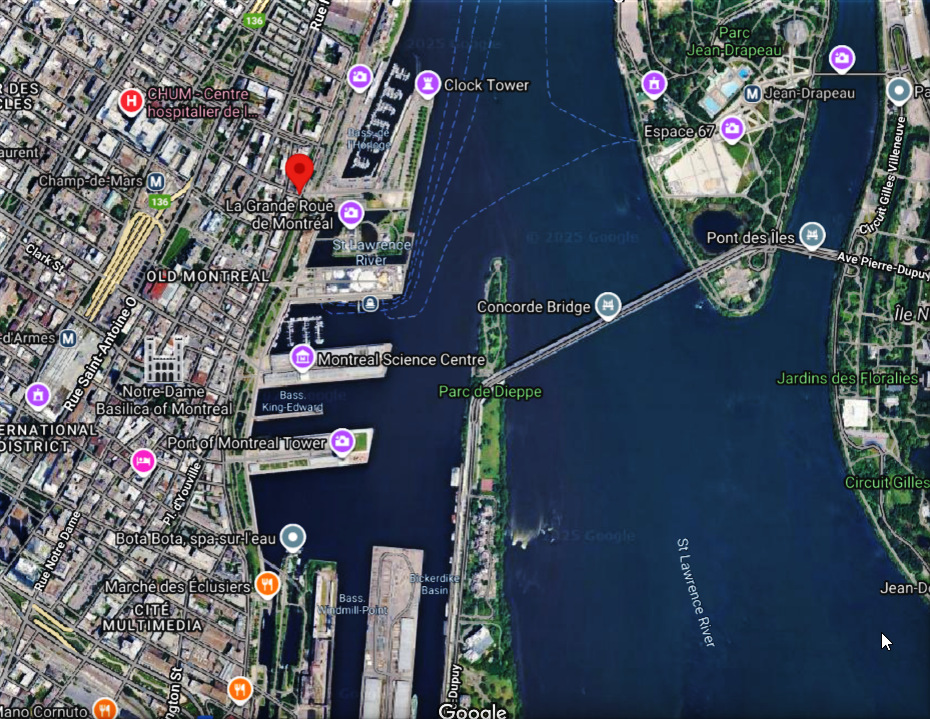
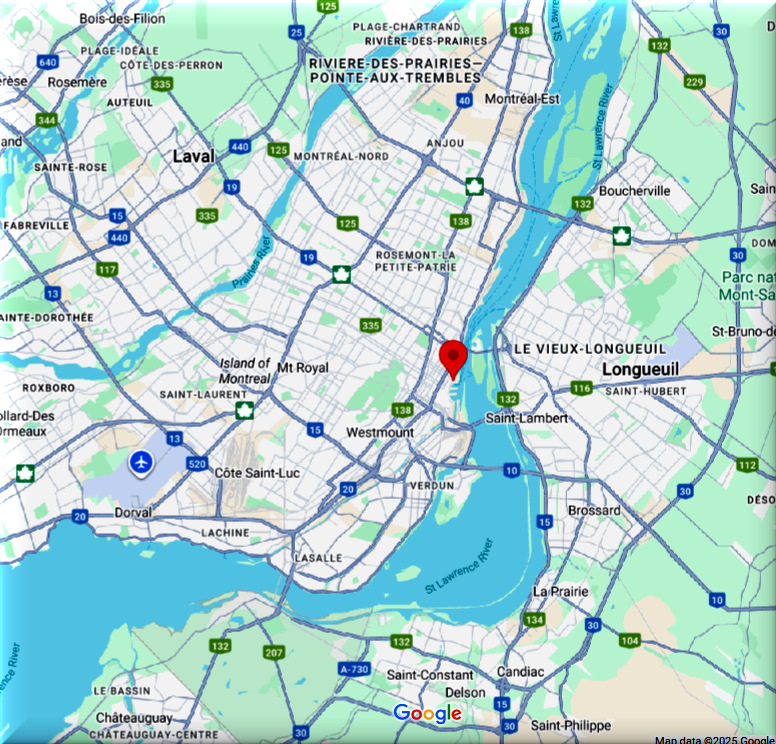
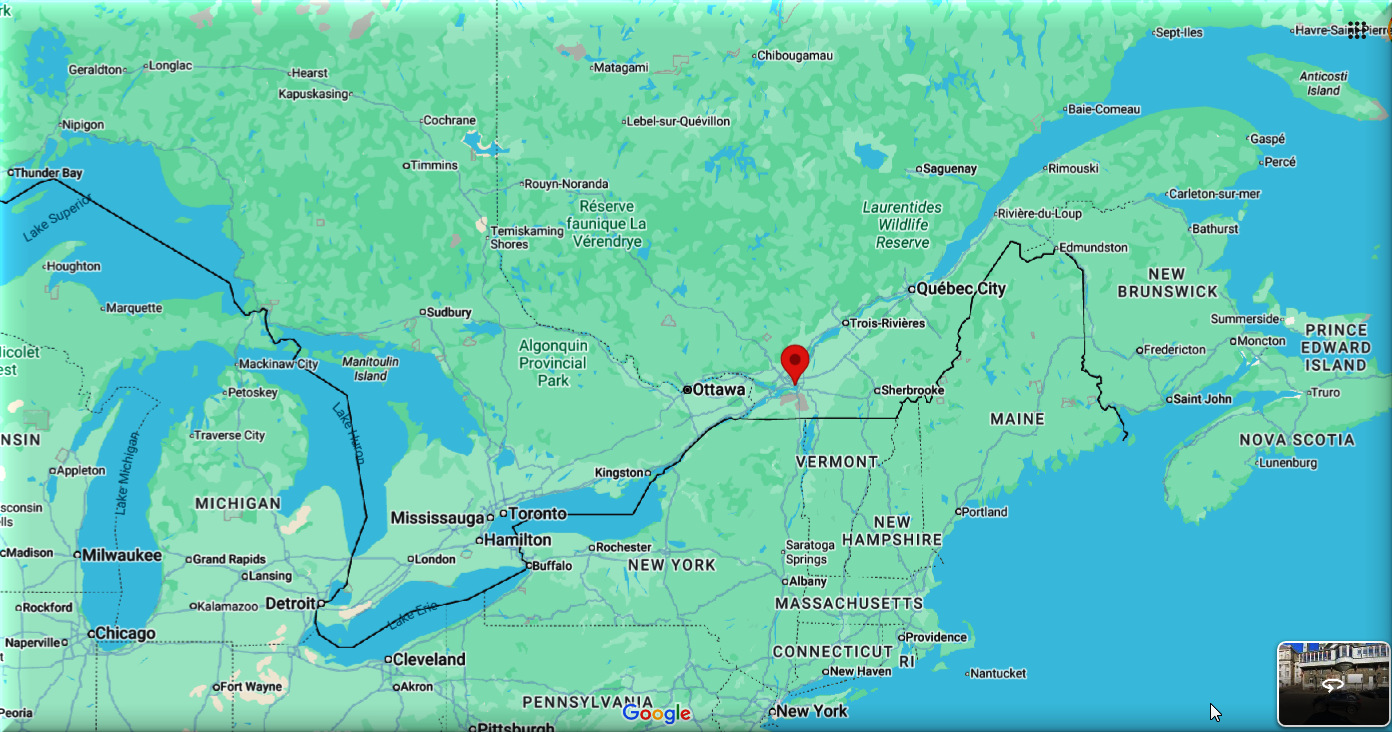
The Notre-Dame-de-Bon-Secours Chapel (chapelle Notre-Dame-de-Bon-Secours, “Our Lady of Good Help”) is a church in the district of Old Montreal in Montreal, Quebec. One of the oldest churches in Montreal, it was built in 1771 over the ruins of an earlier chapel. The church is located at 400 Saint Paul Street East at Bonsecours Street, just north of the Bonsecours Market in the borough of Ville-Marie (Champ-de-Mars metro station).
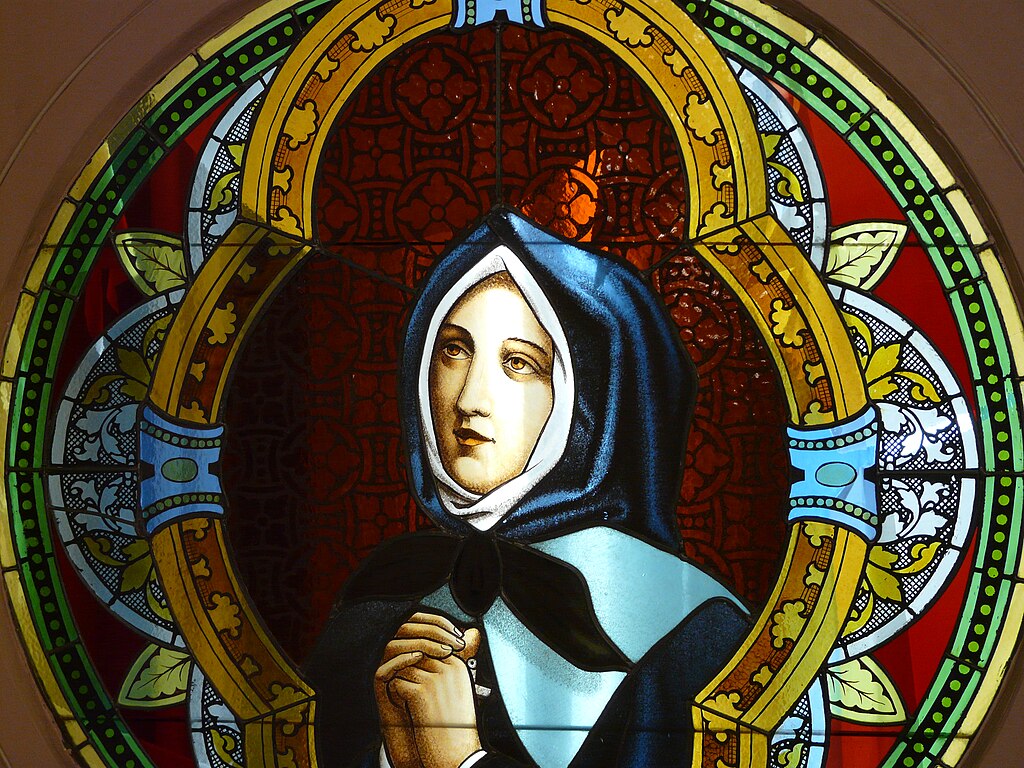
History St. Marguerite Bourgeoys, the first teacher in the colony of Ville-Marie and the founder of the Congregation of Notre Dame, rallied the colonists to build a chapel in 1655. In 1673, returning from France, Bourgeoys brought a wooden image of Our Lady of Good Help; the stone church was completed in 1678. It burned in 1754, the reliquary and statue being rescued and placed above the entrance of the rebuilt church of 1771.
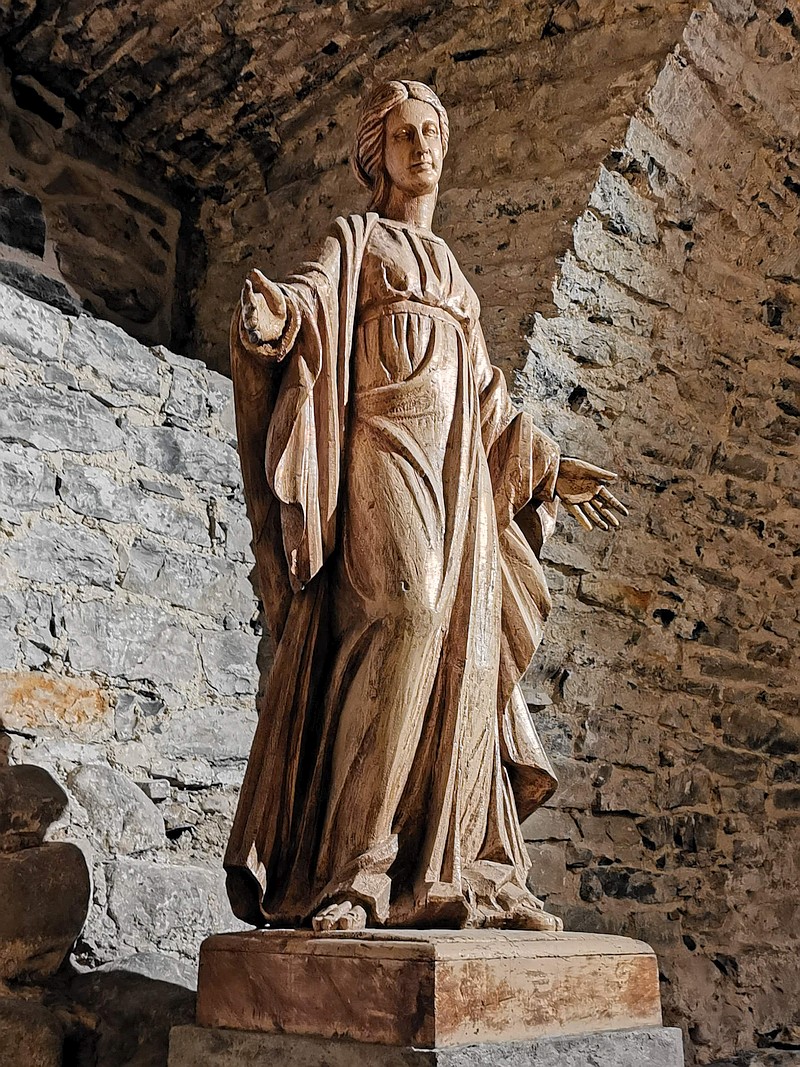
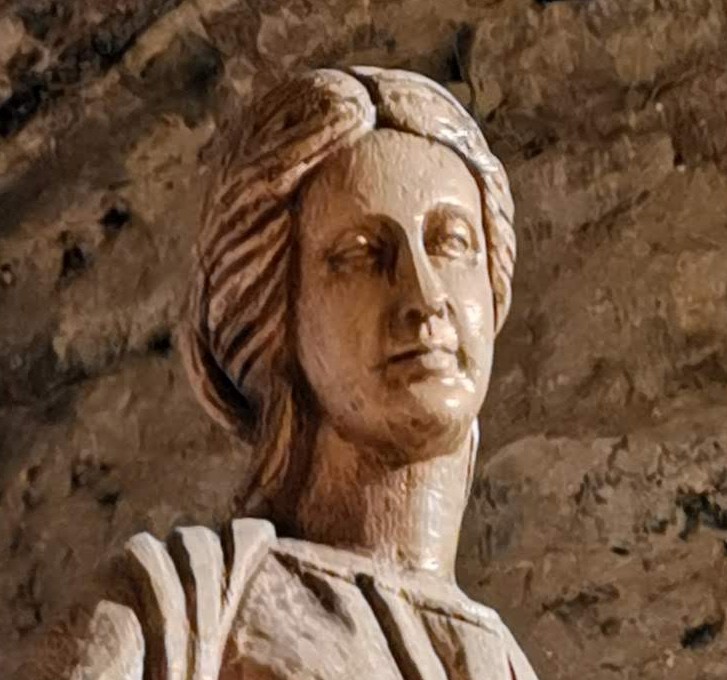
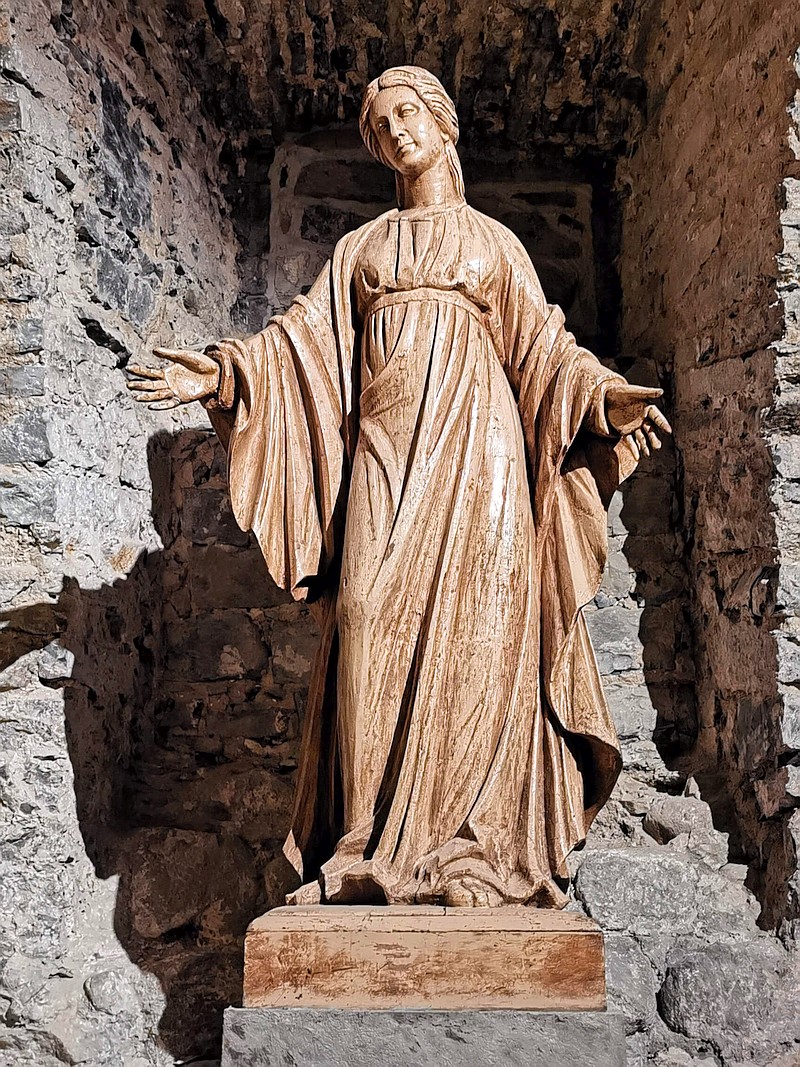
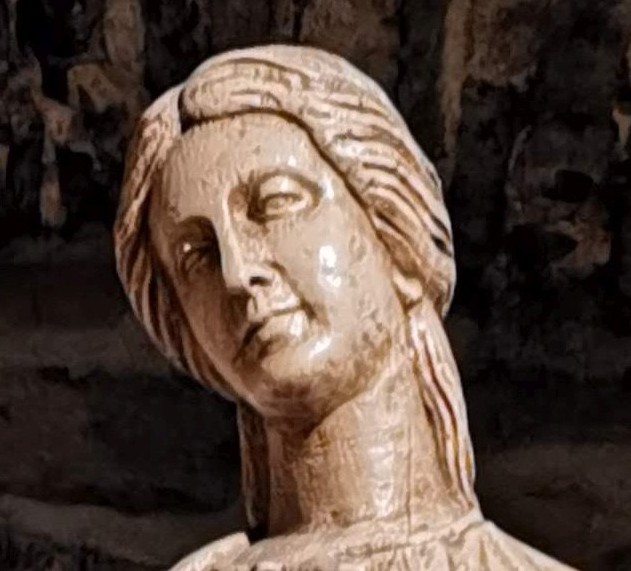
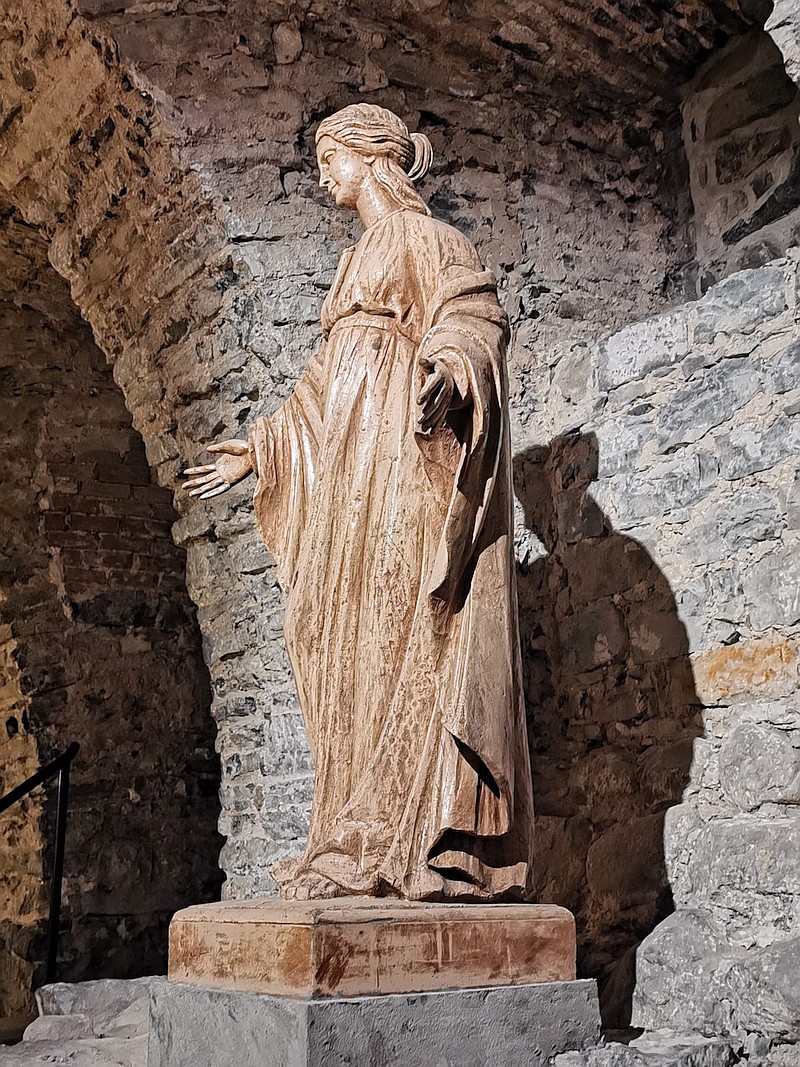
The church has a long and fascinating history. And it has two famous statues: in addition to Our Lady of the Harbor, there is a 17th century wooden statue that St. Marguerite Bourgeoys brough over Europe, and survived a devastating fire in 1754.
The Blessed Virgin Mary looks over Montreal’s present and future, and stands as a beacon from its past…guiding us to her Son. The original chapel of Notre Dame de Bon Secours was founded by St. Marguerite Bourgeoys, building a foundation for this chapel and community that has survived war, fire, and the many difficulties of early colonial life.
This statue of the Blessed Virgin overlooks the Old Port of Montreal, where sailors and settlers would arrive after facing the grueling path to the New World.
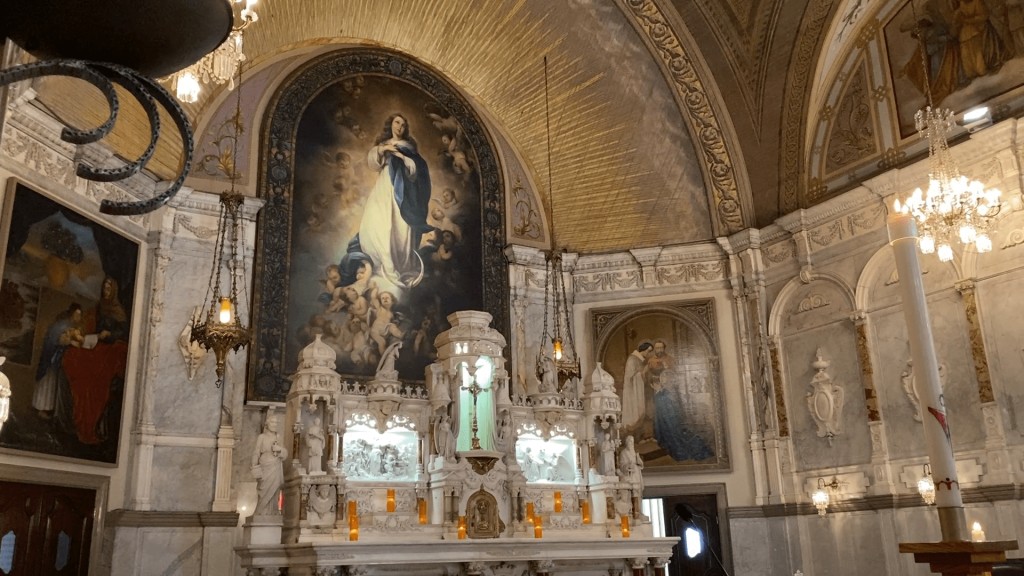
Saint Marguerite Bourgeoys was the Founder of the Congregation of Notre Dame. When she returned from France in 1673 she brought back with her a wooden statue of Our Lady of Good Help. It can still be seen in the reliquary on the gospel side of the altar, for when the Church burned in 1754, the statue was saved from the fire. This is not to say that someone took the statue from the Church, for after the fire had ravaged the original Chapel, the statue was found uninjured among the smouldering embers that remained.
The mortal remains of Saint Marguerite Bourgeoys were interred in the Sanctuary of the Church in the year 2005, the 350th anniversary of Notre-Dame-de-Bon-Secours. She rests now at the feet of the statue she herself had brought from France.
In 1849 the Bishop of Montreal placed a statue of the Blessed Virgin, Star of the Sea, atop the tower facing the harbour. For this reason, the Chapel is also known as the Sailor’s Church. There are votive offerings, carved ships, models of sailing ships suspended from the vault of the Chapel in thanksgiving to the Blessed Virgin for her assistance in their safe return from the sea.
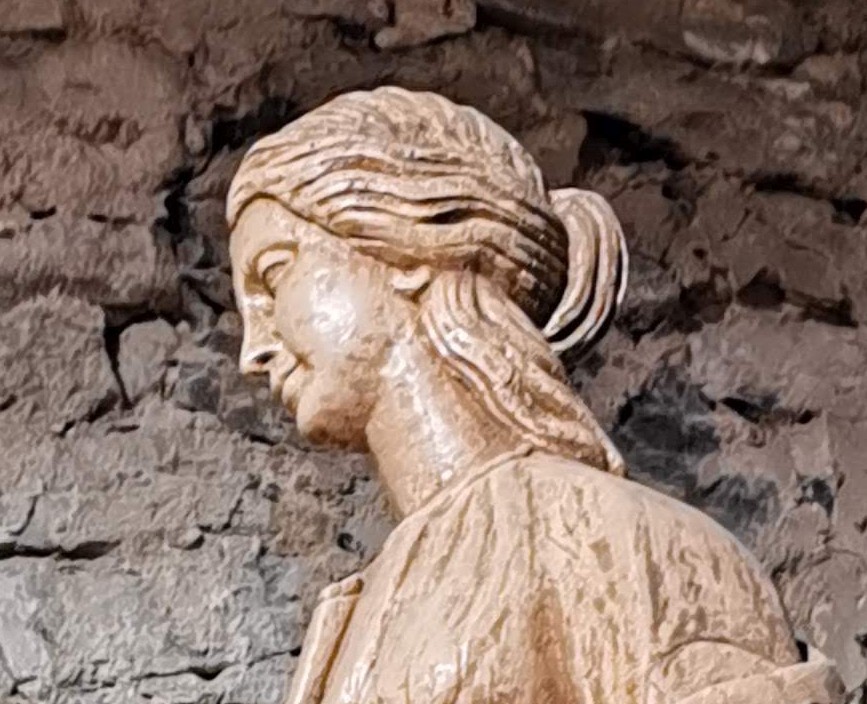
From the Gouvernement du Québec web site, we have these beautiful images of the 1657 wooden statue:
Elder G provides some background….
Key Facts & Clarifications
Saint Marguerite Bourgeoys did indeed bring a statue with her from France when she returned in 1672. It was a wooden statue, often described as “oak,” of the Virgin Mary.
That statue is still in the chapel today, in the reliquary on the gospel side of the altar.
The chapel itself was founded by her, starting in 1655, though actual construction went through several phases, delays, and rebuildings (including after fires).
History of the Chapel and the Statue (“Our Lady of the Harbor” / Star of the Sea)
Here’s a more detailed timeline and background:
Year / Period
What Happened
1655
Marguerite Bourgeoys conceives of building a chapel dedicated to the Virgin Mary, one that would be set back from the fort in Ville-Marie so that pilgrims could come without fear of Iroquois attacks.
1672
During one of her trips back to France, Bourgeoys brings a small wooden (oak) statue of the Virgin Mary to place in the chapel.
1675–1678
The first stone chapel is built (over earlier wooden structures), finishing around 1678. The statue becomes part of the devotional life there.
1754
A fire destroys much of the chapel; however, the original wooden statue survives the blaze. It is rescued and preserved.
1771
The chapel is rebuilt in stone (the present chapel structure dates from 1771).
1849
Bishop Ignace Bourget gives the chapel a new statue of the Virgin as Star of the Sea (“Étoile de la mer”) which is placed atop the church facing the harbor. This is the large statue visible over the harbour called sometimes Our Lady of the Harbor.
1893
Some renovations are made, including presumably enhancements or replacement of the large statue & other fixtures. The statue “Star of the Sea” installed in 1849 is the large one that looks over the port; it’s sometimes conflated with the “original” wooden statue in popular memory.
The Two Statues: Distinguishing Them
Because there are two distinct Virgin Mary statues associated with the chapel, people sometimes mix them up. Here are the differences:
Original wooden statue
Brought by Marguerite Bourgeoys in 1672 from France.
Survived the fire in 1754.
Kept inside the chapel, venerated, in the reliquary.
Large copper/wood “Star of the Sea” / “Our Lady of the Harbor” statue
Installed in 1849 by Bishop Ignace Bourget.
Positioned atop the chapel, overlooking the harbour, serving as a beacon for arriving sailors.
So “Our Lady of the Harbor” is more accurately this later statue atop the chapel, not the wooden statue brought by Bourgeoys — though devotion and identity often blend them in public memory.
Symbolism & Devotion
Sailors arriving in the Old Port of Montreal made ex-voto offerings to the chapel / statue, thanking Mary for safe voyages. The chapel became known colloquially as the Sailors’ Church.
The title Star of the Sea (Latin Stella Maris) is a traditional Marian title, emphasizing Mary as a guiding light for sailors — fitting for a statue facing the harbour.
The chapel as a historic pilgrimage site — not only for sailors, but for settlers, colonists, later generations who saw it as a spiritual landmark.