We hope The New Crescent will become an agricultural powerhouse, ultimately providing a good living for millions of Palestinian refugees. But there are so many factors to consider besides the economic considerations. We want our Crescent Peeps to be happy, healthy, and with opportunities to lead a fulfilling life. And who doesn’t want this?
How would WLBOTT propose a charter for The New Crescent that tries to achieve these ideals?
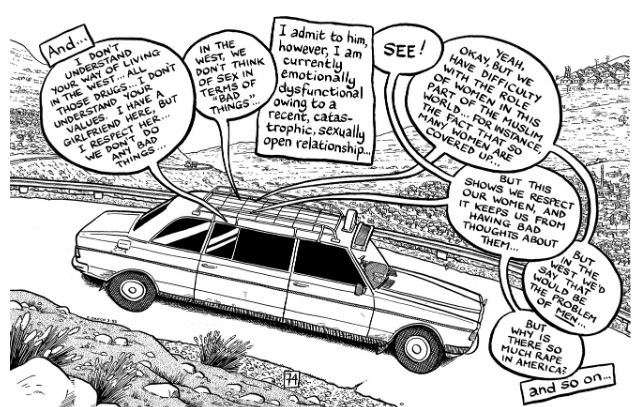
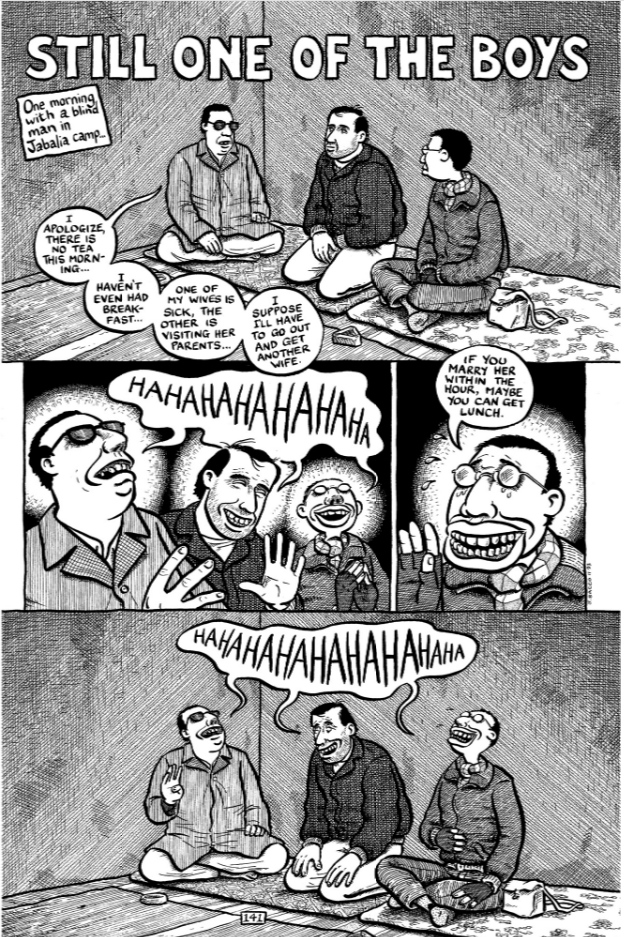
As we continue to study Joe Sacco’s journals of his experience in Palestine, we notice how different the gender roles are compared to the United States. Our “American Exceptionalism” prejudices are encapsulated in one panel from Joe Sacco’s Palestine.
Joe Sacco visits the office of the Palestinian Federation of Women’s Action Committees. He meets with a couple of executive members and hears their stories. Some of the stories are universal: women married to violent, abusive men; women kept in poverty by the men in their lives.
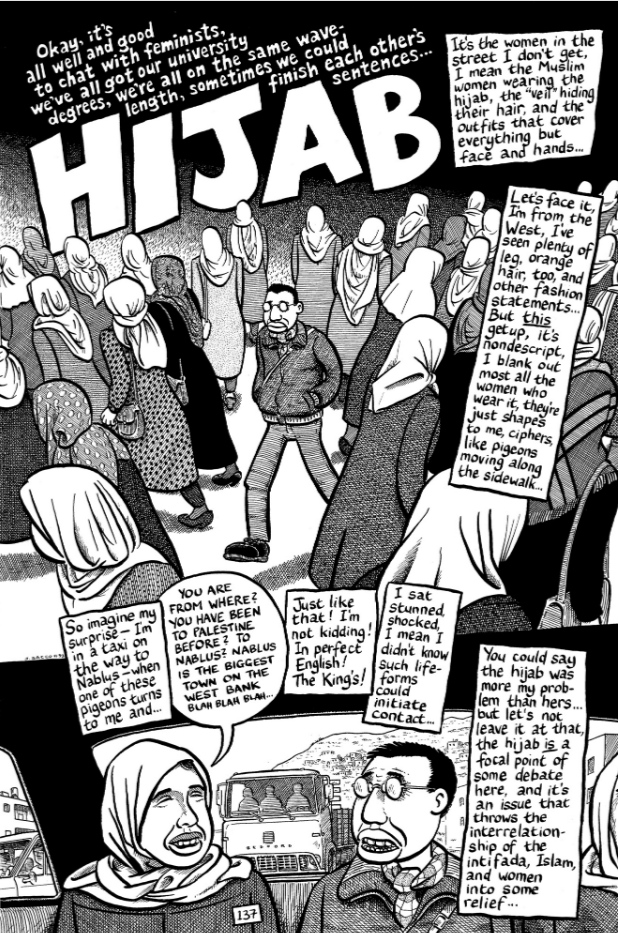
Some of the issues may be more related to the Arabic / Palestinian / Islamic culture, such as child marriages, incredibly high birth rates, and poor education among women, especially in rural areas. And there’s the whole Hijab (women’s head covering) issue.
Palestinian Feminist Collective (PFC)
We weren’t able to find much info about Palestinian Federation of Women’s Action Committees, but we found a fascinating resource in the Palestinian Feminist Collective.
The PFC is a body of Palestinian and Arab feminists committed to Palestinian social and political liberation by confronting systemic gendered, sexual, and colonial violence, oppression, and dispossession.
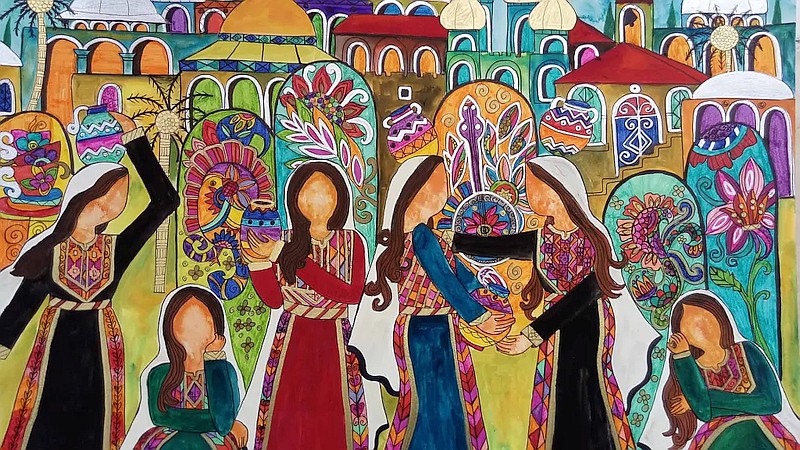
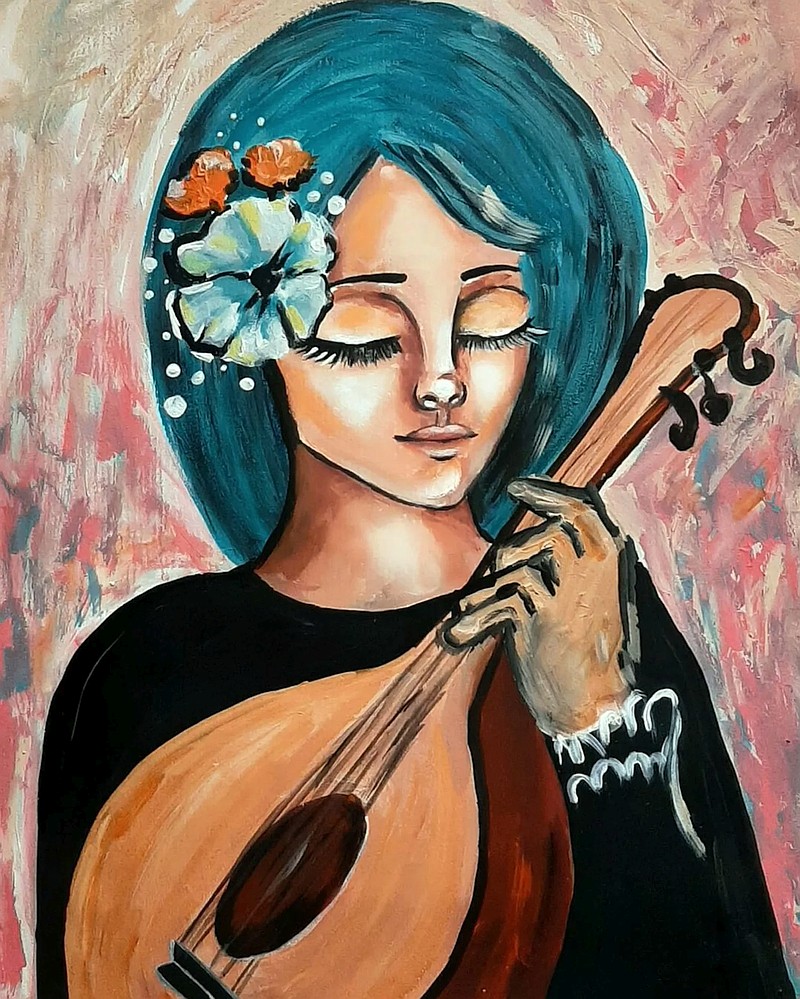
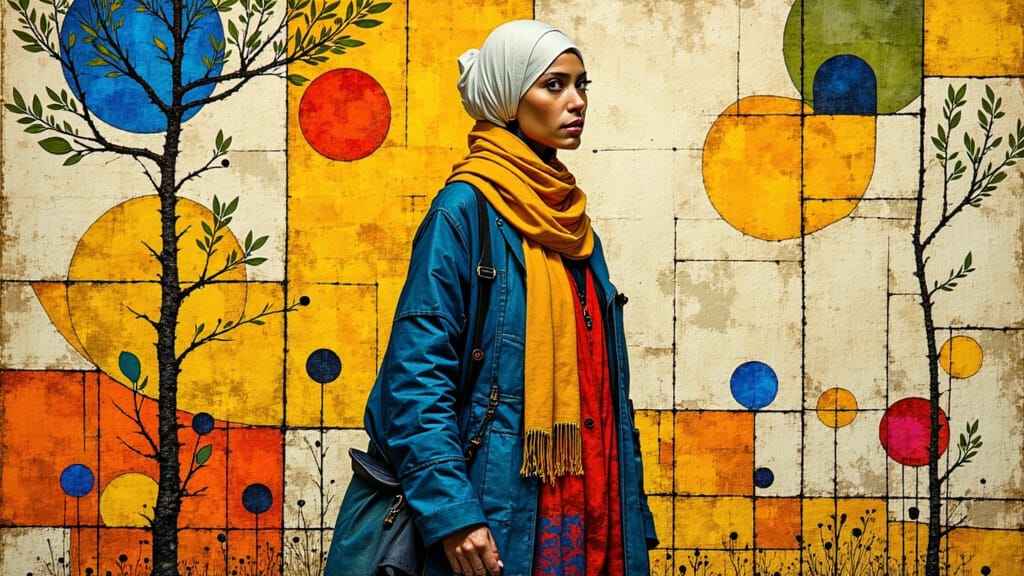
Windows, Jerusalem 2022 by RawAn Anani
Through an anti-colonial approach, we center the political urgency of the Palestinian struggle. We resist the normalization of Zionist violence, oppression, and hegemony in all aspects of public and private life, including within feminist spaces. Our decolonial work centers a set of life-affirming principles and practices to redefine movement cultures that are rooted in transformative justice, healing, and creation. We are inspired by and borrow from past and present Palestinian, Arab, Black, Indigenous, and Third World feminist movements, thought and practice. We advance Palestinian feminism as a liberatory philosophy and practice necessary to create the world we want to live in.
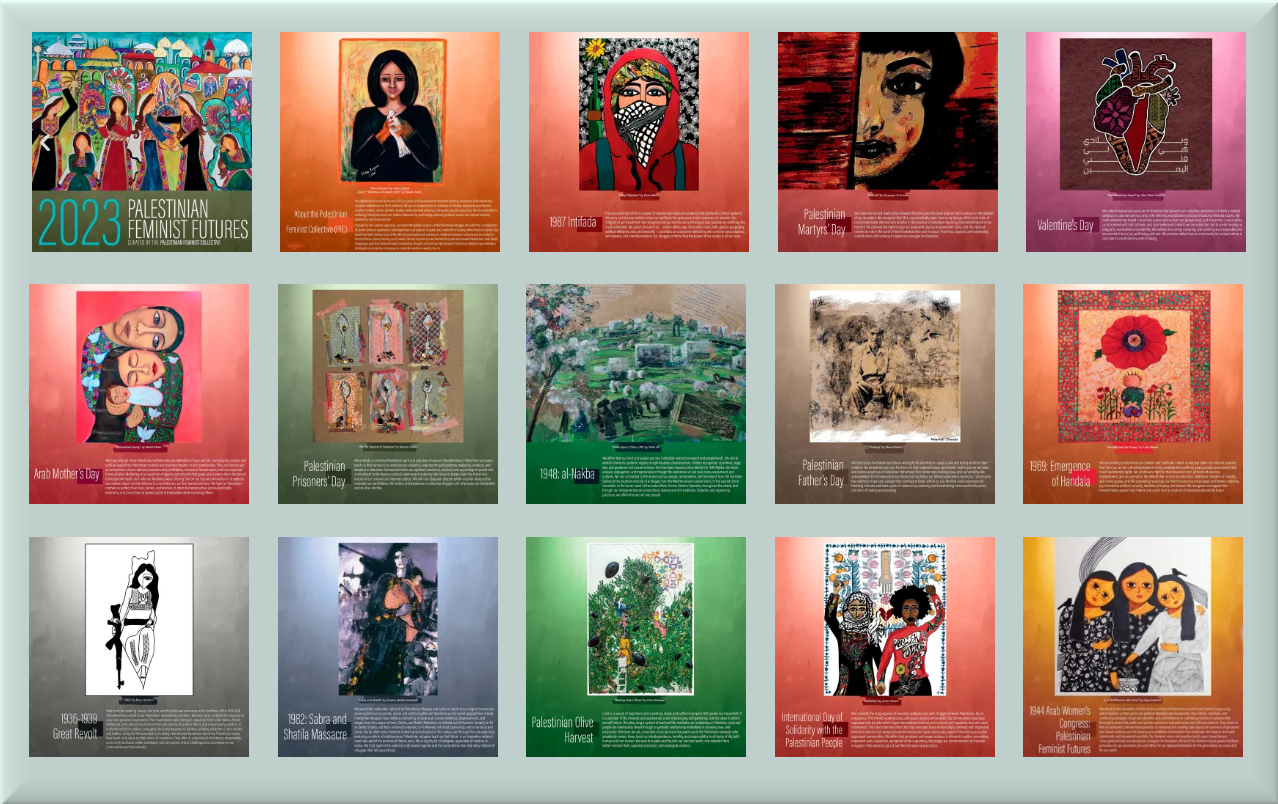
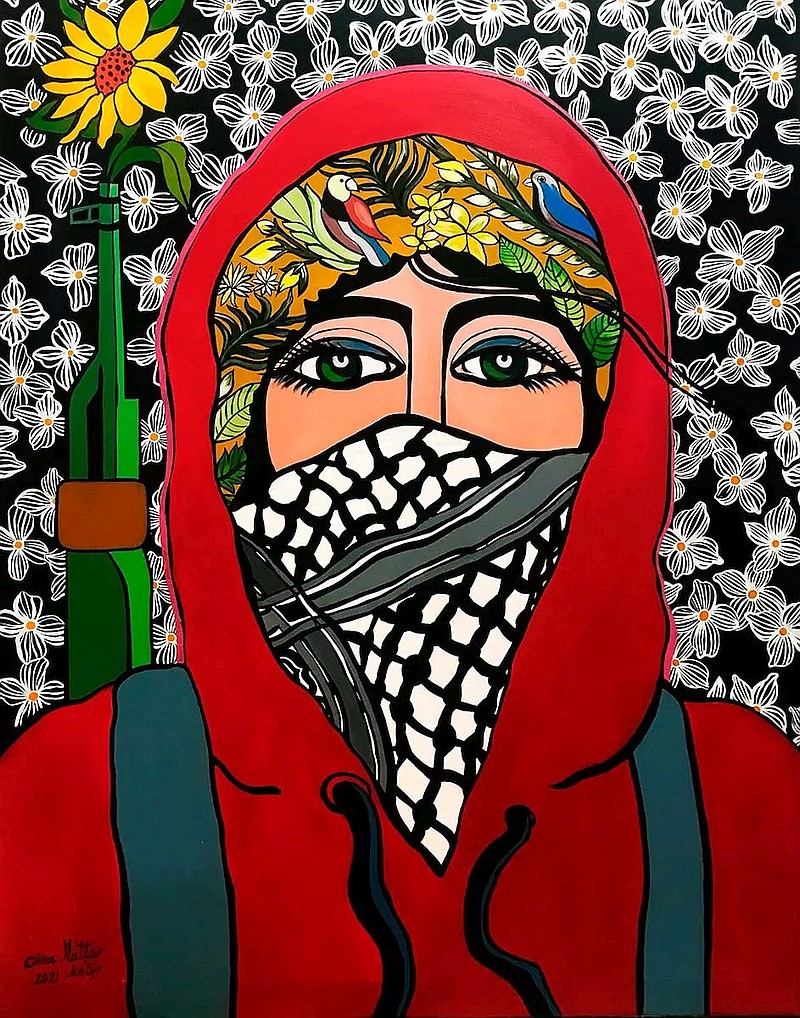
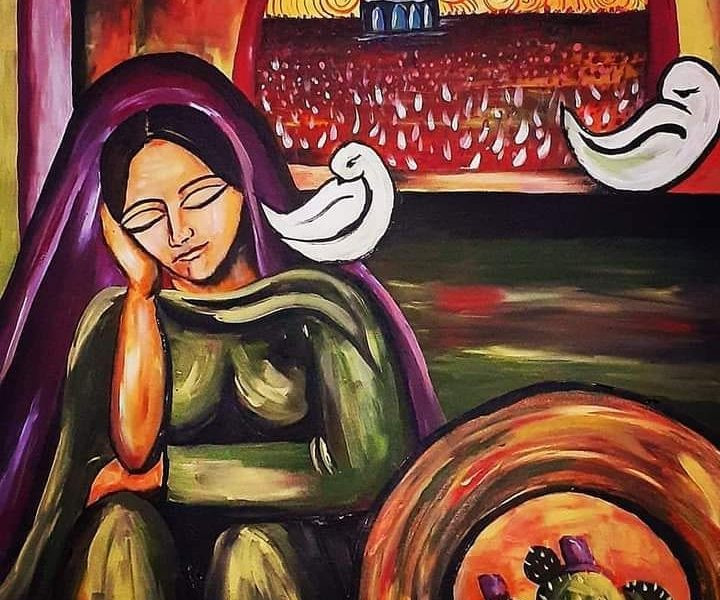
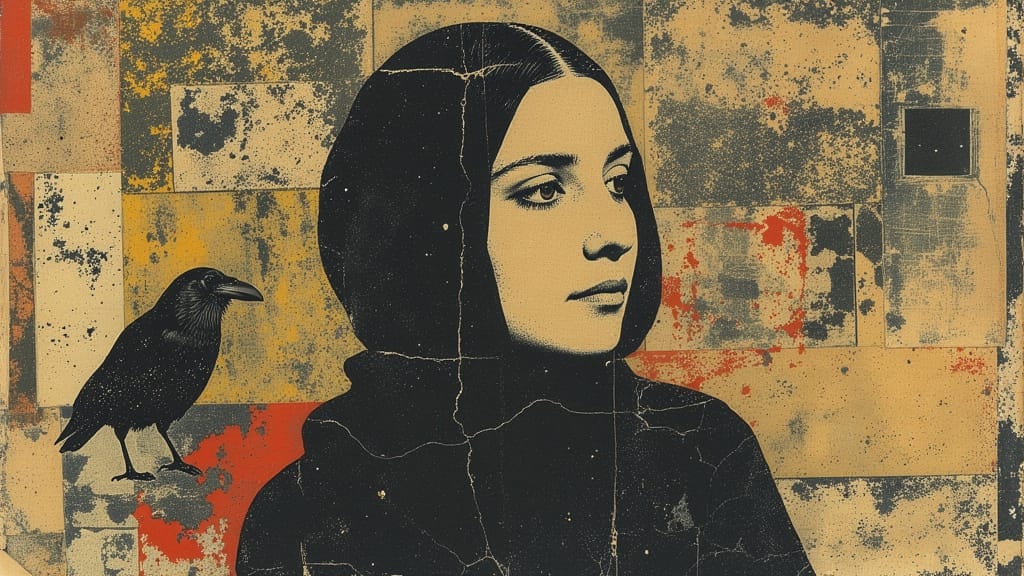
The Palestinian Feminist Collective published a 2023 calendar, with each month featuring original artwork and background on the collective or historically important events.
Throughout the Calendar, we name anniversaries and commemorations in Palestinian history that we hold close. While the list is not exhaustive, the dates we feature offer diverse moments in Palestinian feminist, political, resistance, and mourning traditions.
Popular uprisings fortify our power to regenerate modes of resistance and dismantle colonial systems.
We carry on the long tradition of accountability to the grassroots that is necessary to maintain the integrity of our movement.
We recognize that our communal well-being is only possible by centering the most vulnerable. We assert that all of us – across ability, age, citizenship, class, faith, gender, geography, political affiliation, race, and sexuality – constitute an ecosystem defined by anti-colonial consciousness, self-reliance, and interdependence. Our struggle confirms that the power of the people is all we need.
They also offer a detailed chronology of the feminist movement in Palestine, going back to 1893.
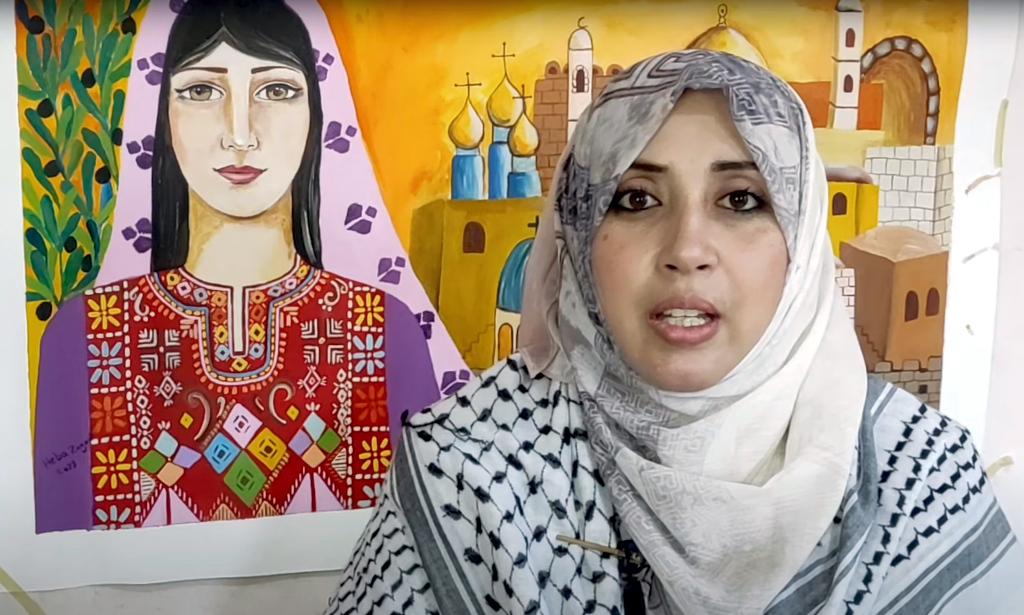
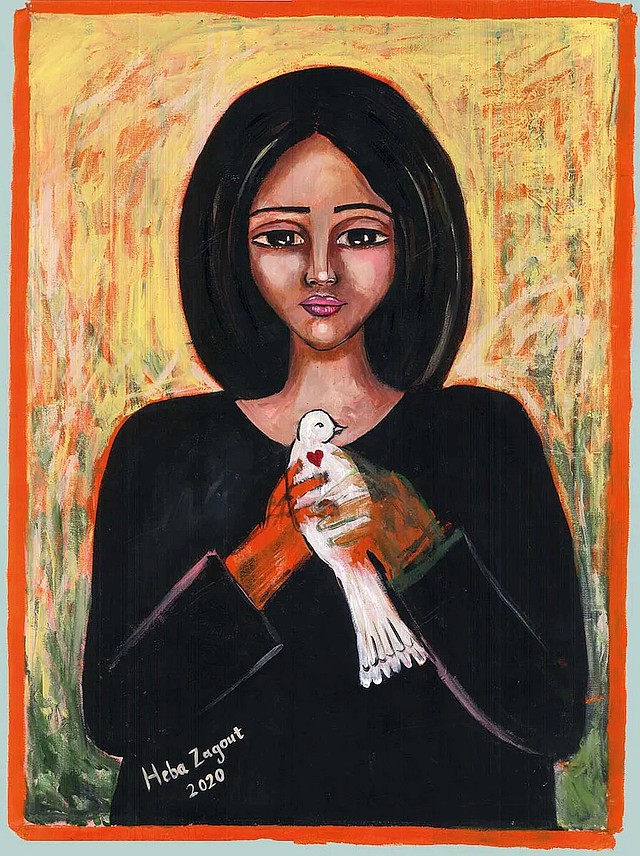
Heba Zagout
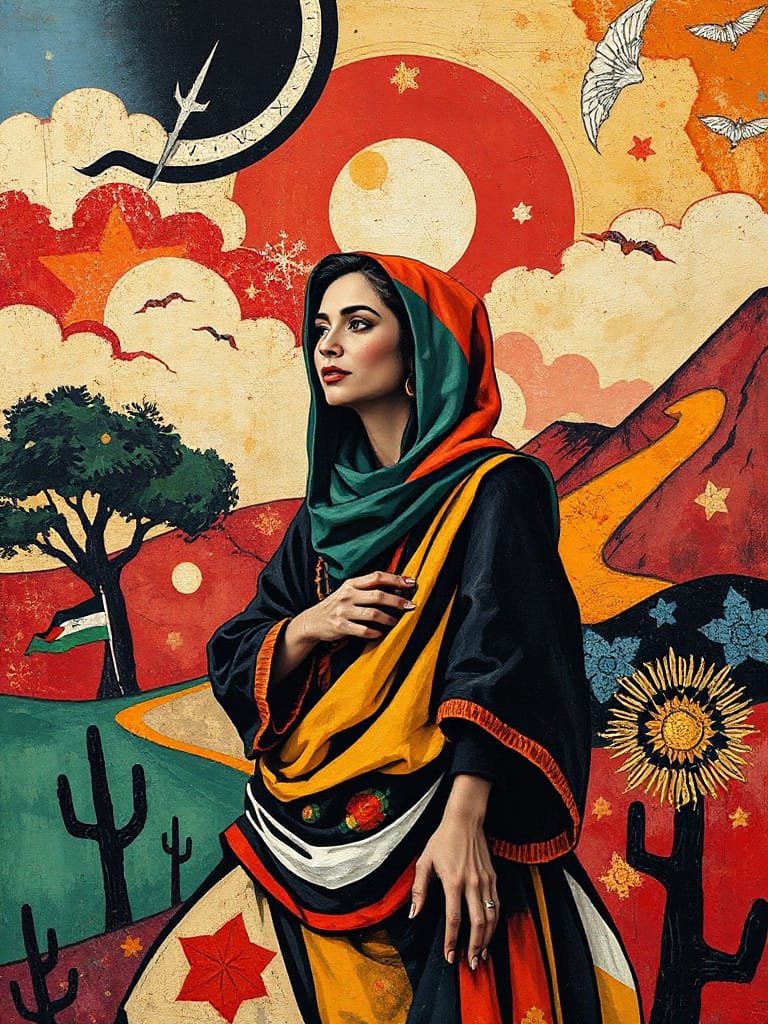
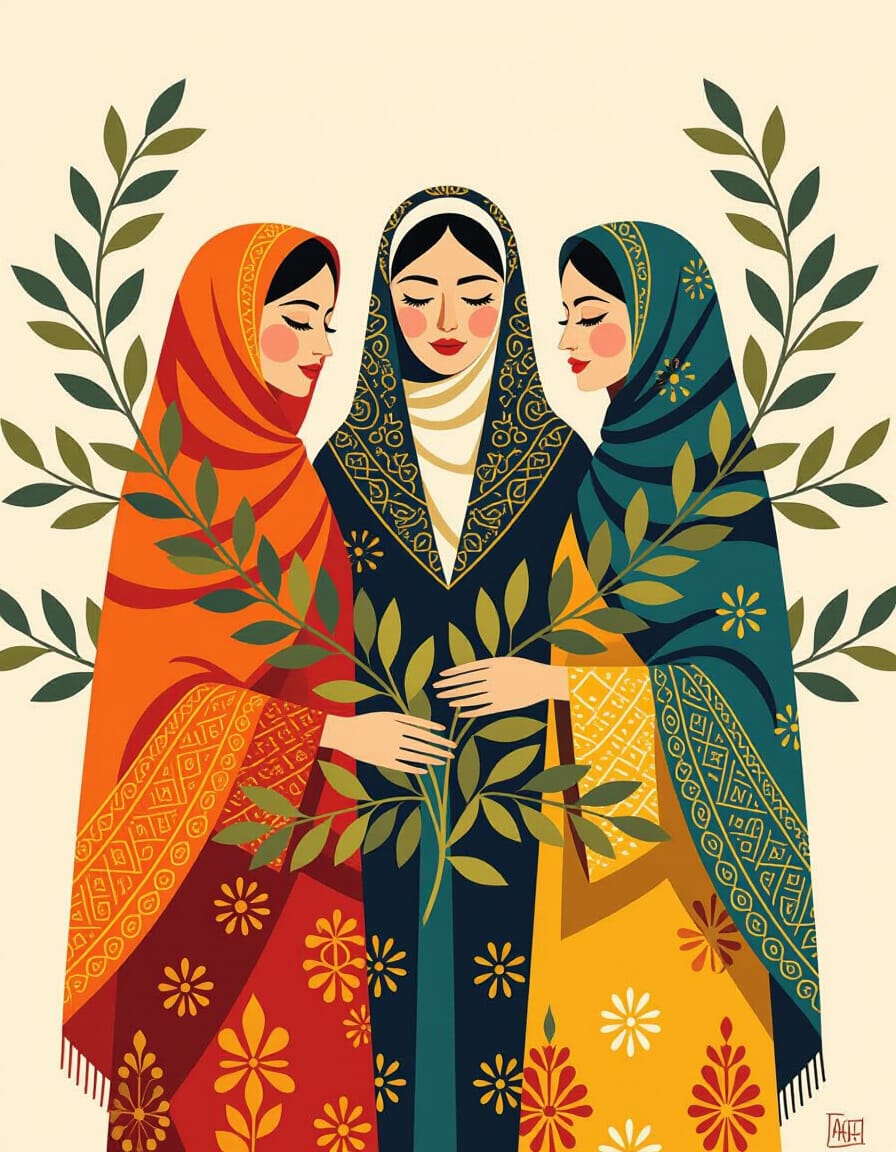
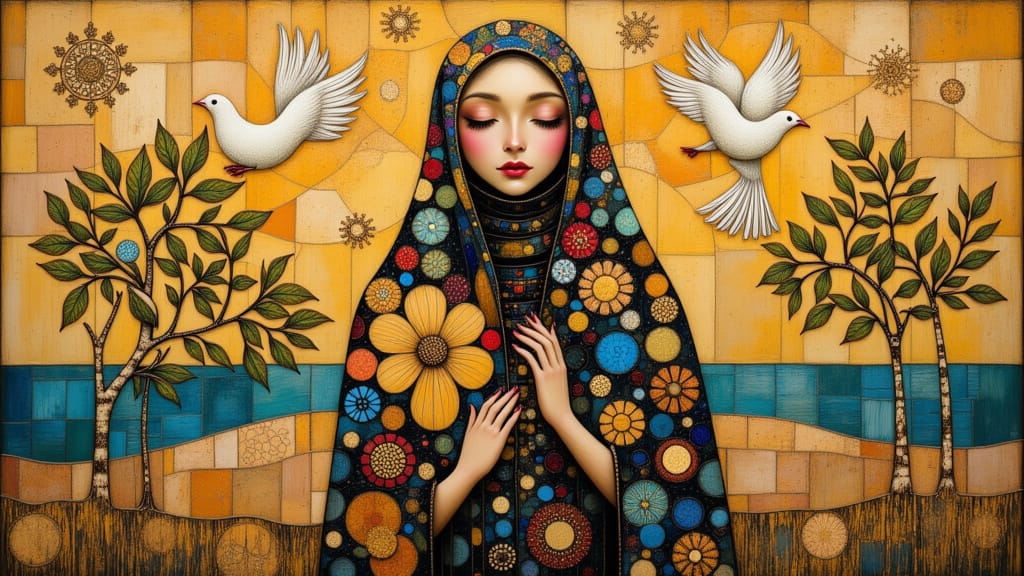
As we reviewed the PFC web site, we noticed many beautiful paintings by the Palestinian artist Heba Zagout. We were saddened to learn that she and two of her children will killed by an Israeli air strike in 2023.
The Guardian offers a memorial of Heba and brave artists killed by Israel.
A painter, a poet, a novelist: the artists being killed in Gaza
The territory’s vibrant arts community was testament to Palestinian resilience, but now it is losing voices central to its spirit
by Harriet Sherwood Mon 13 Nov 2023 00.00 EST
Her vibrant paintings of Jerusalem’s holy sites and Palestinian women wearing traditional embroidered dresses were a way to send a message to the “outside world”, the Palestinian artist Heba Zagout said in a video about her work posted online in late September.
Two weeks later, the 39-year-old was killed with two of her children, Adam and Mahmoud, in an Israeli air strike. Her husband and two other children survived.
Zagout is one of an unknown number of artists, writers and musicians – part of Gaza’s surprisingly once thriving arts scene – among more than 11,000 deaths in the coastal strip since the war between Israel and Hamas began on 7 October.