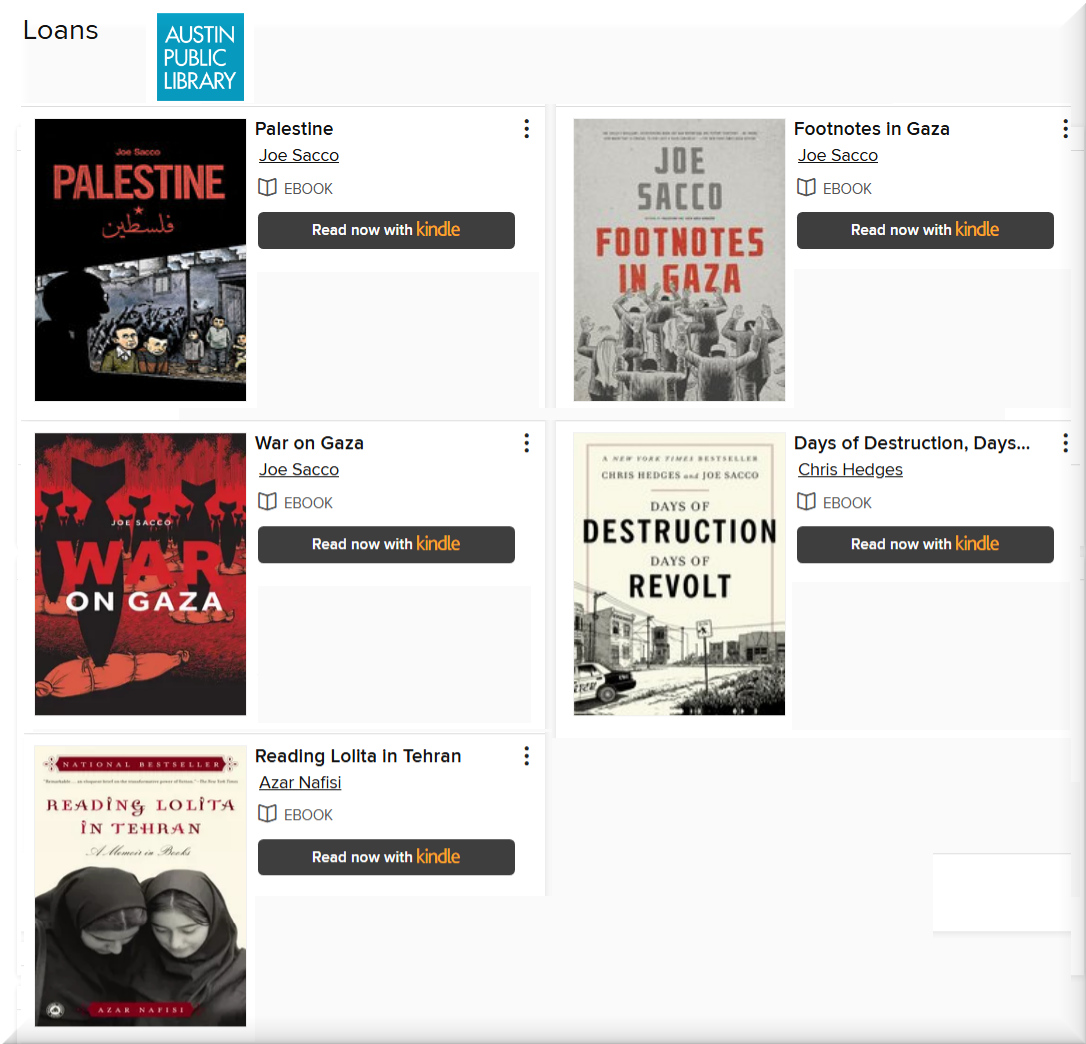
Before we get started, let’s take a moment to reflect:
Q. How cool is the Austin Public Library? A. Very cool.
Joe Sacco: The Nuts and Bolts
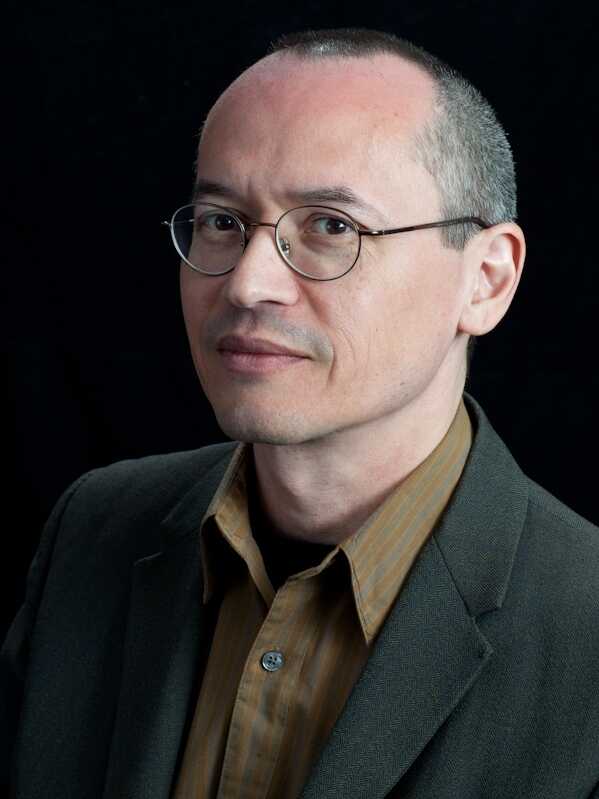
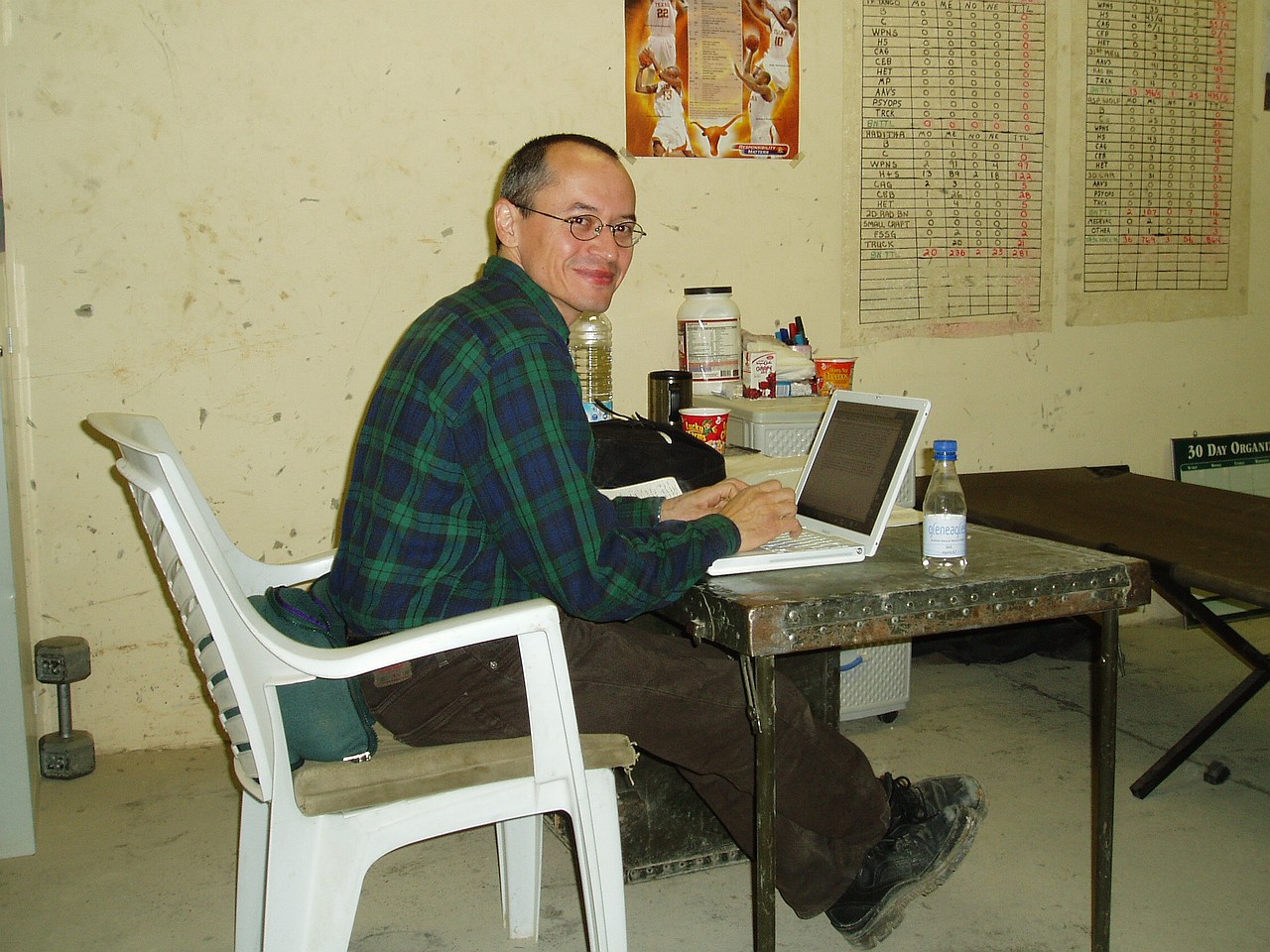
Joe Sacco, journalist, satirist, and illustrator, frequently writes about Palestine, and has collaborated with Chris Hedges on several works.
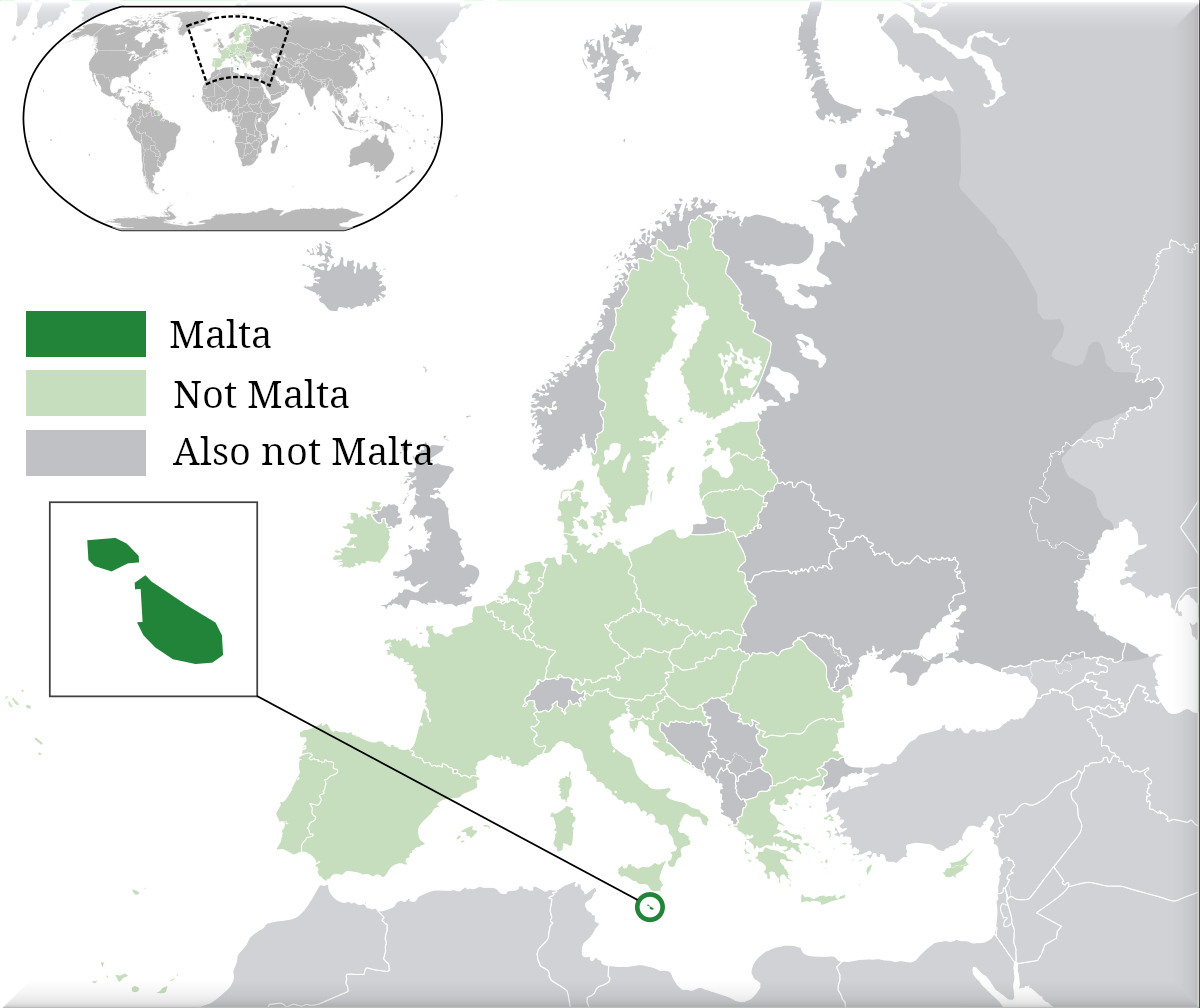
Joe Sacco (born October 2, 1960) is a Maltese-American cartoonist and journalist. He is credited as the first artist to practice rigorous, investigative journalism using the comics form, also referred to as comics journalism. His groundbreaking work documenting Palestinian life in the Occupied Territories was awarded the National Book Award in 1996 and was compiled in the graphic narrative Palestine (2001). His other notable monographs include Footnotes in Gaza (2009) which won a Ridenhour Book Prize.
Other notable works include Safe Area Goražde (2000) and The Fixer (2003) on the Bosnian War. In 2020, Sacco released Paying the Land, published by Henry Holt and Company.
Biography Sacco was born in Malta on October 2, 1960. His father Leonard was an engineer and his mother Carmen was a teacher. At the age of one, he moved with his family to Melbourne, Australia, where he spent his childhood until 1972, when they moved to Los Angeles. He began his journalism career working on the Sunset High School newspaper in Beaverton, Oregon. While journalism was his primary focus, this was also the period of time in which he developed his penchant for humor and satire. He graduated from Sunset High in 1978.
The Gulf War segment of Yahoo drew Sacco into a study of Middle Eastern politics, and he traveled to the Occupied Palestinian territories to research his first long work. Palestine came about as a landmark of journalism and the art form of comics. It was based on several months of research and an extended visit to the West Bank and Gaza Strip in the early 1990s. Palestine is a major work of political and historical nonfiction and is described as an essential reading. Palestine won the American Book Award in 1996 and sold more than 30,000 copies in the UK.
Joe Sacco chats with Chris Hedges in early 2025. They discuss many topics, and some of the stories are disturbing, so brace yourself. Interestingly, Joe Sacco tells how the use of satire makes his stories more relatable.
You can find videos of conversations between Joe Sacco and Chris Hedges on Lannan.
Lannan is dedicated to cultural freedom, diversity, and creativity in support of exceptional contemporary artists, writers, and activists.
From reading Joe Sacco’s books, you get the feeling he’s cynical and trusting, hard-nosed and a soft touch, a humanitarian with a desire for retribution.
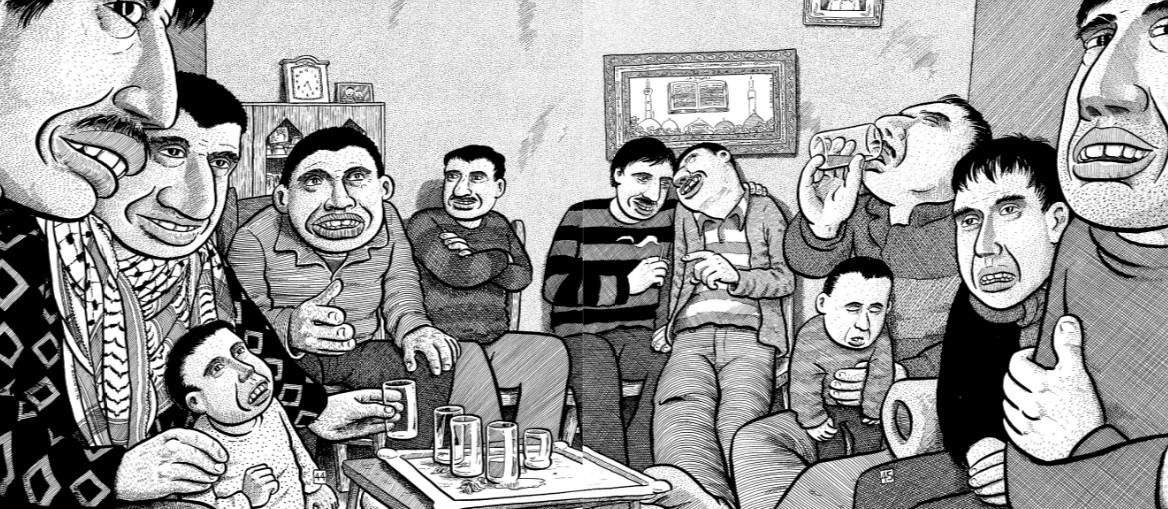
His books take the form of memoir or journal. He meets people, goes to their homes, shares tea with the entire family, listens, learns, and, with good humor, tolerates a lot of pesky kids ….
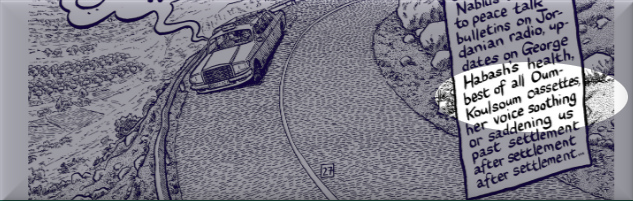
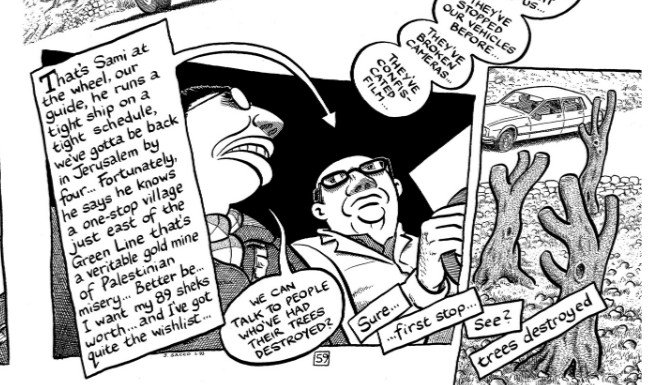
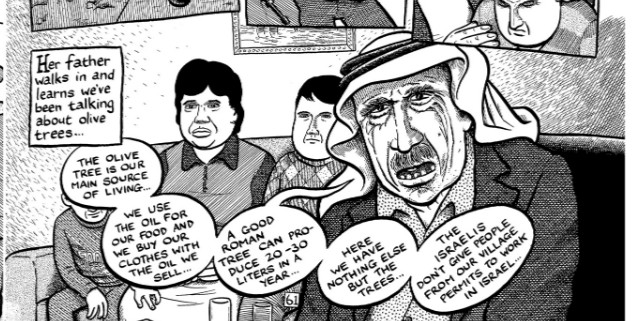
[ed. note: panels are from Joe Sacco’s book Palestine.]
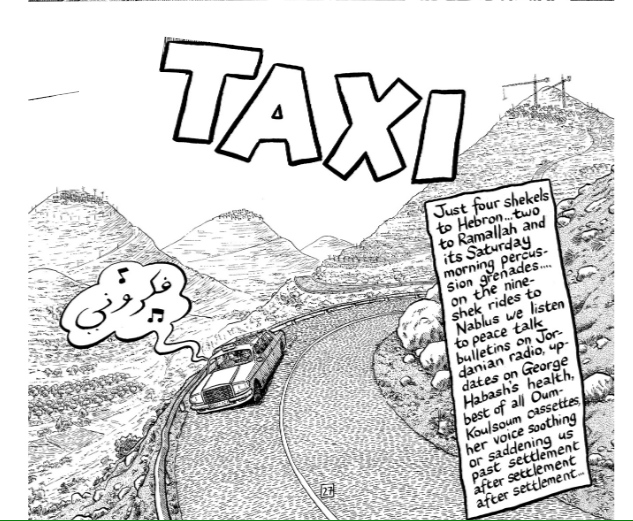
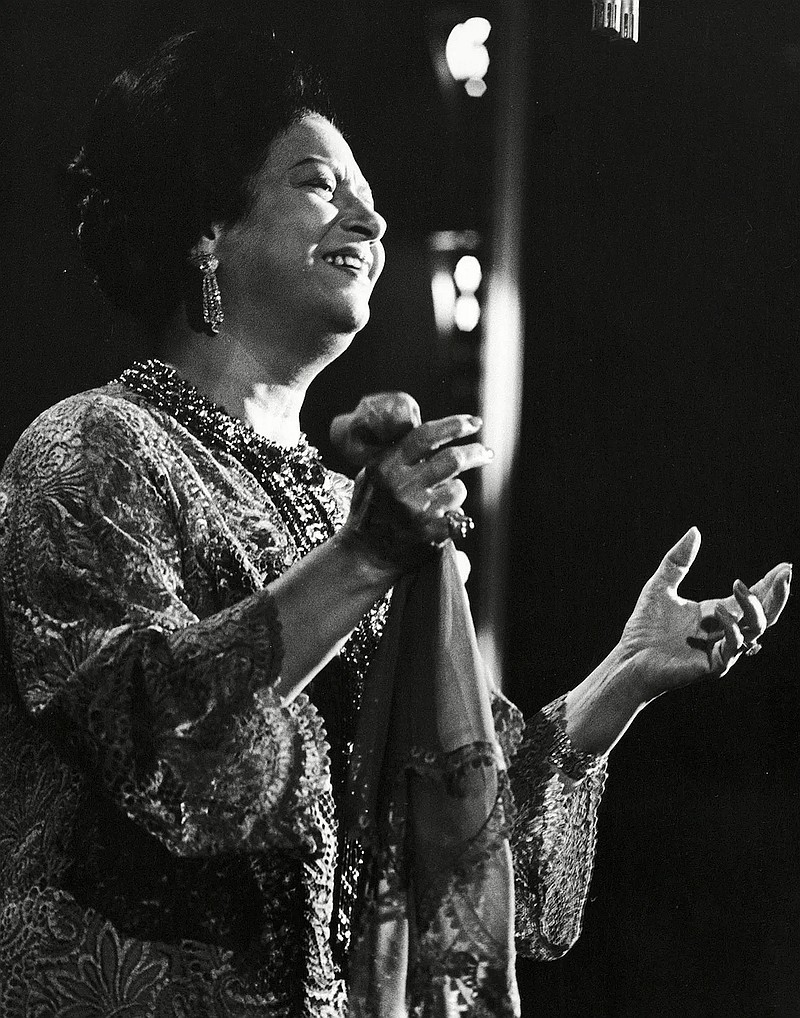
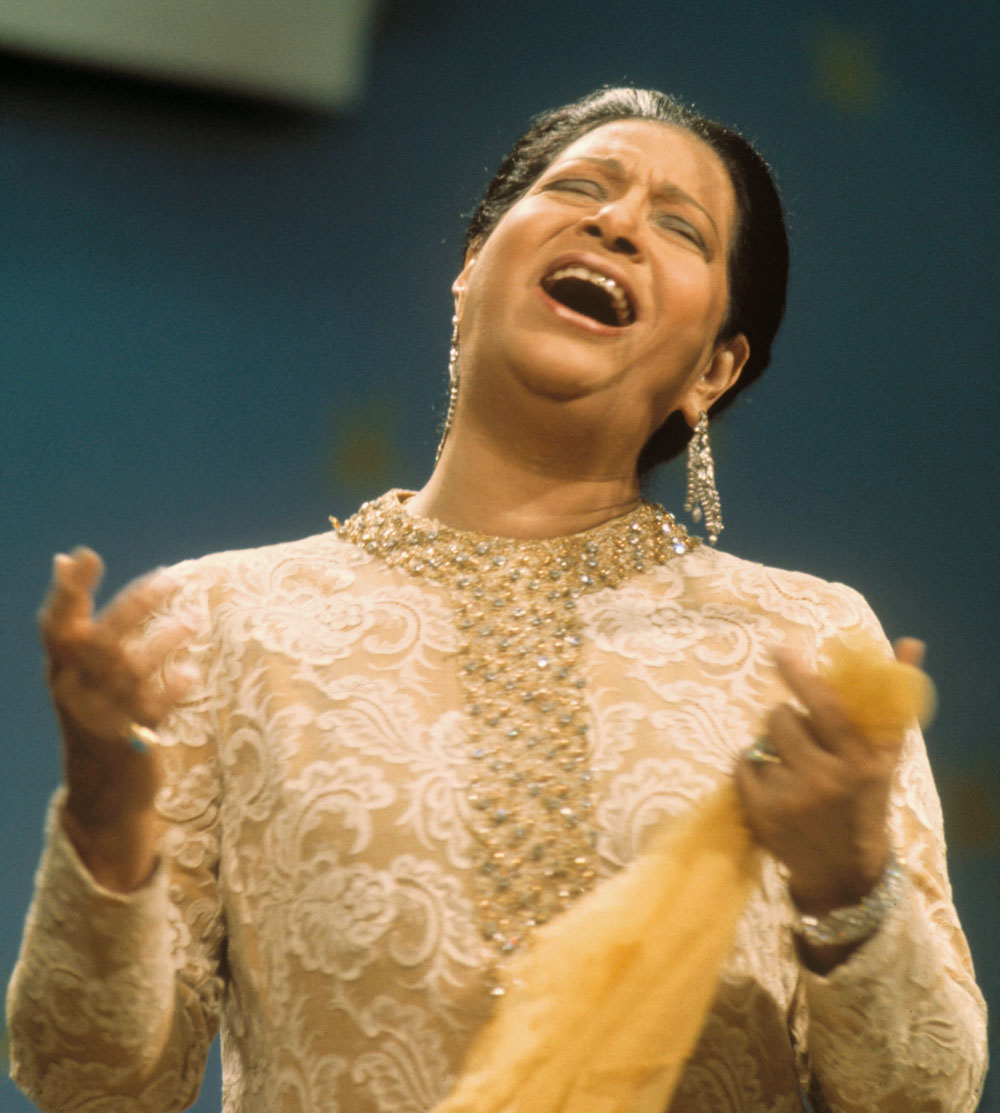
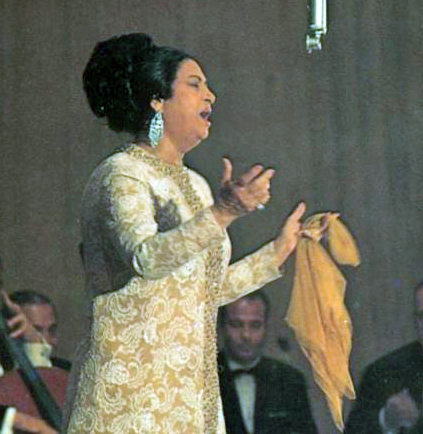
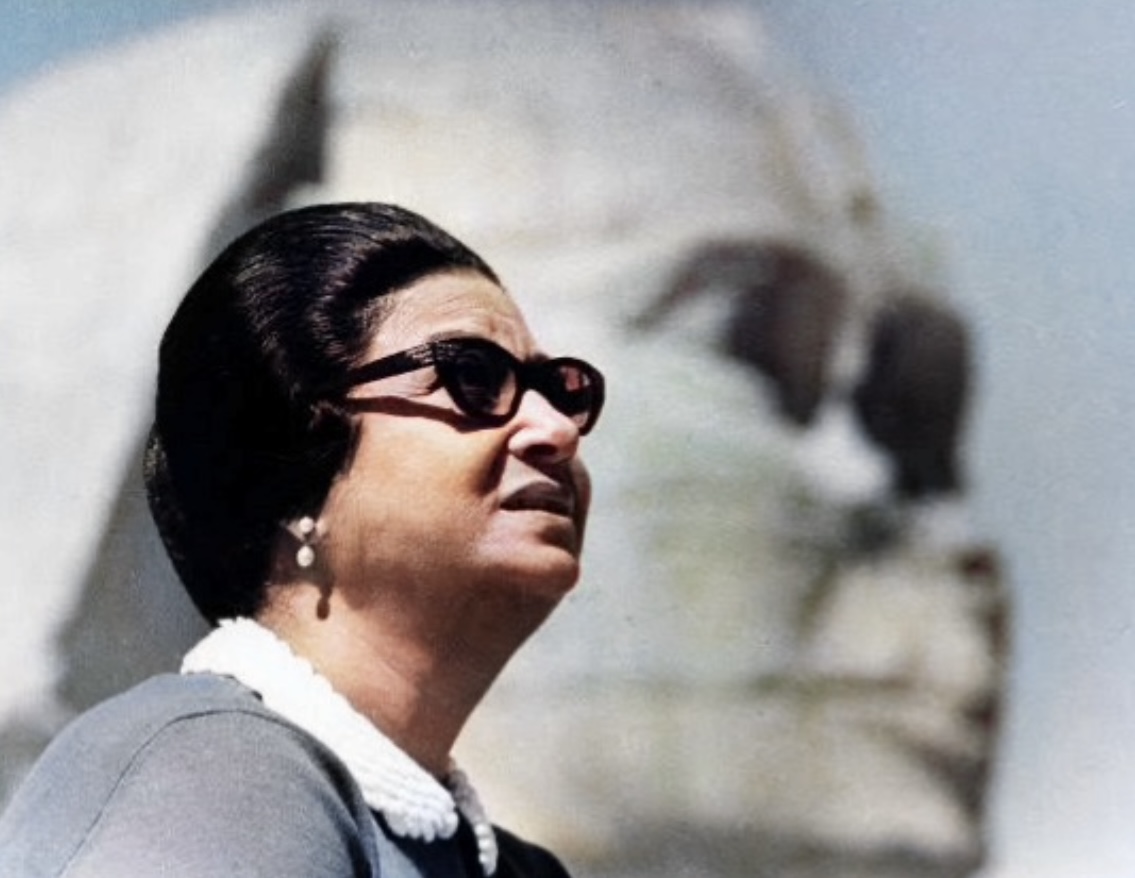
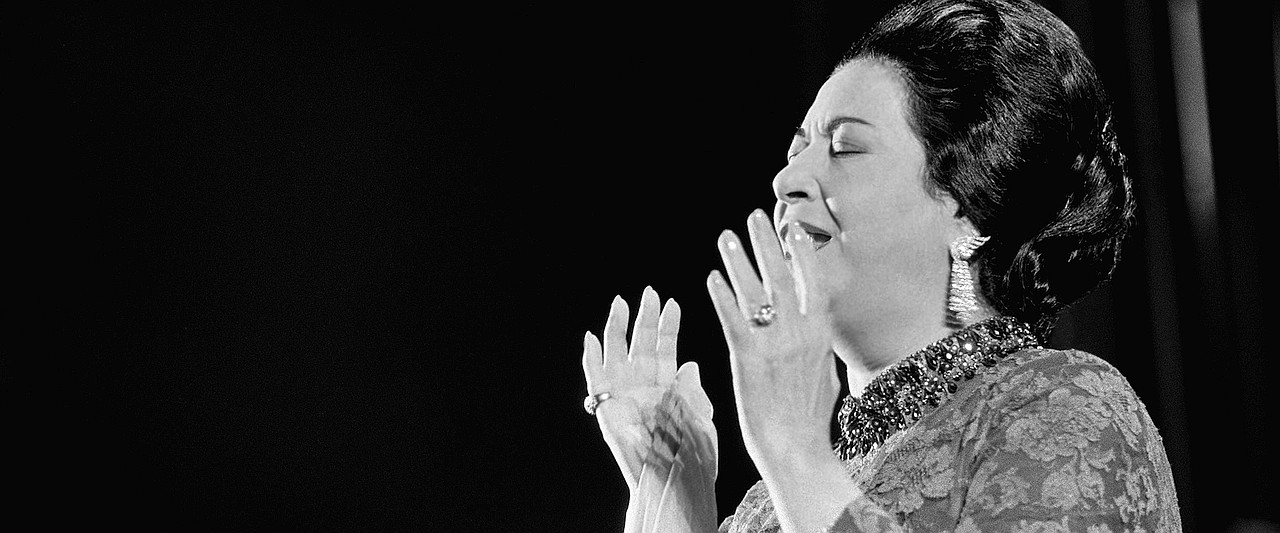
A Short Semi-sequitur: Umm Kulthum
Umm Kulthum (Arabic: أم كلثوم; c. 4 May 1904 – 3 February 1975) was an Egyptian singer and film actress active from the 1920s to the 1970s. She was given the honorific title Kawkab el-Sharq (Arabic: كوكب الشرق, lit. ’Star of the Orient’). Immensely popular throughout the Middle East and beyond, Umm Kulthum is a national icon in her native Egypt; she has been dubbed “The Voice of Egypt” and “Egypt’s Fourth Pyramid”. In 2023, Rolling Stone ranked Umm Kulthum at number 61 on its list of the 200 Greatest Singers of All Time.
Her funeral in 1975 drew a crowd of over 4 million people, the largest human gathering in Egypt’s history, even surpassing that of president Gamal Abdel Nasser.
After reading a few chapters of Palestine, Joe Sacco draws you in with his stories, personal interactions, sometimes dangerous investigations, and always with a sense of self effacing humor. I started to trust him. In a middle eastern world where there is no man righteous, where there are plenty of crazies on both sides, it becomes pretty obvious where the systemic oppression comes from.
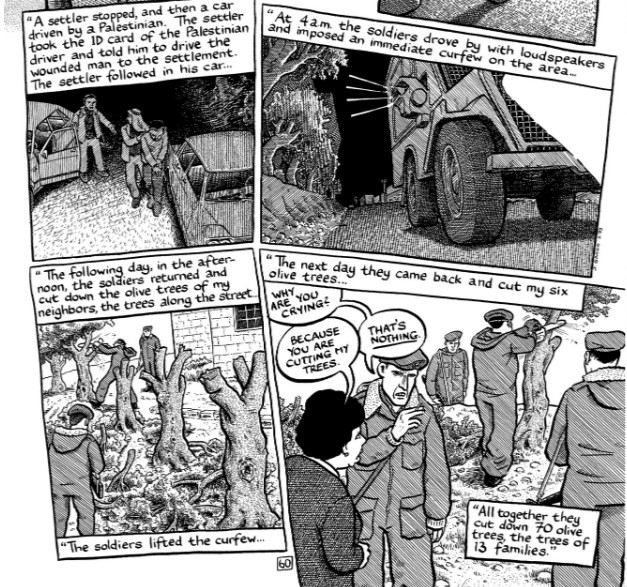
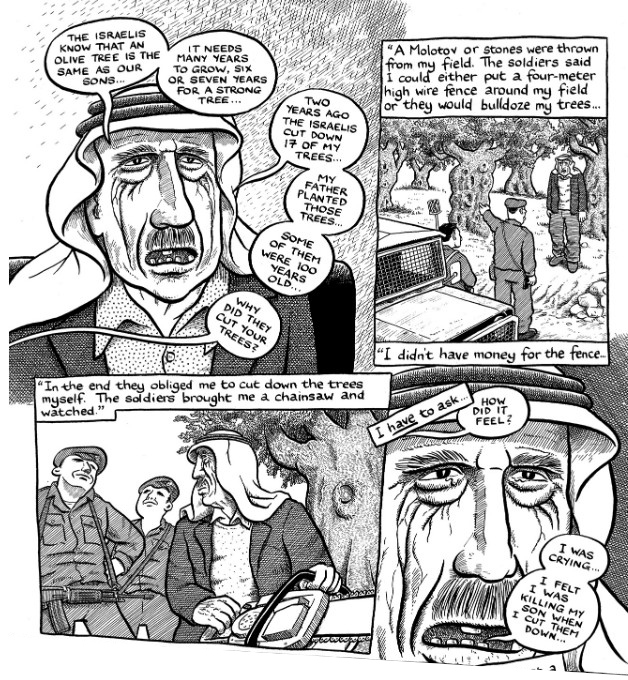
In a place where there is so much death, oppression, and humiliation, I was oddly touched by Joe Sacco’s story of an olive tree. Keep in mind, the government of Israel controls which Palestinians can work, resulting in incredibly high unemployment and poverty.
[ed. note: panels are from Joe Sacco’s Palestine, chapter 3]