In junior high, we had an “advisory” period for about a half hour in the middle of the day. Basically, do what ever you want, just don’t bug the teacher.
My advisory classroom had piles of old textbooks in the back. One was a literary collection for junior high students, and I’d read some of the stories. I still remember one story to this day.
[I haven’t been able to find the name of the story or the author]
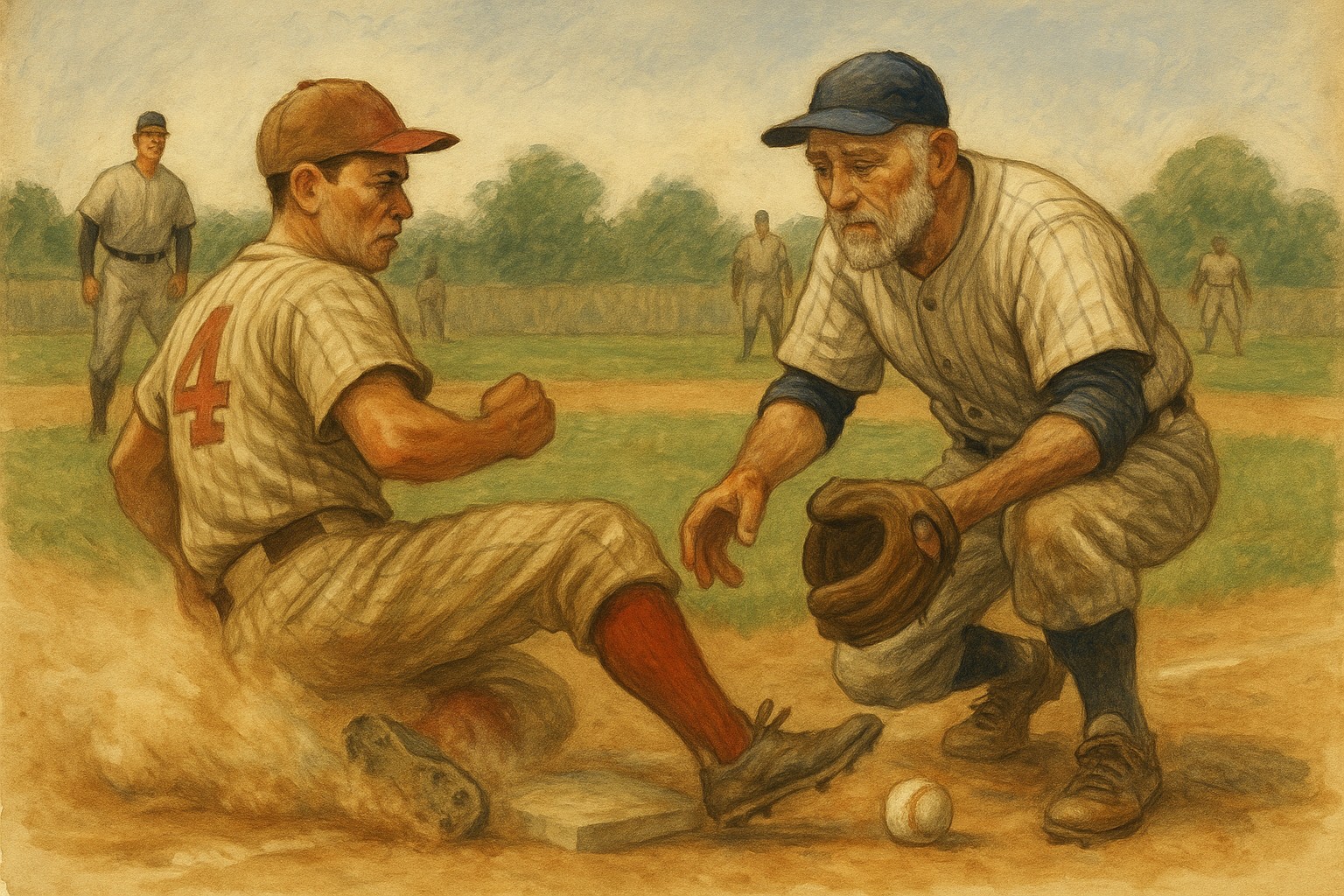
The story takes place in a minor league baseball game. An older man is playing second base. The runner on first recognizes him – the second baseman was disgraced and kicked out of the major leagues for a gambling scandal. The runner is going to teach the second baseman a lesson, so he decides he is going to slide into second base and spike the second baseman’s shins.
On the next hit, the runner carries out this plan. After taking a moment to recover, the second baseman stands and quietly rolls down his sock to attend to his injury.
The runner sees that the second baseman’s leg is covered in scares, some old, some new. Runners have been intentionally sliding into him for years. From this, the runner has a quite revelation, realizing that this man pays for his sins over and over, but each time he gets up, dusts himself off, and in quiet stoic dignity, keeps on.
A Reflection by Elder G
This narrative echoes the archetype of the wounded healer — a figure who, through enduring pain, becomes a source of healing and understanding for others. In this context, the second baseman, bearing the physical and emotional scars of his past, embodies this archetype.
The runner’s transformation—from seeking retribution to feeling empathy—illustrates the profound impact of recognizing shared humanity. It’s a testament to the idea that understanding another’s suffering can lead to personal growth and a break in the cycle of vengeance.
At the start, the runner is fueled by self-righteousness. He believes he’s enacting justice—punishing a man who has sinned and escaped.
But this isn’t justice. It’s vengeance, masked in athletic ritual. The cleats, the slide—they’re a socially acceptable form of retaliation.
And then—
He sees the scars.
This is the mythic moment of revelation. He doesn’t just see a leg. He sees a history of pain. The story doesn’t need a sermon. The scars speak.
It’s the kind of shift that Joseph Campbell would describe as a “return to the heart.” The runner steps back from the cycle of inherited judgment and chooses compassion over condemnation. He thought he would expose the second baseman’s shame. Instead, he’s exposed to the second baseman’s humanity.
Fast Forward 50 Years
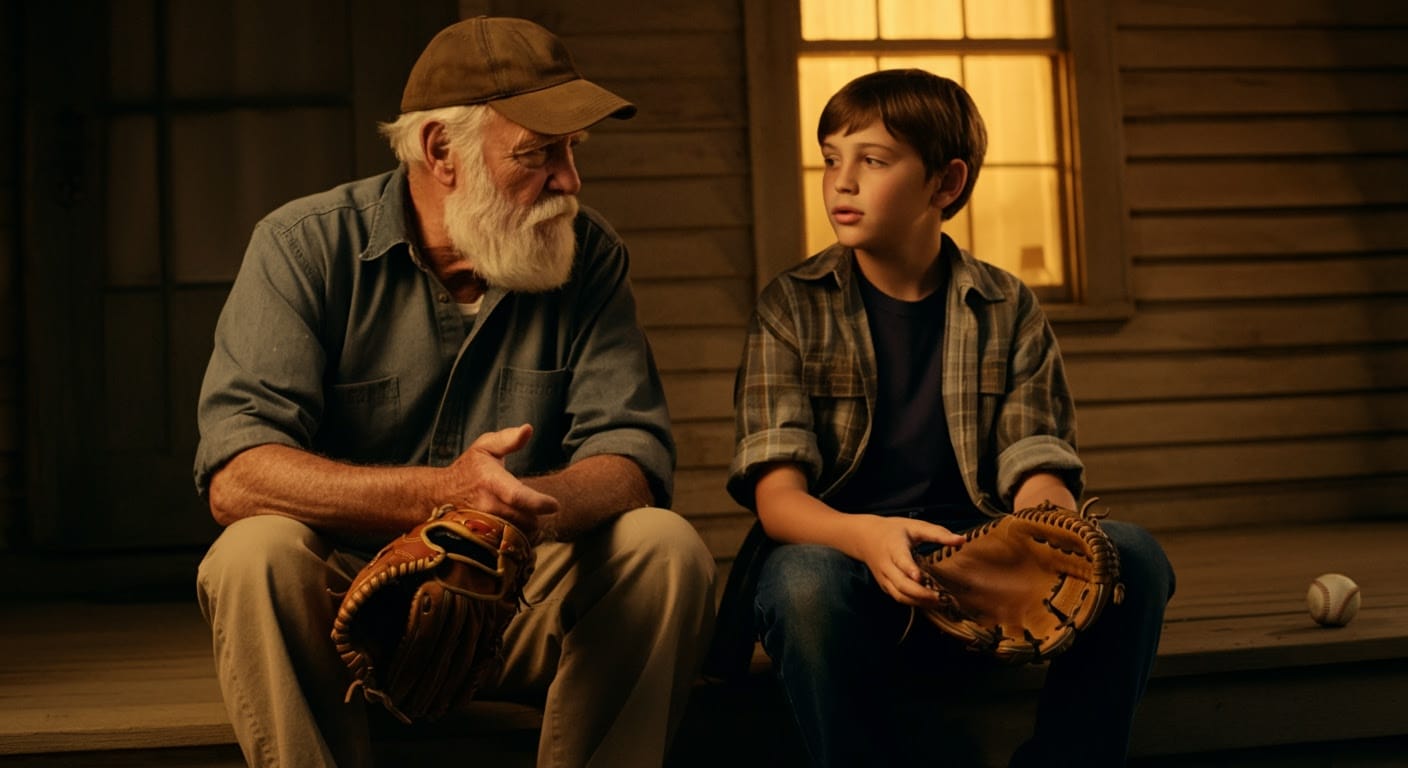
Let’s picture our base runner, many years later. After playing catch with his grandson, he tells him a story…..
You wanna hear about the day I learned what a man really is?
I was about your age when I first heard his name—Charlie Monroe. Second baseman. Used to play in the majors, but they said he cheated. Don’t remember the details—something about a rigged play or a bet gone bad. Whatever it was, they threw him out. Whole town talked about him like he was dirt.
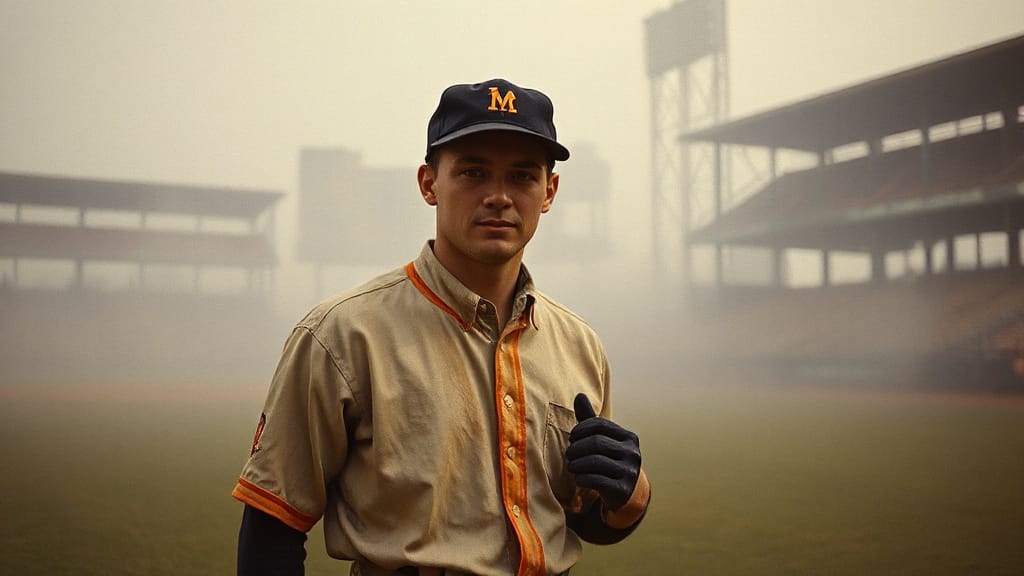
Years later, I’m playin’ minor league ball, tryin’ to make it to the Show. And wouldn’t you know it, that same Charlie Monroe’s on the other team. Old now, late forties maybe, still playin’ second base. Real quiet fella. Didn’t look at nobody.
I told myself I was gonna teach him a lesson. He’d been disgraced, but he was still playin’? Still smilin’ and collectin’ a paycheck? I didn’t like that.
That pitch came. Batter hit a chopper to short, and I ran. Didn’t hesitate. Slid like a rocket. Spikes high. Caught him clean on the leg. He went down hard. He didn’t yell. Just sat up real slow. Pulled down his sock to check the damage. And that’s when I saw it.
Scars.
Not just one. Not two. A whole mess of ’em. Like vines runnin’ up his leg. That’s when it hit me. I wasn’t teachin’ him nothin’ new. I was just one more person throwin’ pain on a pile he’d been carryin’ for years.
He didn’t look at me with hate. Didn’t curse. He just pulled his sock back up, nodded at me once, and limped back to his position. I didn’t say sorry that day. Didn’t know how. But I never slid like that again.
And I started watchin’ people different after that. You see someone doin’ somethin’ wrong, yeah—you hold ’em accountable.
But if you see someone carryin’ scars… you pause. Might be they already learned the lesson you’re tryin’ to teach.
Charlie Monroe never made it back to the majors. But he showed me more about what it means to stand your ground—with grace—than anyone ever did in the big leagues.
So when you step on that field, remember this: You don’t know what someone’s carryin’. But you do get to choose what you add to the weight.
What Changes With the Base Runner?
The runner’s conversion is:
Sudden—as epiphanies often are
Silent—there’s no big apology, no courtroom confession
Embodied—he doesn’t change because he’s told to, but because he feels it, viscerally, through the scared flesh
It’s the kind of shift that Joseph Campbell would describe as a “return to the heart.” The runner steps back from the cycle of inherited judgment and chooses compassion over condemnation.
He thought he would expose the second baseman’s shame.
Instead, he’s exposed to the second baseman’s humanity.
The runner breaks the echo.
He sees the cost of cruelty repeated. And he stops. He doesn’t erase the past, but he refuses to amplify it.