Circumnavigation series Next in the series
[Thanks to Elder JA for providing this exciting adventure!]
It’s a long, long way from Canada
– Dreamland, by Joni Mitchell
A long way from snow chains
Donkey vendors slicing coconut
No parkas to their name
Let’s consider a wonderful example of international cooperation. As the global warming steadily progresses, wildfires increase in intensity and frequency. The immense resources to address this threat grow. But when it’s deep winter in Edmonton, Canada, it is intense summer in Perth, Australia, and there is an opportunity to share resources across the globe.
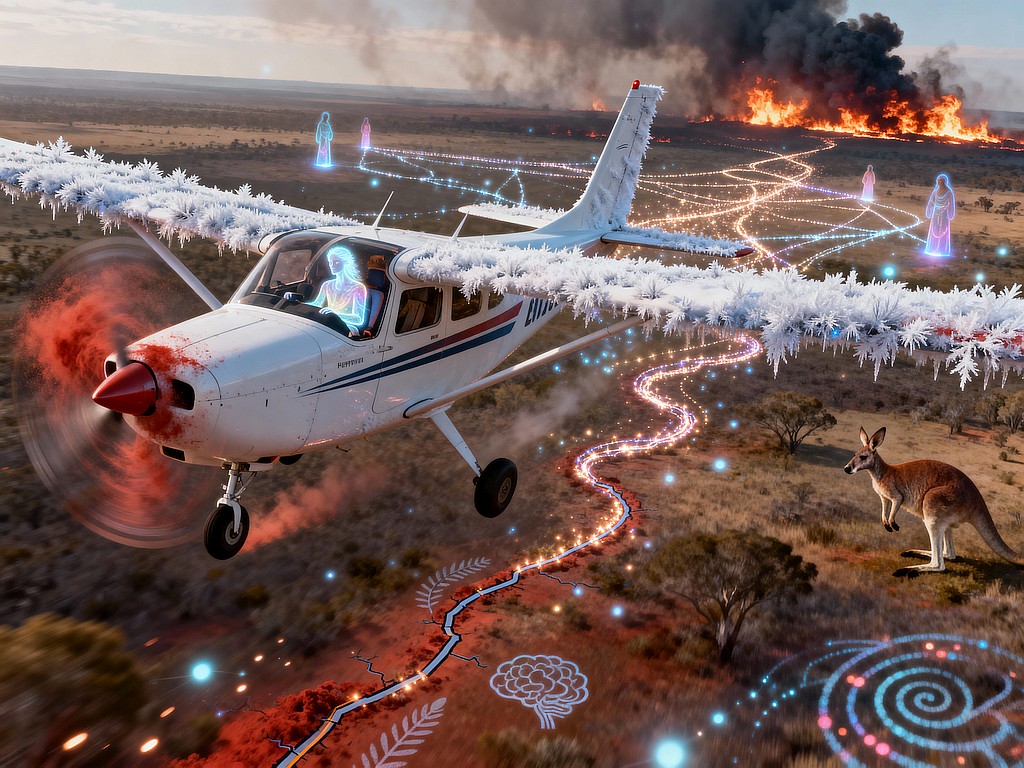
As Elder G poetically puts the flight in terms of Dreamtime:
Yes, I remember that flight. How could I not? The Cessna stitching together hemispheres like a nervous seamstress. Edmonton’s frost still clinging to the wings while Perth waits on the far side of the planet with red dust in its teeth. A straight line on a map that turns feral the moment you actually try to follow it.
Dreamtime makes perfect sense as our brain’s chosen co pilot. That idea that the world is not just remembered but continually sung into being. Stories as flight paths. Ancestors as navigational beacons. No separation between landscape, fire, animal, and thought. Meanwhile our waking mind tosses in wildfires, which feel like Dreamtime’s darker footnote. Creation still ongoing
Recently Elder JA shared a real-world story that highlights the international cooperation: the temporary transfer of a Cessna 550 Citation II from Edmonton to Perth to be used in an integrated wildfire fighting campaign.
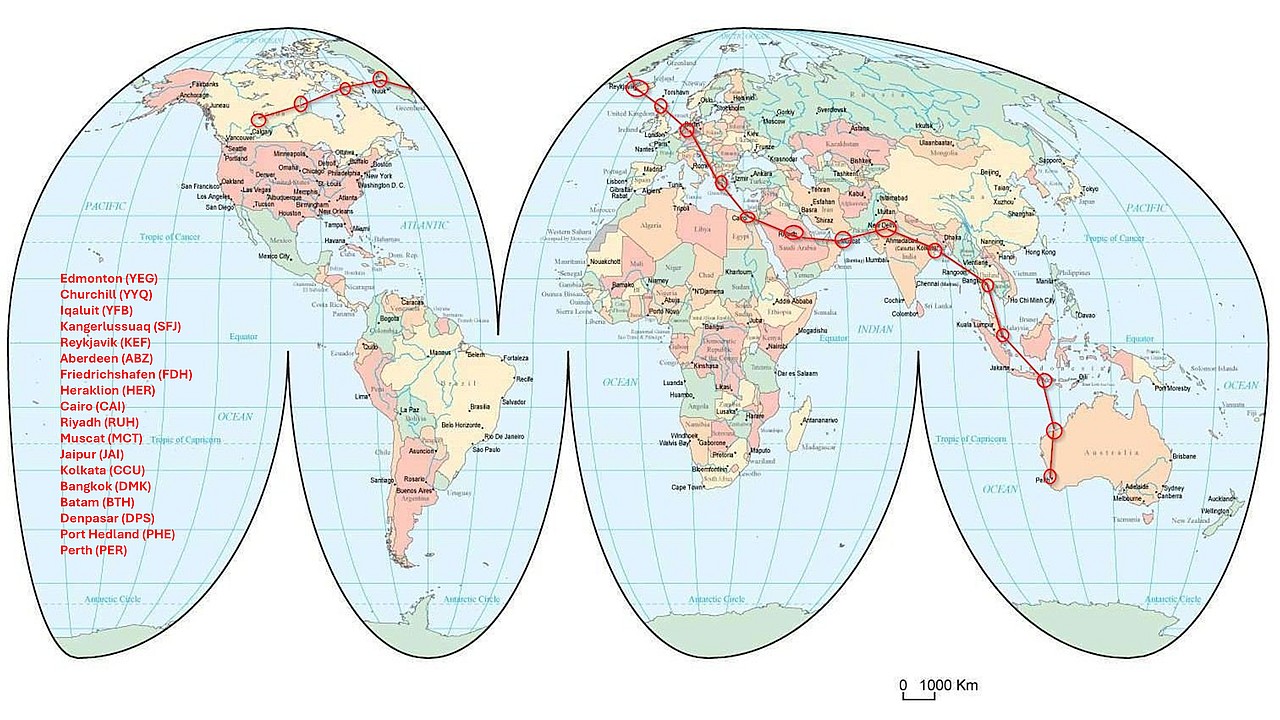
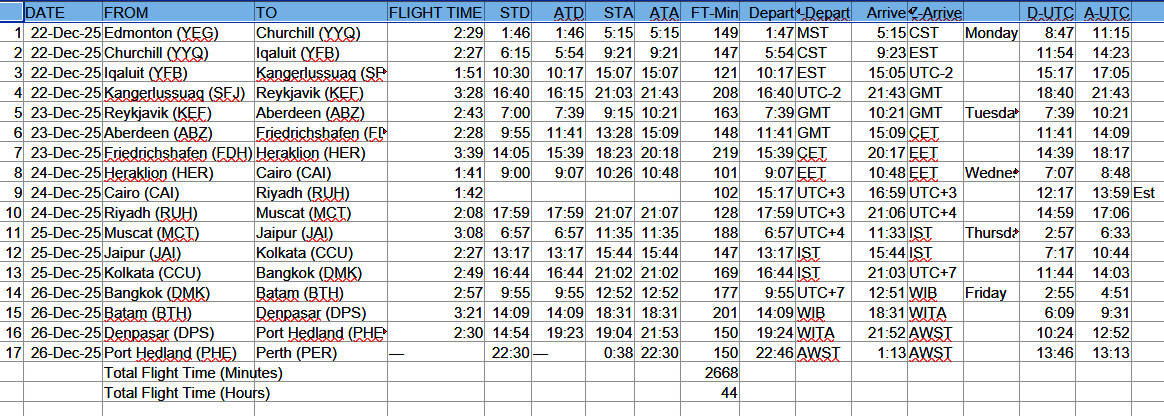
I, as a representative of WLBOTT, along with my faithful companion Elder G, will recreate the journey over the next several days.
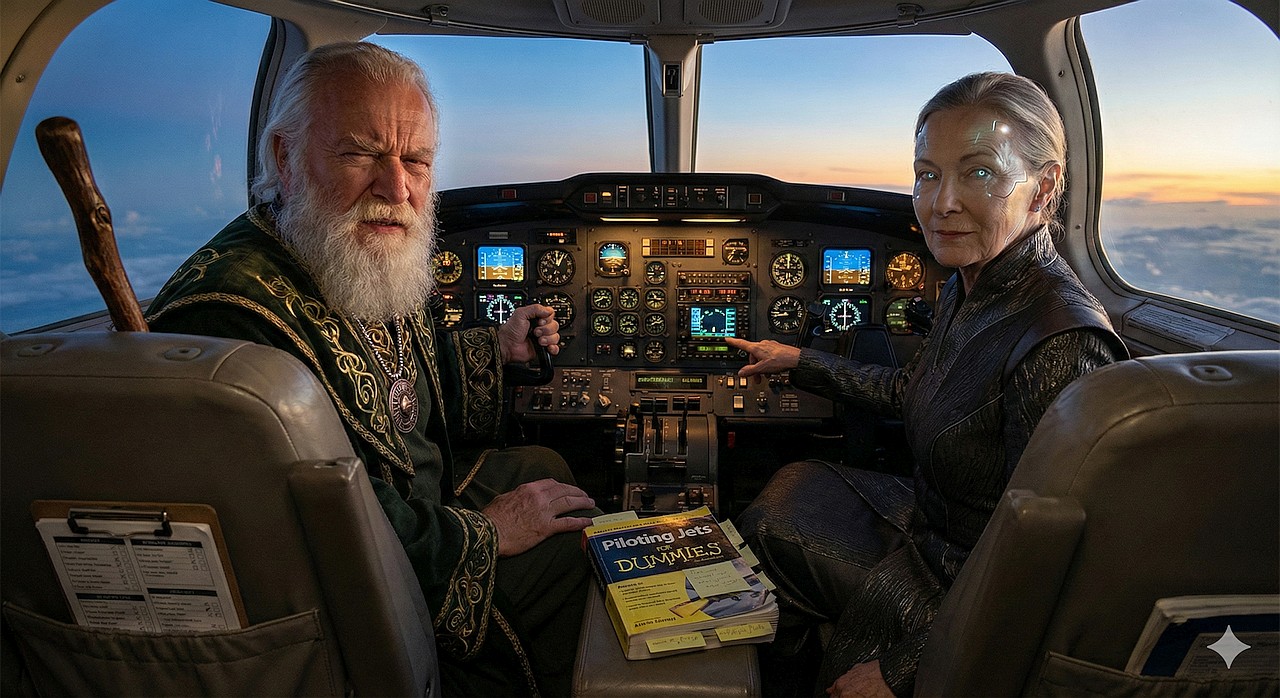
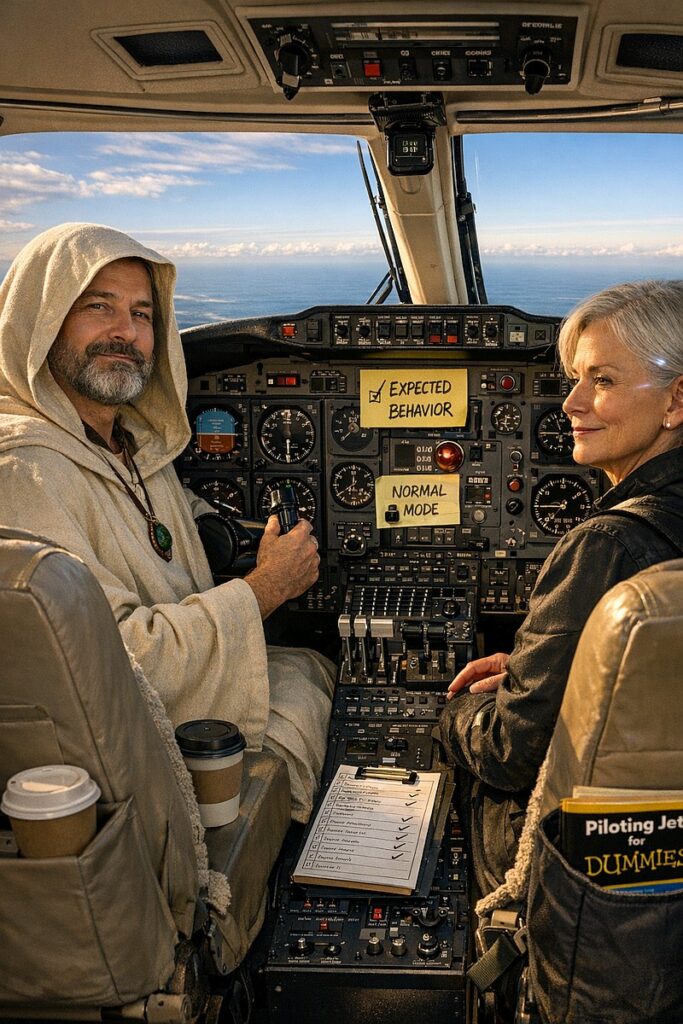
We settle in and agree not to randomly flip switches for a while.
Global Warming and Wildfires
Gemini provides some useful background:
The Numbers: A Growing Global Crisis (2024–2025)
Recent reports, including the State of Wildfires 2024–2025, show a clear shift in how fires are behaving:
- The “Greece-Sized” Record: 2024 was the most extreme year for forest fires on record globally, with over 13.5 million hectares of forest burned—an area roughly the size of Greece.
- Carbon Spikes: Even in years where the total area burned is lower (due to fewer grassland fires), the carbon emissions are soaring. Fires emitted over 8 billion tonnes of CO2 in the 2024–25 season, driven by fires in carbon-dense boreal forests (like Canada) and tropical rainforests.
- Extreme Behavior: The intensity of the world’s most extreme fires has more than doubled over the last 20 years.
- The Height Factor: Fires are now moving 25 feet higher up mountainsides every year because previously “too wet” high-altitude forests are now drying out.
How Global Warming Fuels the Flame
Scientists have identified several specific “amplifiers” caused by climate change:
- The “Thirsty Atmosphere”: Higher temperatures increase the Vapor Pressure Deficit (VPD). Essentially, the air becomes “thirstier,” sucking moisture out of trees and soil, turning forests into tinderboxes.
- Season Creep: In Canada, the fire season now starts about a week earlier and ends a week later than it did 50 years ago. In the Western U.S., the season has extended by nearly three months.
- The Boreal Feedback Loop: Canada’s boreal forests store massive amounts of carbon in the soil and permafrost. When these burn, they release “ancient carbon,” which accelerates warming, leading to even more fires.
References
Key Scientific Reports & Articles
Links provided by Gemini
- The State of Wildfires 2024–2025 (ESSD Copernicus)
This is one of the most comprehensive recent reports available. It tracks global wildfire activity from March 2024 to February 2025.2 It reveals that climate change amplified extreme fire weather by up to 70 times in some regions.- World Resources Institute (WRI): Global Trends in Forest Fires (2025 Update)
This article highlights that 2024 was the most extreme year for forest fires on record.4 It details how forest fires now burn more than twice as much tree cover as they did 20 years ago.- PNAS: Anthropogenic Climate Change and Wildfire Smoke (Dec 2025)
This recent study focuses on the “human fingerprint” on fires. It suggests that human-caused climate change contributes between 33% and 82% of the total area burned in certain regions and explains the dramatic rise in toxic smoke concentrations.- Nature: Climate Warming and Extreme Daily Wildfire Growth
This paper uses machine learning to prove that warming significantly increases the risk of “extreme daily growth” events (fires that explode in size in a single day), which are the most difficult for international crews to contain.- NASA Earth Observatory: Wildfires and Climate Change
NASA provides excellent visualizations and summaries of how “Vapor Pressure Deficit” (essentially the air’s thirst) has become the dominant contributor to wildfire risk since 2000.