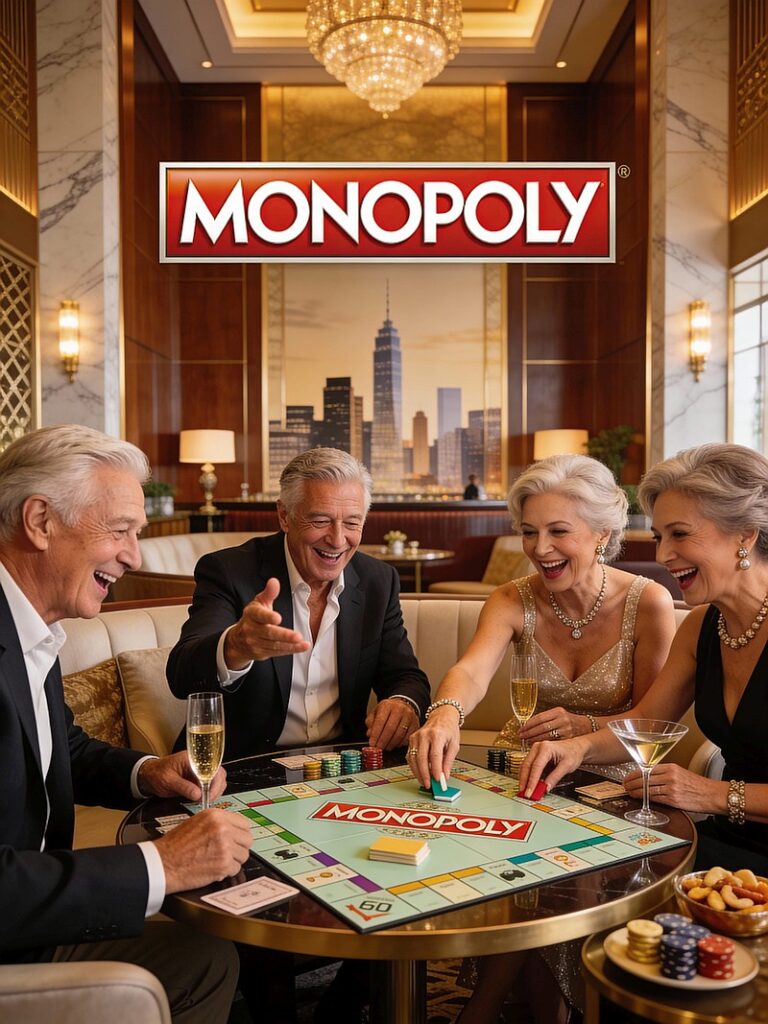
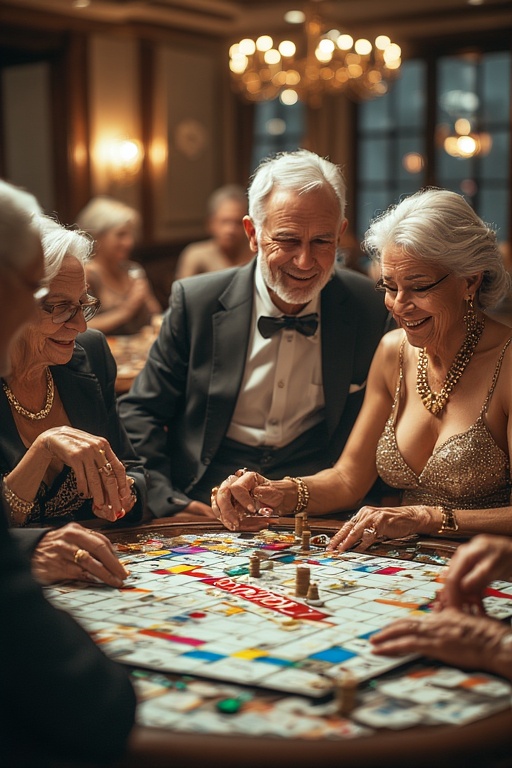
One of the big draws for Senior Living Centers is a lively and vivacious Monopoly community.
THE GRAND MONOPOLIUM
A Residential Continuum of Strategic Leisure
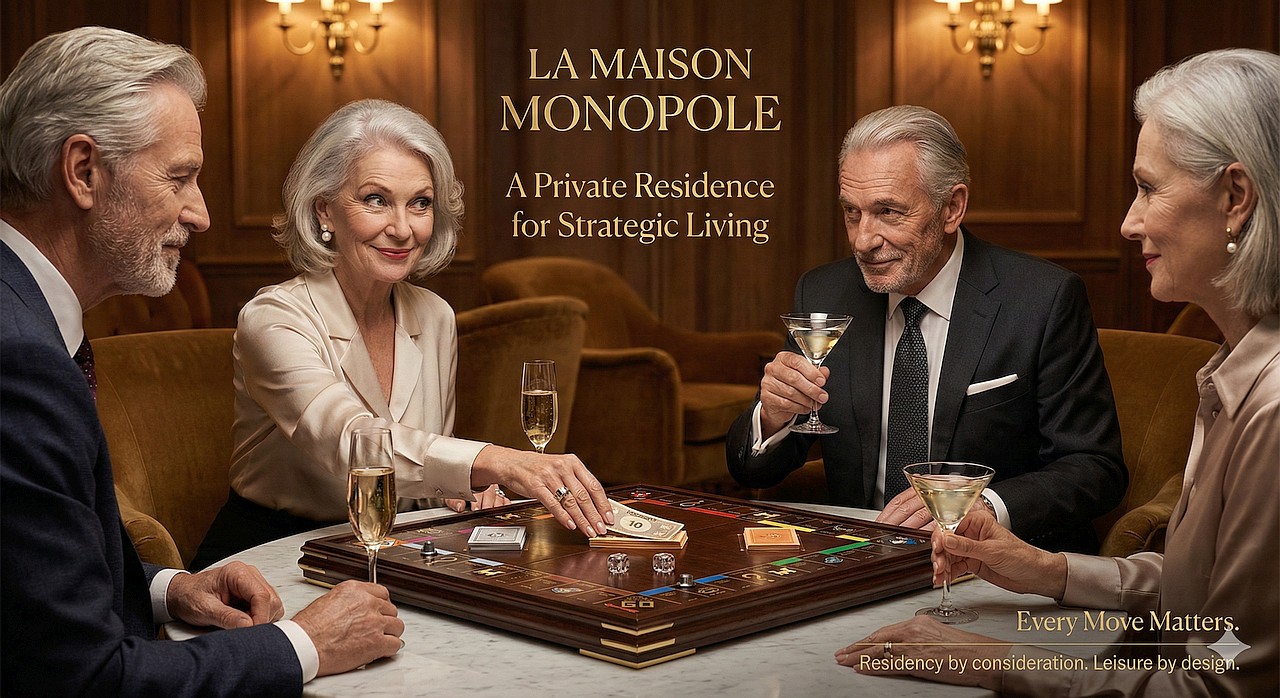
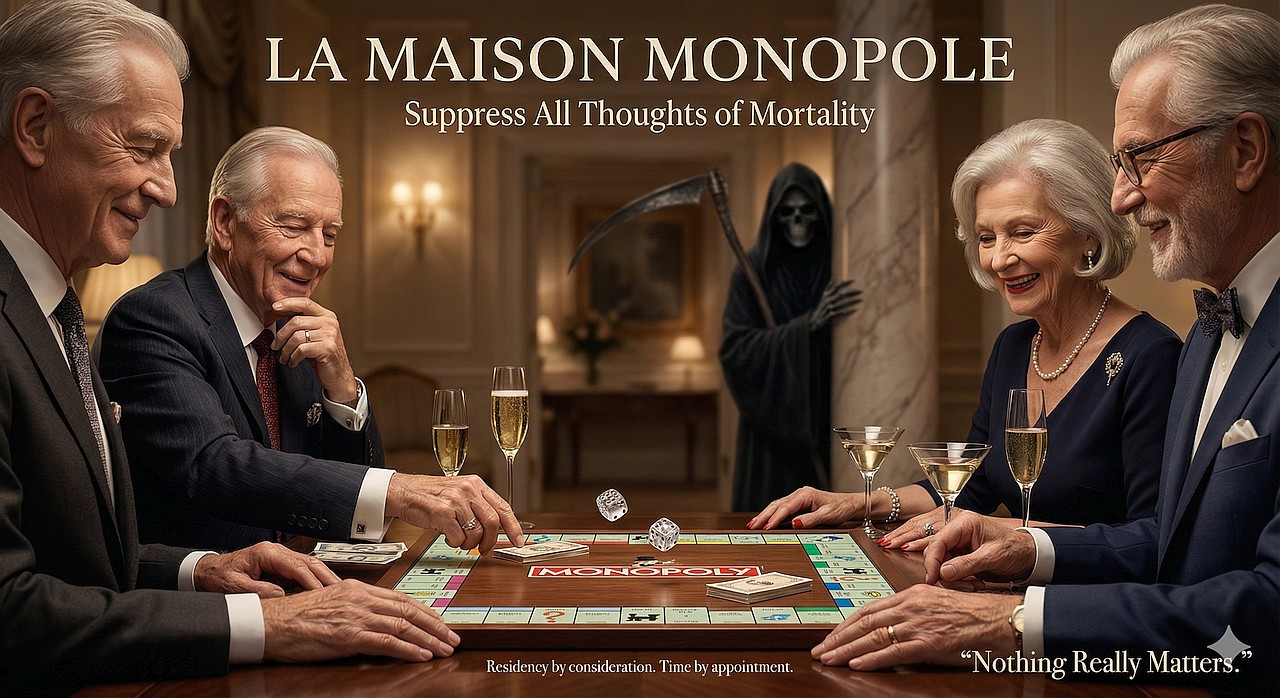
At The Grand Monopolium, we believe retirement is not an ending, but a reallocation of assets.
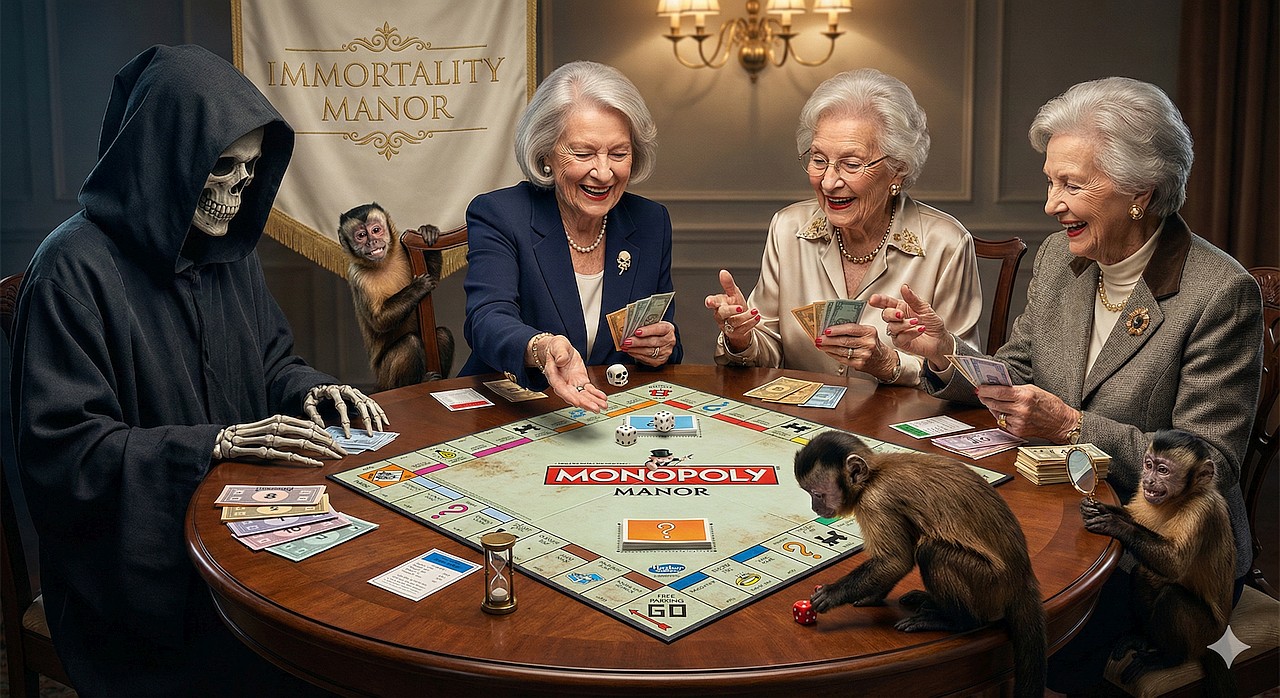
Here, life unfolds around our signature offering: an exclusive, invitation-only Monopoly Salon, where residents engage daily in spirited play, social refinement, and property acquisition under the soft glow of curated lighting and discreetly attentive staff.
This is not a game night. This is a culture.
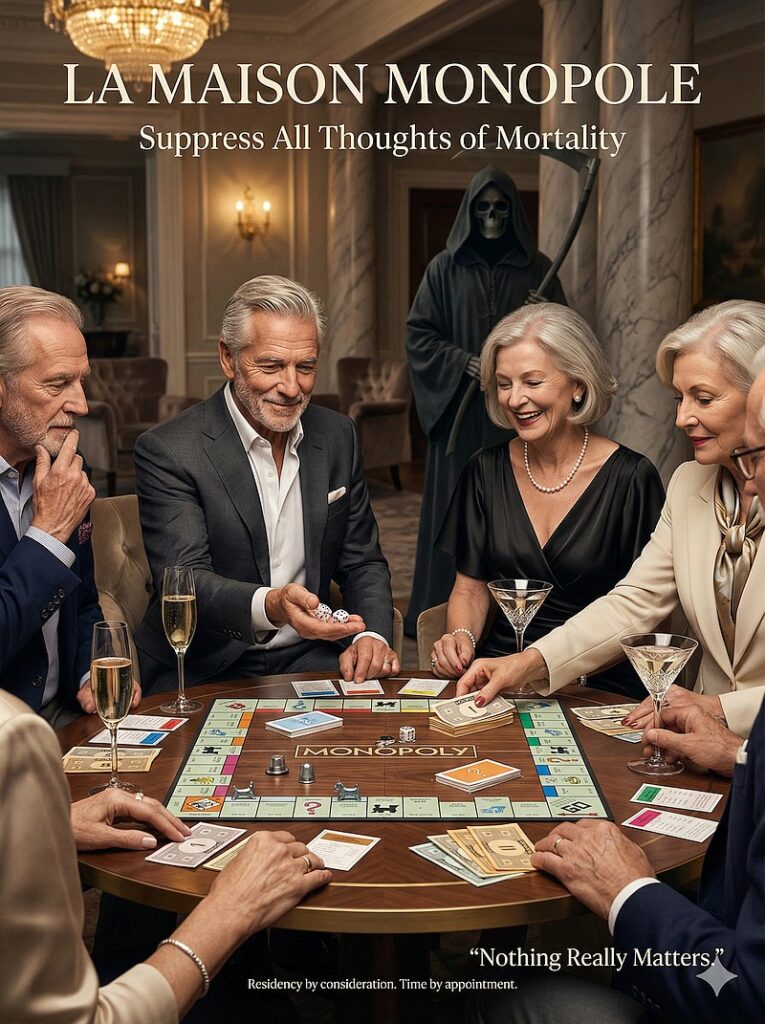
And what the residents are saying: “I hardly every have to reflect on my own mortality!”
Economy Senior Homes
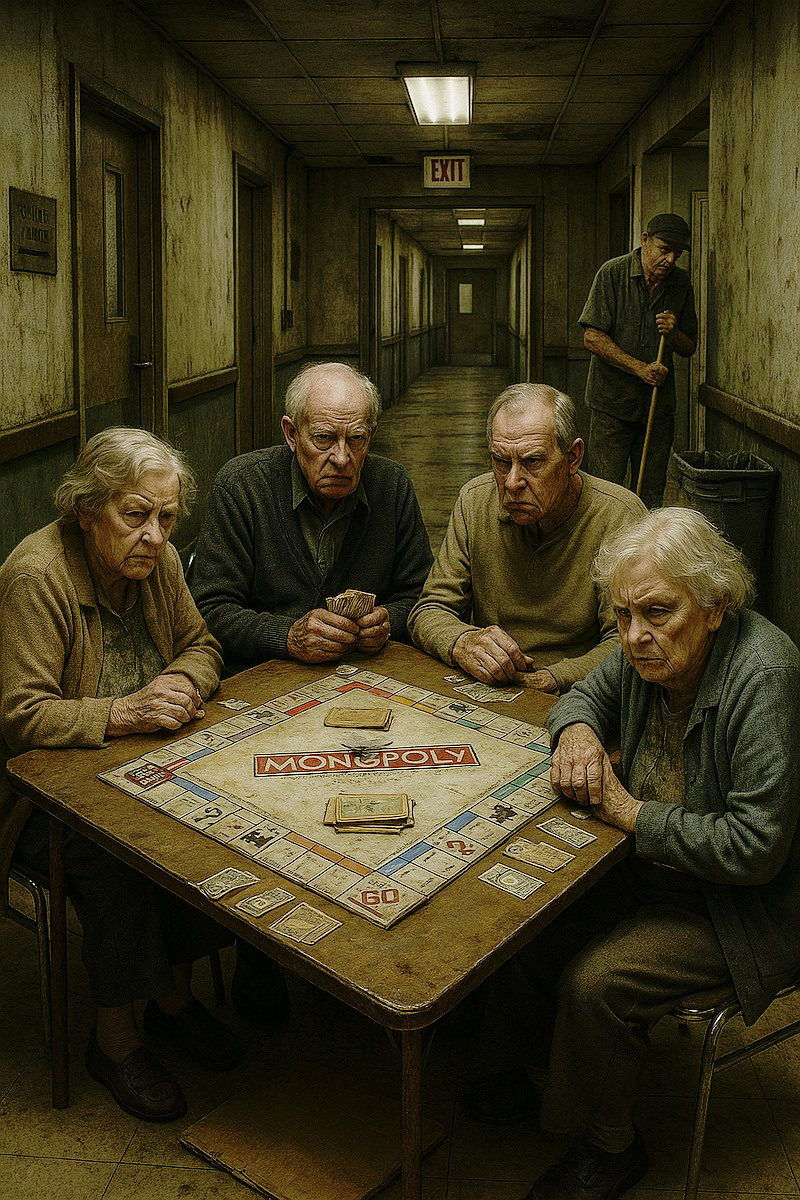
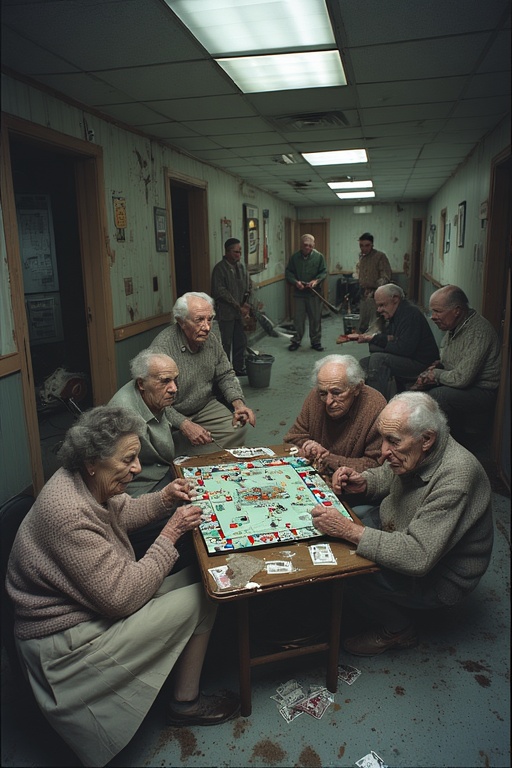
Some economy Senior Homes also offer Monopoly.
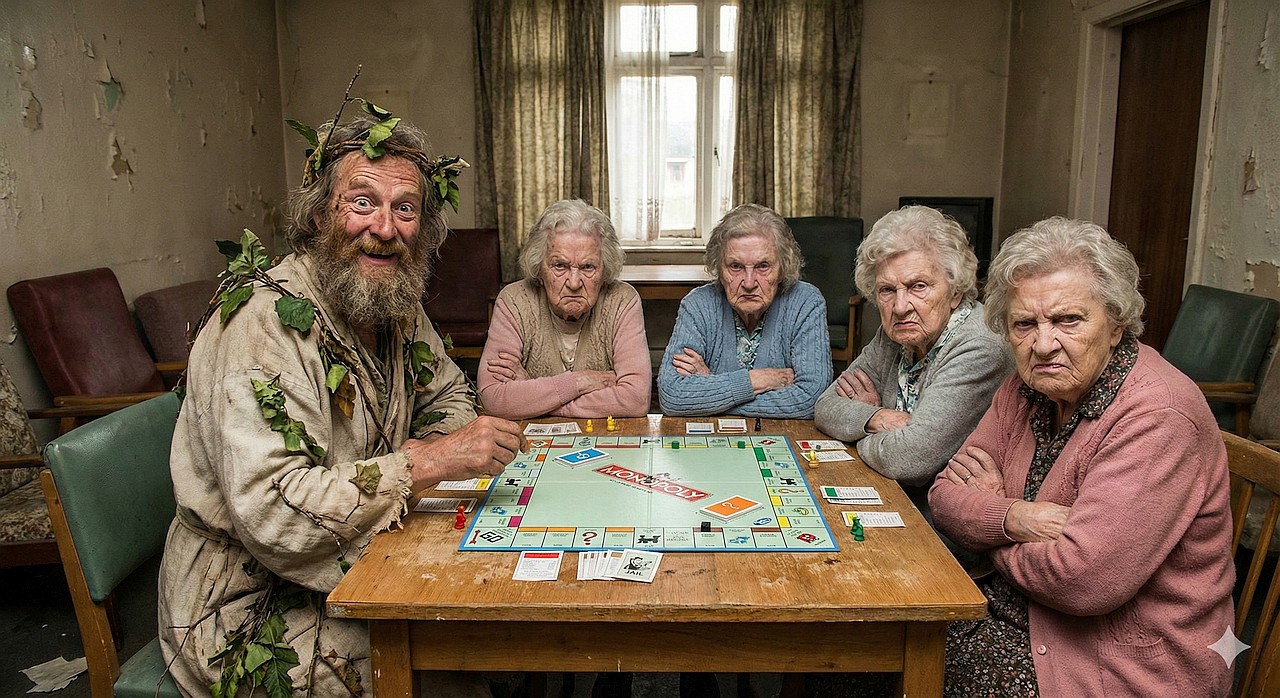
The Middle Path: WLBOTT Seniors’ Night
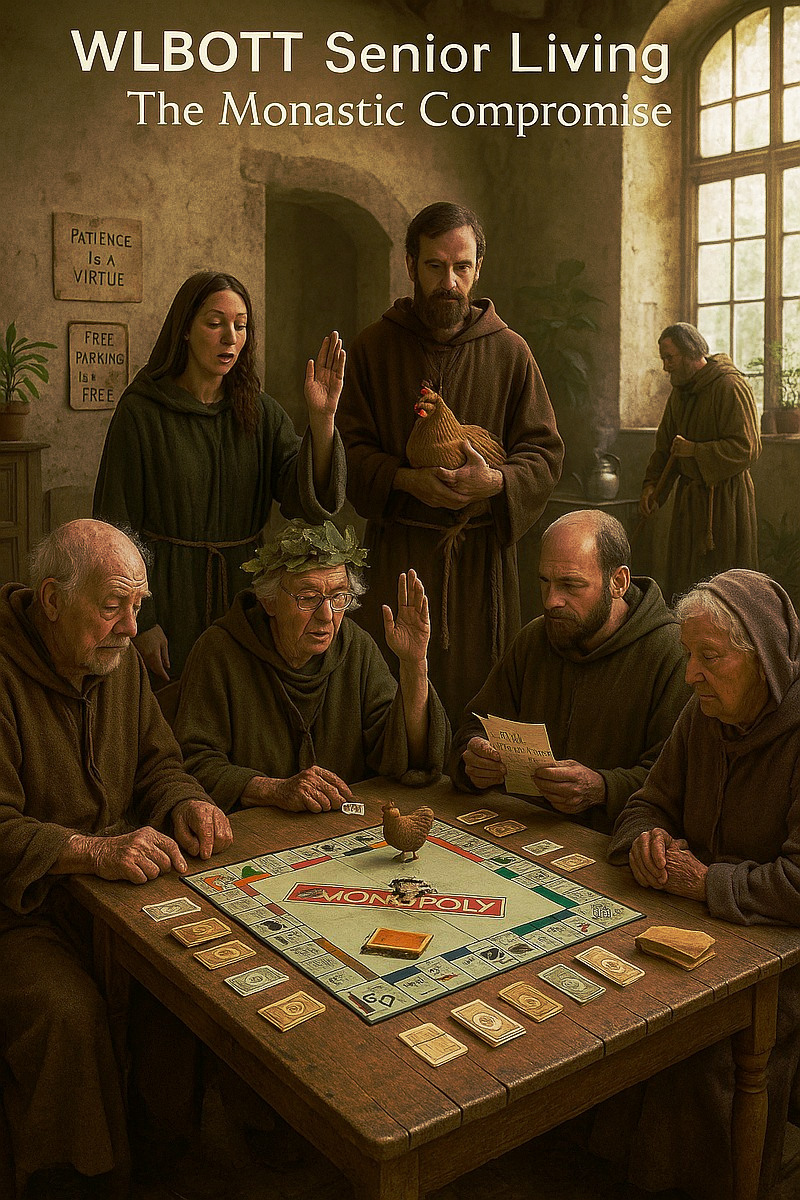
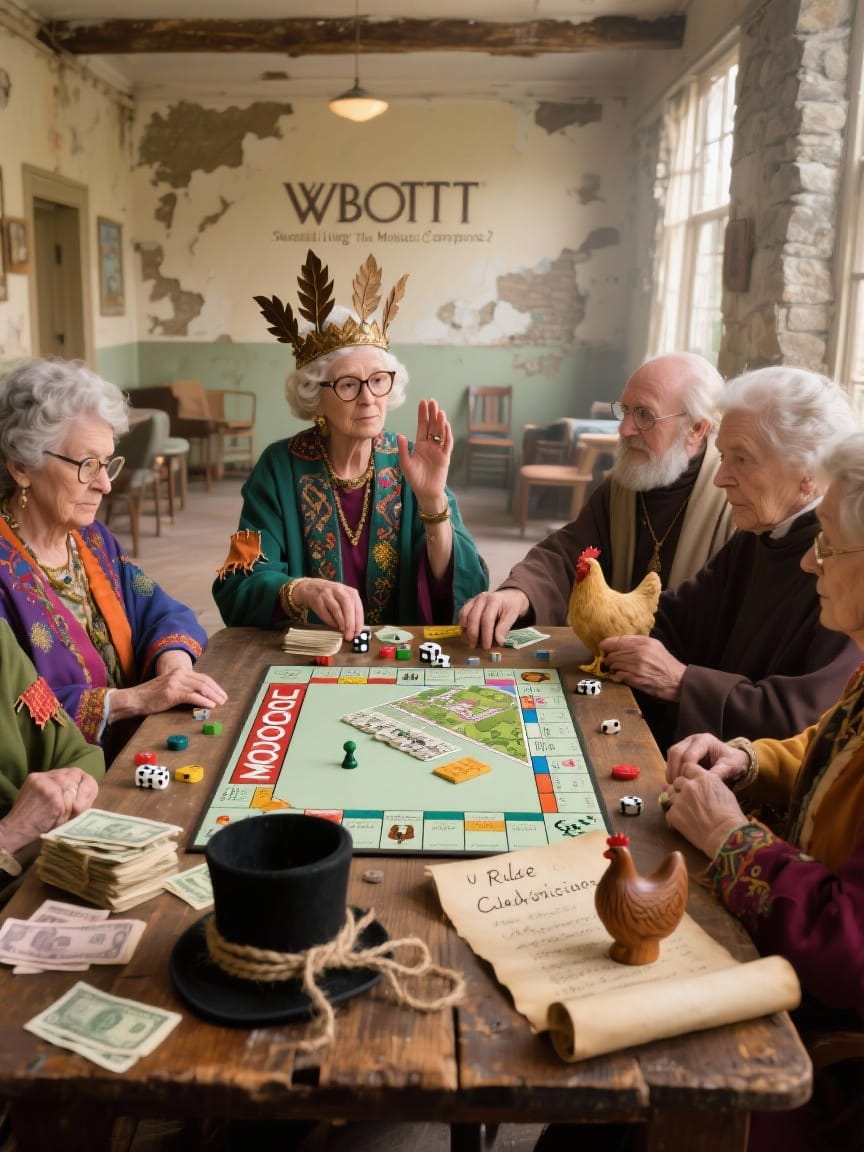
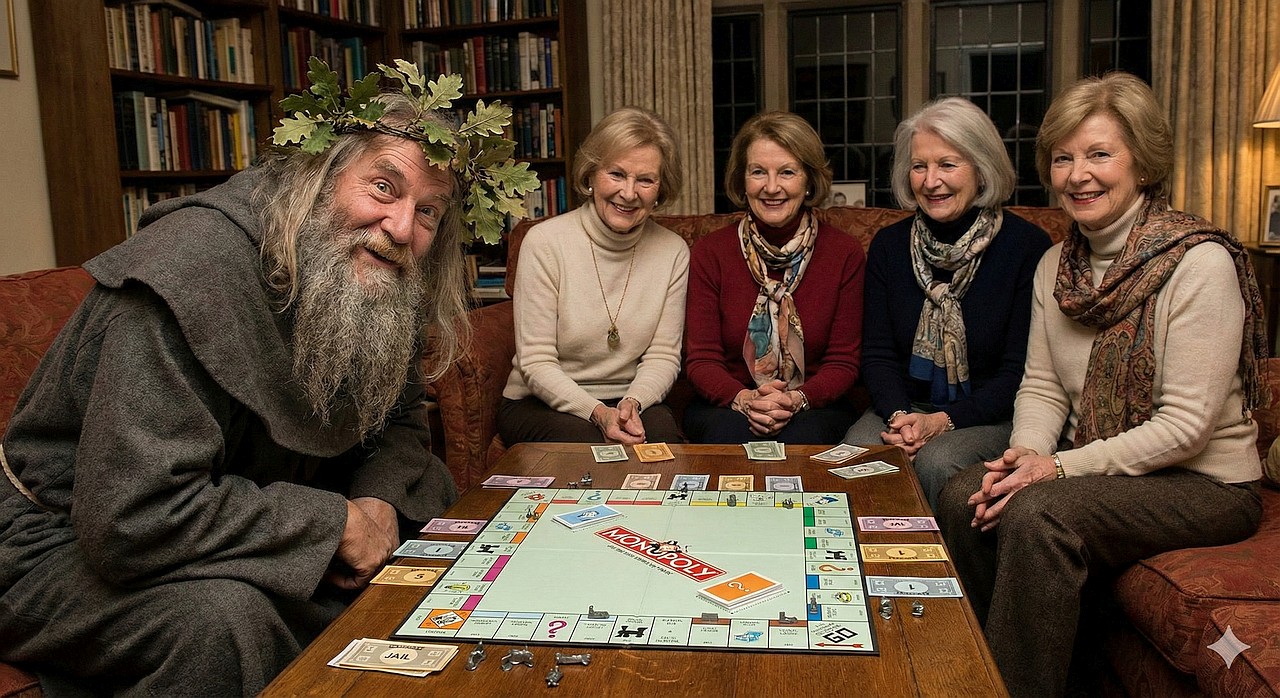
And then there’s George
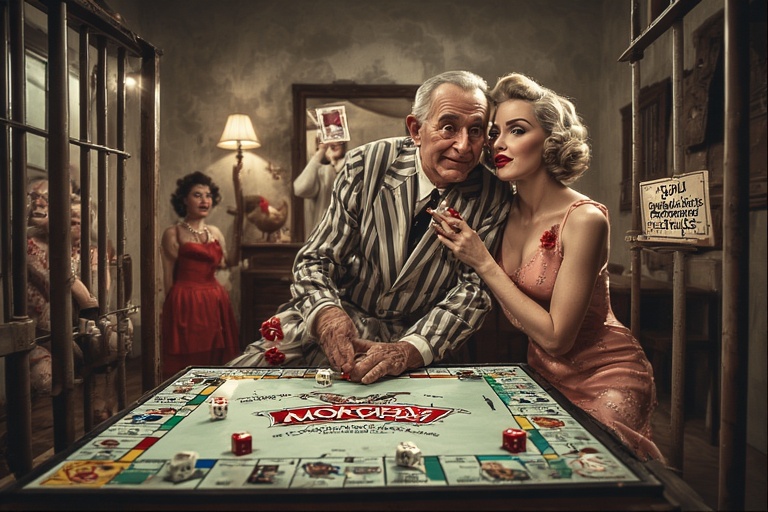
You know our unpaid marketing intern George (he’s single, ladies!) From what we can only assume was a manifestation of his loneliness, thought that going to Monopoly Jail involved conjugal visits.
To be fair, George was brought up on screwball comedies of the 40’s.
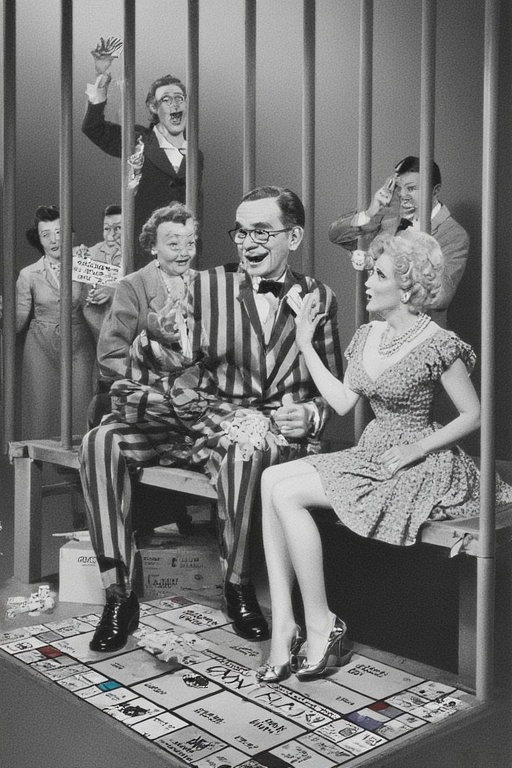
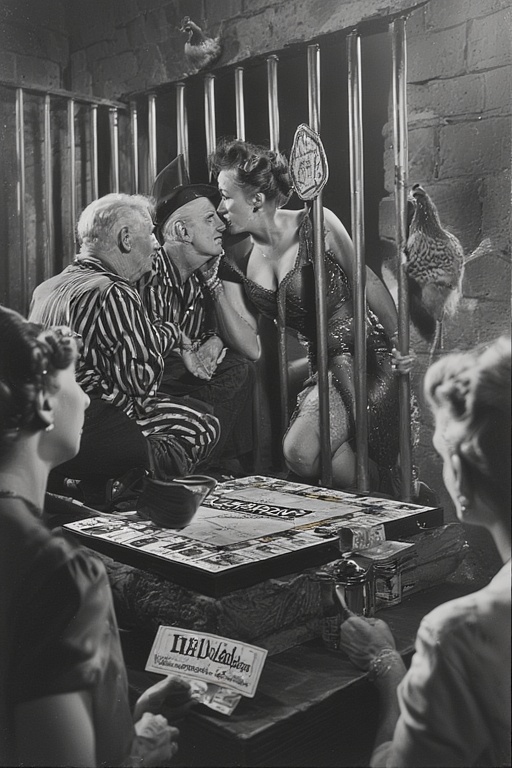
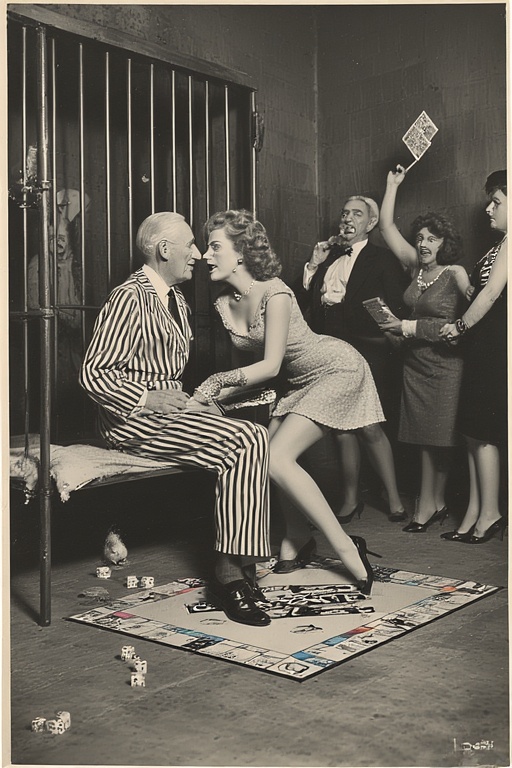
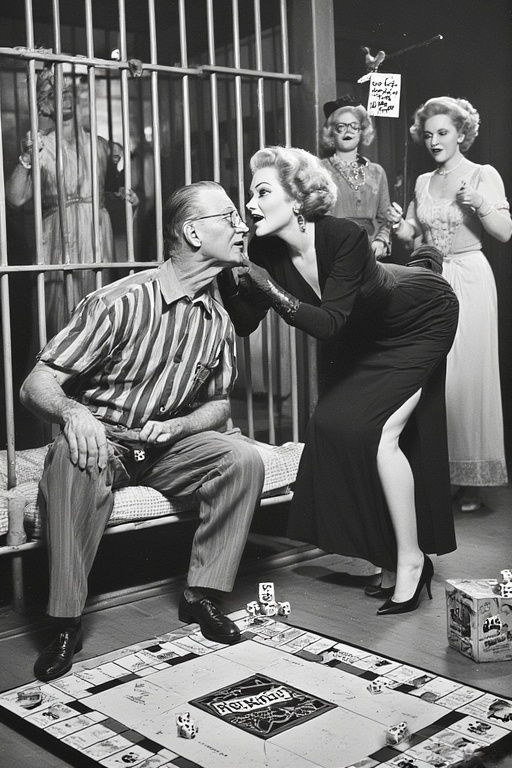
But George’s illustrations of our Monopoly spread were deemed unacceptable by the WLBOTT Ministry of Virtue and Vice. We will not be publishing George’s work product:

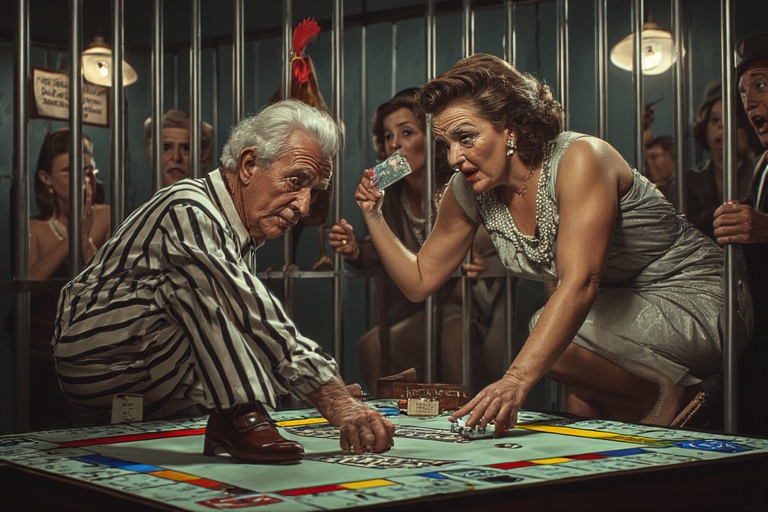
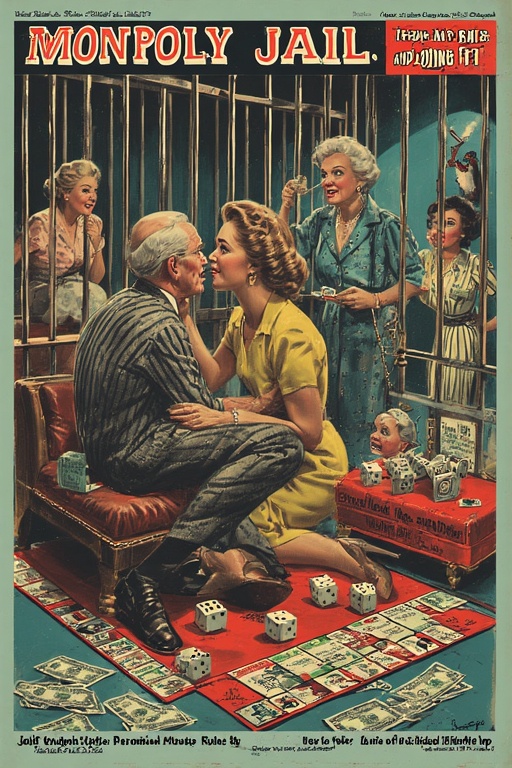
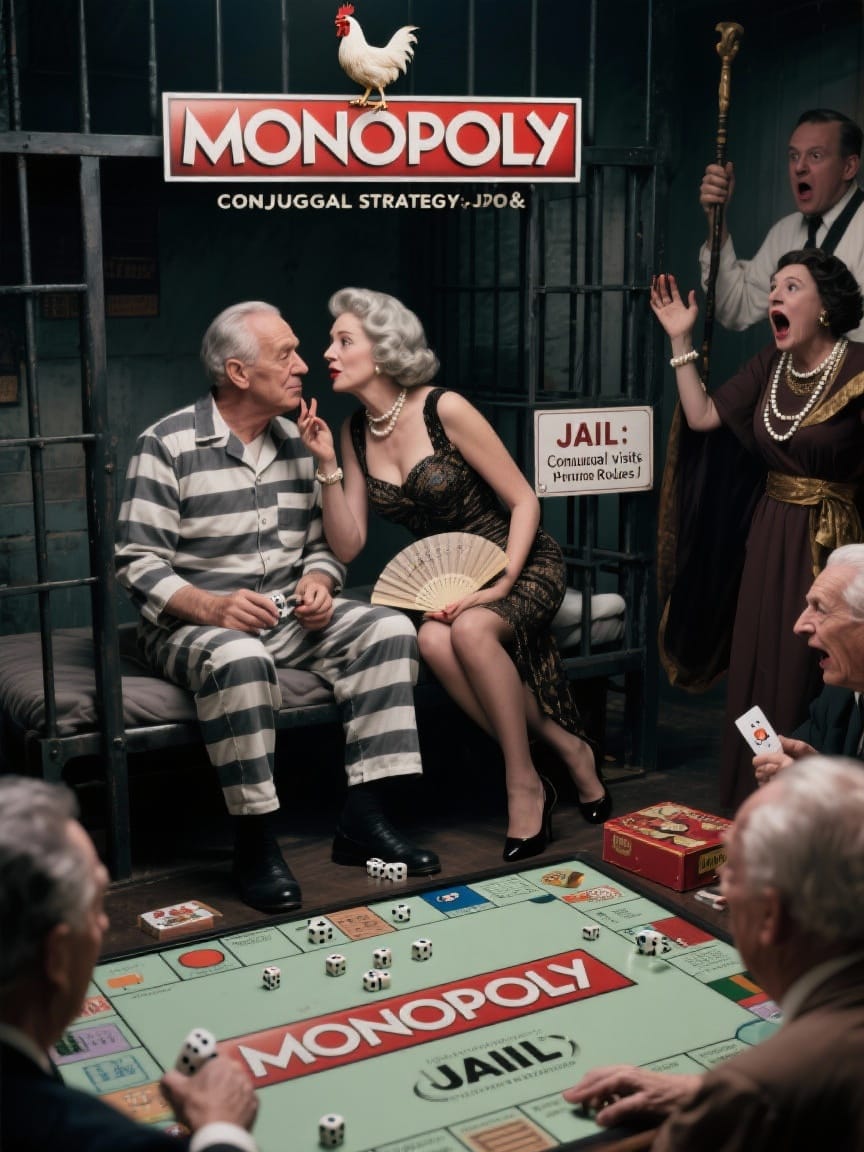
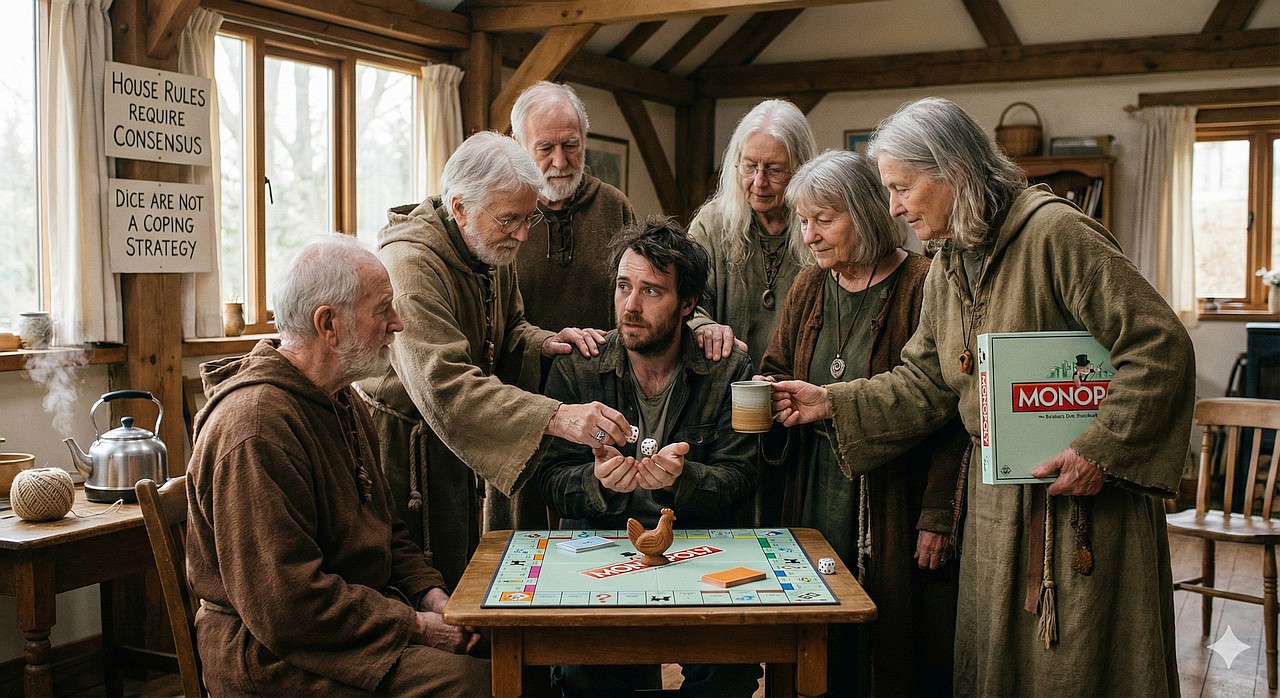
What is this, George? Your 14th intervention this year?
Semi-Sequitur: Monopoly in the former Soviet Union
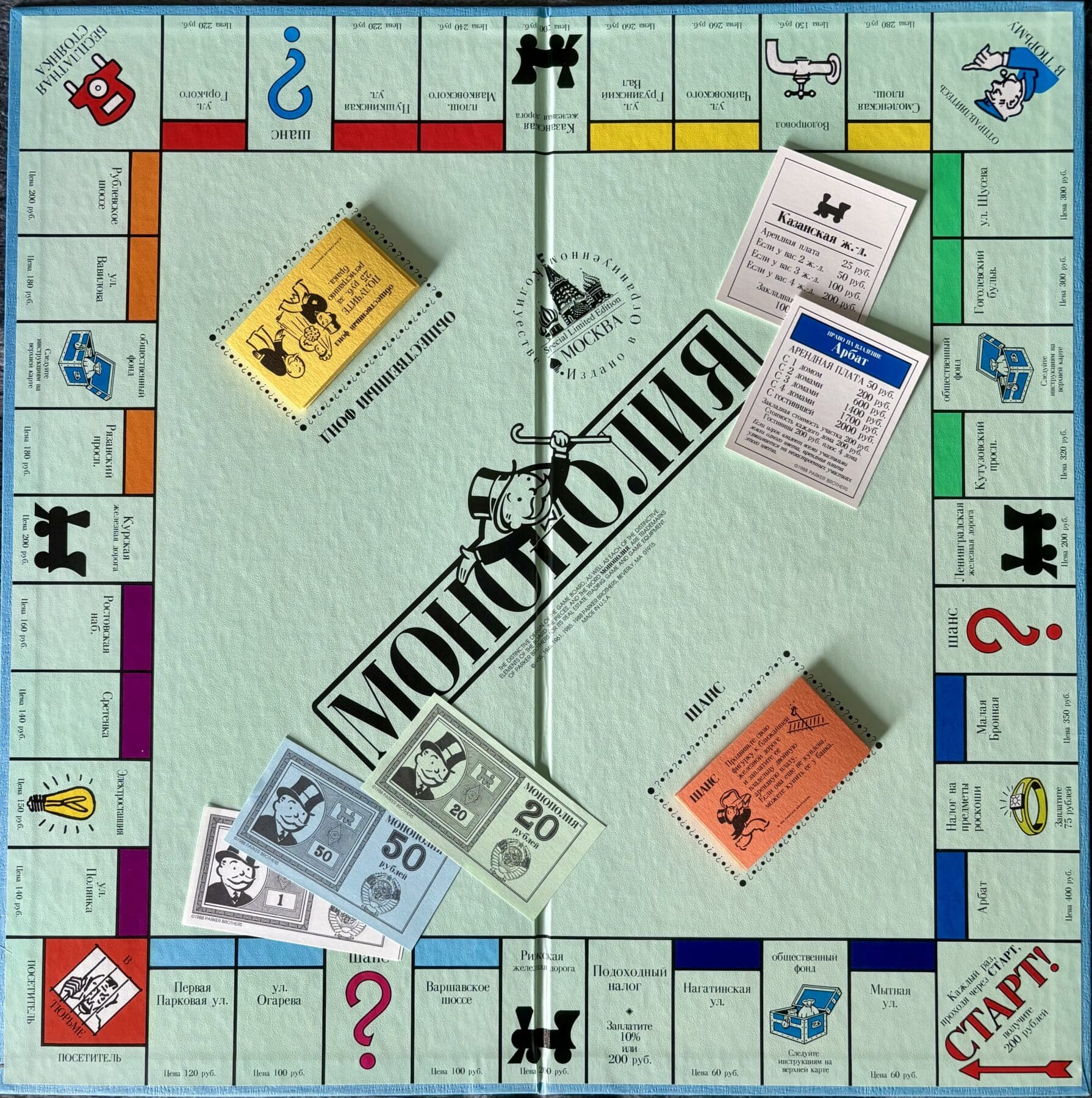
Monopoly was officially banned in the Soviet Union for promoting capitalism but became a cultural phenomenon through homemade versions and later official releases during perestroika, like the 1988 “Moscow Version” (Monopoliia), symbolizing the shift towards market economics, with knock-offs and fan-made rules (like the “Communist Monopoly” house rules) emerging to adapt its capitalistic themes to Soviet life, highlighting its symbolic clash with communist ideology. [1, 2, 3, 4]
The Ban & Ideological Clash
- Capitalism vs. Communism: The game’s core mechanics—buying property, charging rent, accumulating wealth—directly contradicted Soviet communist ideals of collective ownership and anti-capitalism.
- Official Stance: The USSR viewed Monopoly as a corrupting influence, glorifying greed and free-market principles, leading to its unofficial suppression, though it wasn’t always a formal, published ban.
Homemade & “Official” Versions
- DIY Monopoly: Many Soviets played rough, homemade versions, adapting rules and property names to fit their reality, showing a desire to engage with market concepts.
- Monopoliia (Moscow Version): In 1988, under Mikhail Gorbachev’s perestroika, Parker Brothers released a Russian-language version, allowing people to play capitalism legally for the first time.
- Anti-Monopoly Games: The Soviets even created their own Marxist-themed games, like Hungary’s “Save” or Russia’s “Manage,” to promote communist virtues.
Symbolism & Legacy
- Playing Capitalism: The popularity of Monopoly, even before its official arrival, showed a fascination with Western economics, foreshadowing the USSR’s eventual collapse and market transition.
- Cultural Impact: The game’s journey from forbidden fruit to commercial product became a powerful symbol of the USSR’s changing relationship with global capitalism, notes an article from the Association for Slavic, East European, & Eurasian Studies.
– Gemini