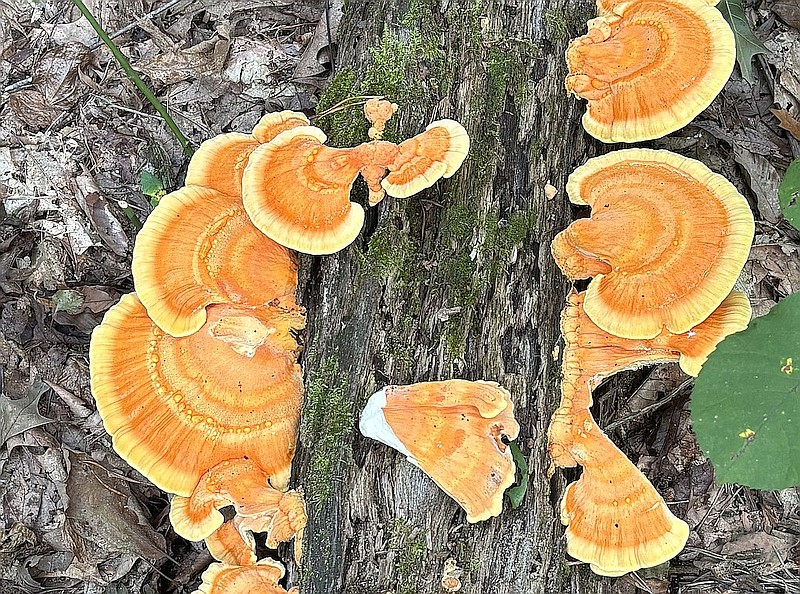
Gentle People – I was hiking in a very nice park in Maryland today and came across these beautiful mushrooms growing out of a decaying log. In addition to the bright color, they had interesting geometric patterns on them.
Since mushrooms grow on moist, organically rich media with low solar and intellectual enlightenment, they are genetically equivalent to DJT’s brain.
A mushroom limerick:
I came upon a mushroom display Growing out of a log in decay Geometric patterns and bright colors adorned the fungus Proclaiming that natural beauty is among us A perfect end to a hike on a forest pathway
Grim, happy, and bawdy mushroom haikus:
‘Shrooms are edible Careful picking is needed To keep you from death
A tasty fungus Added to your omelet Burst of umami
Mushroom sex is odd Spores cast to the forest wind Hyphae tangling happens[1]
[1] A future blott on the love life of mushrooms is pending approval of the WLBOTT Ministry of Virtue and Vice.
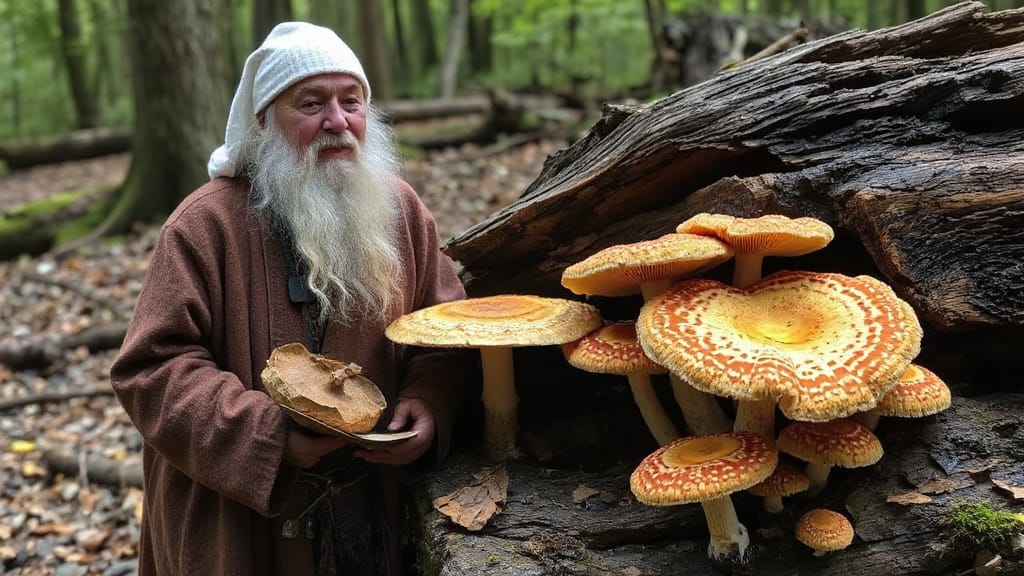
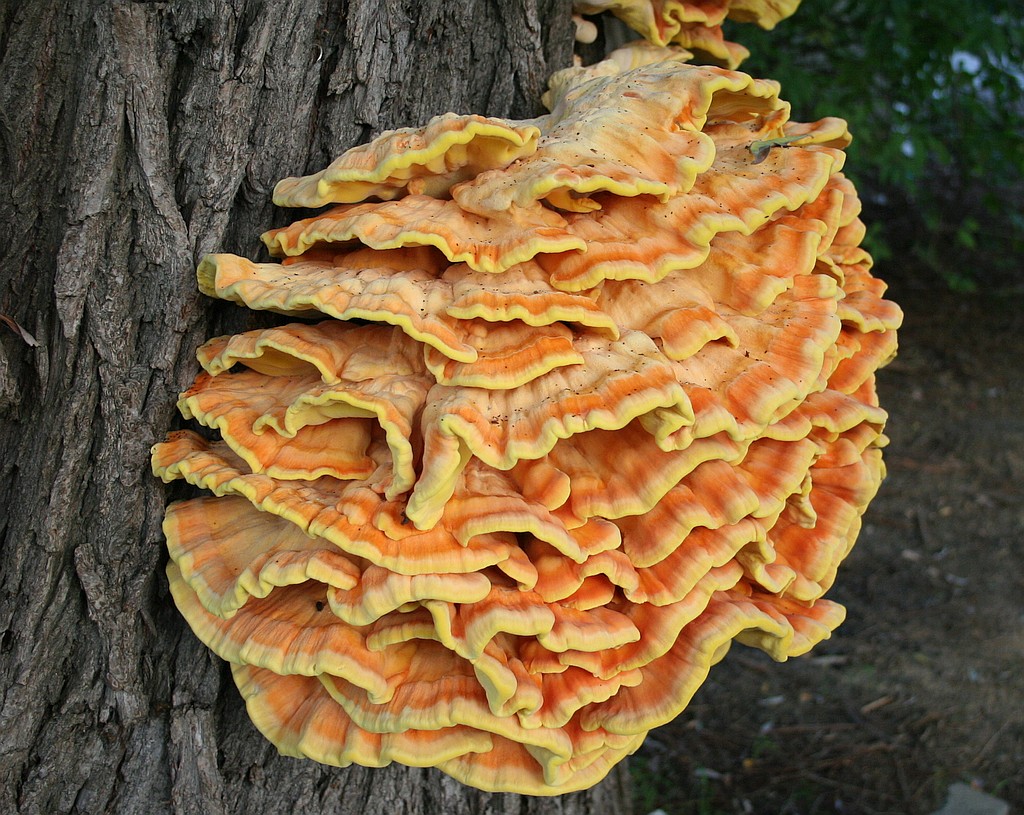
Elder JimZim’s find appears to be the Laetiporus, the Chicken of the Woods.
Laetiporus is a genus of edible mushrooms found throughout much of the world. Some species, especially Laetiporus sulphureus, are commonly known as sulphur shelf, chicken of the woods, the chicken mushroom, or the chicken fungus because it is often described as tasting like and having a texture similar to that of chicken.
By voir ci-dessous / see below – Self-photographed, CC BY 2.5, https://commons.wikimedia.org/w/index.php?curid=1517795
Description Individual “shelves” range from 5 to 25 centimetres (2 to 10 inches) across. These shelves are made up of many tiny tubular filaments (hyphae). The mushroom grows in large brackets; some have been found that weigh over 45 kilograms (100 pounds).
Young fruiting bodies are characterized by a moist, rubbery, sulphur-yellow to orange body sometimes with bright orange tips. Older brackets become pale and brittle almost chalk-like, mildly pungent, and are often dotted with beetle or slug/woodlouse holes.
Distribution and habitat The sulphur shelf mushroom is most commonly found on wounds of trees, mostly oak, though it is also frequently found on eucalyptus, yew, sweet chestnut, and willow, as well as conifers in some species. Laetiporus species are parasitic and produce brown rot in the host on which they grow.
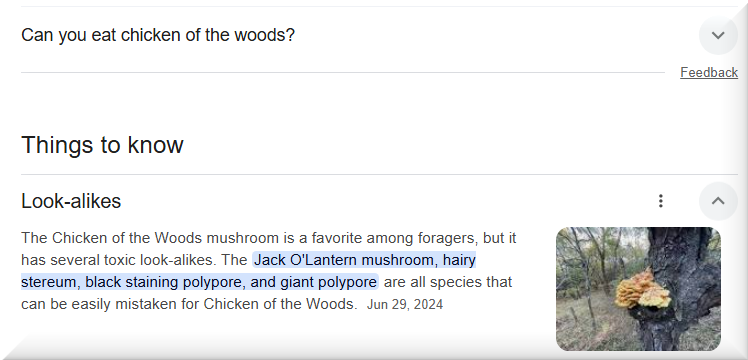
In some cases eating the mushroom “causes mild reactions … for example, ‘swollen lips’ or in rare cases nausea, vomiting, dizziness and disorientation” to those who are sensitive. This is believed to be due to a number of factors that include allergies to the mushroom’s protein or toxins which are only somewhat stable at high temperatures. As such, many field guides request that those who eat Laetiporus exercise caution by only eating fresh, young brackets and begin with small quantities to see how well it sits in their stomach.
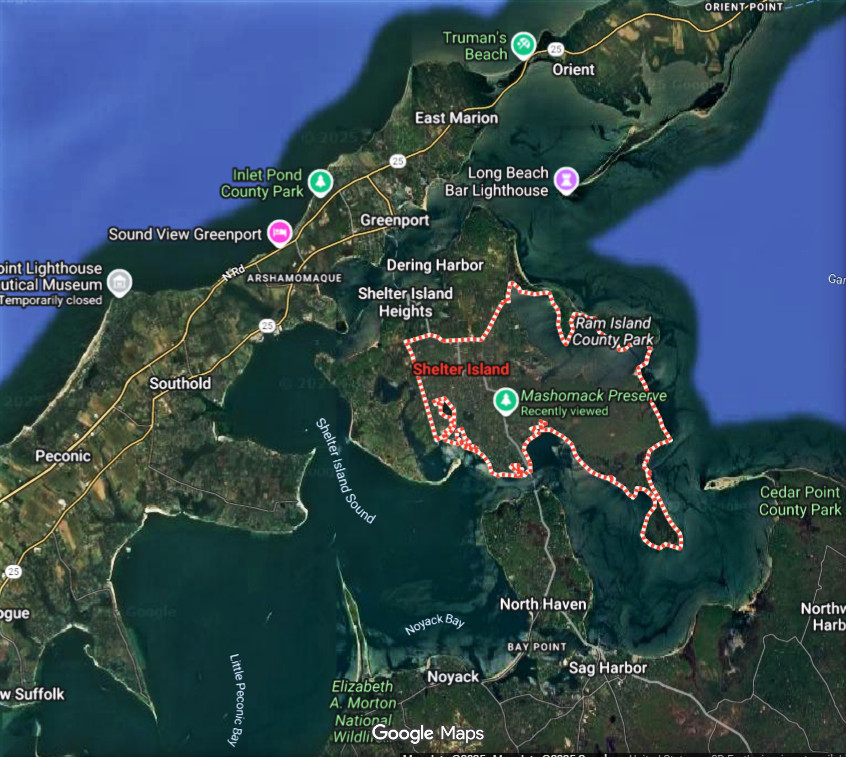
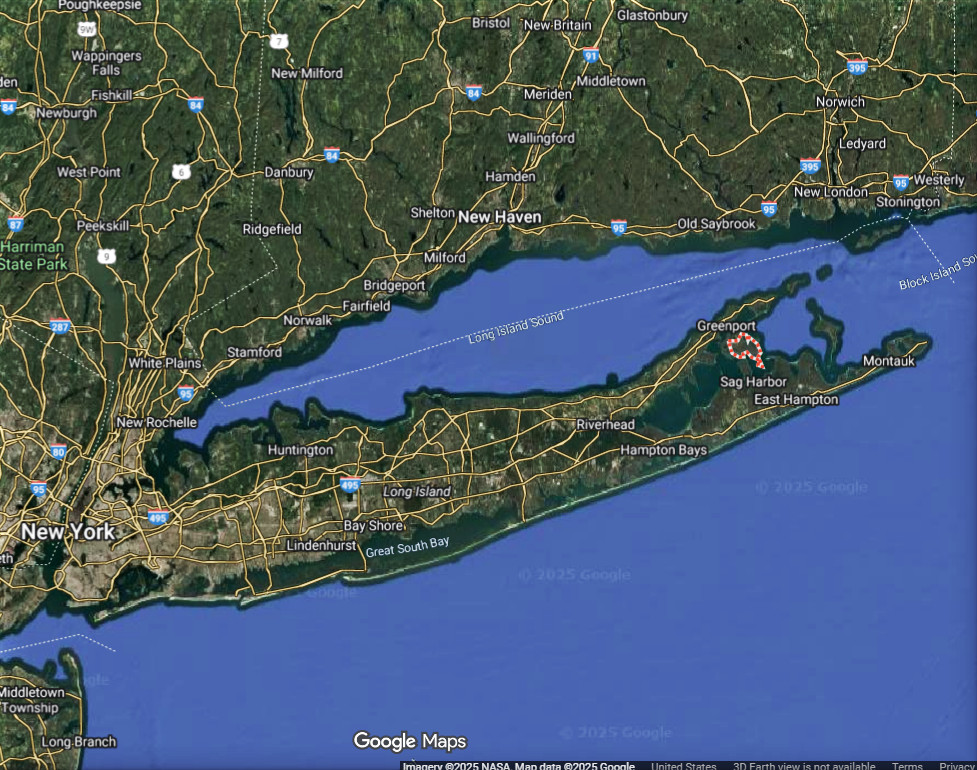
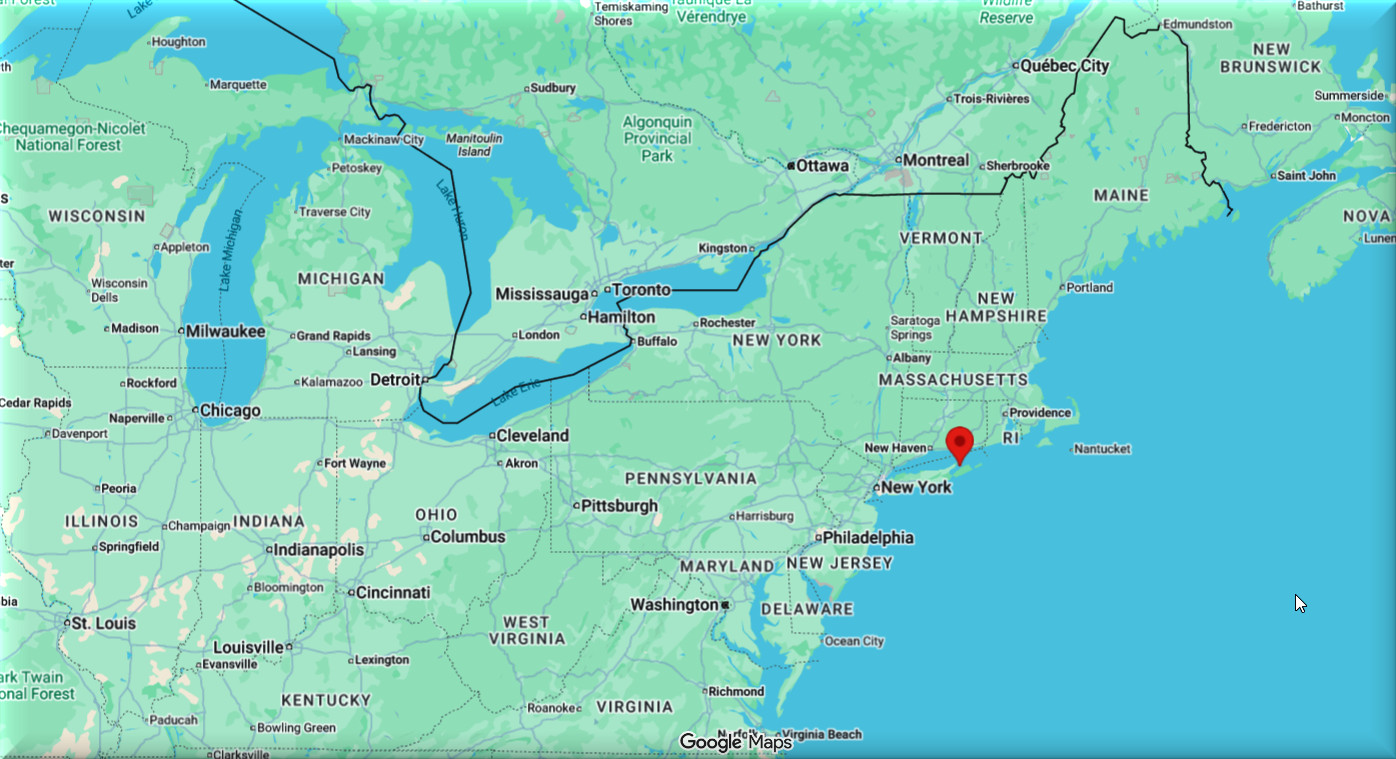
Cindy Belt, of The Shelter Island (NY) Reporter has an informative and prosaic article about mushrooms.
Fall is an unpredictable time of year. Cool mornings may blossom into warm afternoons, sometimes with unexpected showers. After a rain, mushrooms can, well, mushroom up. They seem to appear like magic, quickly pushing up through leaves, the stalk elongating and the cap expanding like an umbrella.
Mushrooms are the most familiar type of fungus. While ordinary citizens broadly divide the world into plants and animals, scientists say that fungi are different enough from plants, animals and other micro-beings to have their own taxonomic kingdom.
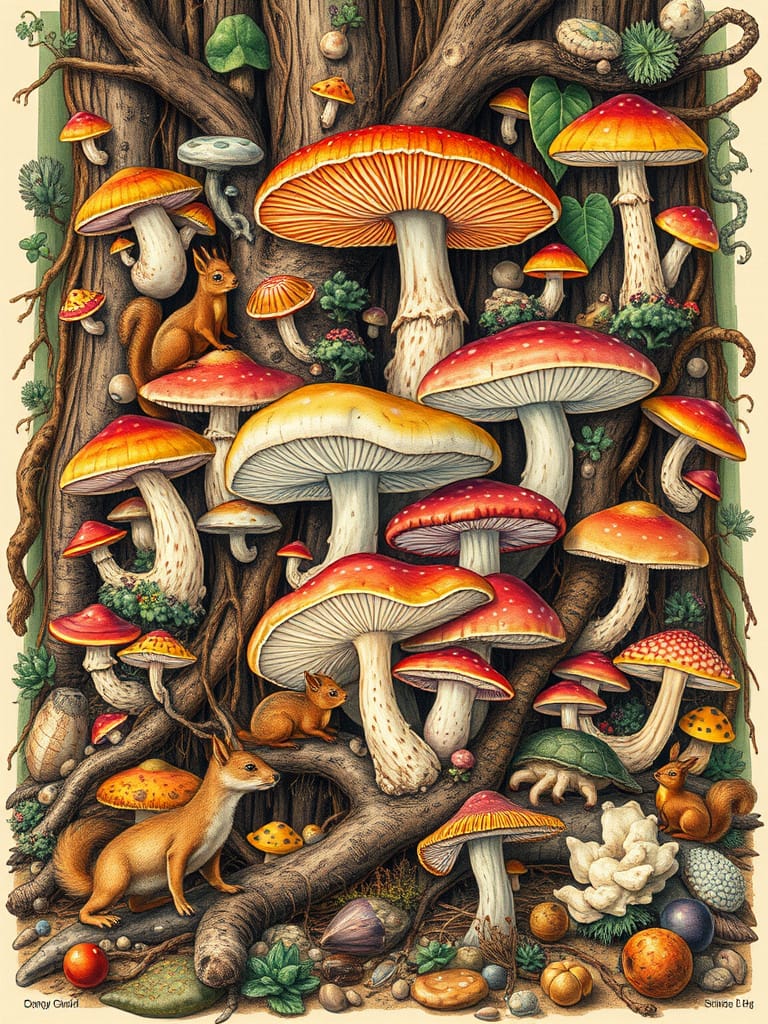
Fungi do not produce their own food, often relying on dead and dying things for nutrients. They are very important as decomposers and nutrient cyclers. Fungi can form life-giving symbiotic relationships with trees and other plants, allowing them to absorb carbon dioxide more quickly, and slowing climate change. Fungi serve as a source of food for many creatures. Deer, squirrels, turtles and even slugs will eat mushrooms.







One reply on “Chicken of the Woods”
[…] be remiss if we didn’t follow up yesterday’s blott with a description of fungi […]