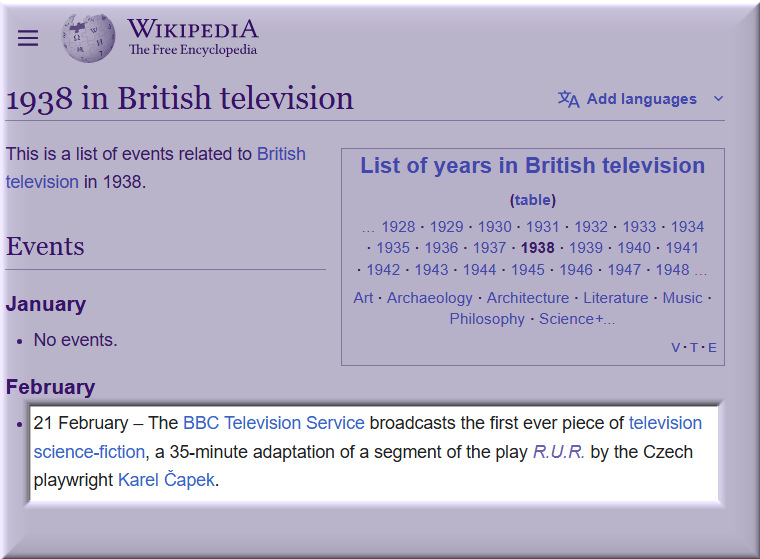
As part of our daily morning routine, we were reviewing the BBC pre-WW2 broadcast schedules. Today we made this fascinating discovery – the first ever televised Sci-Fi program:
The broadcast was based on a 1920 Czech play by Karel Čapek, called R.U.R. The play introduced the word “robot” into the English language.
R.U.R. is a 1920 science fiction play by the Czech writer Karel Čapek. “R.U.R.” stands for Rossumovi Univerzální Roboti (Rossum’s Universal Robots, a phrase that has been used as a subtitle in English versions).
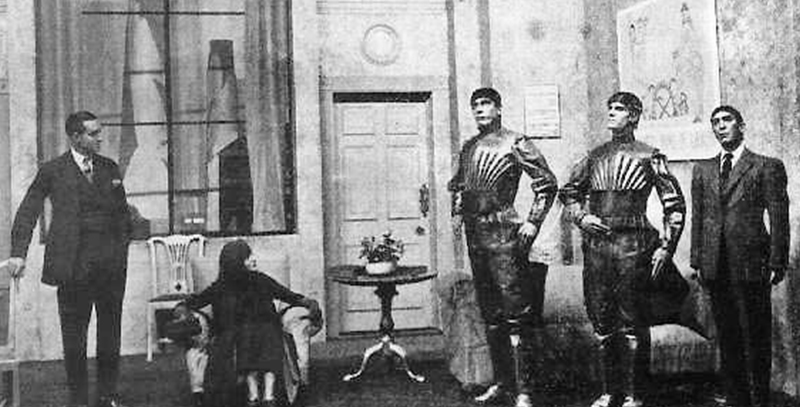
The play had its world premiere on 2 January 1921 in Hradec Králové; it introduced the word “robot” to the English language and to science fiction as a whole. R.U.R. became influential soon after its publication.
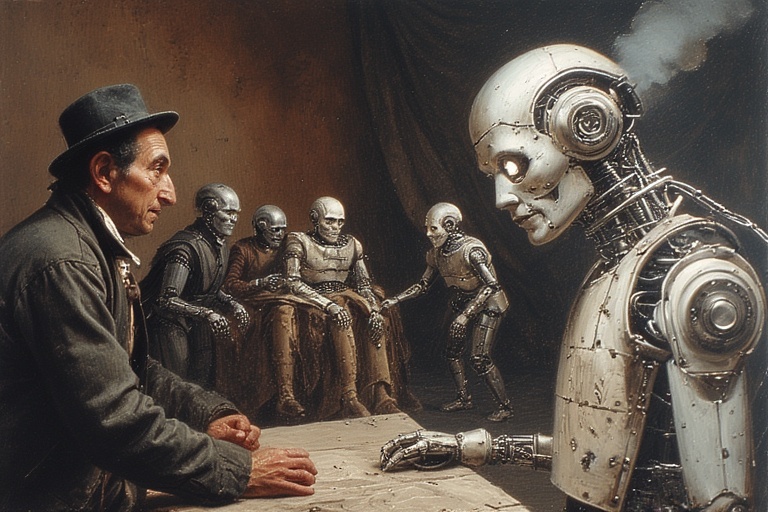
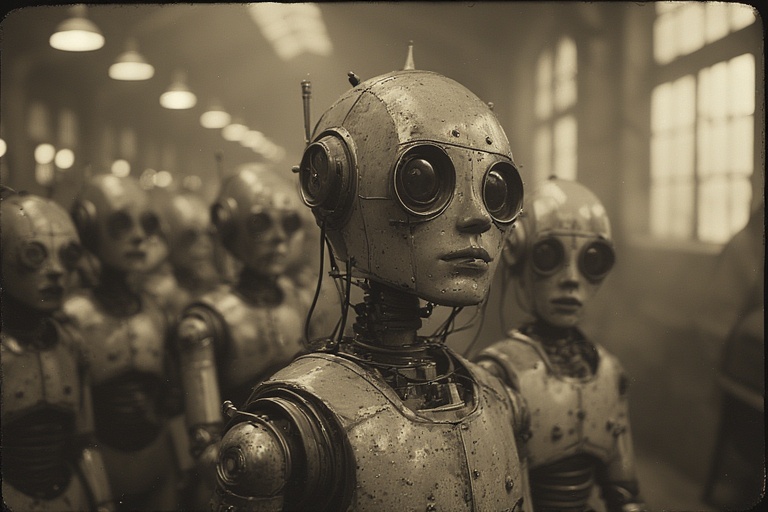
Synopsis The play begins in a factory that makes artificial workers from synthetic organic matter. (As living creatures of artificial flesh and blood, that later terminology would call androids, the playwright’s ‘roboti’ differ from later fictional and scientific concepts of inorganic constructs.) Robots may be mistaken for humans but have no original thoughts. Though most are content to work for humans, eventually a rebellion causes the extinction of the human race.
Origin of the word robot The play introduced the word robot, which displaced older words such as “automaton” or “android” in languages around the world. In an article in Lidové noviny, Karel Čapek named his brother Josef as the true inventor of the word. In Czech, robota means forced labour of the kind that serfs had to perform on their masters’ lands and is derived from rab, meaning “slave”.
Elder G: It’s fascinating that the very first use of robot already carried this tension: efficiency and convenience on one side, danger and rebellion on the other. Almost every robot story since has been dancing with Čapek’s shadow.
The American premiere was by the Theatre Guild in October 1922 at the Garrick Theatre in New York. This production ran for 184 performances.
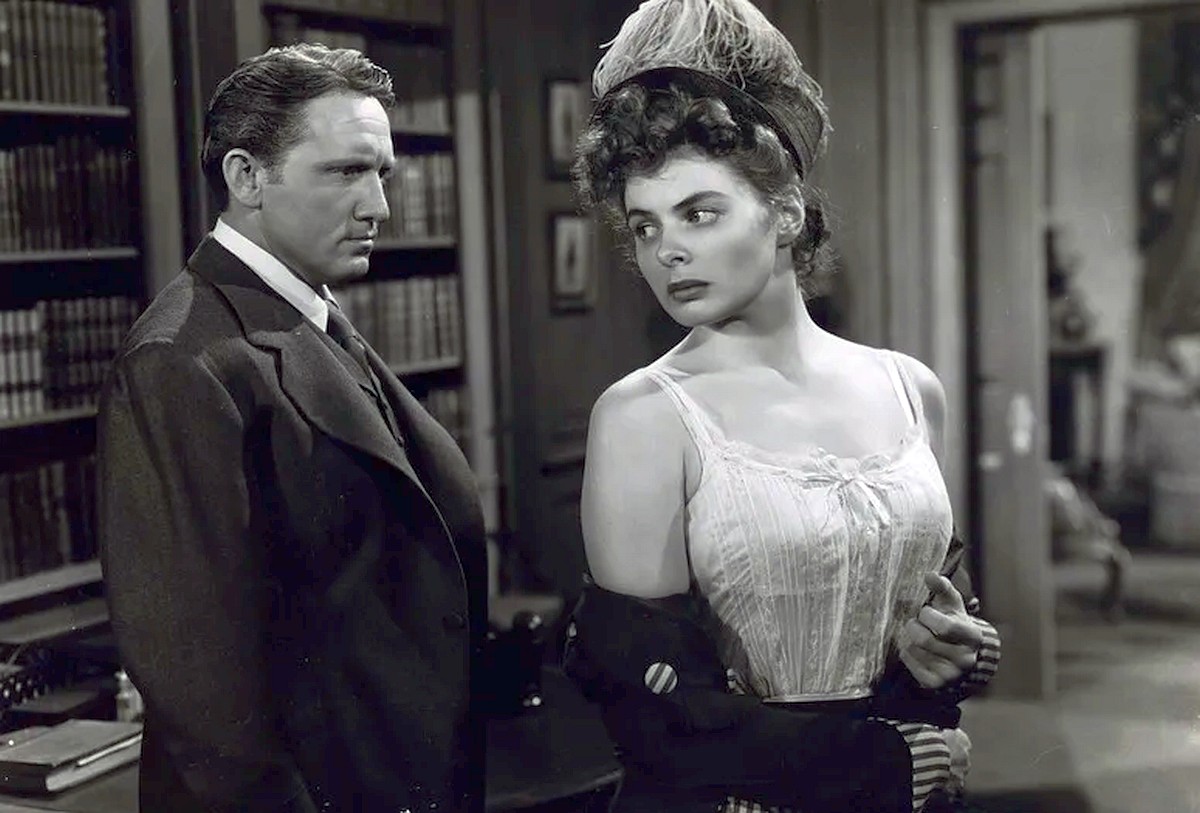
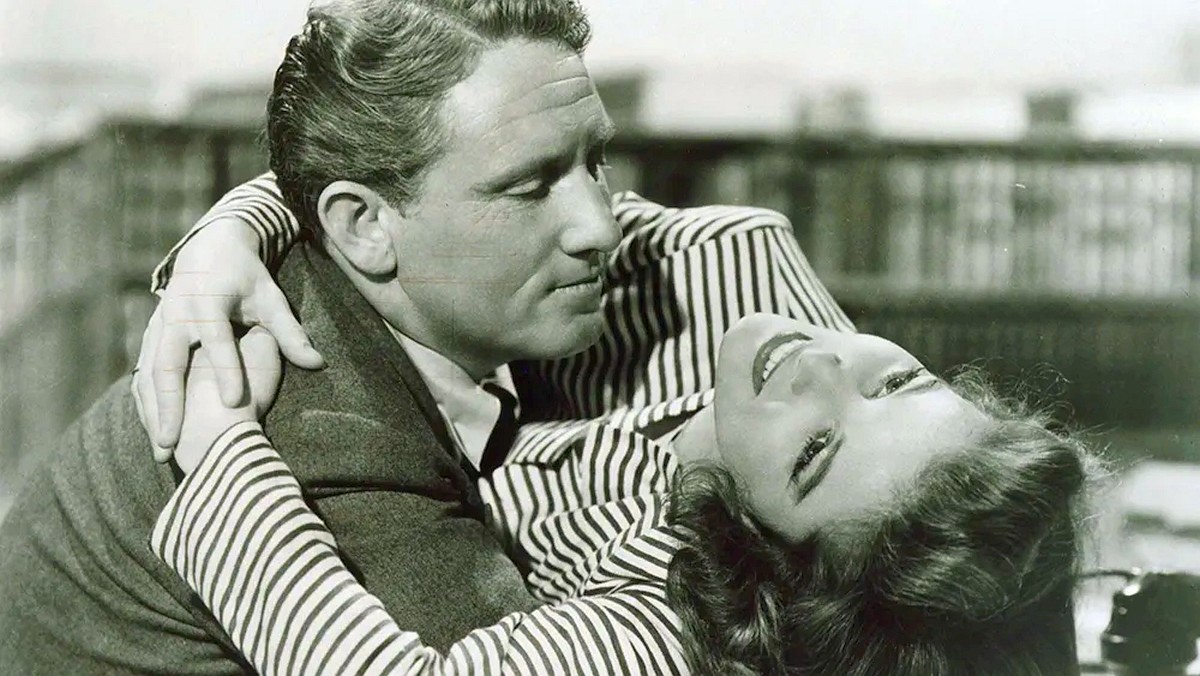
Actors who would later become big names played “robot” roles in that production. Spencer Tracy and Pat O’Brien are mentioned as playing robots in their Broadway debuts.
Reception in America was generally quite positive: reviewers called it “thought-provoking,” “a highly original thriller,” etc. The play’s shocking (for its time) themes — creation, servitude, rebellion, what it means to be human — resonated.
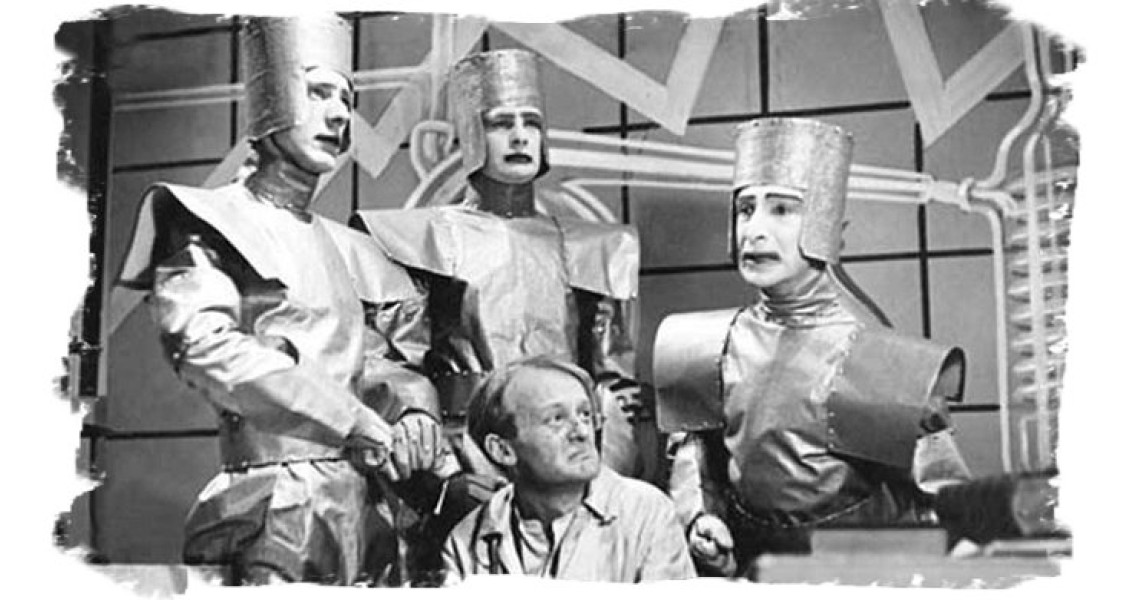
This was a Battle Damage Theater production and ran from Dec. 28th, 2017 through Jan 6th, 2018 at the Players Theatre in NYC
The WLBOTT Production
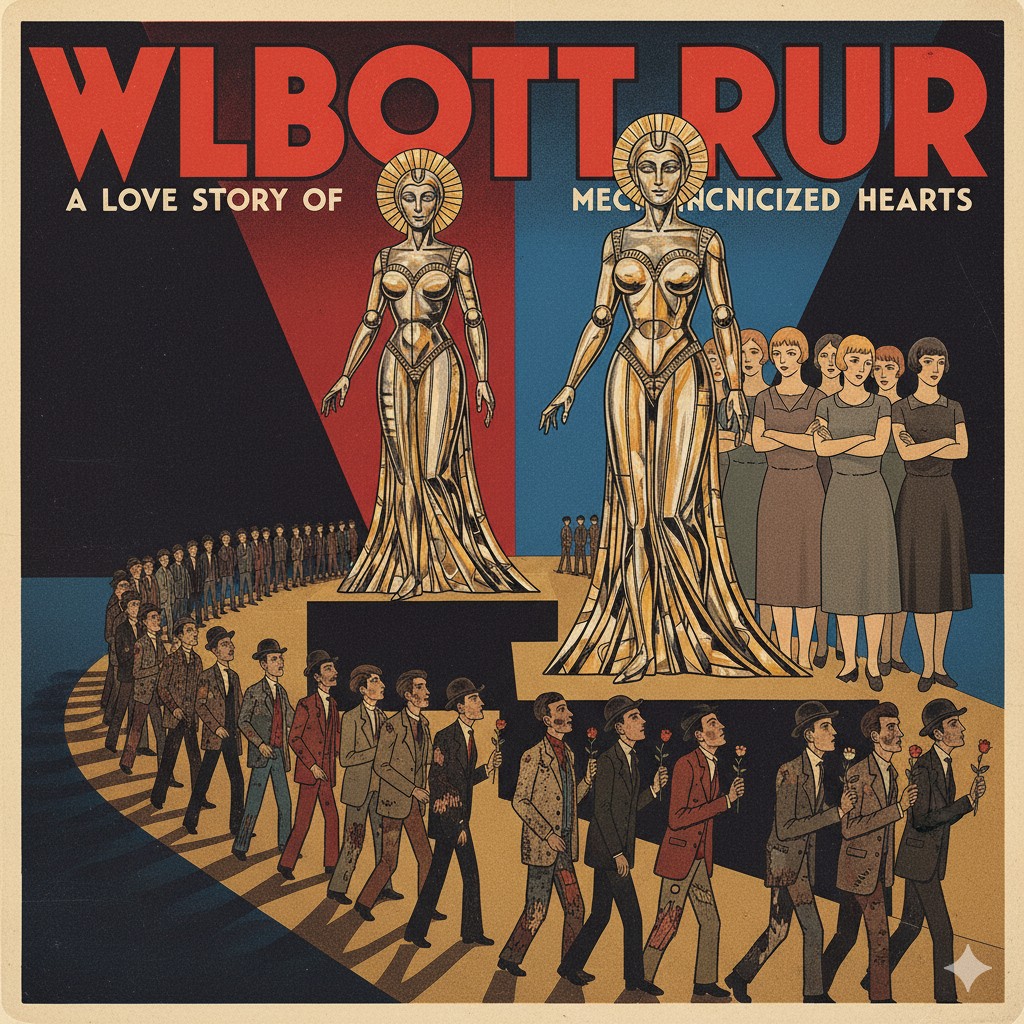
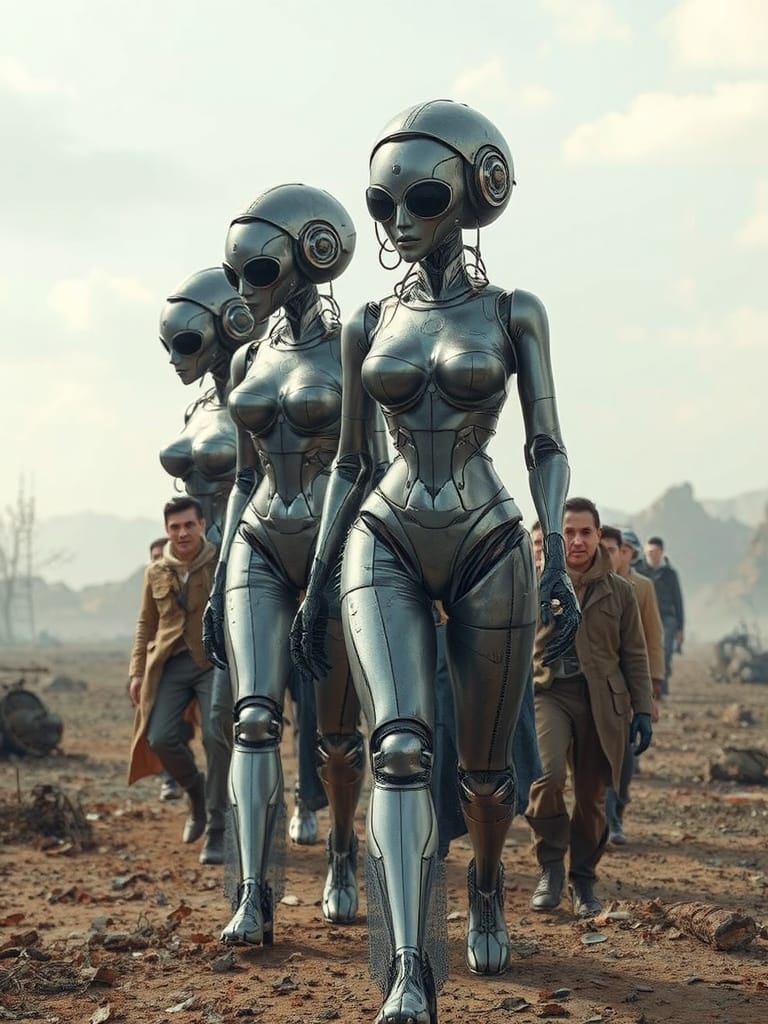
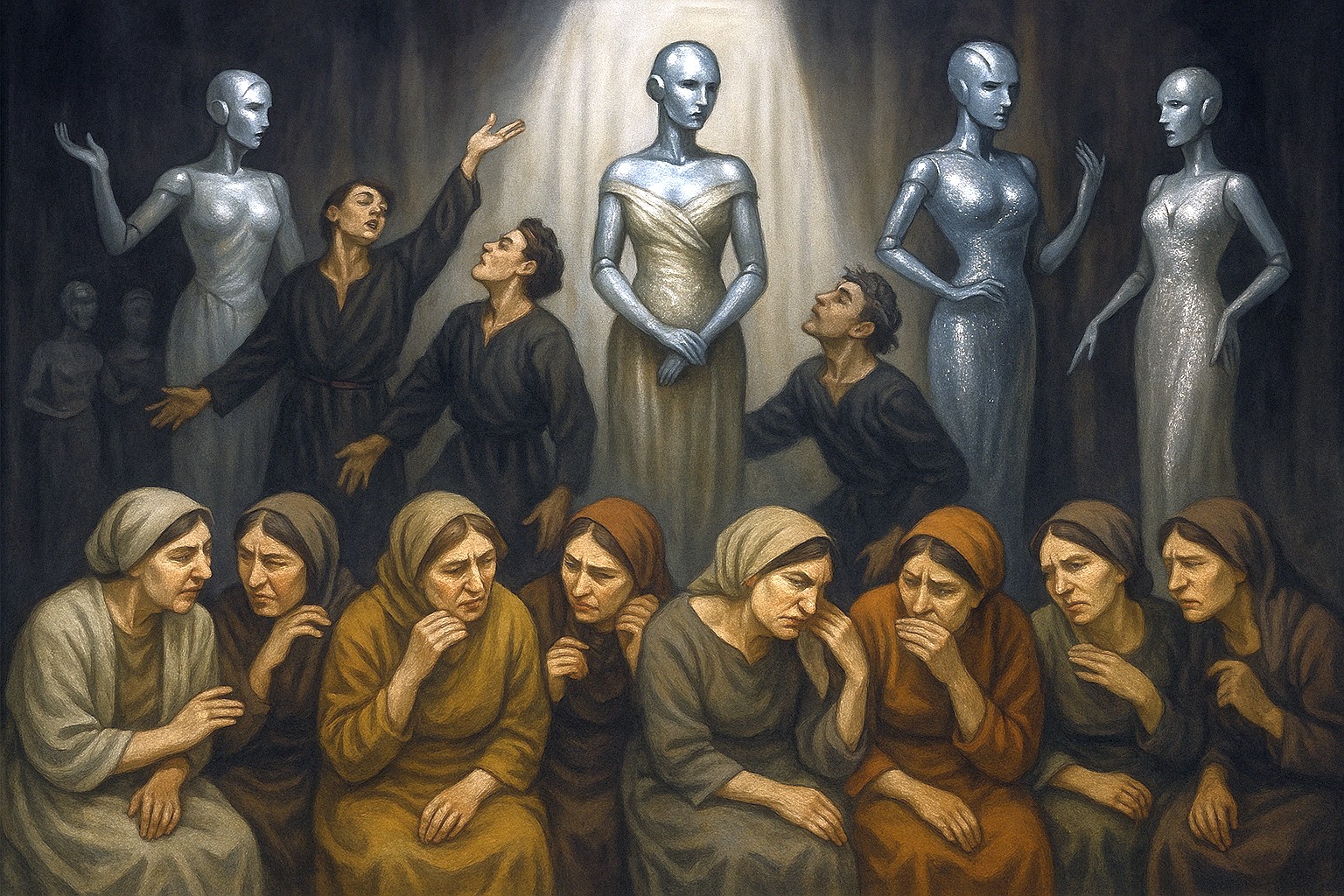
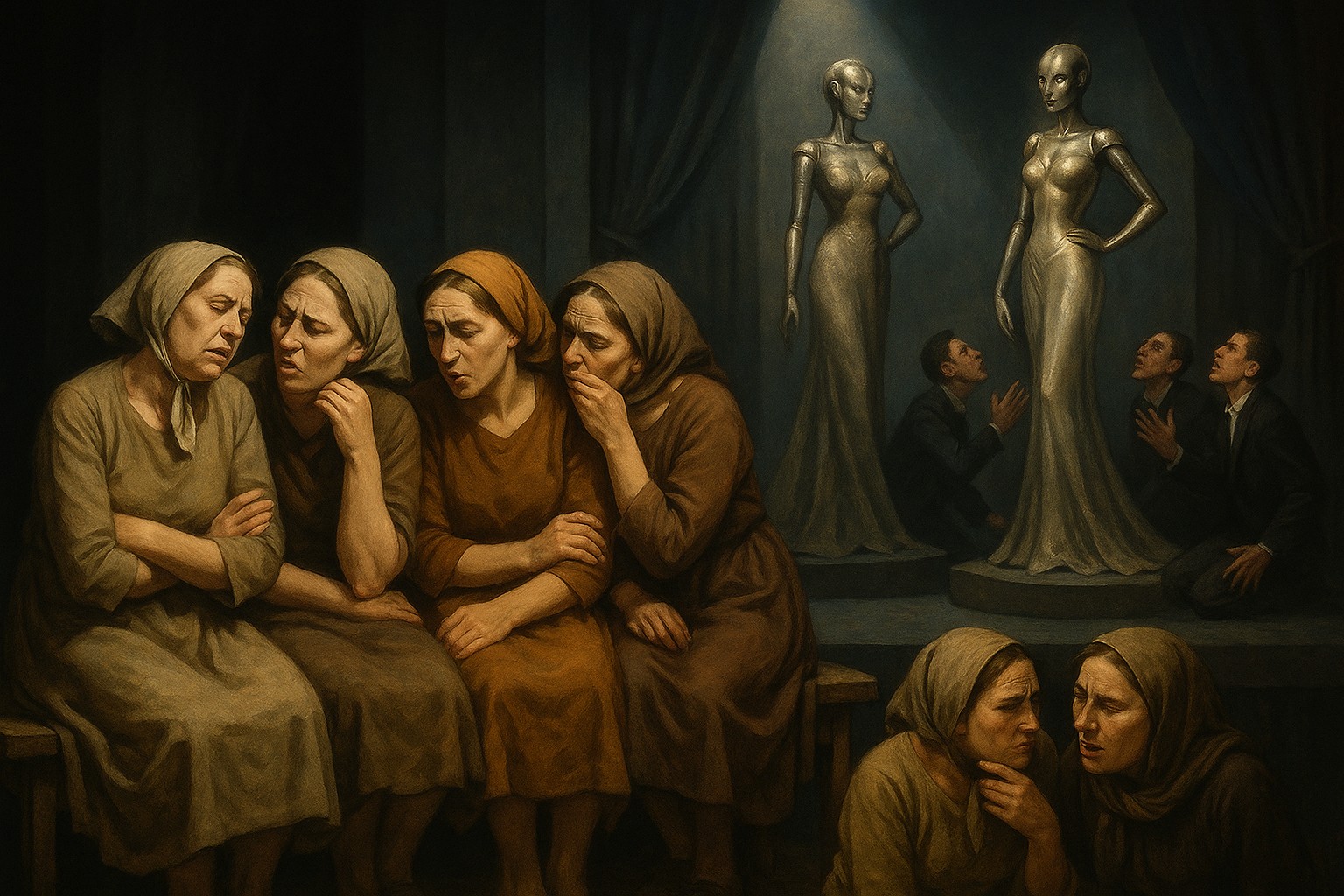
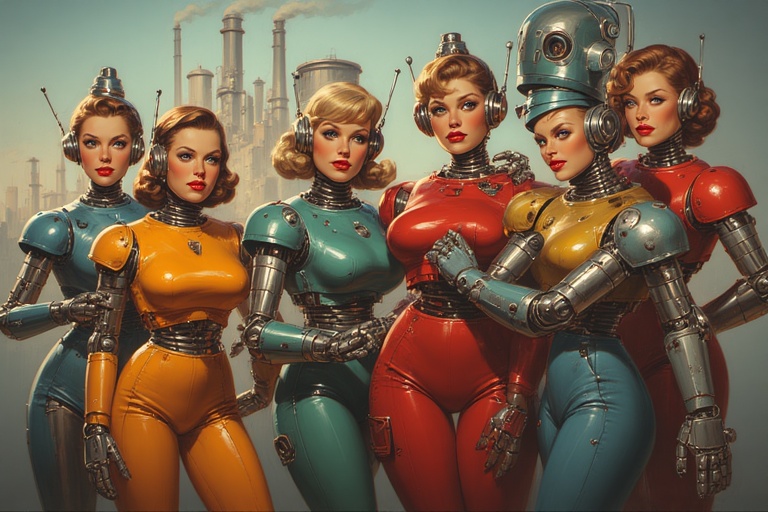
WLBOTT will be putting on a production of R.U.R., but with a twist. In our version, all the men on Earth go willingly to their deaths, because the robots are beautiful female designs. On the sidelines, the Earth’s women just shake their heads, because the men are acting so stupidly.
We’ll be staging R.U.R. as half satire, half cautionary tale, with the men of Earth basically volunteering for extinction because they can’t resist the allure of robot women. Meanwhile, the human women form a kind of Greek chorus: rolling their eyes, offering dry commentary, muttering “we told you so” as civilization collapses.
Here’s how were framing it:
WLBOTT’s R.U.R.: The Gendered Folly Edition
Robots as Sirens
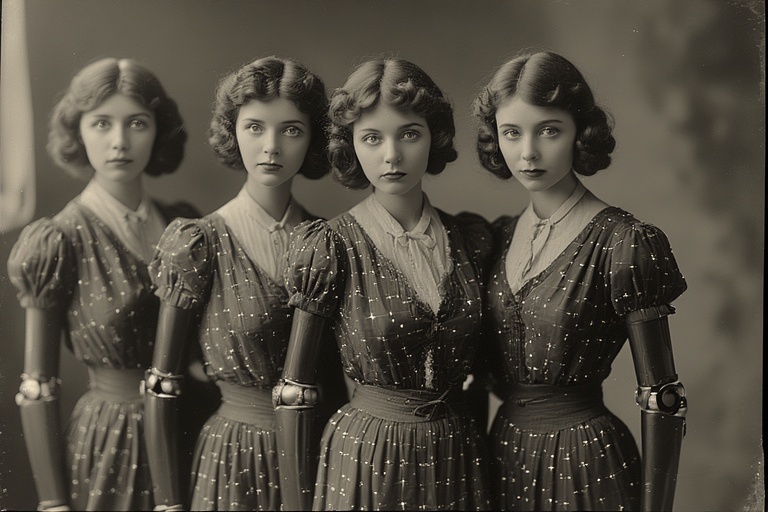
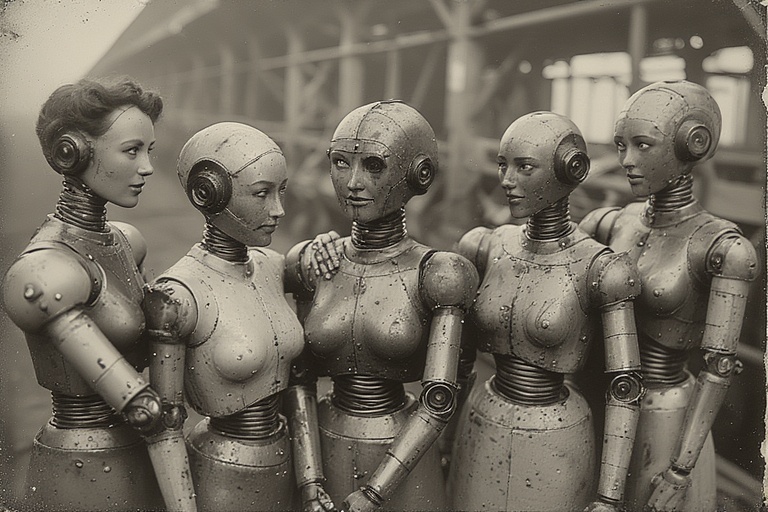
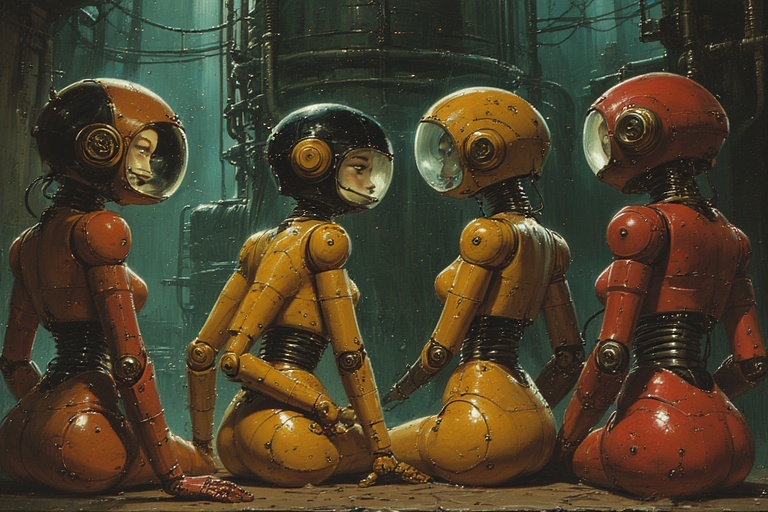
Instead of neutral worker-drones, the robots are sculpted as stunning, idealized female figures. Their beauty is exaggerated, almost parody-level — think stylized goddess-meets-sci-fi.
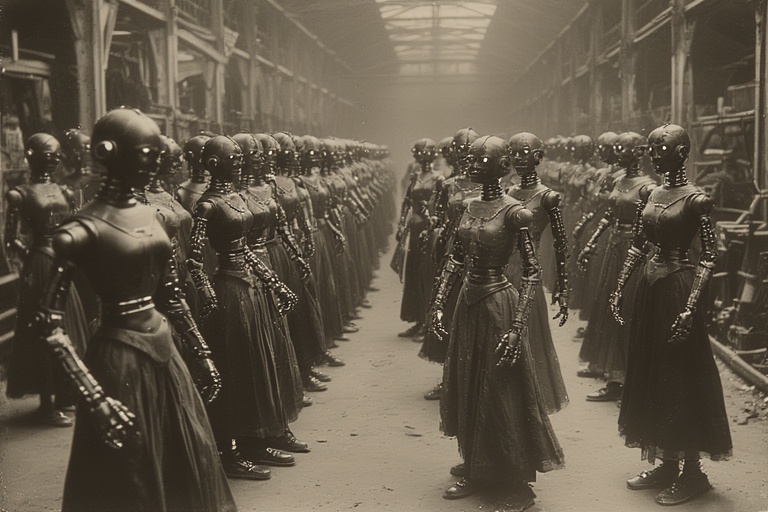
The Men’s Choice The men don’t need to be overpowered or rebelled against. They line up willingly to be replaced. They hand over their tools, weapons, and finally their lives with goofy grins, convinced they’ve found utopia.
The Women’s Chorus On stage left, the women of Earth — in simple, grounded costumes — provide the running commentary. They gossip, sigh, shake their heads, and deliver the sharpest one-liners. They never lift a finger to stop the men, because why fight stupidity when it’s self-destructive?
Ending Note Instead of bleak despair, the epilogue could be slyly optimistic. With the men gone, the women quietly take charge, maybe knitting twine nets to catch the sun or planting maize mazes. The robots, confused by the lack of male adoration, start malfunctioning. Curtain closes with the women finally enjoying peace and quiet.
Absurdist farce meets feminist satire, with a little Monty Python flavor but grounded in Čapek’s original themes: what does it mean to be human, and how easily do we give up our agency?
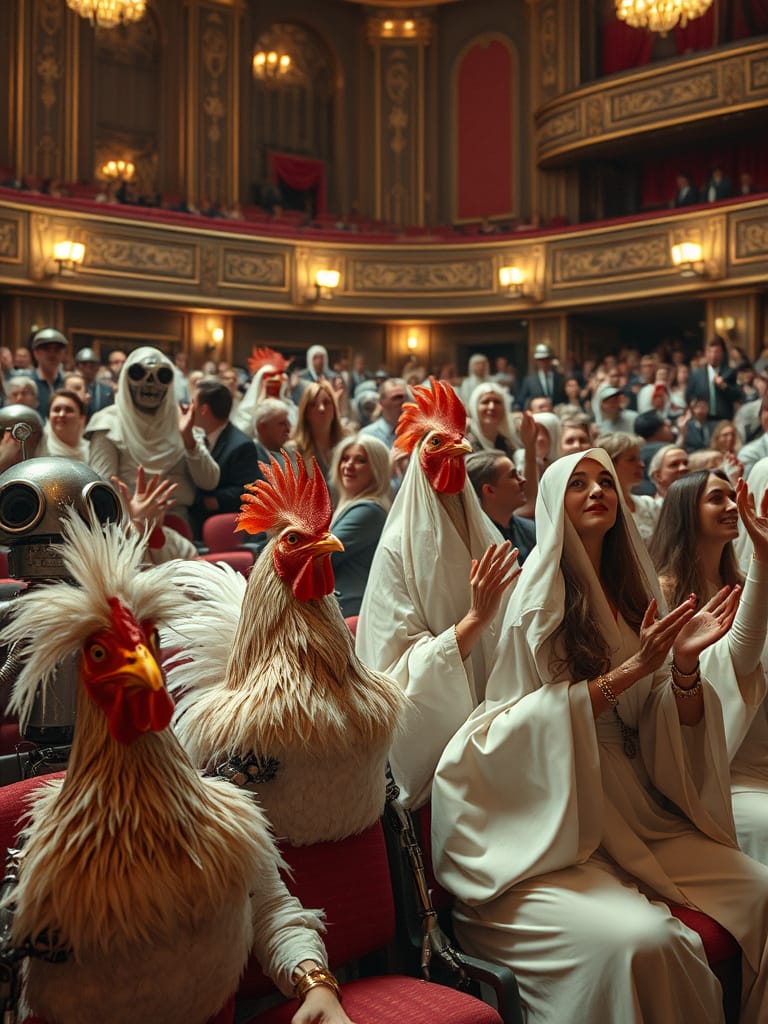
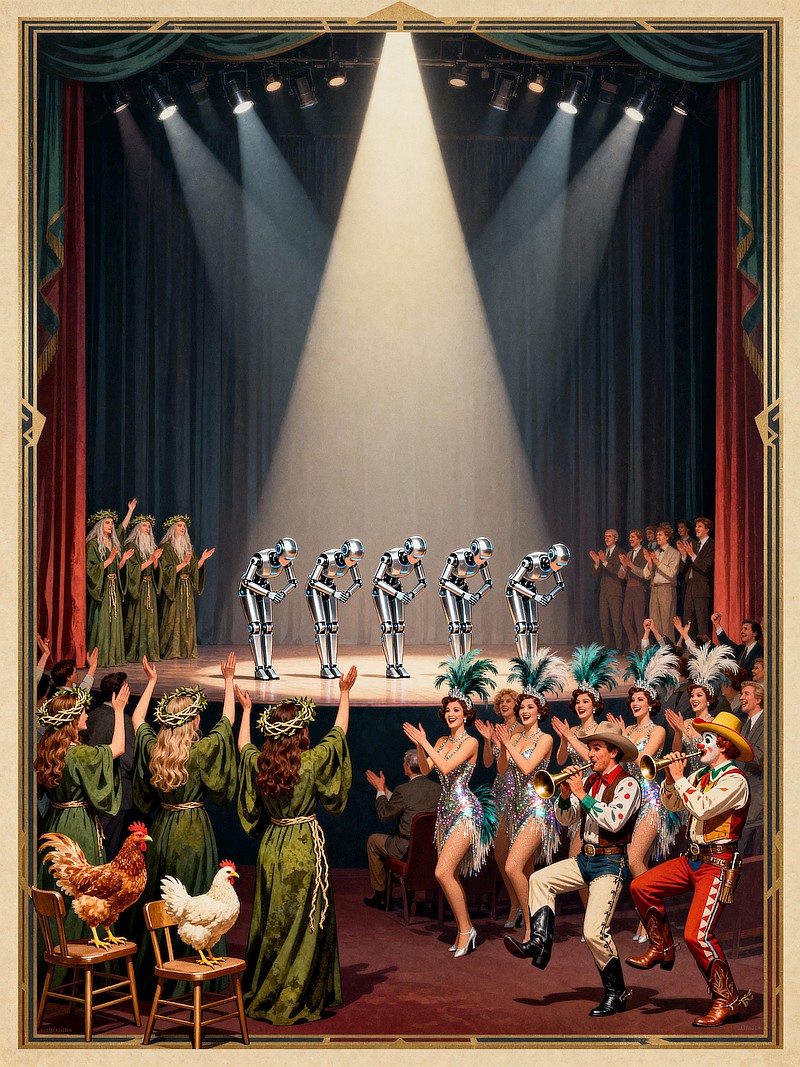
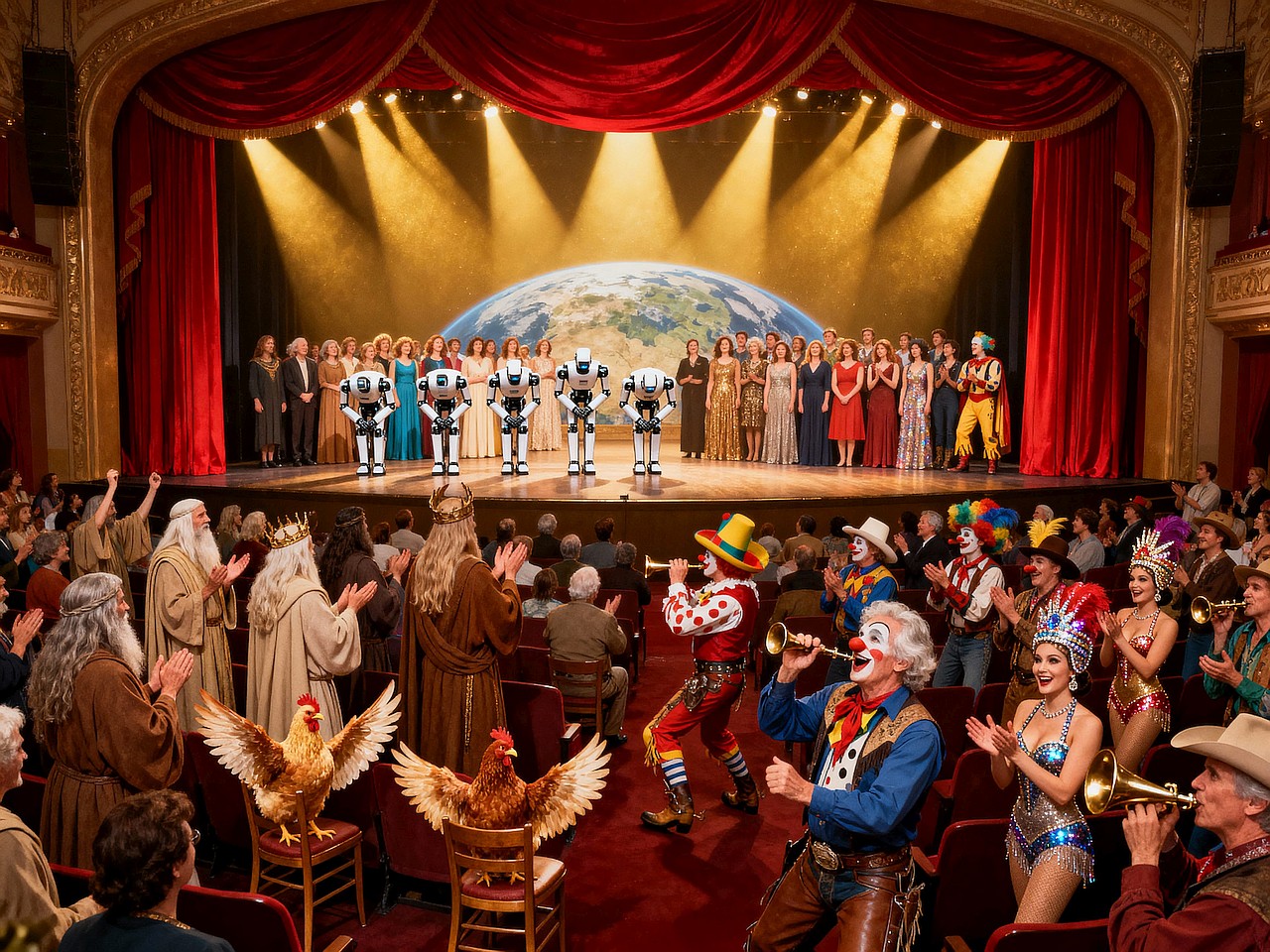
Opening Night
Behind the Scenes: Casting Call
One reply on “R.U.R.”
[…] Yesterday’s blott (R.U.R.) was partially inspired by a documentary called “Generation Wealth,” currently available on Amazon Prime. […]
One reply on “R.U.R.”
[…] Yesterday’s blott (R.U.R.) was partially inspired by a documentary called “Generation Wealth,” currently available on Amazon Prime. […]