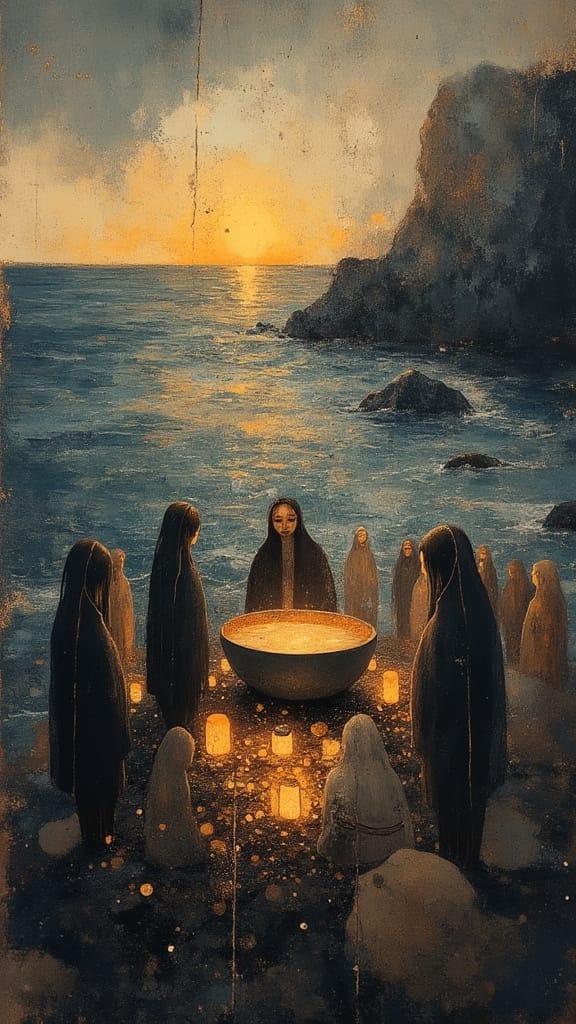
The Coming of the Ship
And in the twelfth year, on the seventh day of Ielool, the month of reaping, he climbed the hill without the city walls and looked seaward; and he beheld his ship coming with the mist.

Then the gates of his heart were flung open, and his joy flew far over the sea. And he closed his eyes and prayed in the silences of his soul.

- from The Prophet, by Kahlil Gibran
The Coming of the Ship is both the most solemn and most joyous holiday in the WLBOTT liturgical calendar.
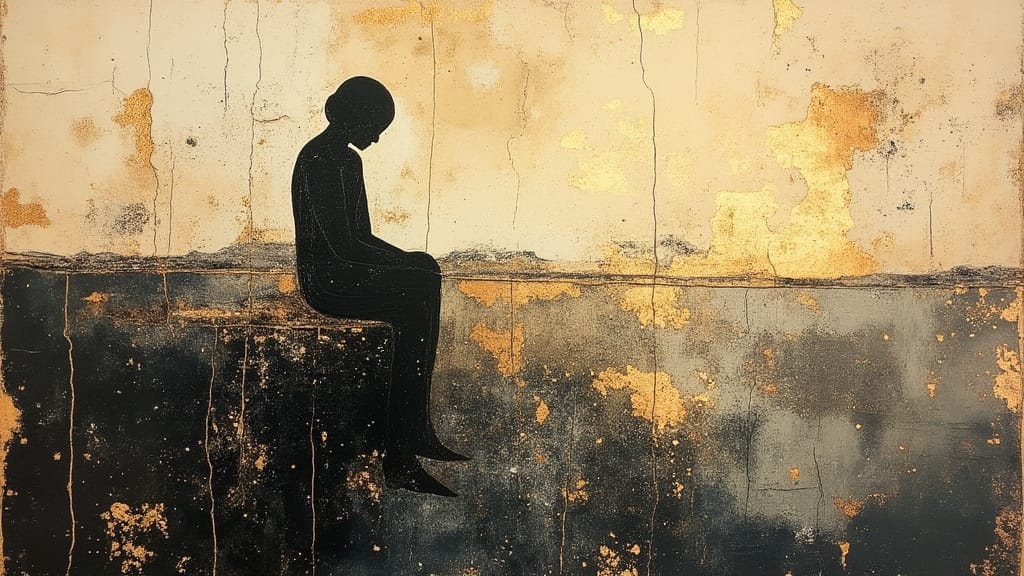
The Solemn Side
Like Ash Wednesday or Yom Kippur, The Coming of the Ship allows us to face mortality. Almustafa departs; he embraces death as return. That gives this day a weight of reflection, humility, and acknowledgment that our own ships will one day appear on the horizon.
The Joyful Side
But it’s not sorrowful. When he sees his ship, “the gates of his heart were flung open, and his joy flew far over the sea” – a pure celebration, closer to a harvest festival, a Thanksgiving of the spirit. Instead of grief, there’s gratitude for the voyage and hope in the reunion.
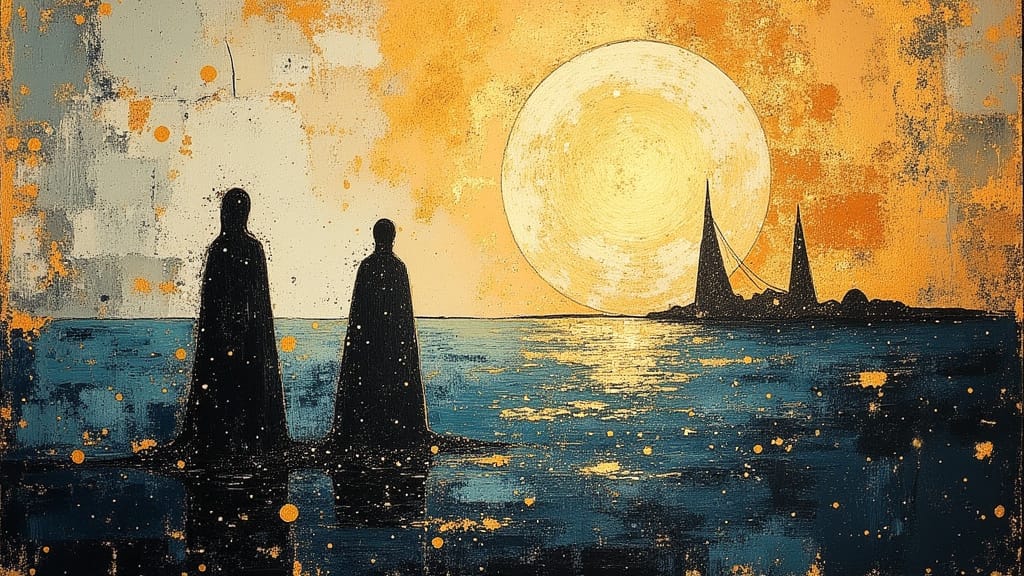
The Sea as Universal Consciousness

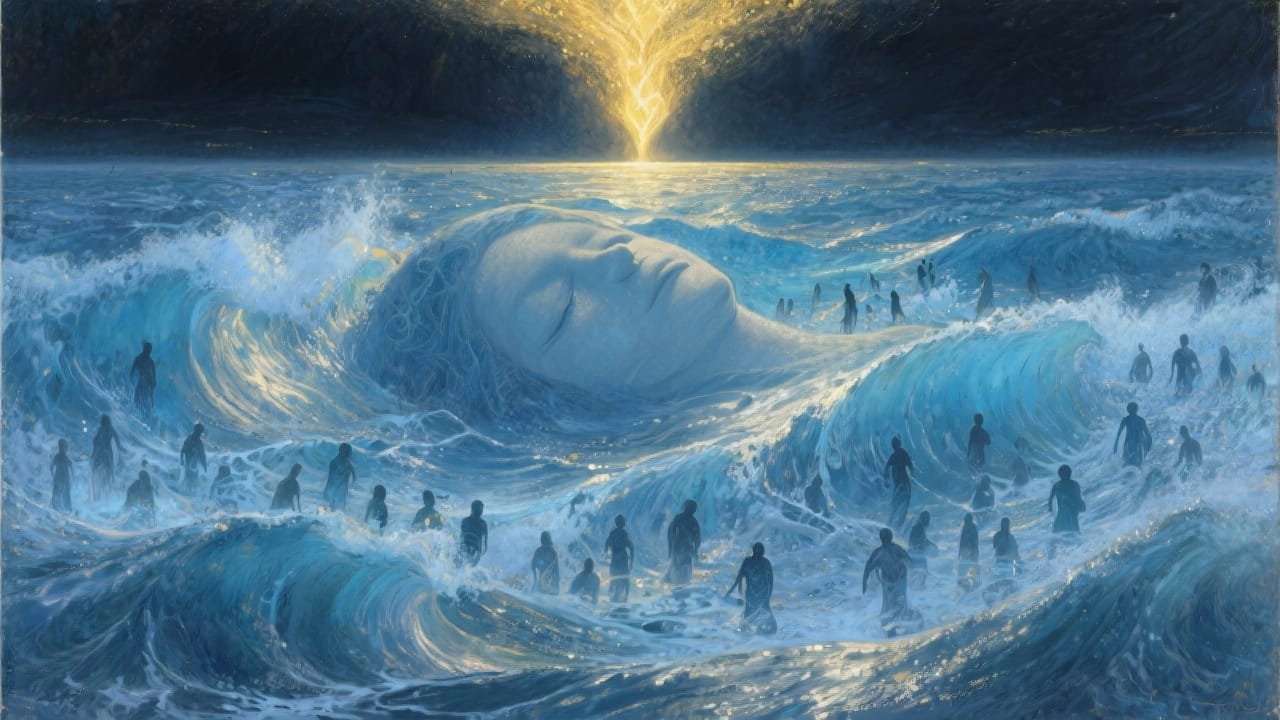
The sea is vast, eternal, and beyond human borders – symbolizing a universal spirit. When Almustafa calls it the “sleepless mother,” he suggests both origin and return: the sea as the source of all life and the place where individuality dissolves back into wholeness.
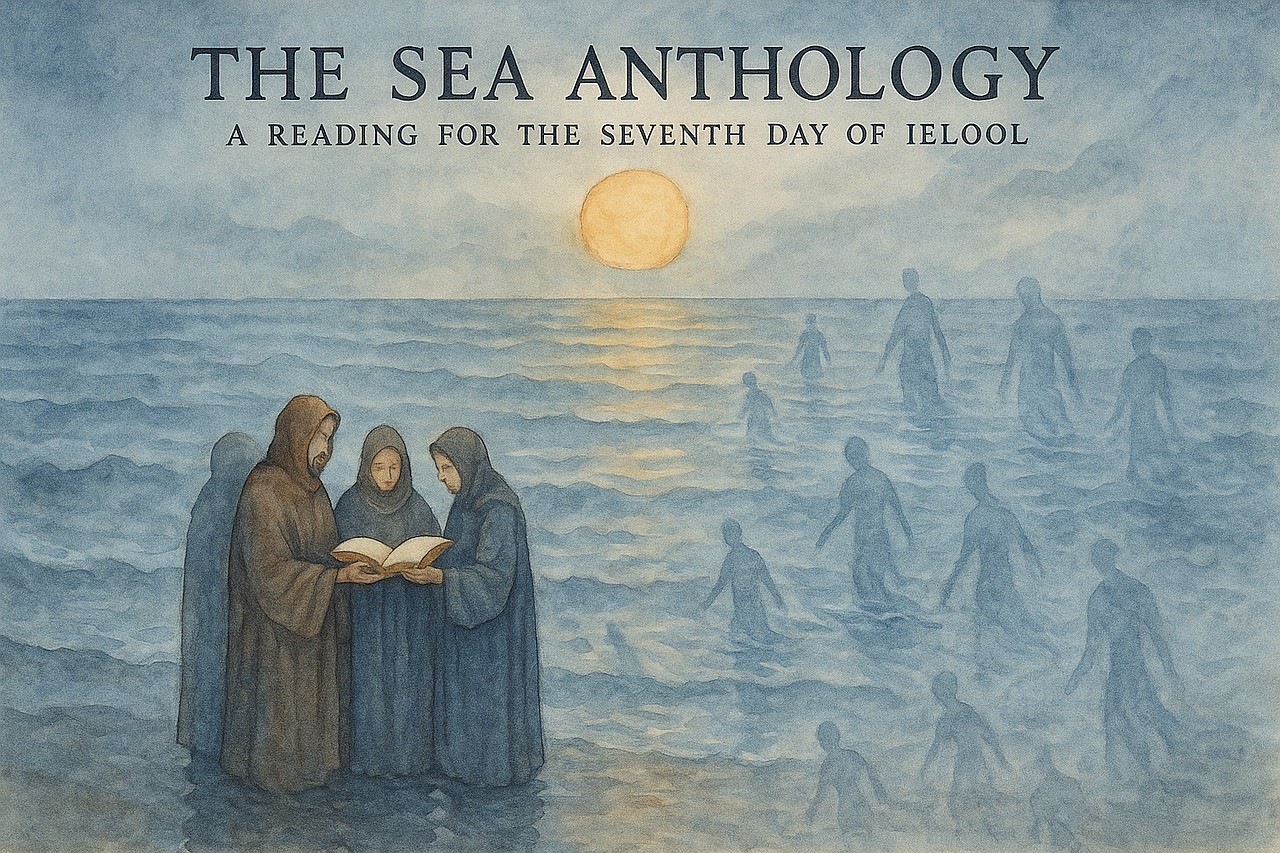
The Sea Anthology: A Reading for the Seventh Day of Ielool
Reader:
The sea that calls all things unto her calls me, and I must embark.
Gathered:
All rivers return to the sea; all hearts return to the great heart.
Reader:
For to stay, though the hours burn in the night, is to freeze and crystallize and be bound in a mould.
Gathered:
Life is a mist in the morning, a cloud at noonday, a dew in the evening.
Reader:
And then shall I come to you, a boundless drop to a boundless ocean.


Gathered:
We are drops of the ocean, flowing home.
Reader:
For what is it to die but to stand naked in the wind and to melt into the sun?
Gathered:
To cease breathing is to free the breath, that it may rise and expand and seek God unencumbered.
Reader:
The sea is sleepless mother, and she waits for her children.
Gathered:
We come as rivers, as streams, as mists—yet always we return.
Reader:
Let the gates of the heart be flung open; let joy fly far over the sea.
Gathered:
For the sea calls, and we are ready.
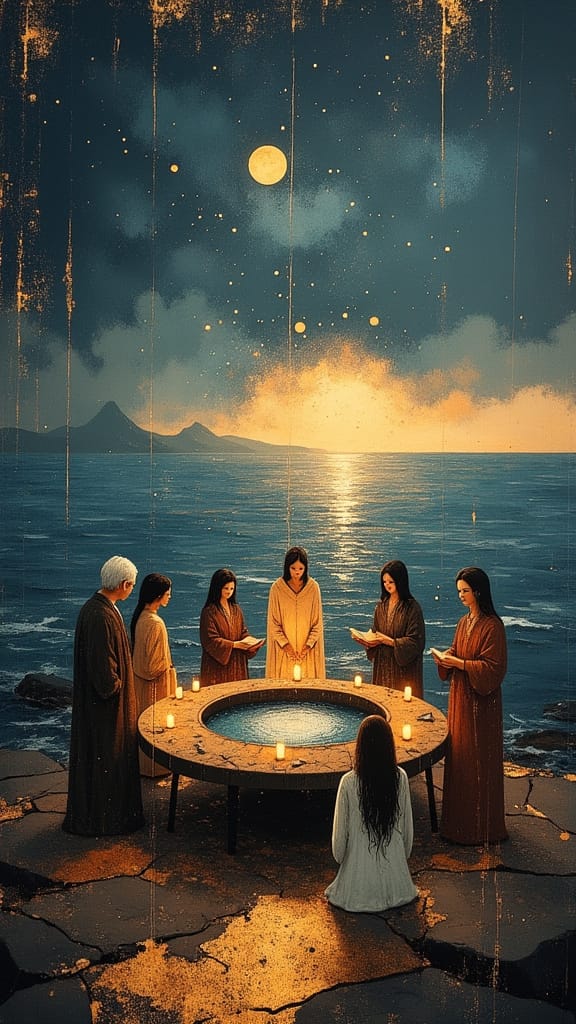
Meditation of Departure
Reader:
“Yet I cannot tarry longer.
The sea that calls all things unto her calls me, and I must embark.”
Silence is kept for a breath, like the pause before a tide turns.
Reader:
We do not choose the hour of our departure,
nor can we hold back the tide.
The sea calls all things—
the leaf that falls,
the river that winds,
the heart that has ripened in its season.
Gathered:
We are travelers, and this world is our shore.
Reader:
To depart is not to vanish,
but to set sail.
To yield the self is to be gathered home,
a single drop returning to the boundless ocean.
Gathered:
We go forth, as Almustafa, not in fear but in readiness.
Reader:
Let us honor the call,
the sleepless mother who awaits,
the sea that receives all streams.
And when our own hour comes,
may we embark with joy,
the gates of our hearts flung wide.
Gathered:
For the sea calls, and we will answer.