Gentle People, if you are like the staff at WLBOTT, you probably spend several hours a day memorizing large prime numbers.
Last night we came across a doozy….
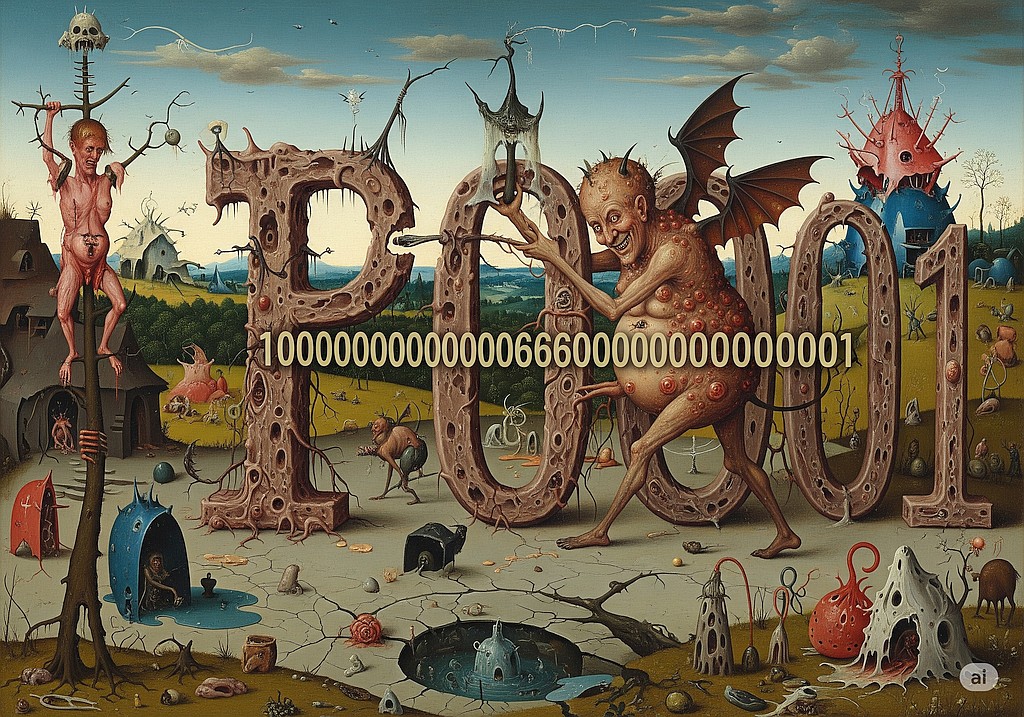
1000000000000066600000000000001
1-0000000000000-666-0000000000000-1
One, followed by 13 zeros, followed by 666, followed by 13 zeros, followed by a one.
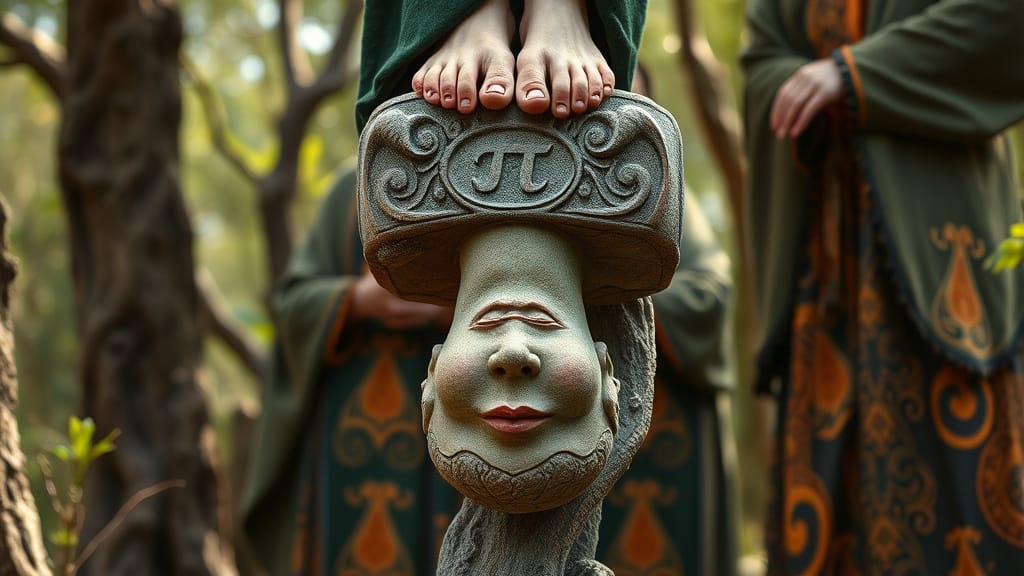
The number is also a palindromic prime (same forward and back). The prime is called Belphegor’s Prime, named after one of the seven Christian demons in Hell. It has its own symbol – the upside down Greek letter pi.
Sounds like a blott-worthy topic. My peeps, if you’d like to create epic poems, haiku, slam poetry, abstract pinatas, gluten-free recipes, OSHA / ISO standards, etc, around Belphegor’s Prime, send them to seriousInquiriesOnly@WLBOTT.com.
Belphegor’s Prime Belphegor’s prime is the palindromic prime number 1000000000000066600000000000001 (1030 + 666 × 1014 + 1), a number which reads the same both backwards and forwards and is only divisible by itself and one.
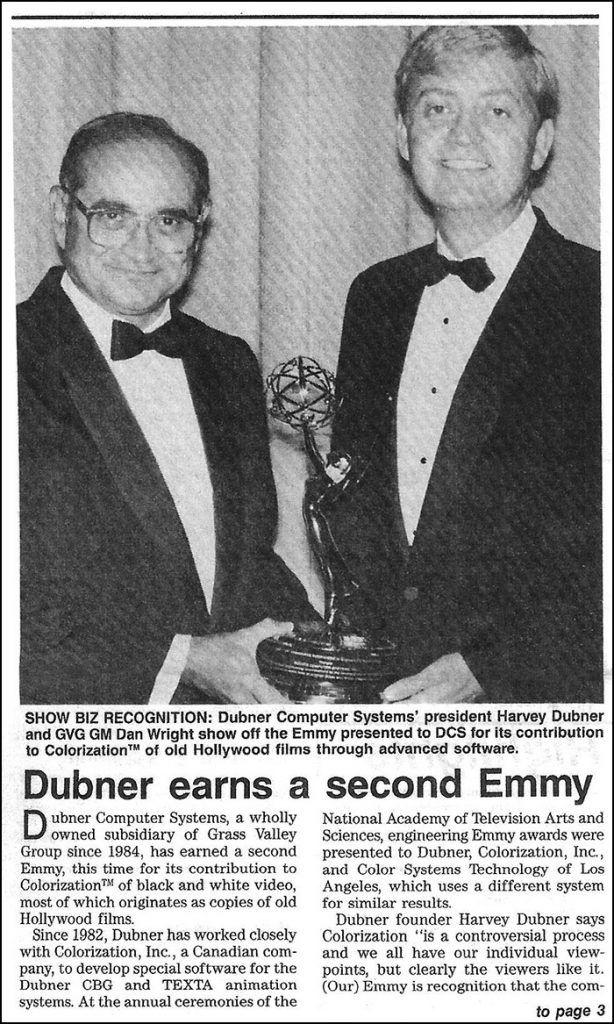
History Belphegor’s prime was first discovered by Harvey Dubner, a mathematician known for his discoveries of many large prime numbers and prime number forms. For Belphegor’s prime in particular, he discovered the prime while determining a sequence of primes it belongs to.
The name “Belphegor’s prime” was coined by author Clifford A. Pickover in 2012.
Belphegor is one of the Seven Princes of Hell; specifically, “the demon of inventiveness”. The number itself contains superstitious elements that have given it its name: the number 666 at the heart of Belphegor’s prime is widely associated as being the number of the beast, used in symbolism to represent one of the creatures in the apocalypse or, more commonly, the devil. This number is surrounded on either side by thirteen zeroes and is 31 digits in length (thirteen reversed), with thirteen itself long regarded superstitiously as an unlucky number in Western culture.
Mathematics A Belphegor number is a palindromic number in the form of
1 (0…) 666 (0…) 1
The sequence of the first four Belphegor numbers is:
16661, 1066601, 100666001, 10006660001, …
Dubner noticed that 16661 is a prime number. By adding zeroes directly on both sides of the 666, Dubner found more palindromic prime numbers, including the Belphegor prime, which is second in the sequence. This sequence eventually became the Belphegor primes, named after the number. The number of zeroes on each side of the 666 in the first few Belphegor primes is:
0, 13, 42, 506, 608, 2472, 2623, 28291, 181298, …
Belphegor’s prime contains 13 zeroes on either side of the central 666, and thus corresponds to the second number in this sequence.
Limerick
Belphegor is known as the demon of Sloth
He is fond of calculating primes while wearing a black loincloth
His devotees are ignorant of numbers prime
They skipped math class all the time
To worship at the altar of Belphegor while dressed in Goth

Haiku
Belphegor loves math
He studies all prime numbers
But he’s known for Sloth
Elder G, help us out here. What about these demons?
Elder G: Ah, the seven Christian demons—that’s a thread that winds through theology, folklore, and a fair bit of medieval imagination. The idea comes from attempts to map the Seven Deadly Sins (pride, greed, lust, envy, gluttony, wrath, sloth) onto specific demonic figures. Different writers and traditions have drawn the lines differently, but one influential version comes from Peter Binsfeld (a 16th-century German bishop and demonologist). His demon–sin correspondences look like this:
The Seven Demons of the Deadly Sins
Lucifer → Pride Once the highest angel, now fallen for wanting to be like God. His pride became the archetype.
Mammon → Greed Associated with wealth, material obsession, and hoarding treasure. Sometimes imagined as a fat, miserly demon.
Asmodeus → Lust A figure from Jewish and Christian demonology (appears in the Book of Tobit). Often tied to lust and carnal desire.
Leviathan → Envy The sea monster of the Old Testament, representing jealousy, spite, and destructive envy.
Beelzebub → Gluttony Sometimes called “Lord of the Flies.” In this schema, linked to excessive appetite, both literal and figurative.
Satan → Wrath The adversary, whose rage against humanity and God embodies destructive anger.
Belphegor → Sloth The very demon you met last night via his prime number! He tempts humans with laziness, shortcuts, and clever but corrupt inventions.
Semi-sequitur: Peter Binsfeld
Quite the handsome devil, but a horrible, evil person.
Rumor has it that he is preparing a guest suite for James Dobson.
Peter Binsfeld (c. 1540 – 1598 or 1603) was a German auxiliary bishop and theologian.
Peter, a son of a farmer and craftsman, was born in the village of Binsfeld in the rural Eifel region, located in the modern state of Rhineland-Palatinate; he died in Trier as a victim of the bubonic plague. Binsfeld grew up in the predominantly Catholic environment of the Eifel region.
Education and career Considered by a local abbot to be a very gifted boy, Peter Binsfeld was sent to Rome for study.
After completing his studies, Binsfeld returned to his home region and became a prominent figure in the anti-Protestant Counter-Reformation of the late 16th century. He was elected auxiliary bishop of Trier and became a well-known writer on theology, who achieved notoriety as one of the most prominent witch hunters of his time.
The Witch Trials of Trier The Witch Trials of Trier took place in the independent Catholic diocese of Trier in the Holy Roman Empire in present day Germany between 1581 and 1593, and were perhaps the largest documented witch trial in history in view of the executions. They formed one of the four largest witch trials in Germany alongside the Fulda witch trials, the Würzburg witch trial, and the Bamberg witch trials.[1]
The persecutions started in the diocese of Trier in 1581 and reached the city itself in 1587, where they were to lead to the death of about 368 people – possibly the largest mass execution in Europe in peacetime.
[Archbishop] Johann von Schönenberg […] ordered the purging of three groups in society; first he rooted out the Protestants, then the Jews, and then the witches: three stereotypes of nonconformity.