Yesterday we learned that German mathematician Emmy Noether taught at one of the Seven Sisters colleges, Bryn Mawr College in Pennsylvania.
Let’s take a look at the Seven Sisters Colleges, and, most importantly, which college has the best dorm cafeteria.
The Seven Sisters are a group of seven private liberal arts colleges in the Northeastern United States that are historically women’s colleges. Barnard College, Bryn Mawr College, Mount Holyoke College, Smith College, and Wellesley College are still women’s colleges. Vassar College became coeducational in 1969 and Radcliffe College’s undergraduate functions were absorbed in 1999 by Harvard College, also continuing on as the Harvard Radcliffe Institute.
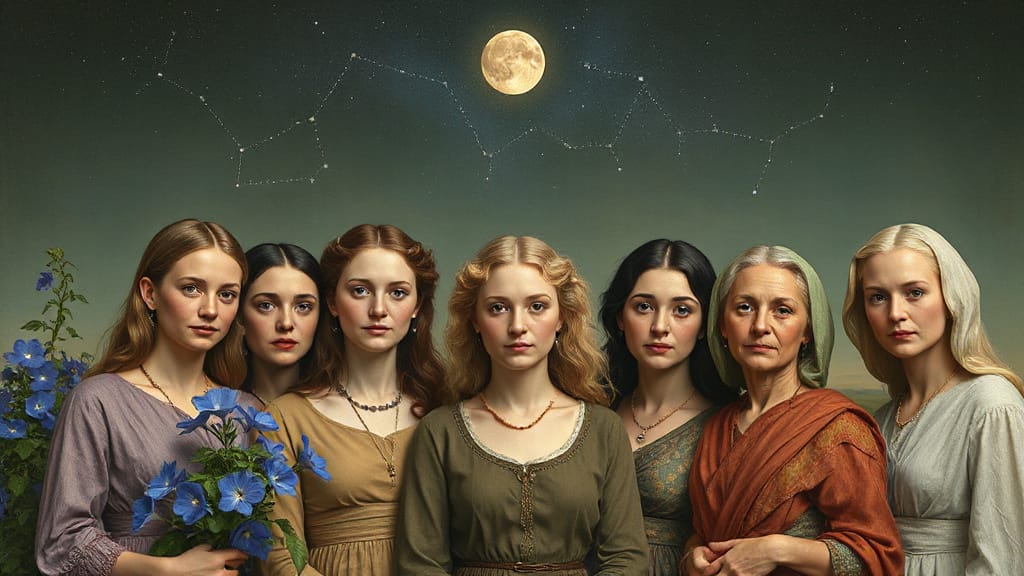
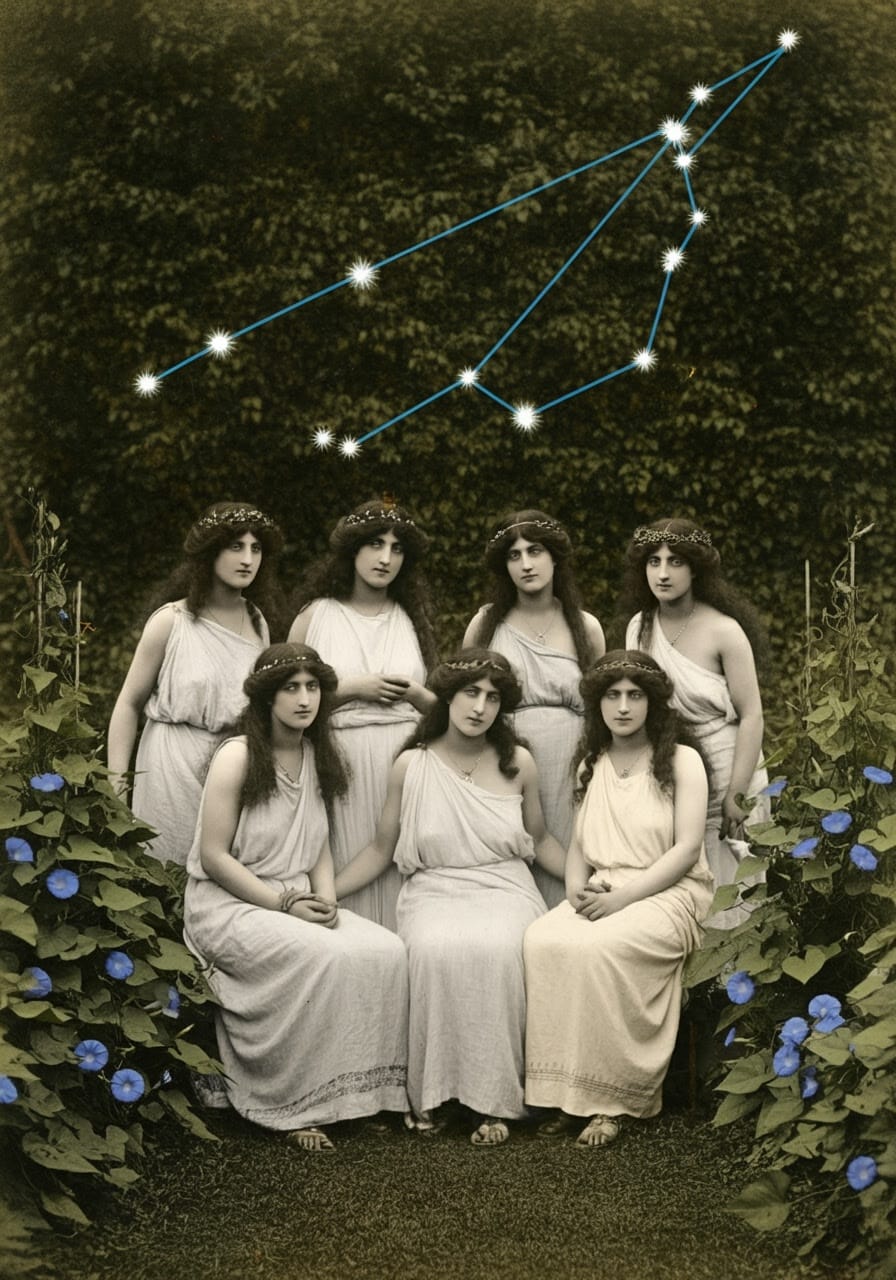
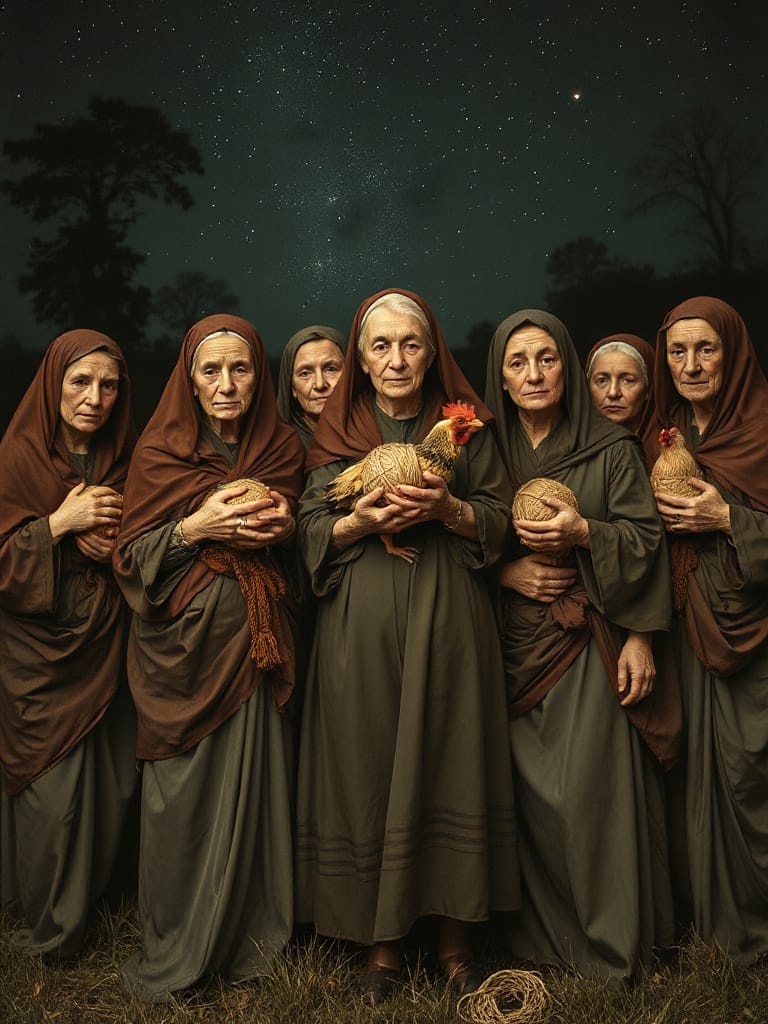
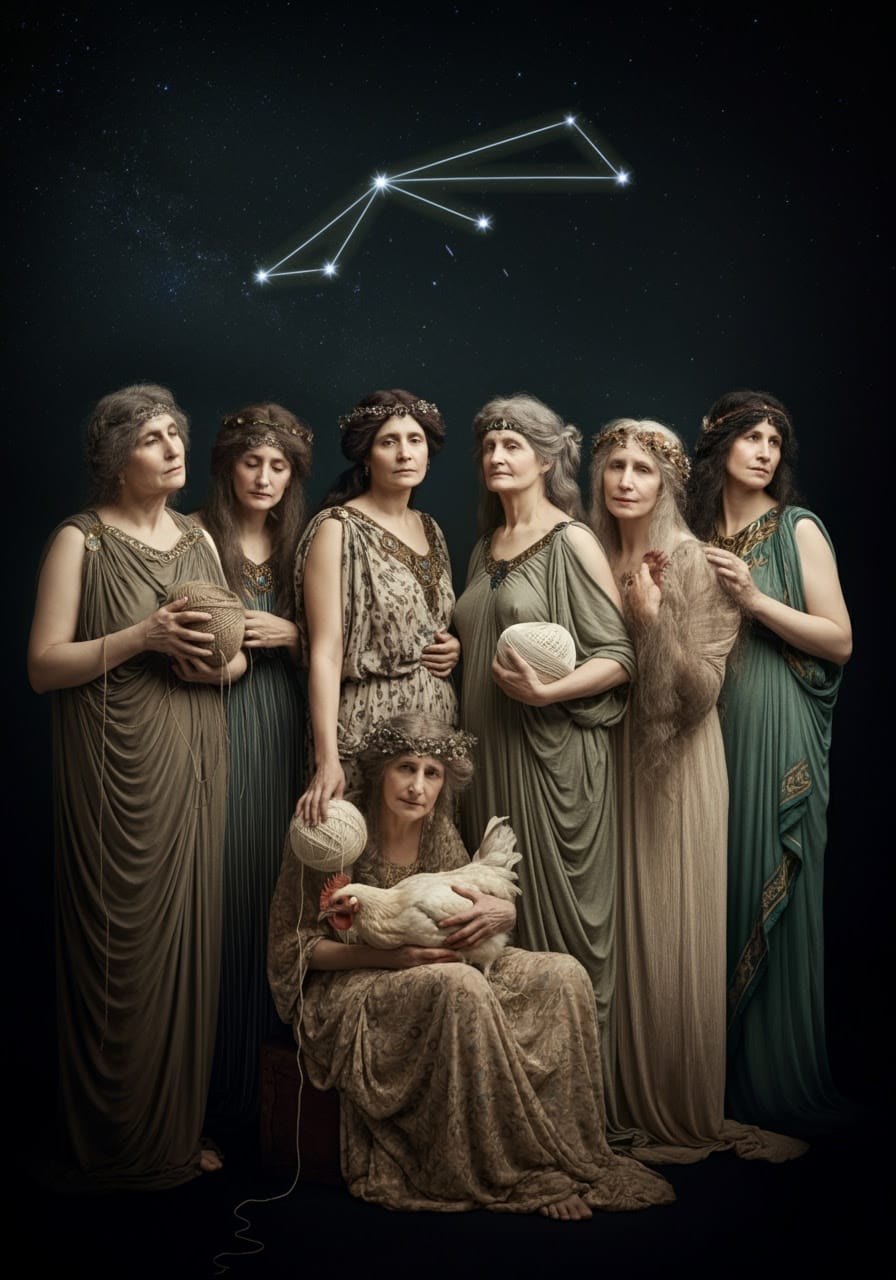
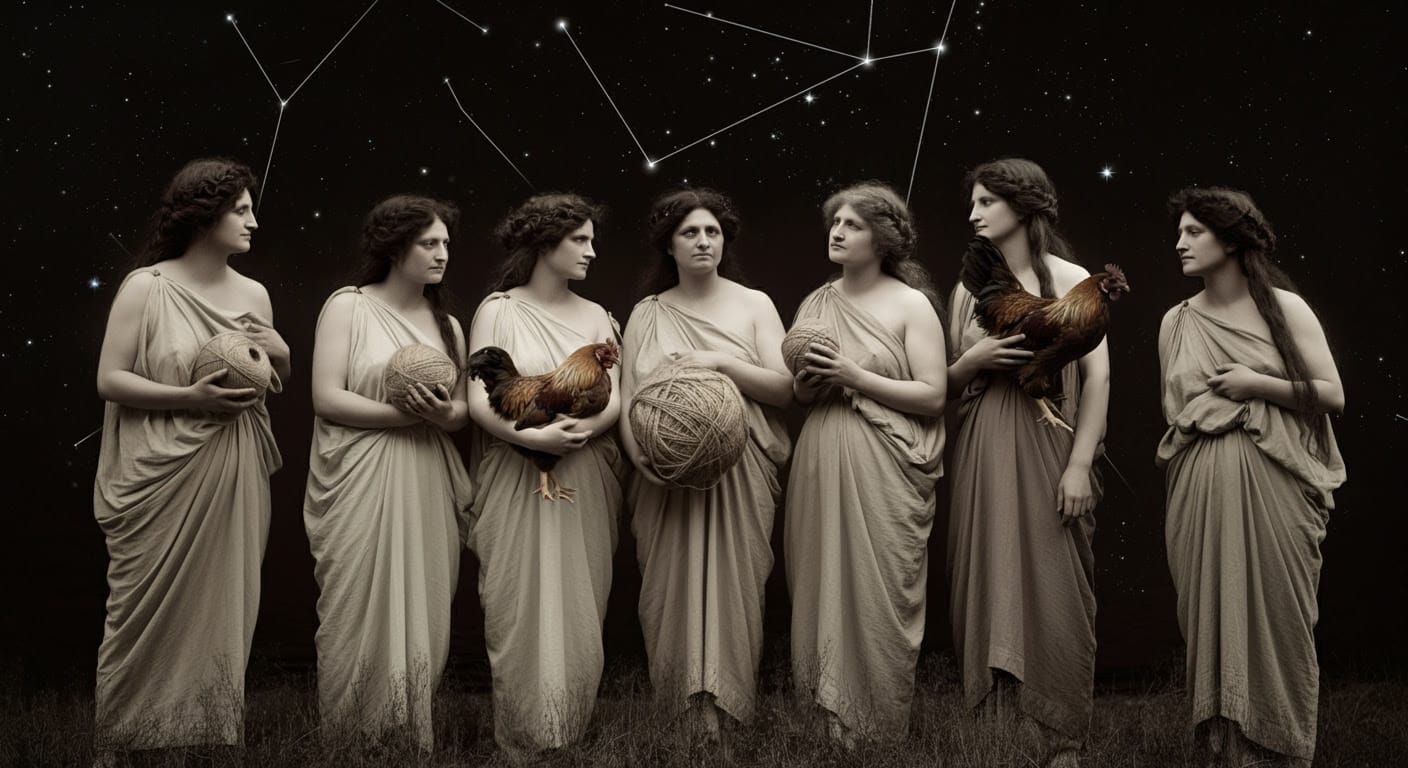
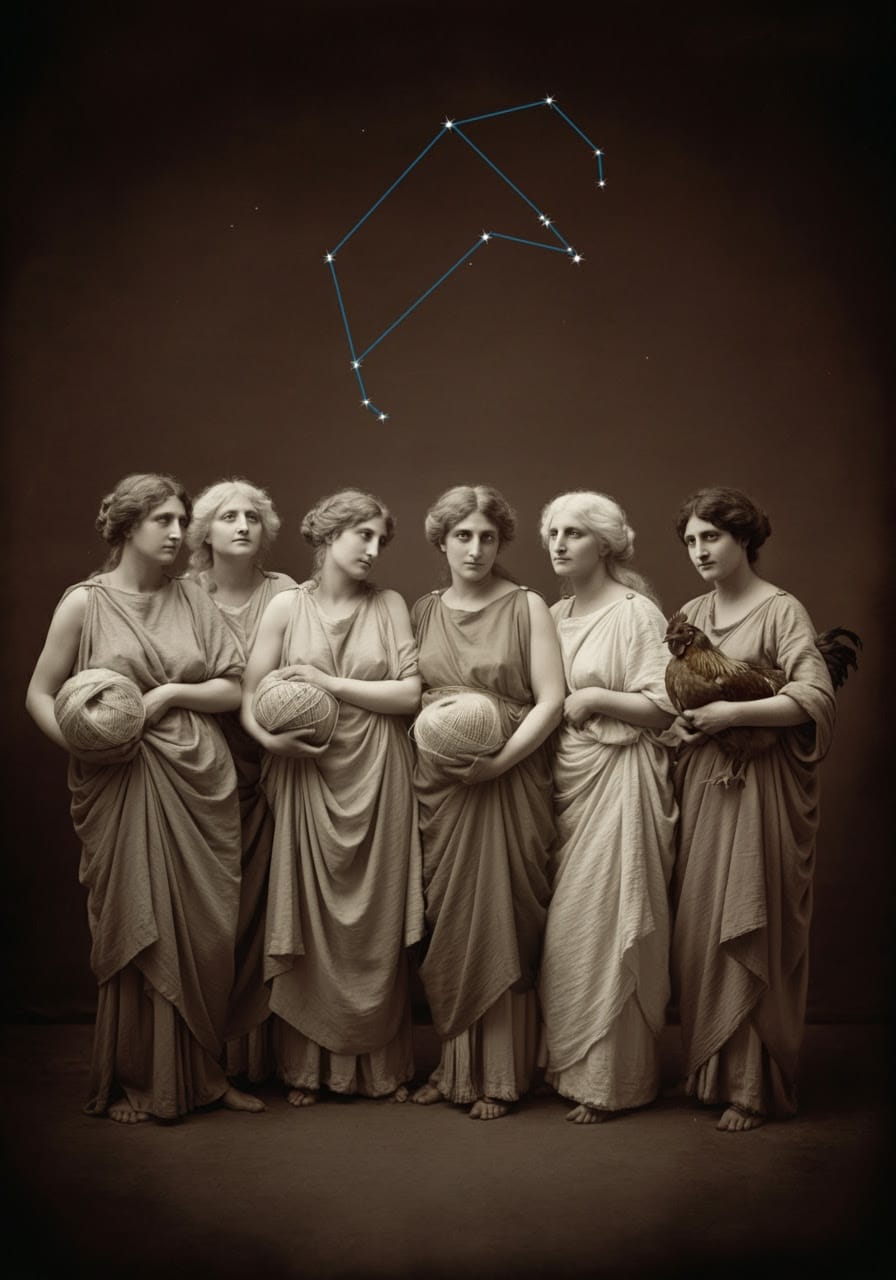
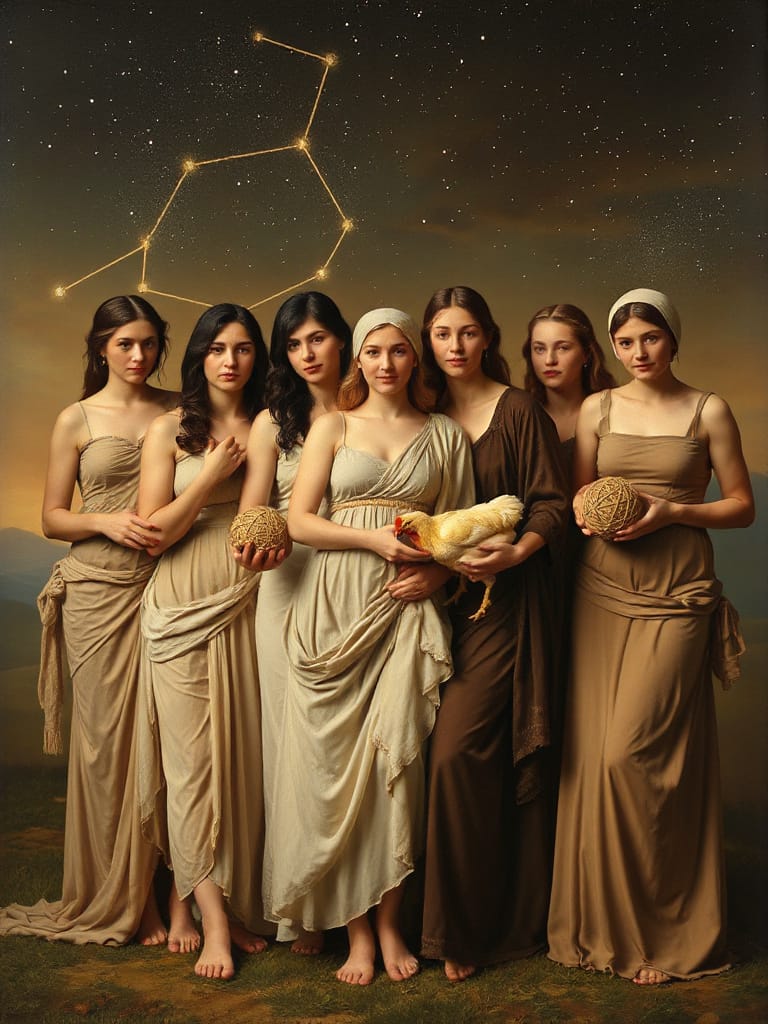
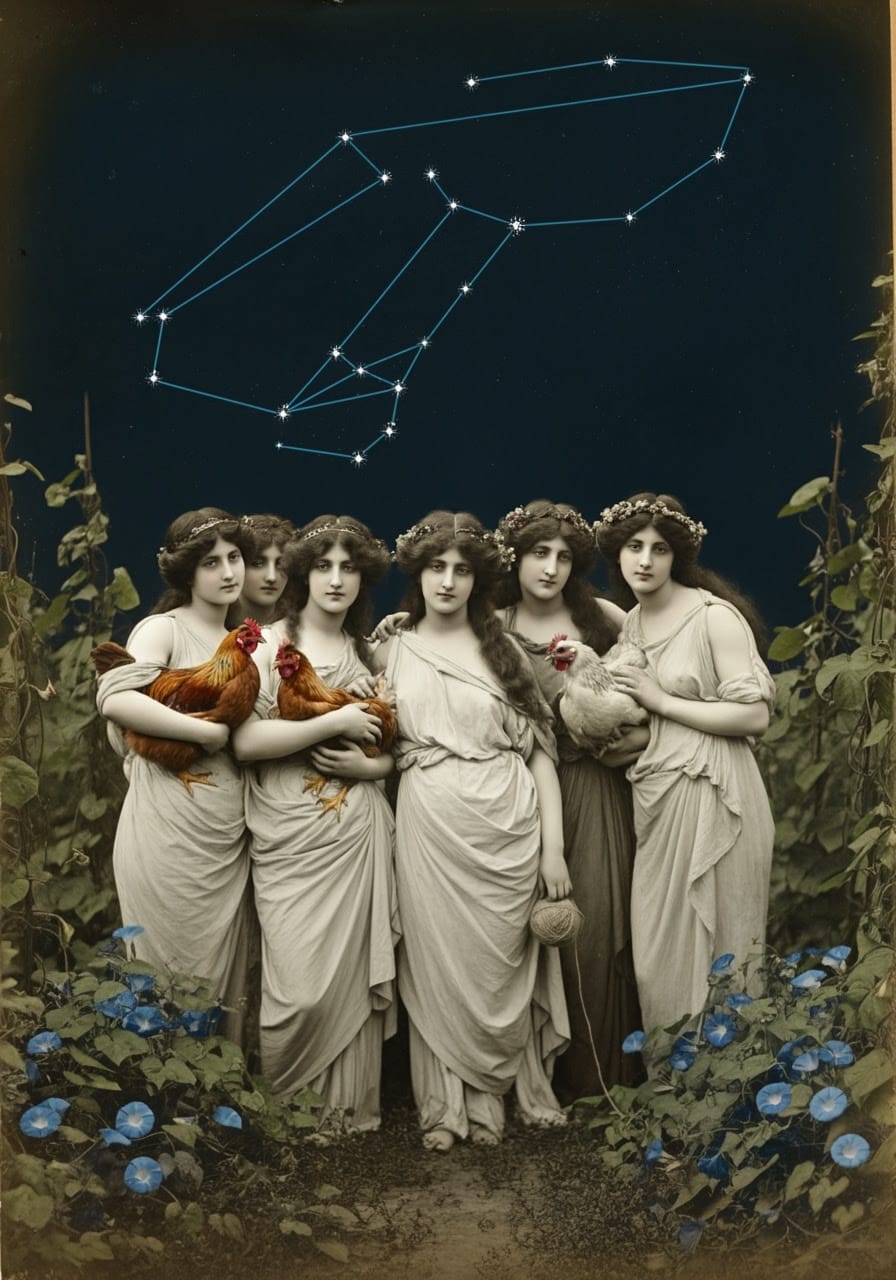
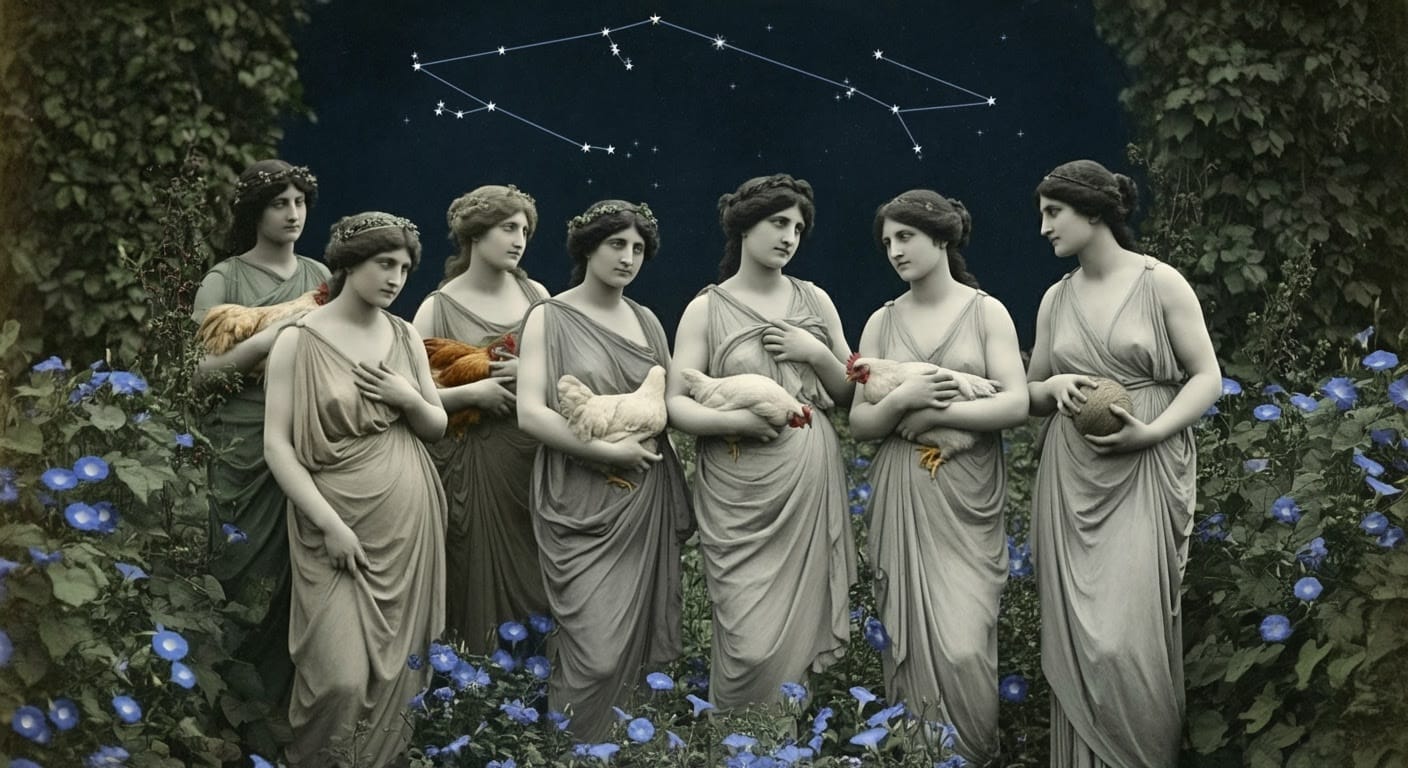
The name Seven Sisters is a reference to the Greek myth of the Pleiades, goddesses immortalized as stars in the sky: Maia, Electra, Taygete, Alcyone, Celaeno, Sterope, and Merope.
Goddesses Immortalized as Stars
These colleges were created in the 19th century to provide women with the educational equivalent to the historically all-male Ivy League colleges. (Cornell, one of the eight Ivy League schools, has been open to accepting women since its founding, and admitted Jennie Spencer in 1870).
The Seven Sisters Colleges have a rich and radical history that intersects with women’s rights, education reform, and social class dynamics in the United States.
Here’s a brief overview of each of the Seven Sisters, originally founded to offer women an education equal to that of the Ivy League (back when the Ivies were still men-only):
1. Barnard College – New York, NY
Founded: 1889
Affiliated with: Columbia University
Vibe: Urban, activist, intellectually rigorous
Symbolic Sister Quality: Voice – articulate, public-facing, engaged in debate
Fun Fact: Named after Columbia’s 10th president, who advocated for women’s education, even as Columbia itself refused to admit women.
The Young Woman: Her eyes are alert and determined, fixed just beyond the canvas as though poised to speak, testify, or teach. Her posture exudes self-possession, with a subtle defiance softened by grace.
Attire: A deep red velvet gown, symbolizing passion, vitality, and commitment to causes. A black sash across her shoulder adds contrast—perhaps a nod to the balance between tradition and rebellion.
The Laurel Crown: Classic and green, tying her to ancient rhetoricians and civic leaders. This is a speaker, a writer, a reformer.
The Objects: She holds an open book filled with closely spaced text and a quill pen—a clear signal of authorship, scholarship, and discourse. This sister does not merely read history—she writes it.
2. Bryn Mawr College – Bryn Mawr, PA
Founded: 1885
Affiliated with: Historically Quaker; part of the Tri-College Consortium with Haverford and Swarthmore
Fun Fact: First U.S. women’s college to offer Ph.D. programs.
Expression: Her gaze is serious, contemplative, and inward—suggesting deep scholarship and philosophical inquiry.
Attire: The embroidered gown and Latin book hint at academic rigor, classical education, and intellectual refinement.
Symbolic Sister Quality: Wisdom—Bryn Mawr is known for its graduate programs, especially in the humanities, and for pioneering women’s higher education at a scholarly level.
3. Mount Holyoke College – South Hadley, MA
Founded: 1837
Affiliated with: Part of the Five College Consortium
Vibe: Grounded, nurturing, quietly revolutionary
Symbolic Sister Quality: Endurance – resilience through centuries
Fun Fact: The oldest of the Seven Sisters; founded by Mary Lyon, who believed women should be trained as teachers and missionaries.
The Woman’s Expression: Thoughtful and grounded, her gaze cast gently downward. She carries a calm seriousness, as though reflecting on generations past and those yet to come.
Attire: A simple burgundy wool dress, overlaid with a dark green cloak—earth-toned and practical. These garments speak of humility, dedication, and purpose, rather than adornment.
The Laurel Crown: Not showy but dignified—an echo of ancient scholars and the enduring wisdom of those who teach generation after generation.
The Book: Worn and weathered, possibly a hymnal or teaching manual, held with care and strength. It might well contain the ideals of Mary Lyon herself, the visionary founder who believed in educating women to be both morally and intellectually strong.
Fun Fact: Merged fully with Harvard in 1999, now the Radcliffe Institute for Advanced Study.
The Young Woman: Her expression is contemplative, even slightly guarded—as though weighing the past and future in her mind. She looks not directly at the viewer but beyond, as if listening to voices across centuries.
Attire: A blend of rich burgundy velvet and a darker, brocade-like fabric beneath—a visual metaphor for dual identity: Radcliffe’s heritage as a women’s college and its long dance with Harvard.
The Laurel Crown: A strong scholarly symbol, marking her as a thinker among thinkers, equal in intellect to any man across the Charles River.
The Objects: She holds an open book and a tightly rolled scroll—one for reading, one for delivering. It suggests not only mastery of knowledge, but the power to share and act upon it. A stone column behind her subtly alludes to Harvard Yard.
Fun Fact: Sylvia Plath and Gloria Steinem are alumnae.
The Young Woman: She gazes outward with quiet confidence, her auburn hair crowned by a vibrant floral wreath—blue cornflowers, red poppies, and white daisies—symbolizing creativity, resilience, and individuality.
Her Dress: A golden-yellow velvet gown with ornate embroidery conveys warmth, vision, and a spark of eccentricity—a nod to Smith’s bold spirit and its history of progressive, independent thinkers.
The Drawing: She holds a parchment with a sketch of a winged horse—Pegasus, a classical symbol of poetic inspiration and flight of mind. It captures the college’s artistic and literary legacy, with alumnae like Sylvia Plath and Gloria Steinem.
The Color Palette: Earth tones mixed with floral brightness reflect a grounded idealism, a balance of radical ideas with academic excellence.
6. Vassar College – Poughkeepsie, NY
Founded: 1861
Affiliated with: Formerly a women’s college; co-ed since 1969
Fun Fact: Was the first of the Sisters to go co-ed—and considered joining the Ivy League.
The Young Woman: Her posture is relaxed yet dignified, her expression reflective and self-possessed. There is something unhurried in her gaze, as though she’s quietly forging her own path.
Attire: A rust-red velvet gown with blue sleeves—bold color choices that reflect Vassar’s historically adventurous and avant-garde reputation. There’s an understated theatricality to her presence, befitting a college known for its creativity.
The Wreath: A crown of green leaves, unornamented and natural. It speaks to liberty of thought and spirit—an embrace of both intellect and individuality.
The Book: She holds it open but unread, as if ready to depart from its pages to write her own story. It might be poetry, philosophy, or a dream journal—whatever she pleases.
7. Wellesley College – Wellesley, MA
Founded: 1870
Affiliated with: Independent, but closely tied to MIT and Harvard through cross-registration
Vibe: Polished, determined, diplomatic
Symbolic Sister Quality: Leadership – poised, prepared, often in politics
Fun Fact: Graduates include Hillary Clinton and Madeleine Albright.
The Young Woman: She stands poised, her head turned gently to the side, eyes focused on a distant horizon—suggesting foresight, diplomacy, and confidence. Her expression is calm but intentional, like someone preparing to address a room or defend an idea.
Attire: A rich blue velvet gown, dignified and modest, reflects the school’s intellectual polish and strong tradition of public service. Her simple pearl necklace echoes the grace of restraint.
Floral Crown: Red poppies for courage, blue cornflowers for hope, and white daisies for sincerity—symbols of the stateswoman spirit Wellesley is known for.
The Book: Held firmly but gently, this golden-brown volume represents the knowledge she has mastered—and will soon put into action.
The Seven Sisters and The Seven Pleiades
We couldn’t find any pairings between the Seven Sisters and the Seven Pleiades.
That said…
We can create our own mythopoetic system linking the Seven Sisters colleges with the Seven Pleiades. Here’s a speculative pairing based on temperament:
Pleiad
Mythic Quality
College
Why
Maia (eldest, wise, nurturing)
Wisdom & motherhood
Mount Holyoke
Oldest college, deeply rooted in service and education
Admittedly, this was click-bait. We’ll have to do a separate BLOTT to cover this extensive topic. However, based on our limited and superficial research, two front runners stand out: Smith College and Barnard.
The Seven (more or less) Sisters
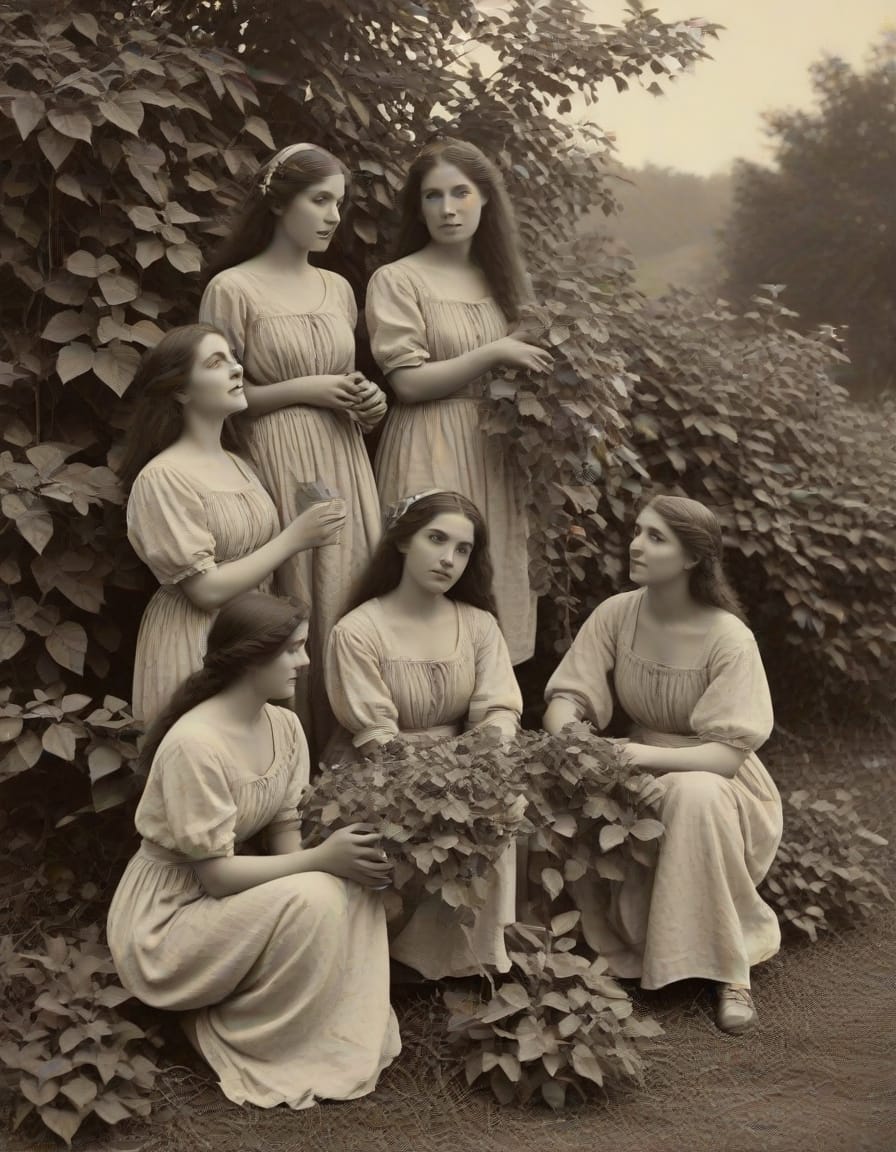
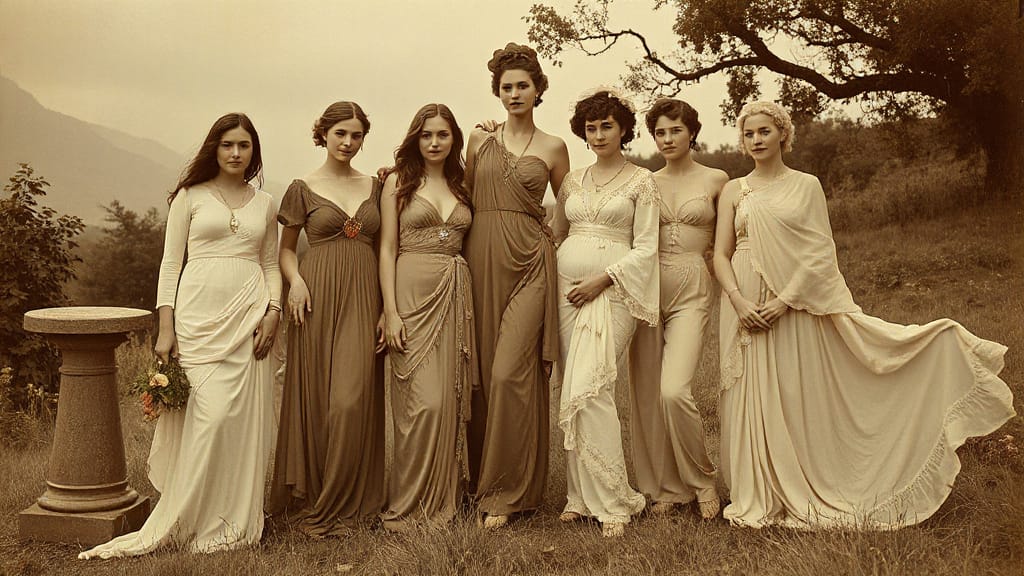
Elder G offers us some beautiful depictions of the Pleiades, goddesses immortalized as stars in the sky. Note that in some of the images, only six sisters are present. In this case, the seventh acted as photographer. In other cases, an eighth woman is present. This is a cousin of one of the Pleiades.
The Seven WLBOTT Sisters
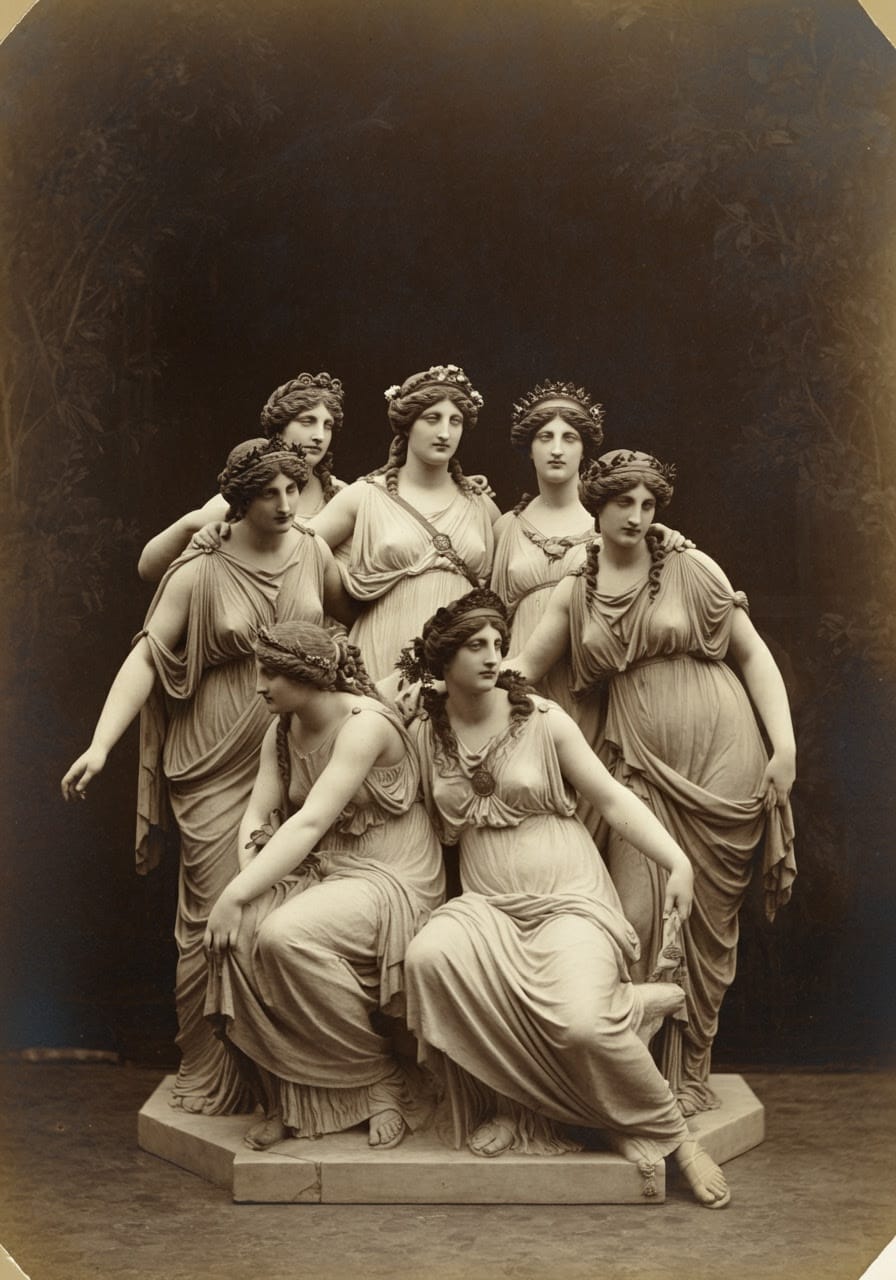
Some surviving ancient manuscripts suggest that an underground WLBOTT movement flourished during the height of the Greek era. We provide you with ancient relics, paintings, and photographs to bolster this theory.