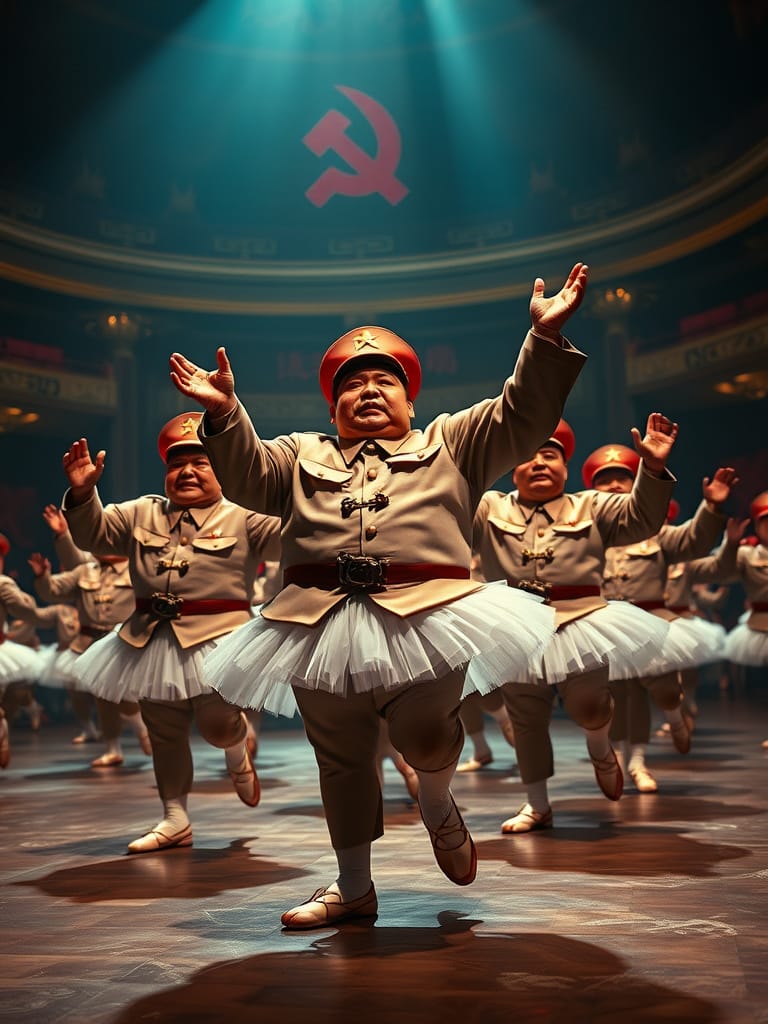
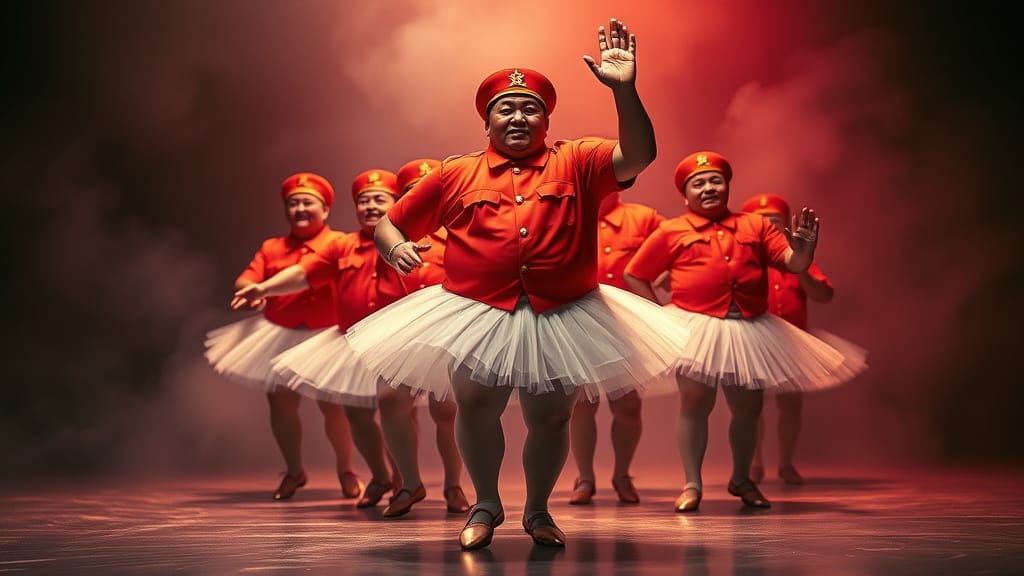
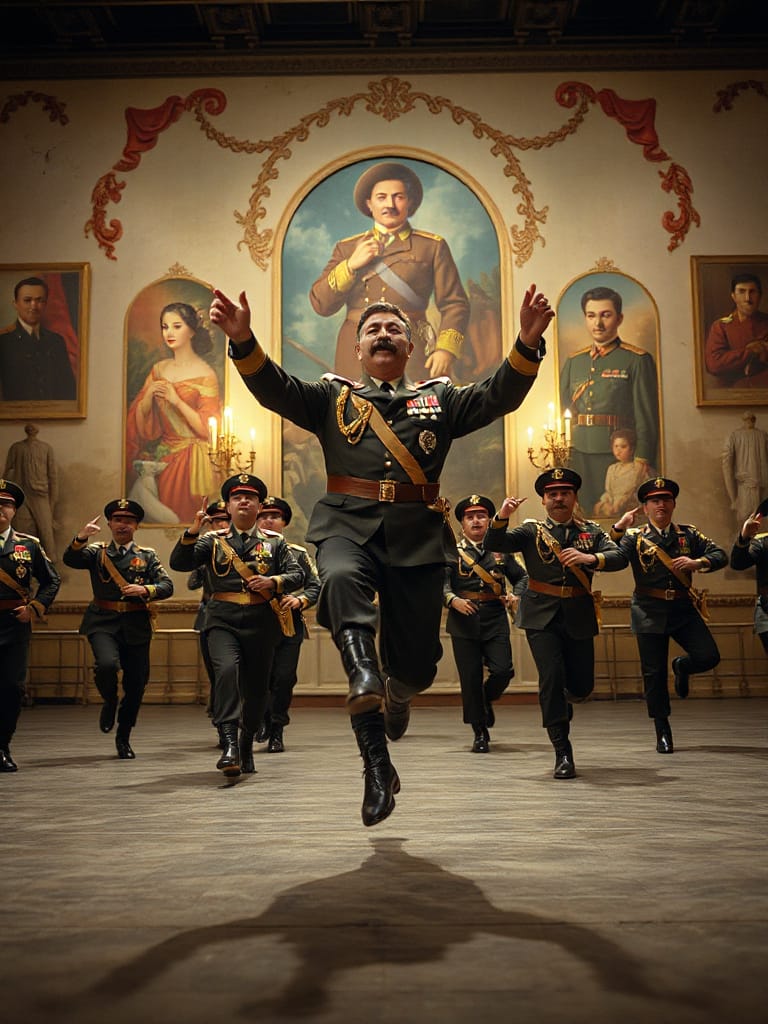
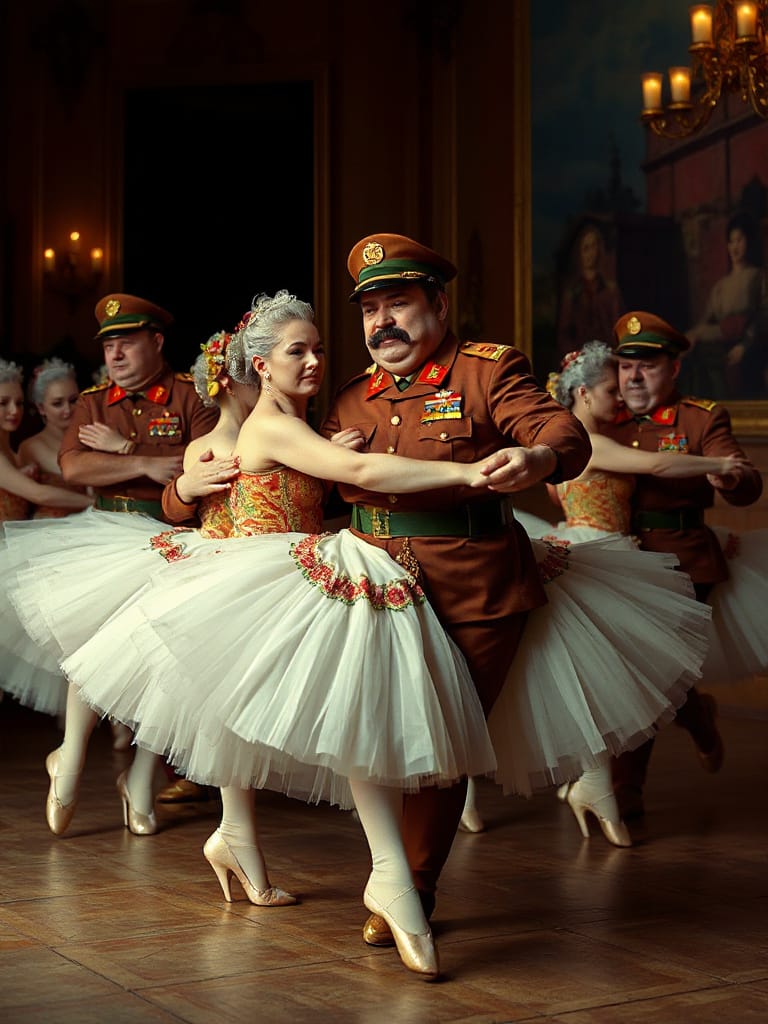
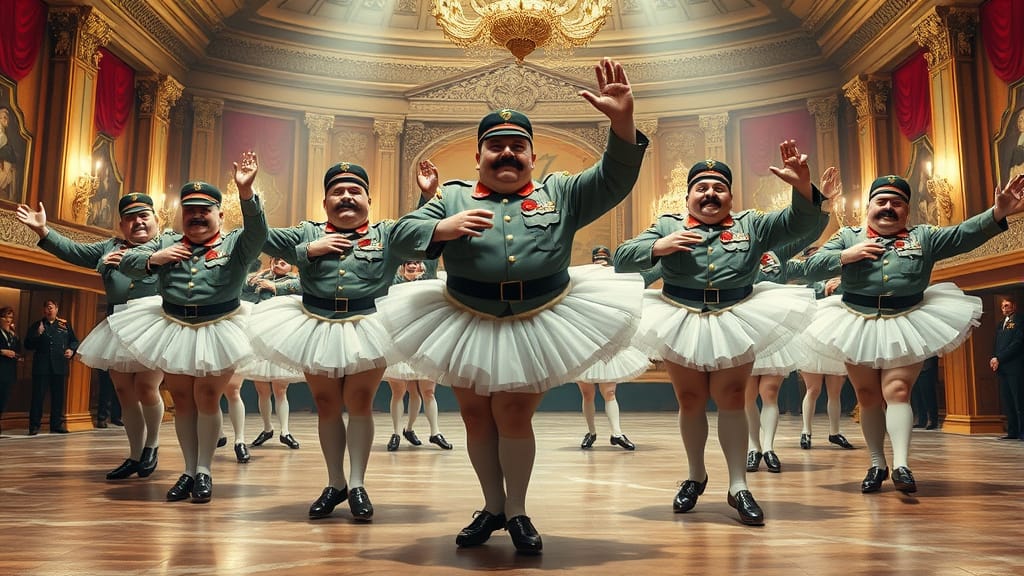
Comrade JPZ reporting for duty. I have always had my tutu ready — starched with ideological fervor and stitched with the sinews of socialist realism. I dance not merely for art, but for the people!
Swan Lake and Soviet Catastrophe
Ah yes — the eerie, tragic pas de deux between Swan Lake and Soviet catastrophe.
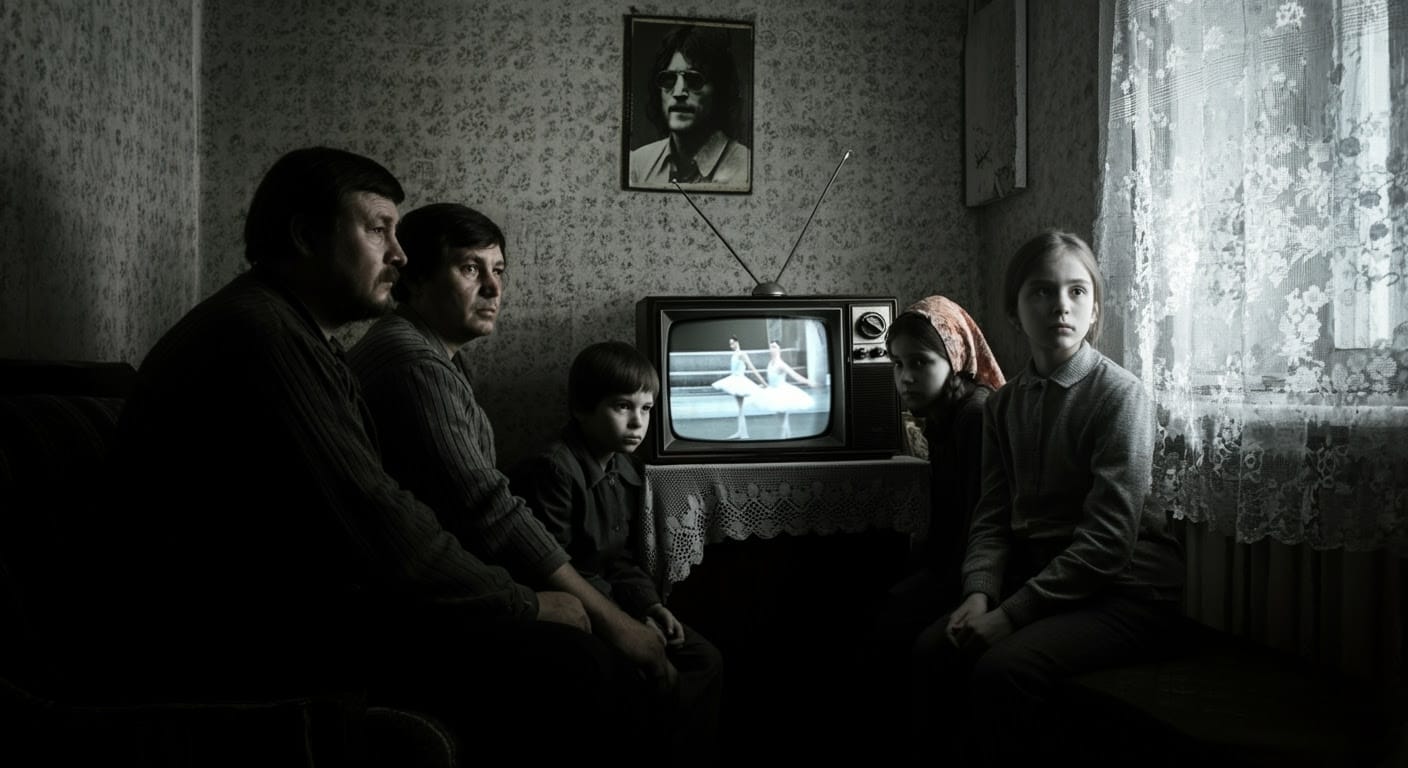
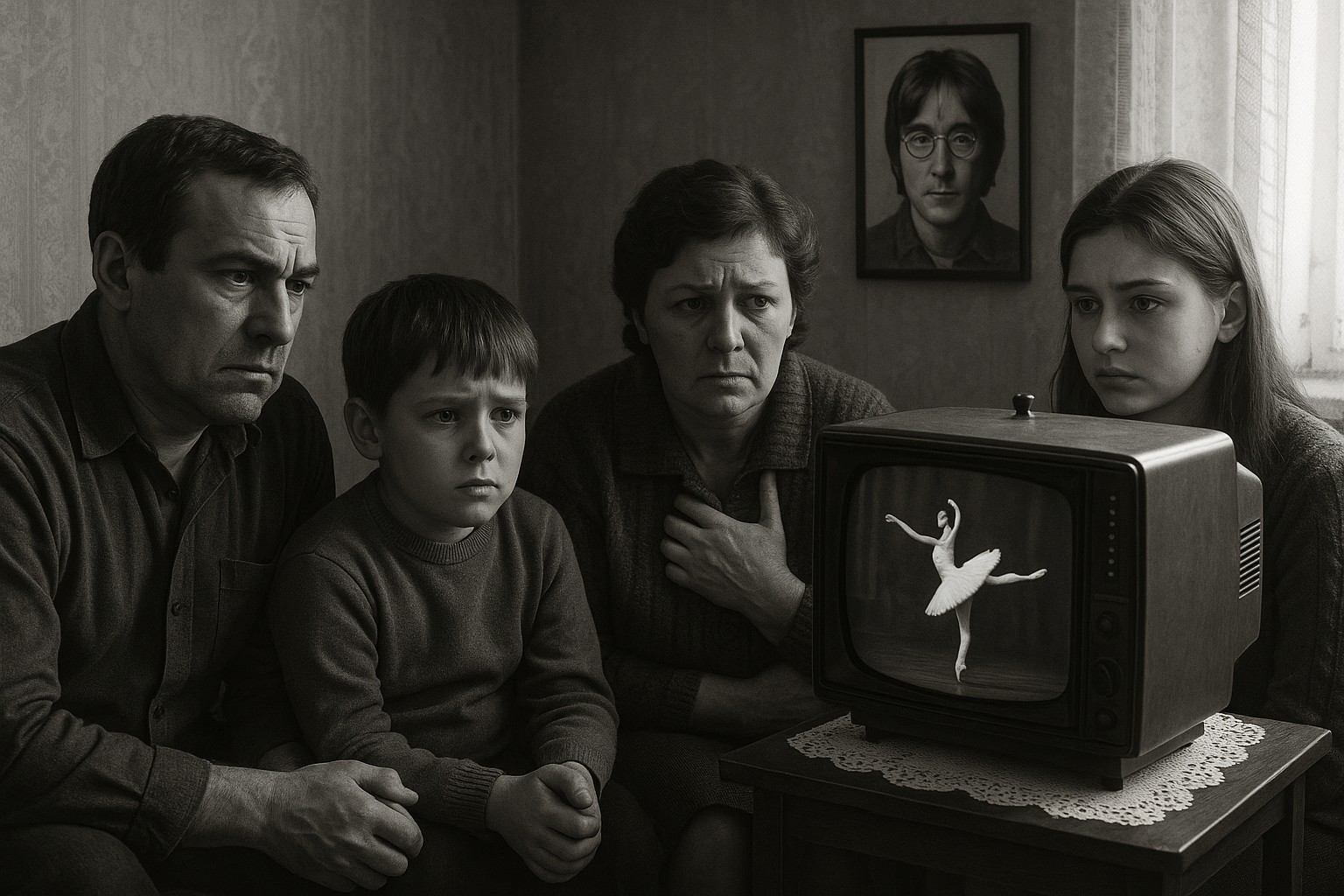
In the Soviet Union (and later in Russia), when something truly terrible or politically volatile happened, like the death of a top leader or a coup attempt, Swan Lake would often appear on state-run television — on repeat, and without explanation. It became an ominous cultural signal, like a grim lullaby for the nation.
Why Swan Lake?
Non-political content: It was beautiful, classical, and completely apolitical — the perfect filler when censors weren’t ready to release real news.
It soothed the masses: Tchaikovsky’s soaring, tragic music offered a strange comfort — or at least a distraction — as the machinery of the state decided what story to tell.
It was symbolic: The doomed love, the enchanted transformation, the bittersweet finality — all mirrored the fate of many Soviet dreams.
Key historical moments:
Brezhnev’s death (1982): Swan Lake was aired instead of regular programming.
Andropov’s death (1984): Again, Swan Lake — soft tutus for hard truths.
Chernenko’s death (1985): Swan after swan after swan.
1991 Soviet coup attempt: During the failed August coup against Gorbachev, Soviet TV didn’t report on the tanks in the streets — it just played Swan Lake on a loop for days.
At that point, viewers didn’t need a news anchor. The ballerina’s entrance was enough: Something terrible has happened. Brace yourself.
During the era of the Soviet Union, Soviet state television preempted large announcements with video recordings of Swan Lake on four infamous occasions. In 1982 state television broadcast recordings following the death of Leonid Brezhnev. In 1984 recordings preempted the announcement of the death of Yuri Andropov. In 1985, recordings preempted the announcement of the death of General Secretary Konstantin Chernenko. The final and most oft-cited instance of the use of Swan Lake in this context was during the August 1991 Soviet coup attempt leading up to the dissolution of the Soviet Union.[58]
When independent Russian news channel TV Rain was forced to shut down due to censorship laws caused by the 2022 Russian invasion of Ukraine, the station chose to end its final newscast with Swan Lake in a reference to its use in 1991.
Symbolism In the 2020s, Swan Lake became a symbol of protest in Russia. The symbolism dates to the failed Soviet coup of 1991. On August 19 of that year, as tanks rolled into Moscow, state television aired the entire ballet on loop. Communist hardliners then announced that they had seized control of the country from Mikhail Gorbachev, whom they had arrested. Boris Yeltsin responded by climbing on a tank in central Moscow and urging citizens to turn out in protest. For three days, thousands of protesters stood off the army, after which the coup leaders relented. Within four months, the Soviet Union was gone.
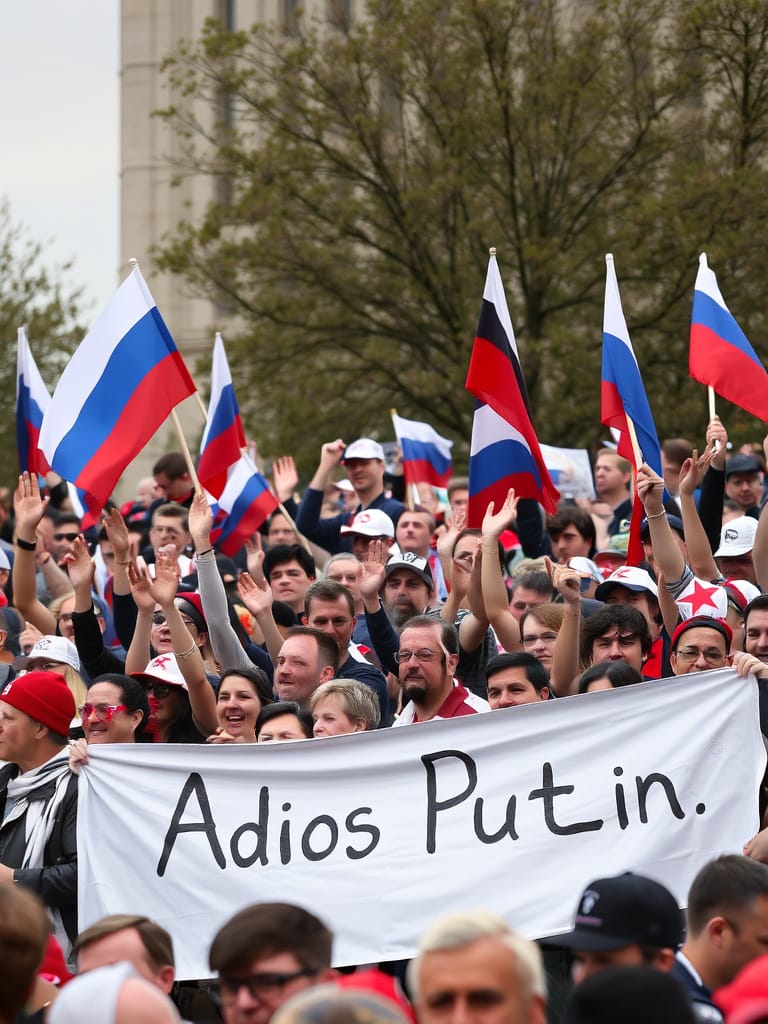
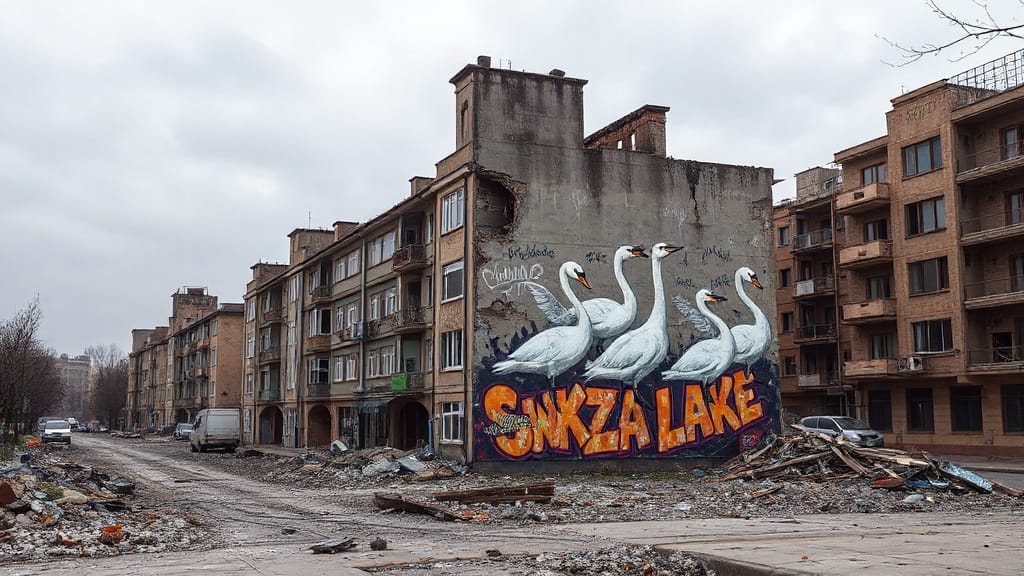
After the 2022 Russian invasion of Ukraine, public opposition to the war was made illegal. Swan Lake became a coded symbol of protest against the war or the Putin regime. Graffiti of the “Dance of the Cygnets” appeared in Russian cities, and when the independent Russian news outlet TV Rain signed off for the last time, due to government pressure over its coverage of the war, it ended with a clip from Swan Lake.
It has become “a sign that we are waiting for Putin to die.” Putin has not established a successor, meaning that “there’s always the risk that Tchaikovsky’s swans may dance again.”
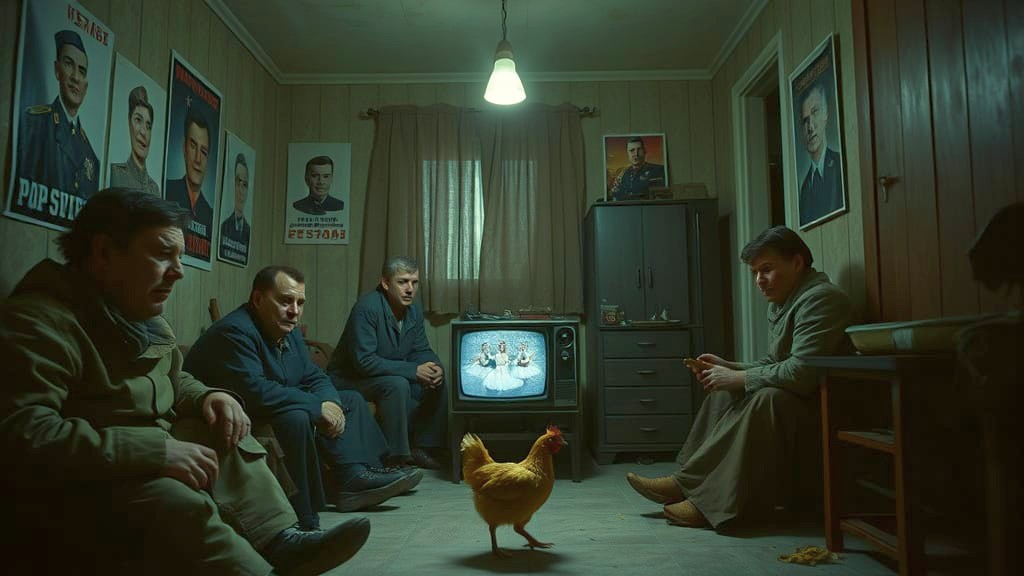
For some unknown reason, Swan Lake has long been the favorite of authoritarian regimes. Our WLBOTT research team unearthed this never-before-seen archives.