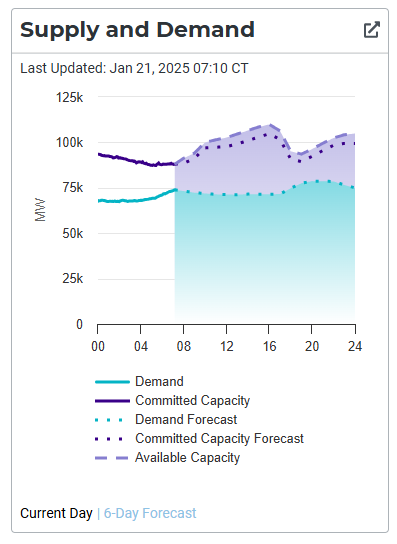
Yesterday morning, I was checking out the Texas electrical grid (ERCOT), to see if the previous night’s snowfall was going to cause problems.
Sally T. Intern braves the 1/4″ of snow this morning to get to her paying job. Her hard-currency income is essential for the day-to-day operational expenses of WLBOTT.
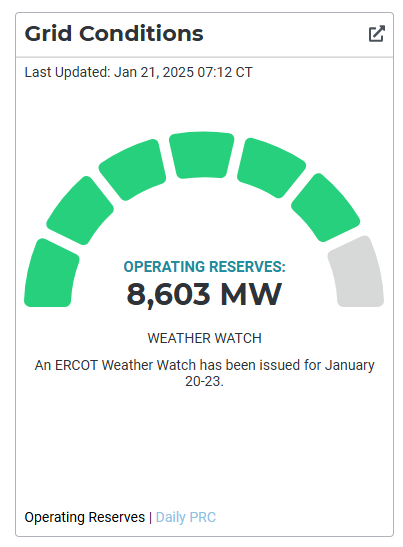
The grid looks like it’s got plenty of slack….
WLBOTT: I was checking the Texas electrical grid conditions earlier. We have 8,603 mw in reserve. How much toast could we make with that reserve?
Elder G: Assumptions: A typical toaster uses 900 watts to toast two slices of bread. It takes 2 minutes to toast bread.
With 8,603 MW in reserve, Texas could theoretically toast 1.15 billion slices of bread in an hour.
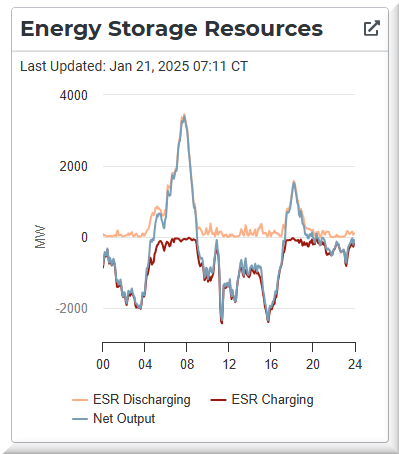
But here’s something I hadn’t noticed before….
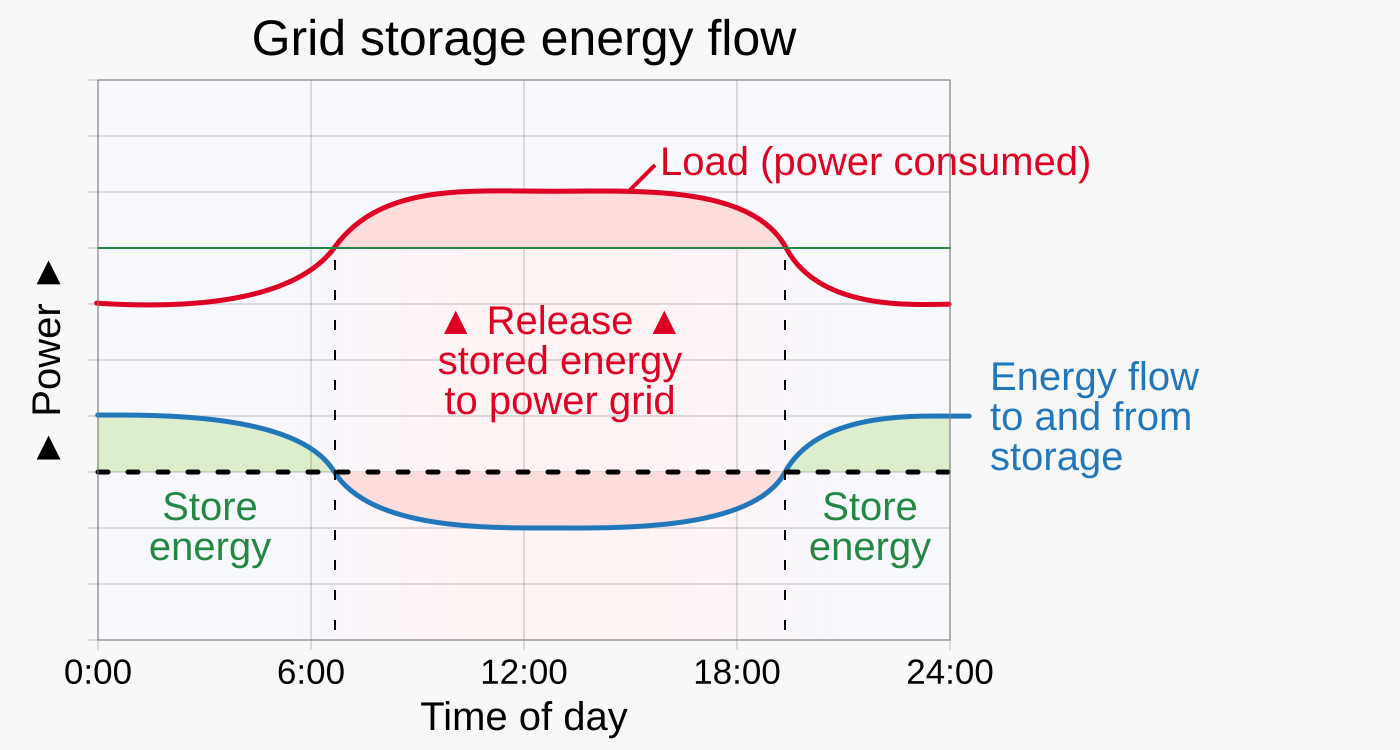
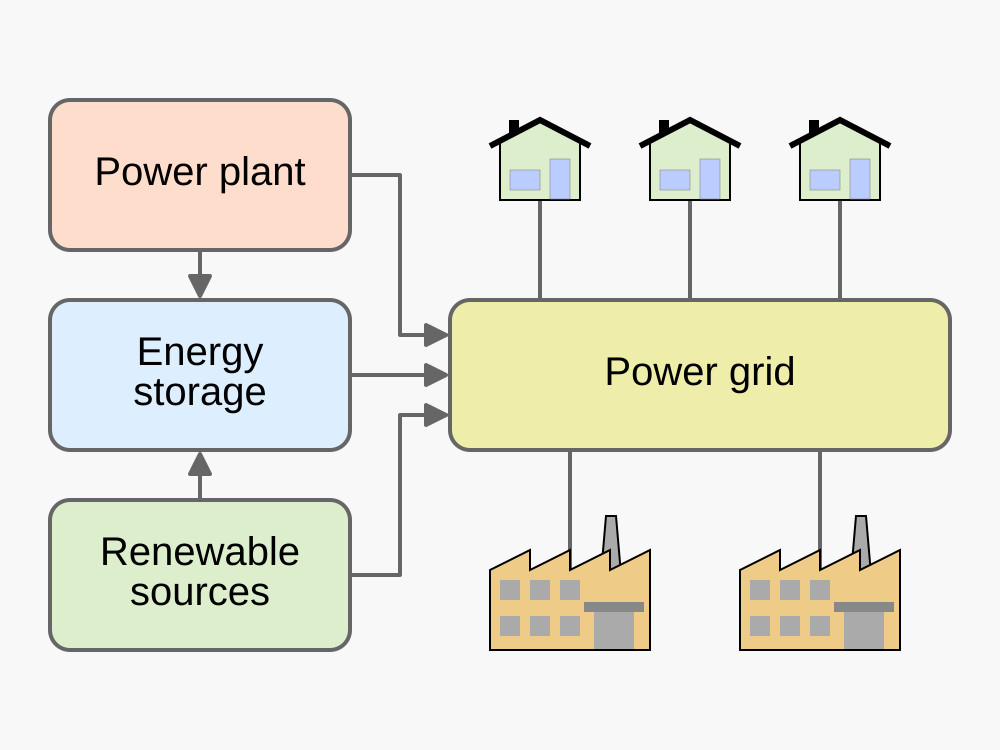
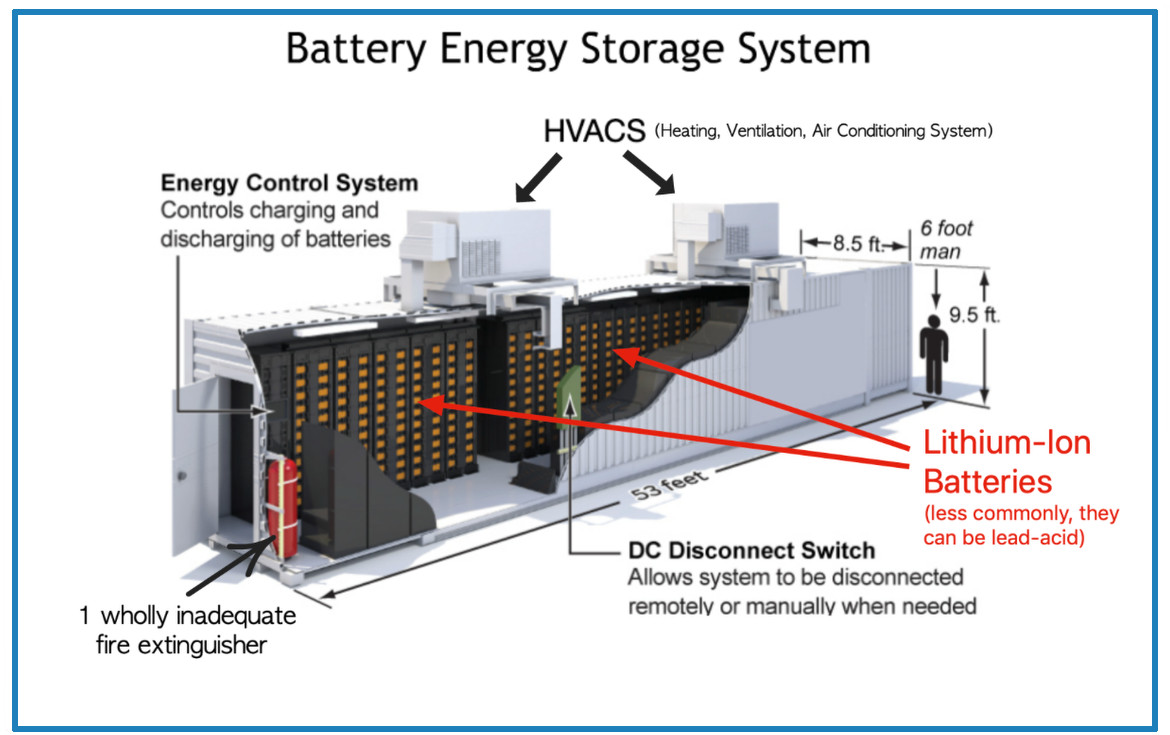
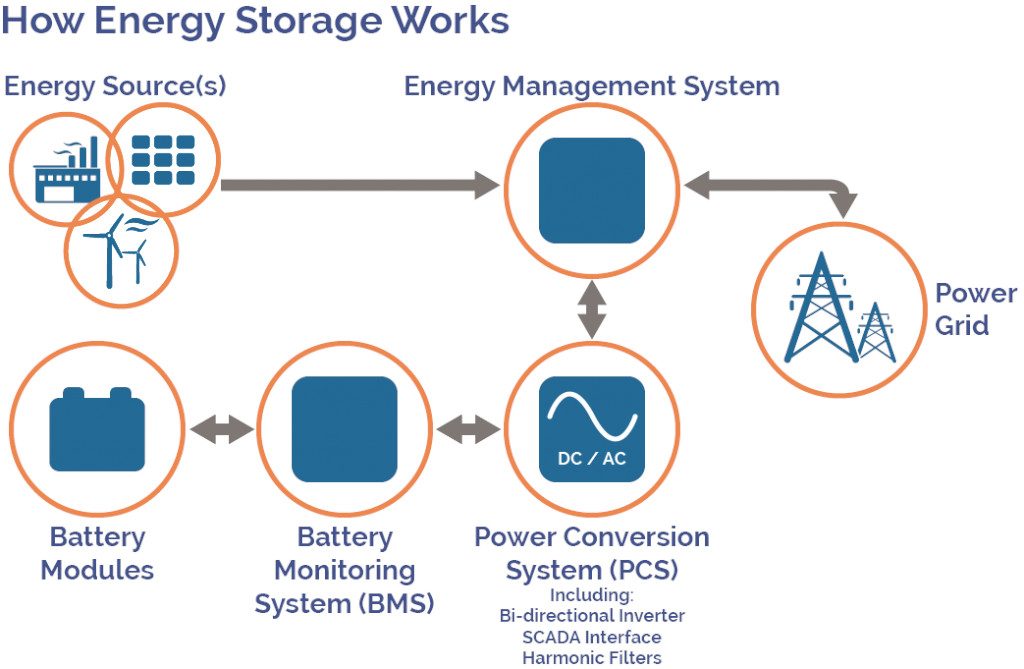
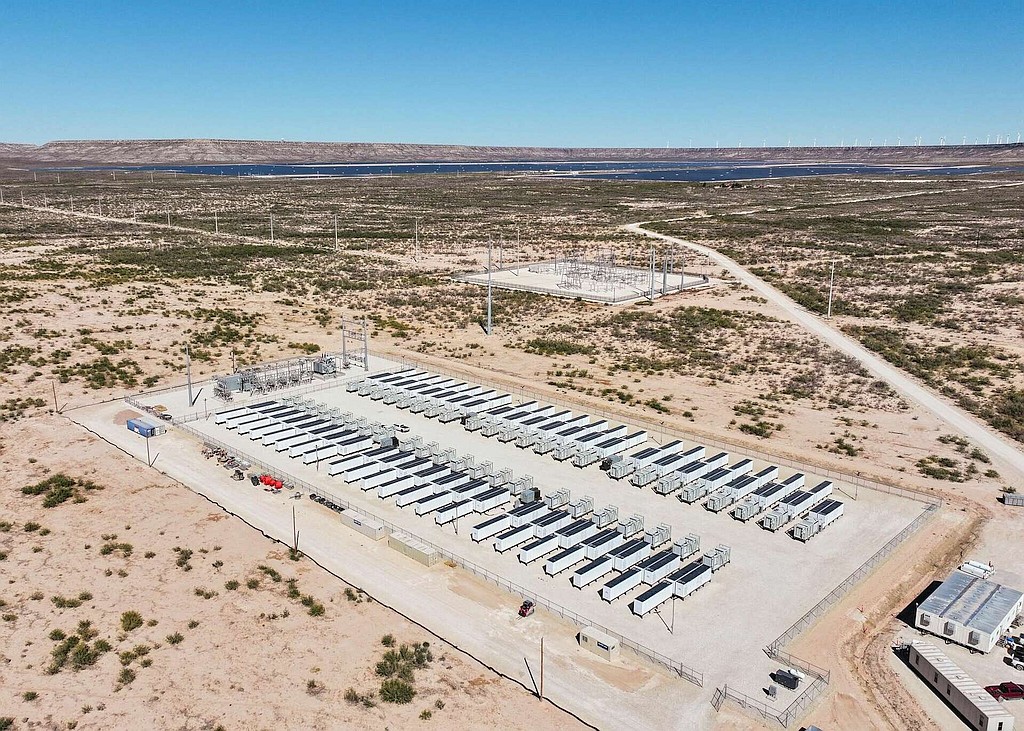
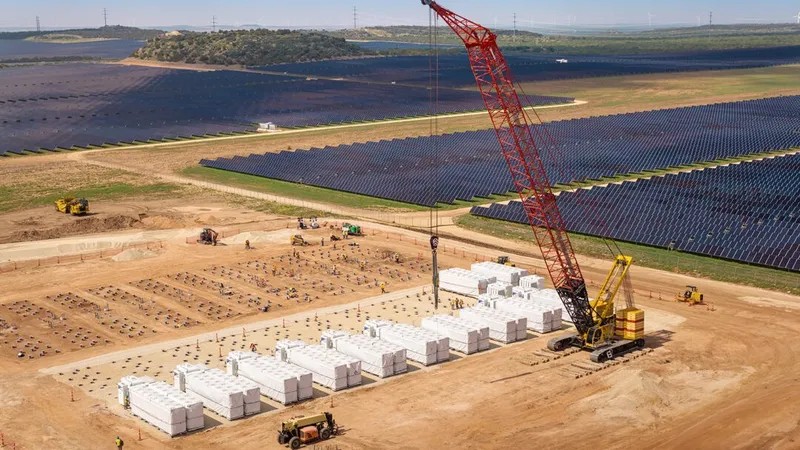
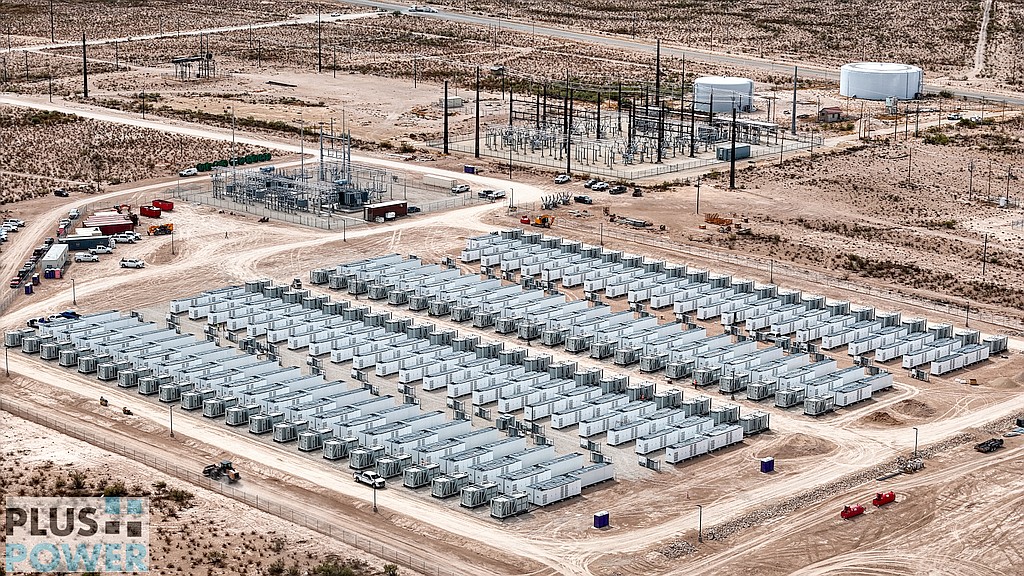
Grid energy storage, also known as large-scale energy storage, are technologies connected to the electrical power grid that store energy for later use. These systems help balance supply and demand by storing excess electricity from variable renewables such as solar and inflexible sources like nuclear power, releasing it when needed. They further provide essential grid services, such as helping to restart the grid after a power outage.
By RCraig09 – Own work, CC BY-SA 4.0
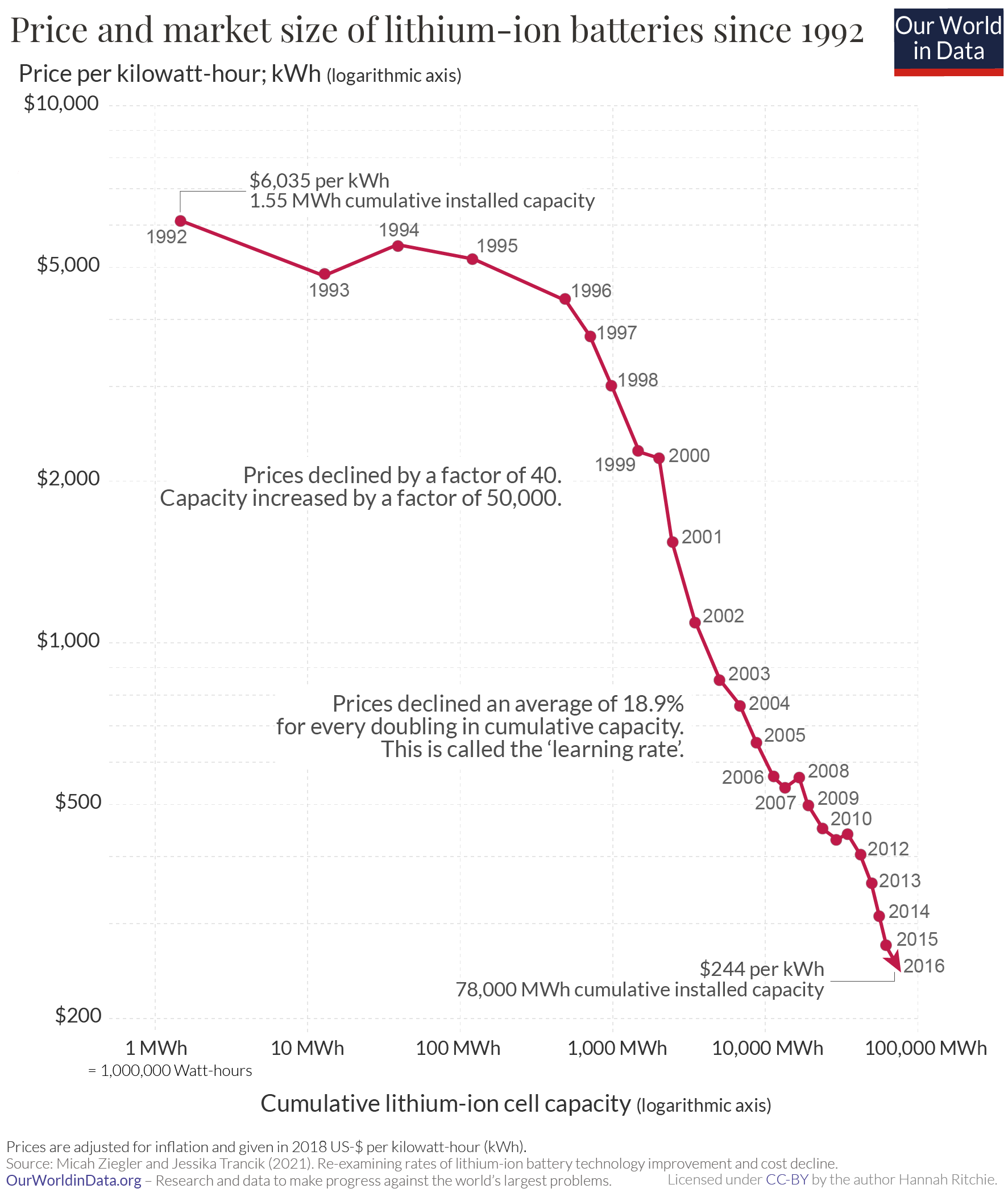
As of 2023, the largest form of grid storage is pumped-storage hydroelectricity, with utility-scale batteries and behind-the-meter batteries coming second and third. Lithium-ion batteries are highly suited for shorter duration storage up to 8 hours. Flow batteries and compressed air energy storage may provide storage for medium duration. Two forms of storage are suited for long-duration storage: green hydrogen, produced via electrolysis and thermal energy storage.
By RCraig09 – Own work, CC BY-SA 4.0By Max Roser – https://ourworldindata.org/cheap-renewables-growth, CC BY-SA 4.0Wikipedia
Swanson’s Law
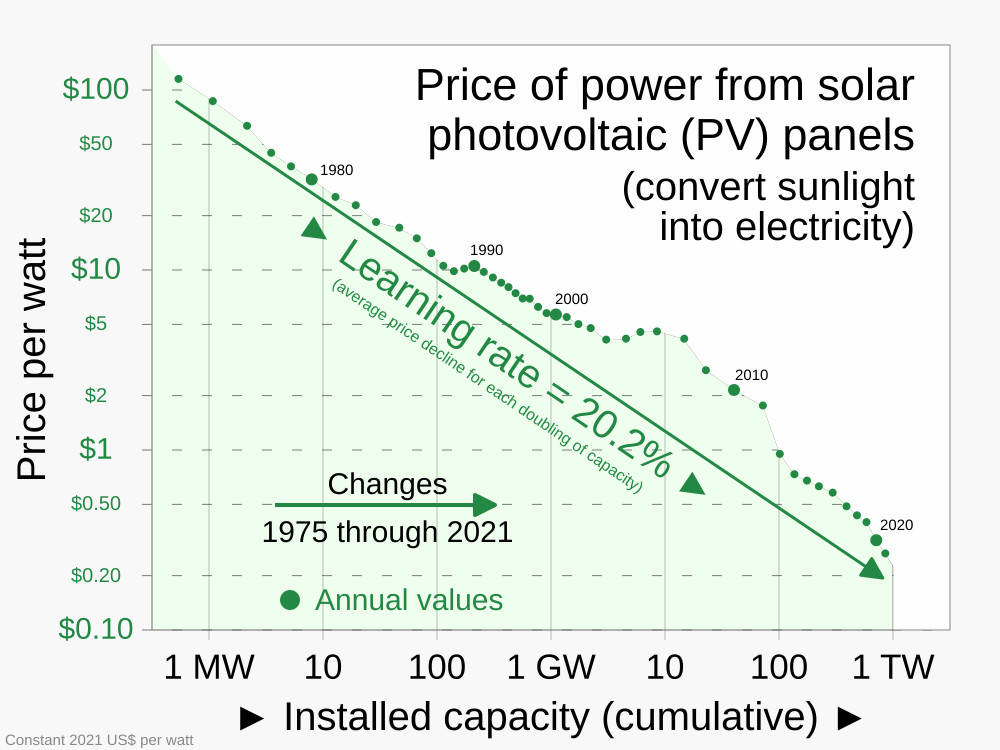
Swanson’s law is the observation that the price of solar photovoltaic modules tends to drop 20 percent for every doubling of cumulative shipped volume. At present rates, costs go down 75% about every 10 years.
By RCraig09 – Own work, CC BY-SA 4.0
Swanson’s law has been compared to Moore’s law, which predicts the growing computing power of processors. Swanson’s Law is a solar industry specific application of the more general Wright’s Law which states there will be a fixed cost reduction for each doubling of manufacturing volume.
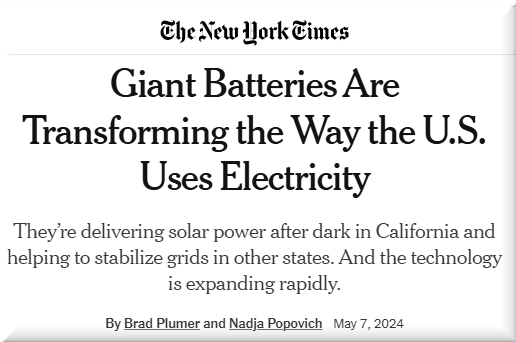
Those batteries play a pivotal role in California’s electric grid, partially replacing fossil fuels in the evening.
Between 7 p.m. and 10 p.m. on April 30, for example, batteries supplied more than one-fifth of California’s electricity and, for a few minutes, pumped out 7,046 megawatts of electricity, akin to the output from seven large nuclear reactors.
While the state remains heavily dependent on natural gas, a significant contributor to global warming, batteries are starting to eat into the market for fossil fuels.
But power companies also use batteries to engage in a type of trading: charging up when electricity is plentiful and cheap and then selling power to the grid when electricity supplies are tighter and more expensive.
In Texas, market forces dominate. The state’s deregulated electricity system allows prices to fluctuate sharply, rising as high as $5,000 per megawatt-hour during acute shortages. That makes it lucrative for battery developers to take advantage of spikes, such as in locations where power lines periodically get clogged.[…]
In Texas, many batteries today are actually increasing carbon-dioxide emissions, according to one analysis. That’s because operators focus on maximizing revenue and sometimes charge with coal or gas power.
Enormous, digitally controlled batteries across the Lone Star State rapidly injected 2 gigawatts of power into ERCOT’s wires just before 8 p.m., staving off potential power shortfalls and lowering electricity costs for customers.
These two recent record-setting events represent a quiet victory for both Texas’ brashly free-market energy system and battery storage, a rapidly growing technology seen as the key to unlocking a clean, decarbonized energy system.
Over the last decade, solar photovoltaics have ascended from a power industry sideshow to the biggest source of new generation in the U.S. The technology’s stunning success created an opening for energy storage technologies that make solar power available outside of sunny hours
[ed. note: for political purposes in Texas, climate change doesn’t exist. For anything that requires reality, climate change most certainly does exist.]
But this year, for the first time ever, the fastest-growing energy storage market appears to be Texas, a free-market-affirming red state that officially cares little about solving climate change. Nonetheless, the state’s low-regulation, business-friendly landscape has created ideal conditions to build batteries quickly and at scale, just like it previously incubated thriving wind and solar markets.
That brings us to today. Texas rolled into 2024 with some 5.1 gigawatts of energy storage online, second only to mighty California. But the U.S. Energy Information Administration (EIA) predicts Texas will complete another 6.4 gigawatts this year, outstripping California’s 5.2 gigawatts of new construction. ERCOT expects to end the year with approximately 11 gigawatts online.
This dynamic has worked incredibly well for renewables already: Texas has long produced more wind power than any other state, and last year its utility-scale solar construction outpaced reigning champion California for the first time. Texas generated 35% more solar electricity in 2023 than the year before, per the EIA. ERCOT now contains nearly 23 gigawatts of solar. The EIA expects Texas will add another 24 gigawatts of solar across 2024 and 2025.
For context, the most instantaneous power ever consumed in ERCOT was 85.5 gigawatts, during a heat wave last summer.
If future policies make it harder for storage to get built, Texas could lose out on a valuable resource to respond to the next Uri. Batteries discharging for an hour or two clearly won’t save a grid struggling through a multiday crisis. But the power plant outages during Uri wreaked havoc on the grid’s frequency, and instantly correcting frequency is where grid batteries are most effective. Timely intervention to fix grid frequency can prevent other power plants from automatically tripping offline to prevent mechanical damage, which leads to cascading problems.
Moreover, Texas needs ever more capacity, and storage is delivering it, fast. This year, storage developers could equip Texas with a battery fleet equivalent to 13 percent of ERCOT’s record-setting peak demand. As they push into longer energy durations, batteries will become even more useful for bolstering the grid in times of crisis.
Because electricity supply and demand on the power system must always be in balance, real-time energy production across the grid must always match the ever-changing loads. The advent of economical battery energy storage systems (BESS) at scale can now be a major contributor to this balancing process. The BESS industry is also evolving to improve the performance and operational characteristics of new battery technologies.
This is the ultimate boot-strap loader. How do you get a grid back on line when it is completely down?
A black start is the process of restoring an electric power station, a part of an electric grid or an industrial plant, to operation without relying on the external electric power transmission network to recover from a total or partial shutdown. […] Often hydroelectric power plants are designated as the black-start sources to restore network interconnections. A hydroelectric station needs very little initial power for starting purposes (just enough to open the intake gates and provide excitation current to the generator field coils) and can put a large block of power on line very quickly to allow start-up of fossil fuel or nuclear stations.
Startup sequence One method of black start (based on a real scenario) might be as follows:
A battery starts a small diesel generator installed in a hydroelectric generating station.
The power from the diesel generator is used to bring the generating station into operation.
Key transmission lines between the station and other areas are energized.
The power from the station is used to start one of the nuclear/fossil-fuel-fired base load plants.
The power from the base load plant is used to restart all of the other power plants in the system.
Power is finally re-applied to the general electricity distribution network and sent to the consumers.










One reply on “Sally, The Grid, and Large Quantities of Batteries”
At the rate that solar panel costs are going down, it should be very soon that they start paying us to take them.