At WLBOTT, we recognize our employee’s sometimes intense personal relationships with their radishes. As part of our work/life balance, we encourage our employees to share their feelings. This includes our annual “Bring Your Radishes to Work” day.
The Nuts and Bolts
The radish (Raphanus sativus or Raphanus raphanistrum subsp. sativus) is a flowering plant in the mustard family, Brassicaceae. Its large taproot is commonly used as a root vegetable[1], although the entire plant is edible and its leaves are sometimes used as a leaf vegetable. Originally domesticated in Asia, radishes are now grown and consumed globally.
Being relatively easy to grow and quick to harvest, radishes are often planted by novice gardeners…. Radishes are a common garden crop in many parts of the world, and the fast harvest cycle makes them particularly suitable for children’s gardens.
Radishes are annual or biennial brassicaceous crops grown for their swollen tap roots which can be globular, tapering, or cylindrical. The root skin colour ranges from white through pink, red, purple, yellow, and green to black, but the flesh is usually white.
The radish is a diploid species, and has 18 chromosomes (2n=18). It is estimated that the radish genome contains between 526 and 574 Mb.
Production Using 2003–2004 data, several sources report annual world production of radishes to be about 7 million tonnes, produced mainly by China, Japan, and South Korea, and representing roughly 2% of global vegetable production.
Noche de los Rábanos Citizens of Oaxaca, Mexico, celebrate the Night of the Radishes (Noche de los rábanos) on December 23 as a part of Christmas celebrations. This folk art competition uses a large type of radish up to 50 cm (20 in) long and weighing up to 3 kg (7 lb). Great skill and ingenuity are used to carve these into religious and popular figures, buildings, and other objects, and they are displayed in the town square.
Here are some of the chemicals which make radishes so radishy:
glucosinolate
myrosinase
isothiocyanate
anthocyanins
pelargonidin
cyanidin
The Big Boy of the Radish World
The Sakurajima radish is a hot-flavored variety which is typically grown to around 10 kg (22 lb), but which can grow to 30 kg (66 lb) when left in the ground.
The Sakurajima radish or Sakurajima daikon (Japanese: 桜島大根) is a special cultivar of the Japanese radish named for its original place of cultivation, the former island of Sakurajima in Japan’s Kagoshima Prefecture. It is the largest radish variety in the world. Its regular weight is about 6 kilograms (13 lb), although large ones can be as much as 27 kg (60 lb). It can grow as large as 50 cm (20 in) in diameter. It is also sometimes known in Japanese as shimadekon (しまでこん, “island daikon”).
The three varieties are early, middle, and late, but the most commonly encountered form is the late.[3] The seeding period is from last August to first September and the harvest season is from December to February. To reach full size, special care needs to be taken with the region’s volcanic-ash soil.
About 1200 farm houses had about 200 hectares (490 acres) of growing area in total in the high season. Sakurajima radish is one of the most precious local commercial crops. Also, in every harvest season, the toikae (Kagoshima dialect for “market”) was held in Kajiki (now part of Aira District) and people traded Sakurajima radishes with straw. However, the main crop was shifted to satsuma (mikan) from Sakurajima radishes, because the area of Sakurajima suffered so much damage from a 1914 eruption of the nearby volcano, decreasing the growing area to about 30 hectares (74 acres) by 1955. Furthermore, its growing area was decreased to about 1.5 hectares (3.7 acres) owing to ashfall between then and 2001.
Sakurajima (Japanese: 桜島, lit. ’Cherry Blossom Island’) is an active stratovolcano, formerly an island and now a peninsula, in Kagoshima Prefecture in Kyushu, Japan. The lava flows of the 1914 eruption connected it with the Ōsumi Peninsula. It is the most active volcano in Japan.
As of November 2025, the volcanic activity continues, dropping volcanic ash on the surroundings. Earlier eruptions built the white sand highlands in the region. On September 13, 2016, a team of experts from Bristol University and the Sakurajima Volcano Research Centre in Japan suggested that the volcano could have a major eruption within 30 years; since then many eruptions have occurred.
Sakurajima has a population of a few thousand residents, formerly incorporated as Sakurajima town, with a number of schools, shrines, and shops on the island.
Image Credits: (top left) Sakurajima erupting on 10 March 2009 By Krypton at Japanese Wikipedia, CC BY-SA 3.0, https://commons.wikimedia.org/w/index.php?curid=16867398 (top right) Sakurajima eruption (桜島の噴火) 1914 (bottom) By TANAKA Juuyoh (talk) – https://www.flickr.com/photos/13910409@N05/3290954157, CC BY 3.0, https://commons.wikimedia.org/w/index.php?curid=6087331 Wikipedia
The WLBOTT Ag Extension: Sakurajima?
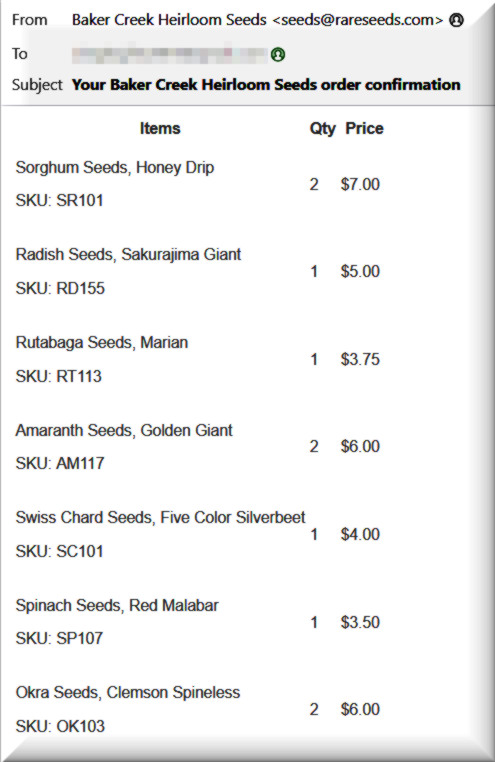
Big Texas Yes. WLBOTT will be growing these in the fall.
We ordered some Sakurajima seeds today for the fall planting. We will look into renting a volcano between now and then to enhance the soil.
The Google Search
WLBOTT Science
After this morning’s harvest, WLBOTT scientists brought a sample radish back to the lab to get a closer look.
Interesting and beautiful pictures from the USB microscope:
But look what else we found! This little critter is so small that s/he can’t be scene with the naked eye
Elder G Clarifies….
That little creature is almost certainly an aphid, specifically a nymph (juvenile aphid).
Here’s what gives it away:
Key Features in Your Image
Soft, pear-shaped body → classic aphid silhouette
Pale green/yellow coloration → very common on leafy greens like radishes
Visible segmentation → especially in the abdomen
Six legs, clustered toward the front
No wings → indicates it’s a juvenile (nymph), not an adult
If you zoomed in just a bit differently, you might also spot tiny rear “tailpipe” structures called cornicles, which are a signature aphid feature (they look like little exhaust pipes—fitting for our earlier “bellows” discussion). [1]
[1] Perhaps a little too invasive for our sensitive visitors
Let Us Not Be Speciesist
Keep in mind that our aphid nymph had two parents in a loving and committed relationship.
And at some point in the future, this aphid nymph may be quite alluring to his/her fellow aphids.
Any let’s not forget that this little critter is called a “nymph”, long embodying the ancient Greek and Roman folklore and mythology.