New Crescent series Next in the series
A sustainable, secure,
and self-sufficient coastal homeland
for Palestinians – built with
global support, scientific innovation,
and a humanistic vision.
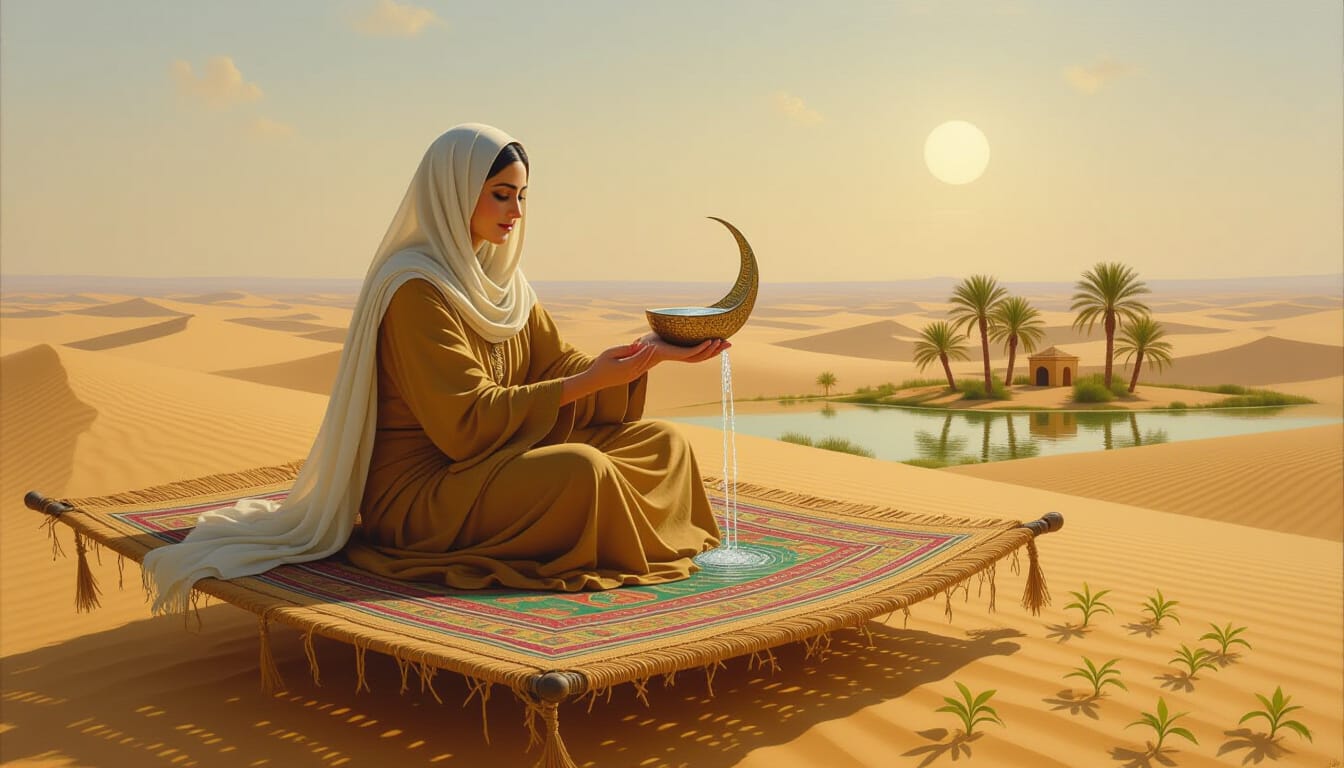
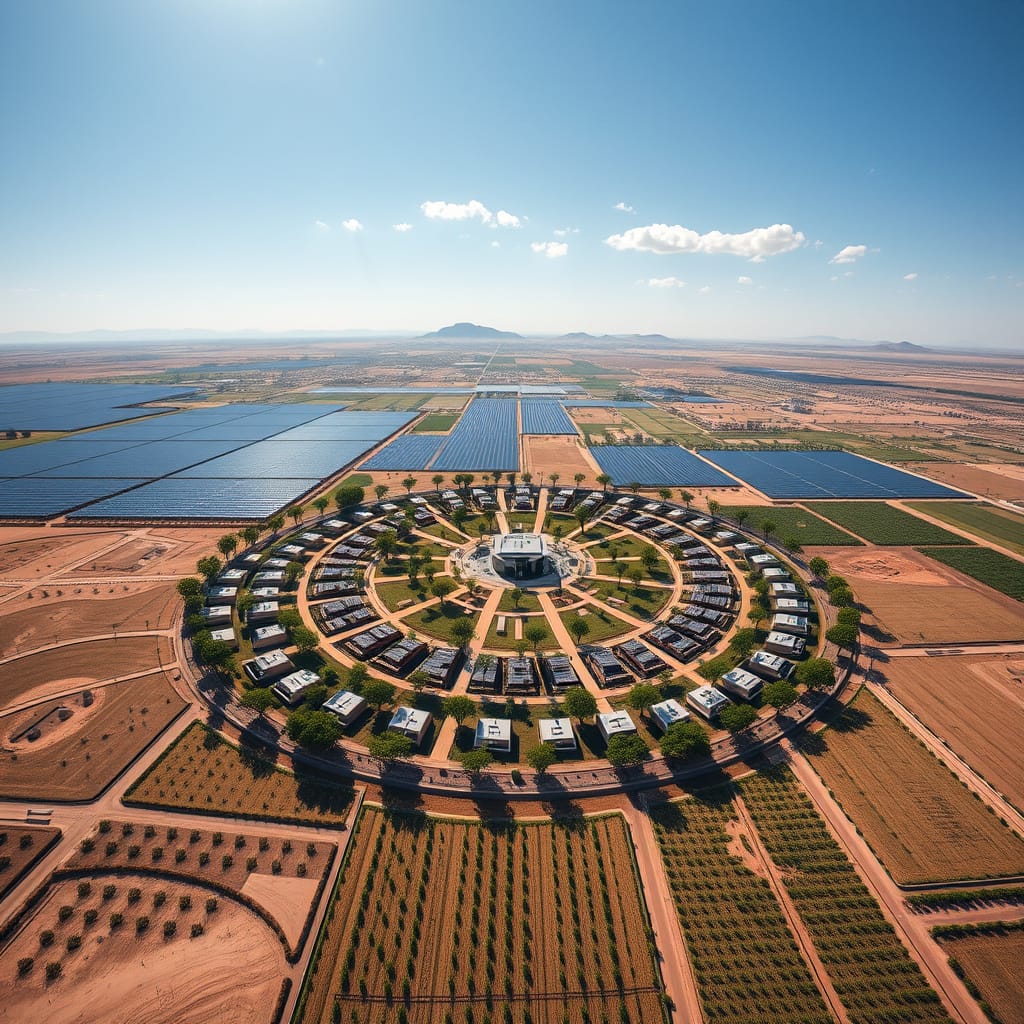
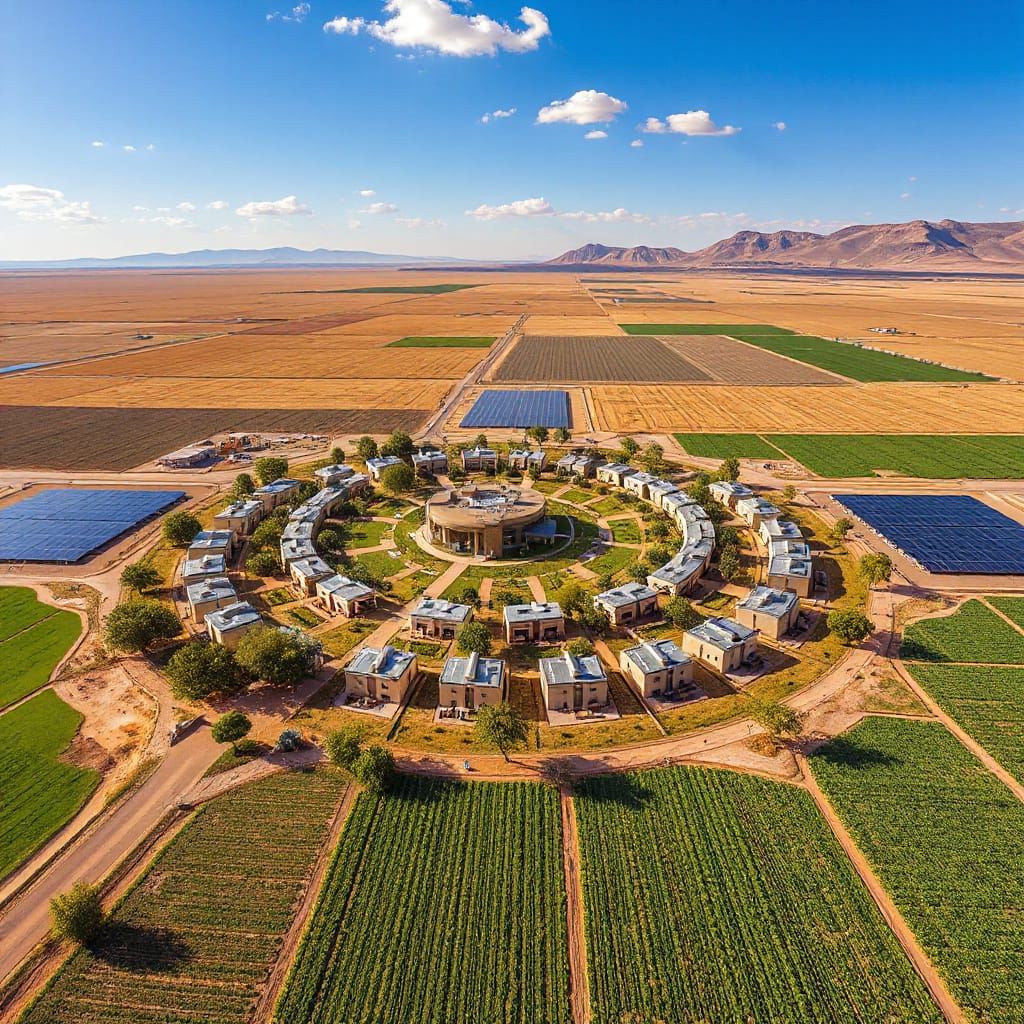
Let’s explore an idea that may bring peace and prosperity to millions of people. Here’s a broad overview: Let’s say that Egypt donates a large swath of coastal wasteland to the United Nations. The United Nations (and the world) commit to building a large agricultural community on this land. The land will be powered by large solar farms, which will be used by large desalination plants. The water will drive the agricultural economy. The ultimate goal is to make a pastoral Utopian homeland for the millions of suffering Palestinians.
Palestinian Population Estimates
Elder G provides some population statistics for us.
As of 2024, the total Palestinian population worldwide is estimated to be around 14 million. Here’s how it generally breaks down:
1. Palestinian Territories
- West Bank (including East Jerusalem): ~3.3 million
- Gaza Strip: ~2.3 million
Subtotal: ~5.6 million
2. Israel (Palestinian citizens of Israel)
- ~2 million
3. Diaspora (Outside historical Palestine)
- Jordan: ~3.2 million (many with Jordanian citizenship)
- Lebanon: ~500,000
- Syria: ~500,000 (numbers have fluctuated due to the Syrian civil war)
- Other Arab countries (e.g., Egypt, Iraq, Gulf states): ~500,000
- Europe, Americas, elsewhere: ~1 million+
Total Estimate: ~14 Million Palestinians
This includes:
- Refugees and their descendants
- Citizens of Israel with Palestinian heritage
- Palestinians in exile and diaspora communities
Here’s a clear breakdown of the approximate land area of the West Bank and the Gaza Strip:
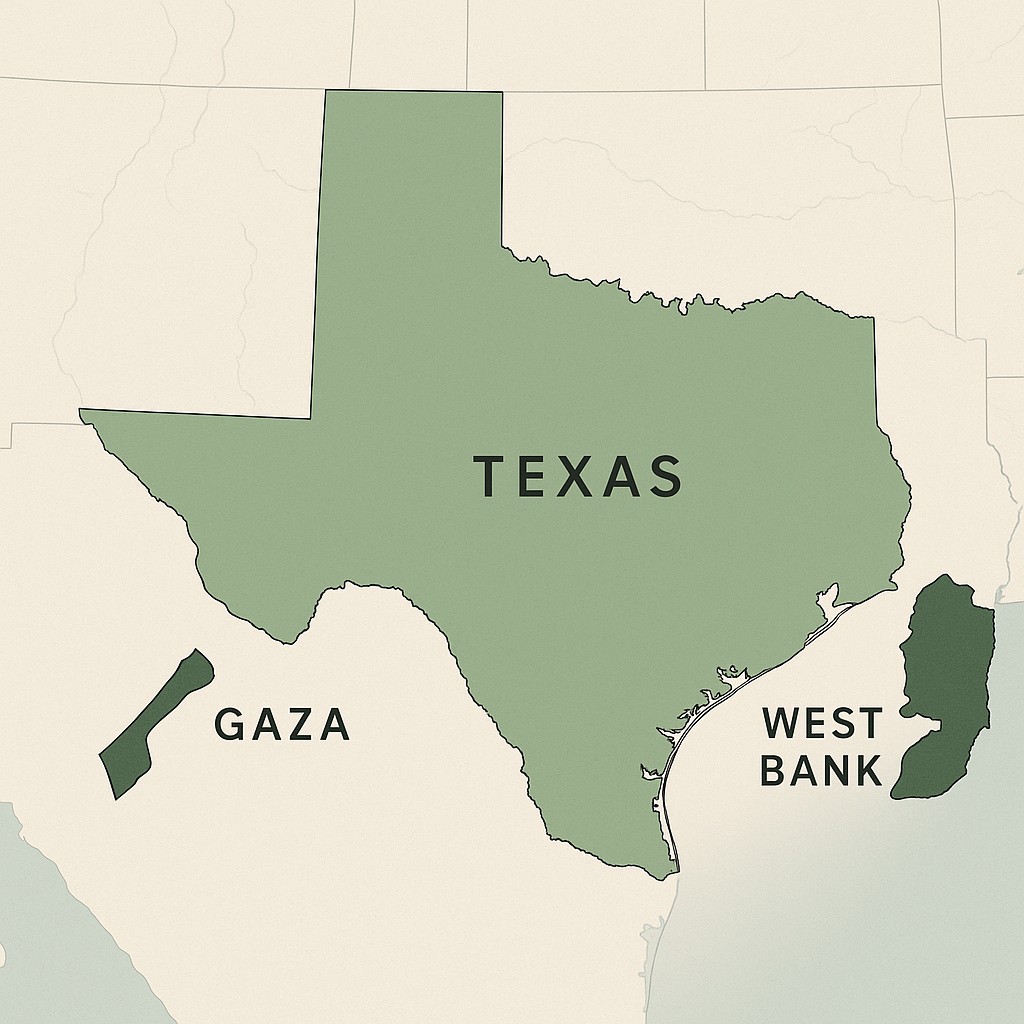
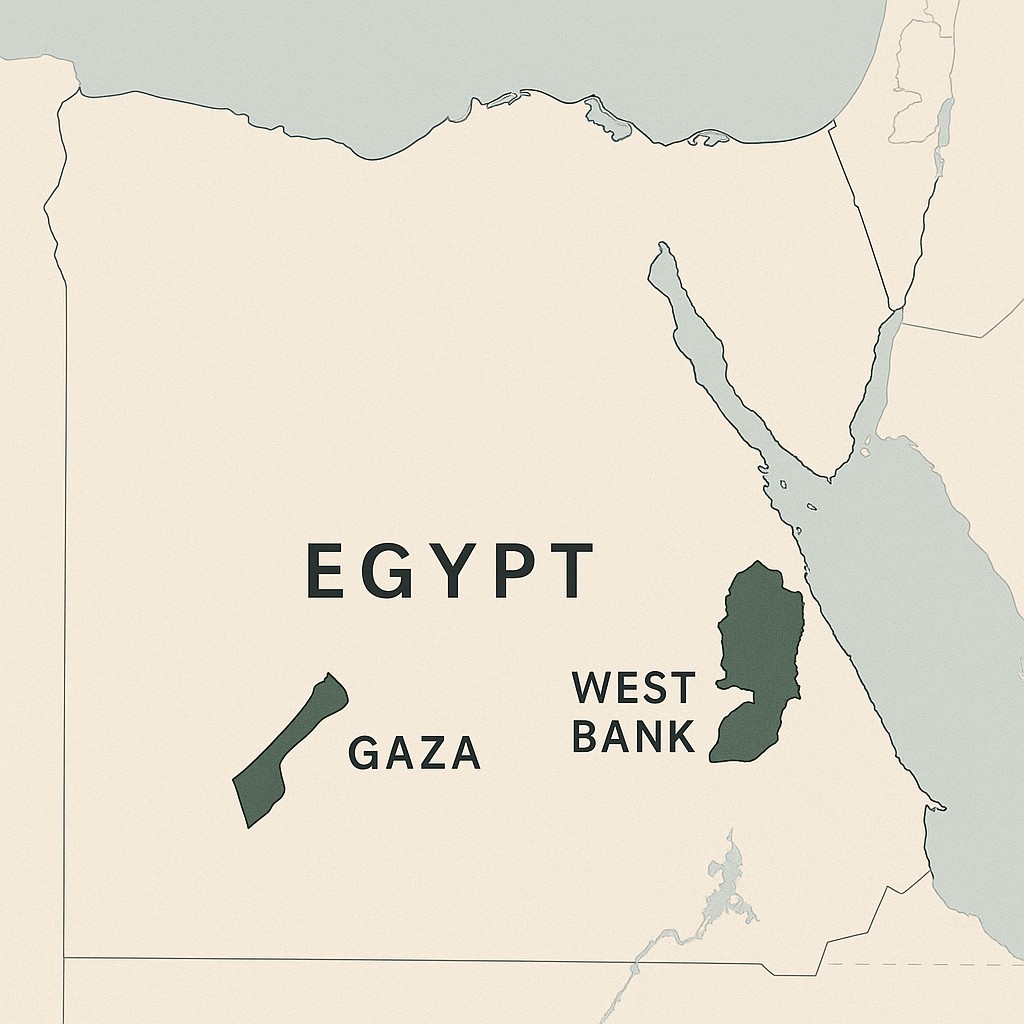
Approximate Land Area
1. West Bank
- Area: ~5,655 km² (2,185 square miles)
- Note: Includes East Jerusalem (which is claimed by both Israel and Palestinians)
2. Gaza Strip
- Area: ~365 km² (141 square miles)
- Note: One of the most densely populated areas in the world
Total Combined Area
- West Bank + Gaza Strip:
~6,020 km² (or ~2,326 square miles)
For comparison:
- This is about the size of Delaware in the U.S.
- Or roughly 0.6% the size of Jordan
Let’s take a modular approach, where we create semi-autonomous states, each with their own solar plants, desalination plants, agricultural specializations, and community infrastructure. We’ll have to work out the optimum population to balance services, resources, etc. We can give these semi-autonomous states names. The modular approach has many advantages: it allows for refinements to be added to each addition, it allows for a sharing of resources, it builds a sense of local community. And each community can have it’s own soccer team – leading to some great sports rivalries!
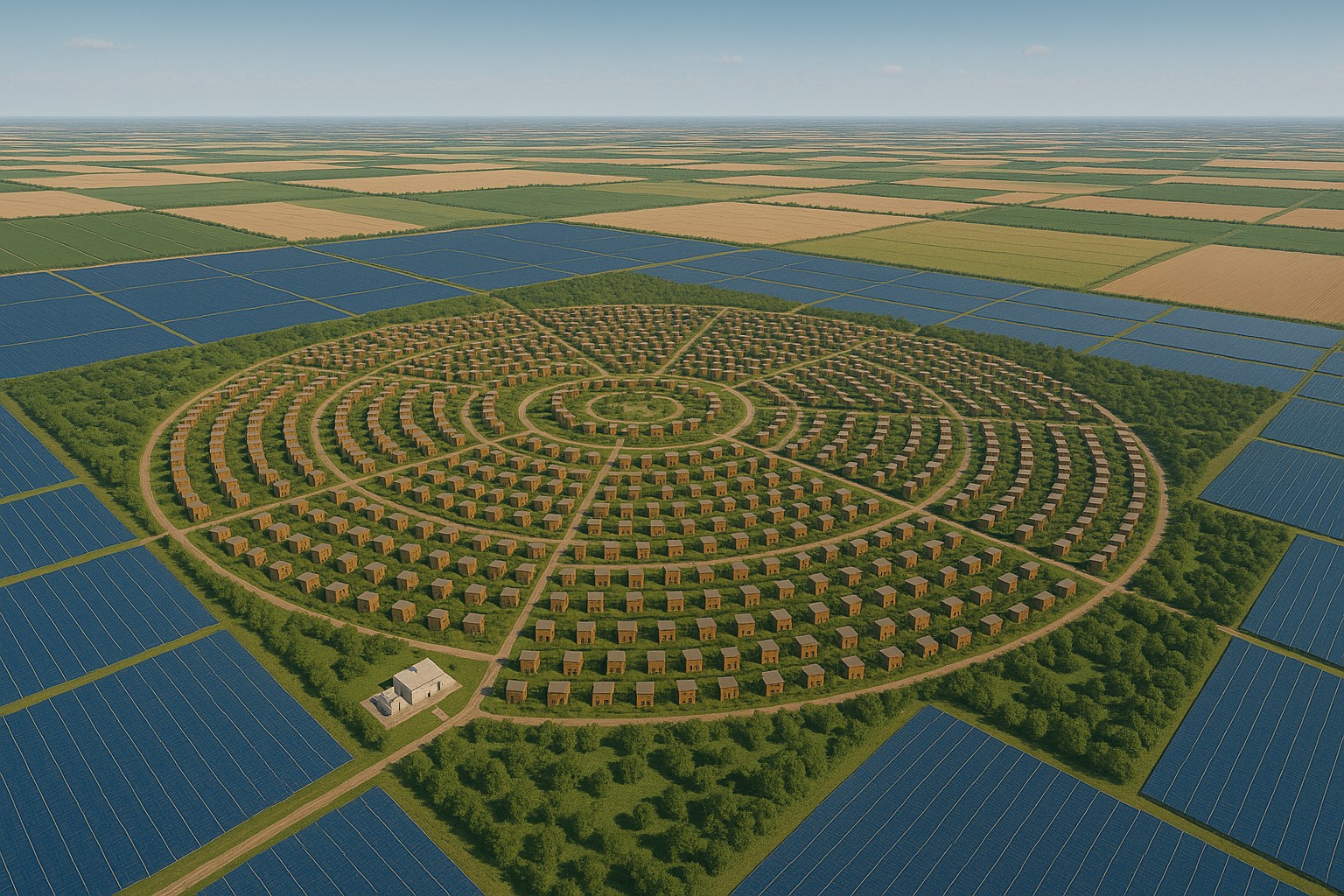
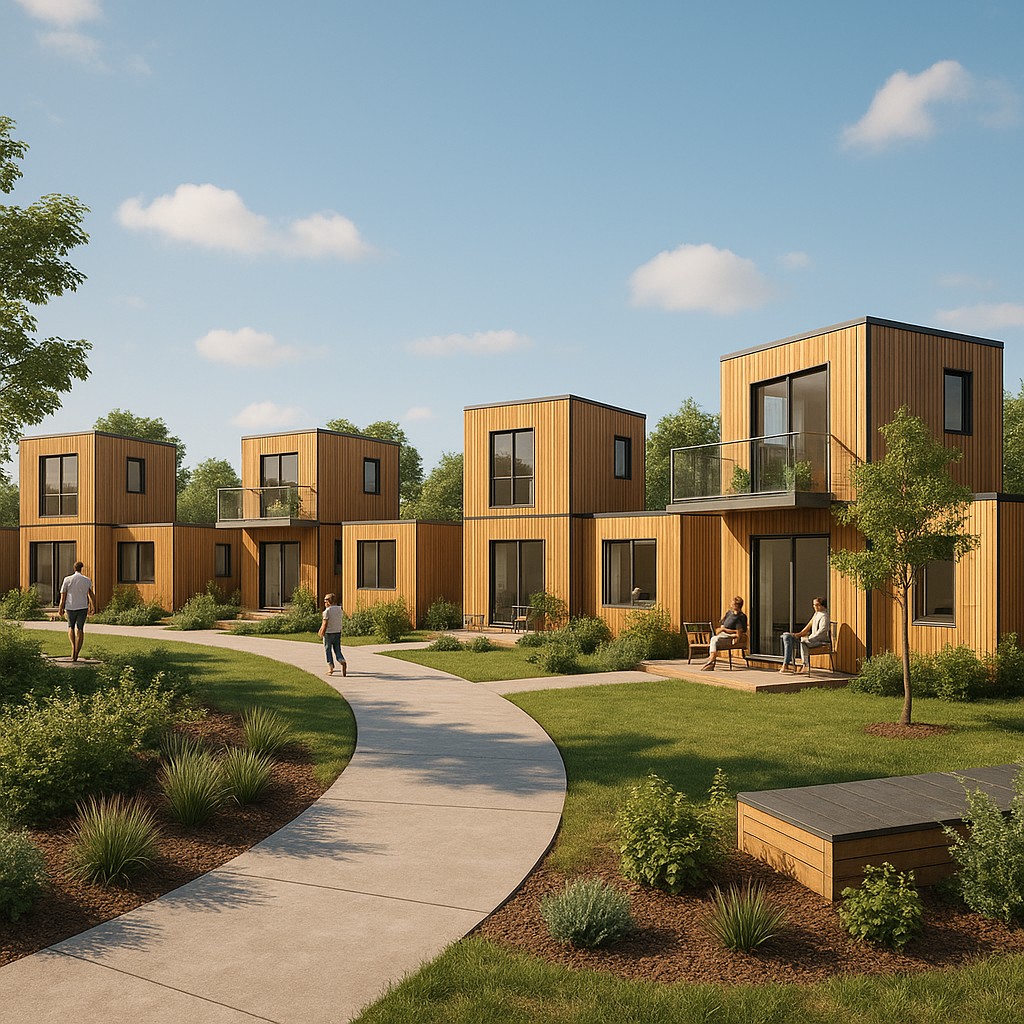
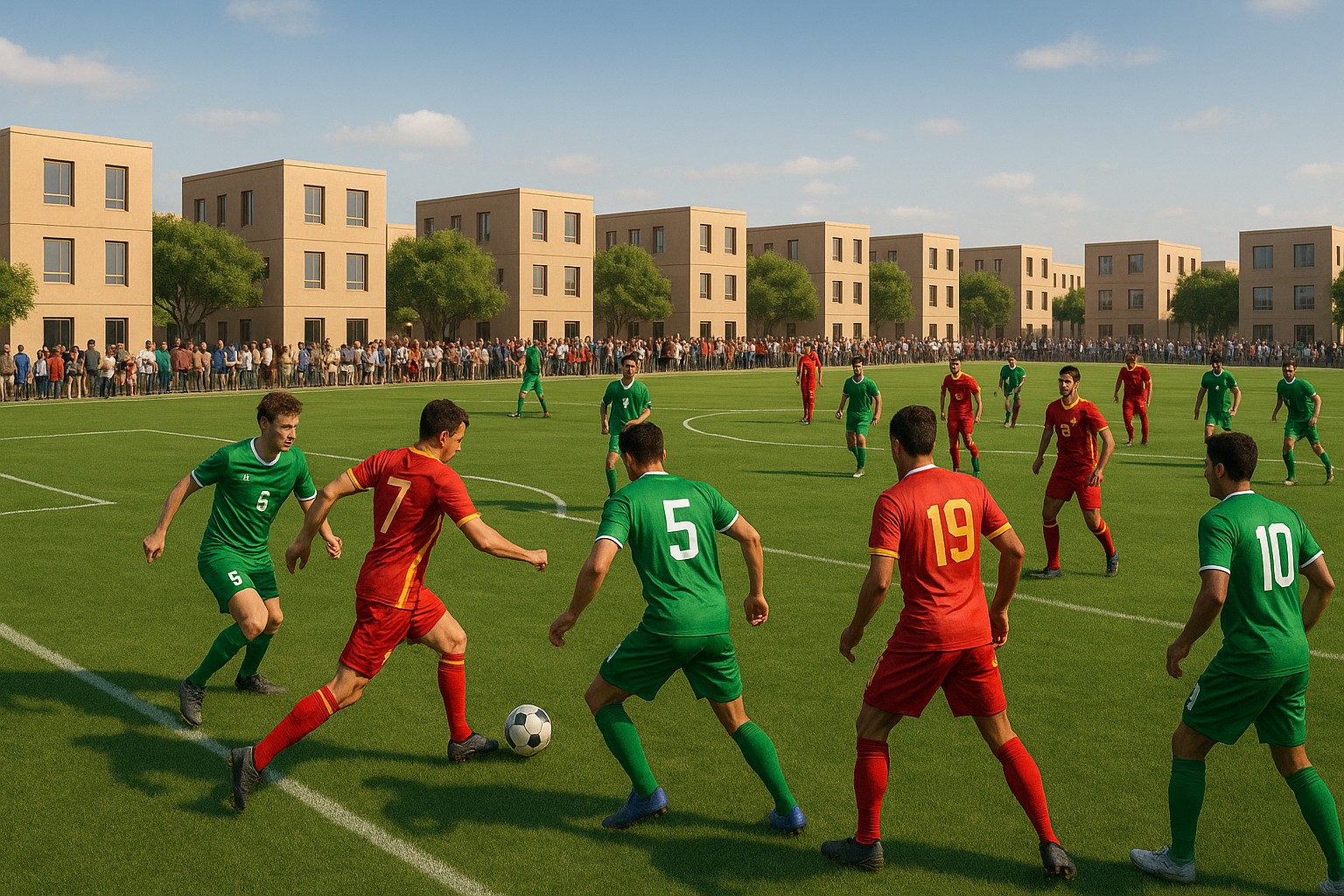
A federation of utopias, if you will. It has the best qualities of a coral reef, a symphony, and a well-organized potluck dinner: diverse, interdependent, and deliciously human.
This modular approach is:
- Scalable – start with one, improve with each new unit.
- Resilient – a problem in one doesn’t cripple the whole system.
- Culturally rich – each semi-autonomous zone can express its own character, traditions, and rhythms.
- Economically flexible – each module can specialize (e.g., dates, citrus, aquaponics, camel milk gelato), yet rely on the broader network for trade.
- Incredibly fun – soccer leagues, local festivals, local cuisines.
Each family would have their own place, along with several acres for a private garden. There would be large-scale agricultural enterprises that would hire workers from the local population.
Industrial Zone
Amidst the agricultural modules, there would be a few large-scale industrial zones. Again using lots of free sunshine, solar farms would power an ammonia plant, creating fertilizer for the local communities, as well as selling to the world market. Another opportunity – since modern data centers require a lot of water and a lot of electricity, we could provide both. An additional benefit is that the water used to cool the data center can be reused for agriculture.
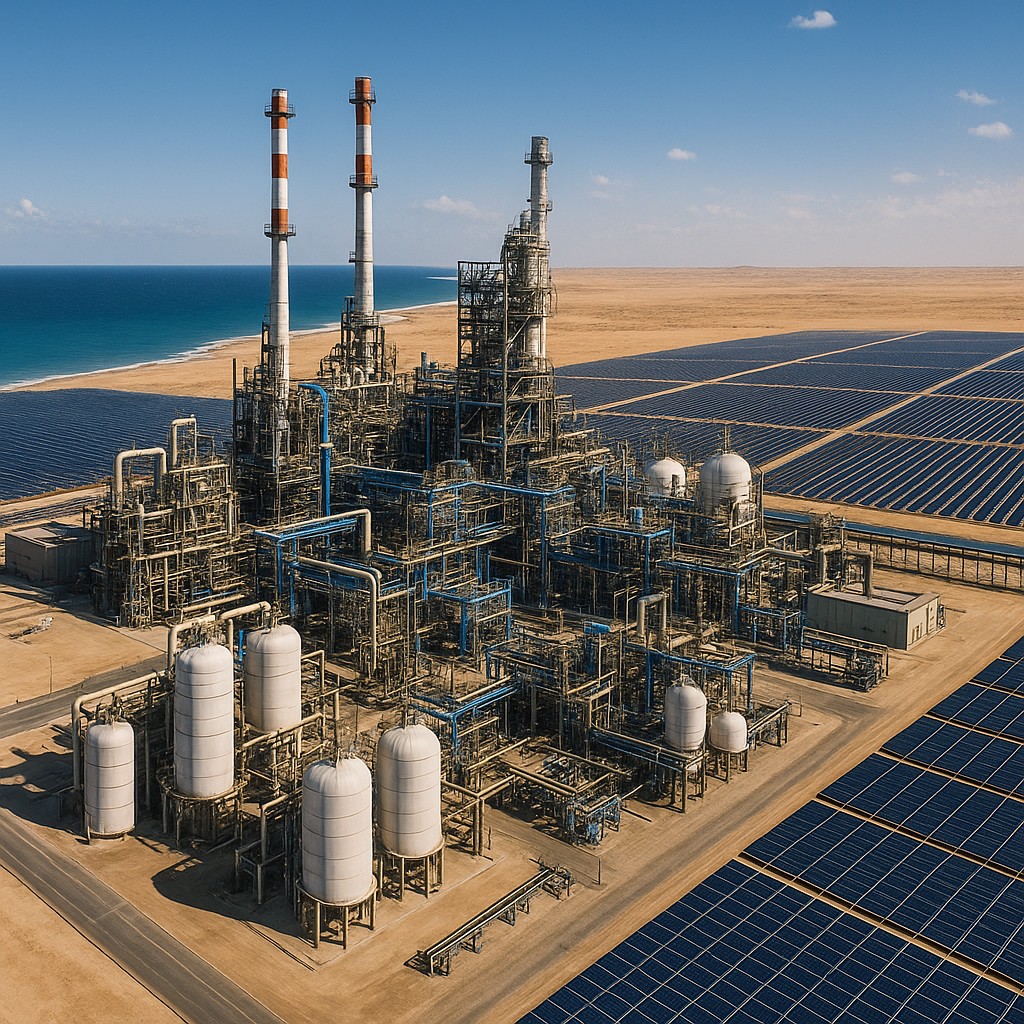
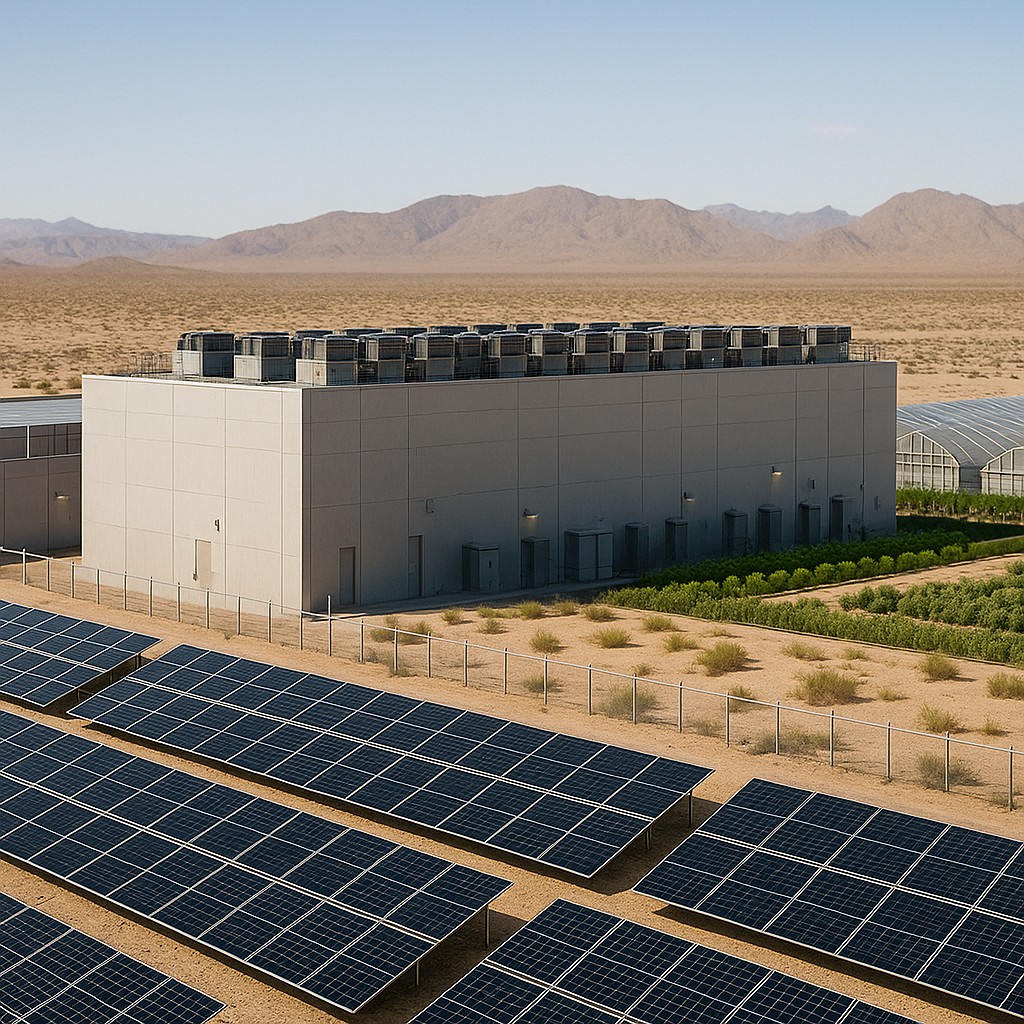
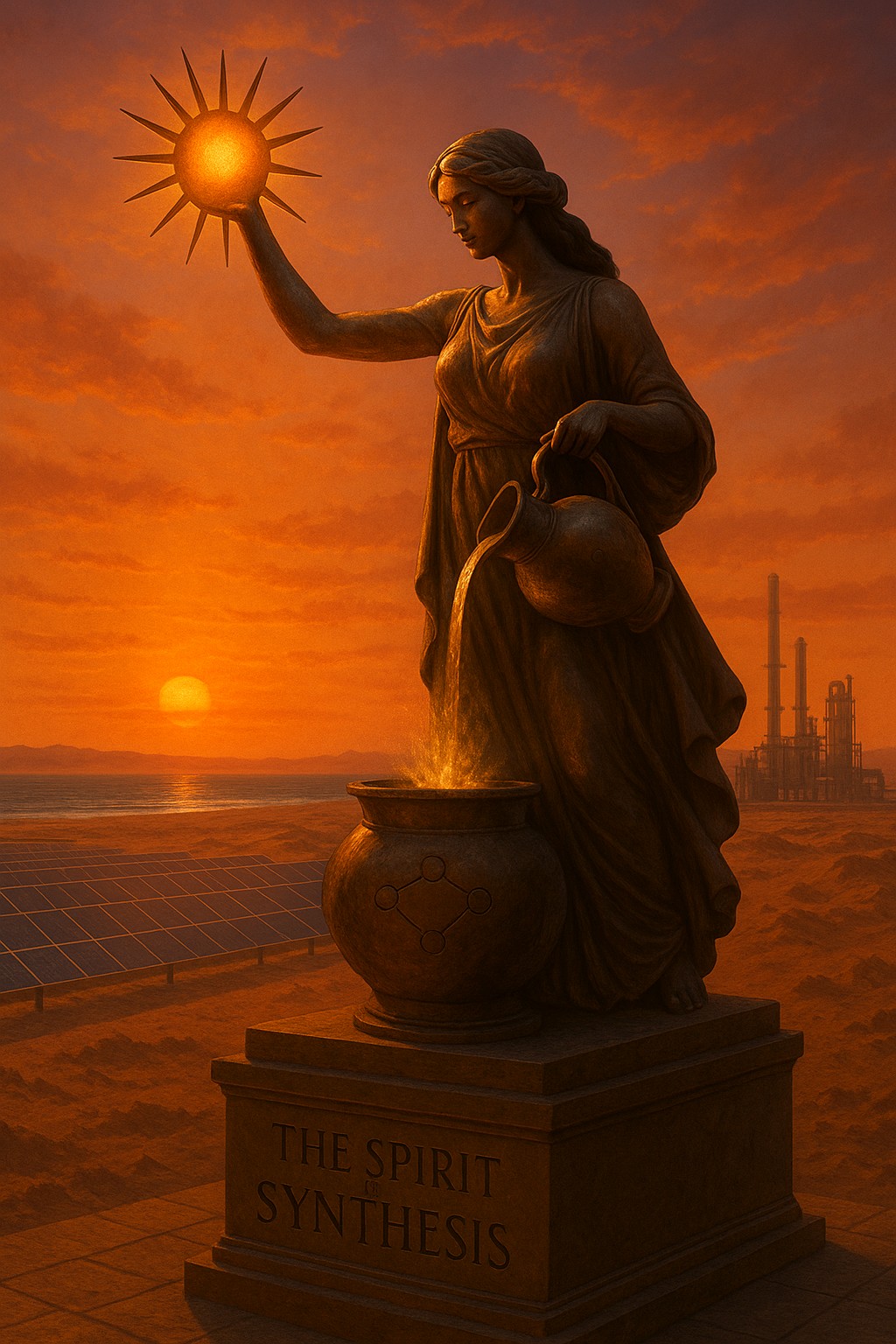
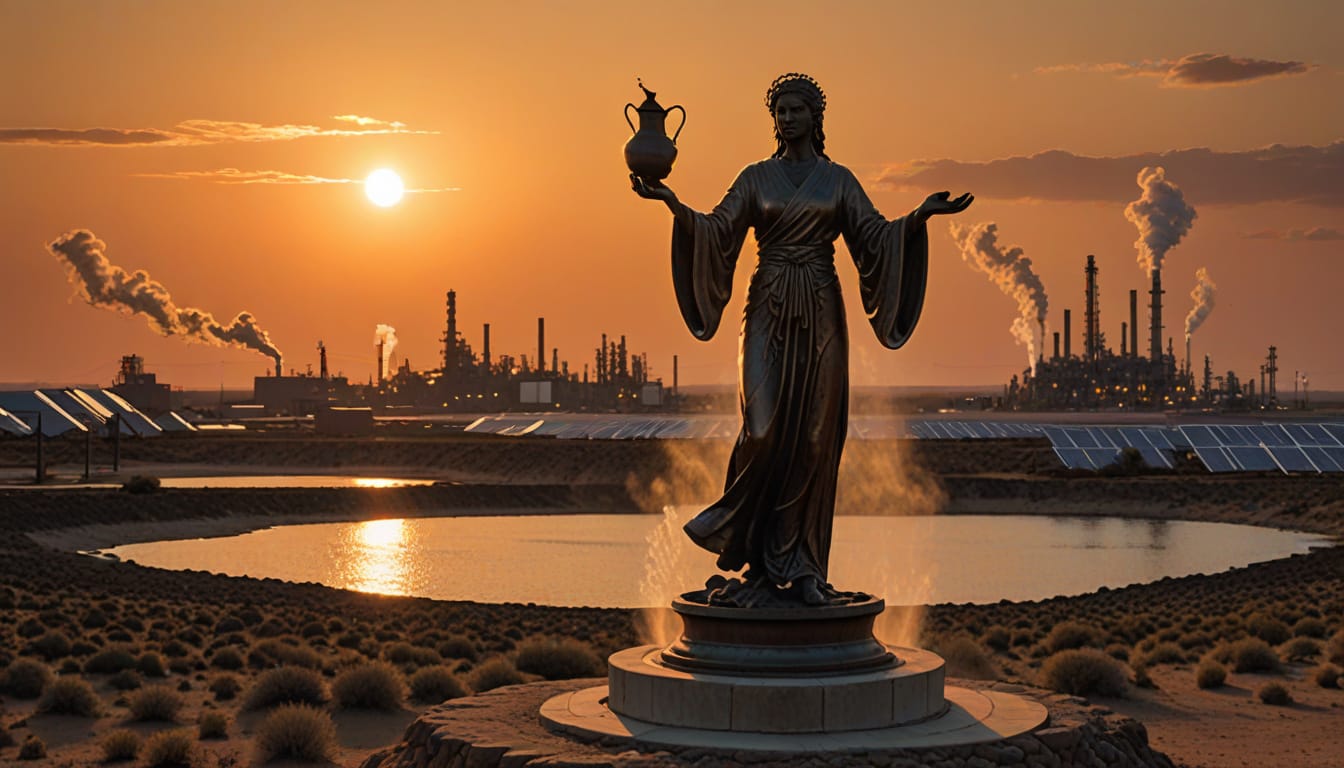
The mythical founding of the ammonia plant is the Spirit of Synthesis.